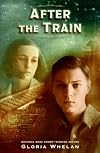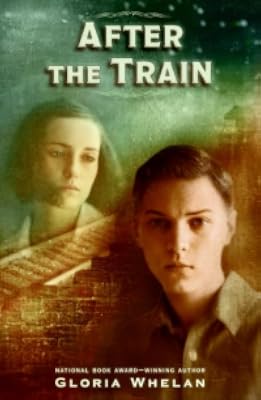
After the Train
by Gloria Whelan
On This Page
Description
Ten years after the end of the Second World War, the town of Rolfen, West Germany, looks just as peaceful and beautiful as ever, until young Peter Liebig discovers a secret about his past that leads him to question everything, including the town's calm facade and his own sense of comfort and belonging.Tags
Recommendations


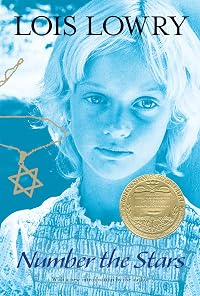

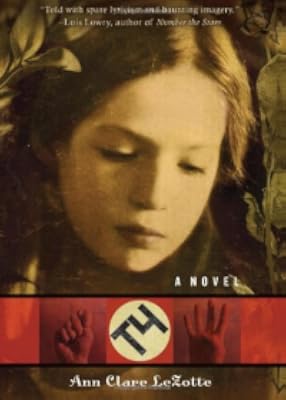
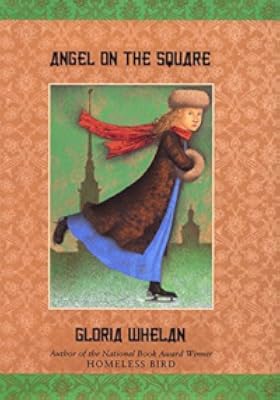
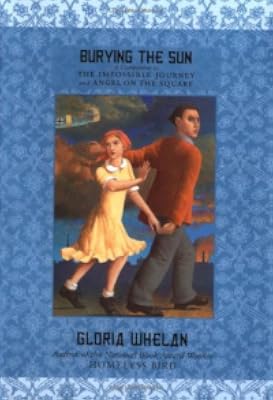

















Member Recommendations


Member Reviews
Children's Books Too Cool For School
I was distinctly underwhelmed by this little post-Holocaust tale set in Germany shortly after the war. Although it seemed to want to have a strong didactic bent, trying to drive home messages about tolerance and the importance of history, the story's very distance in time, location, and circumstance to its own ideal reader makes that message likely to fall flat. It is a highly literary little volume, but for all that, I wonder who's going to read it? And more to the point, love it?
After the Train tells the story of a young German boy sick of hearing about the Jews. Not that he suffers from any antisemitic notions, but rather that for a young boy who doesn't really remember the war, the whole thing show more seems so distant now. However, a few things in his life make him begin to question these feelings. He notices that not everyone seems to have moved beyond Jew-hatred. Then the real bombshell drops -- he finds he's adopted, and (not surprisingly) Jewish.
So what does that make him? Should he eat pork? Should he go to synagogue? And how will this change how the world around him reacts to him?
While interesting in premise, the whole thing may be just a wee bit to cerebral for this age. There isn't any real driving crisis or moment of tension. It really is mostly a quick read about a boy's image of himself after he discovers the story of his rescue from a cattle car headed to a concentration camp. It's very well-written, but, again, it doesn't really seem to have an audience.
On the plus side for those that like to introduce a subject like the Holocaust with gentleness, the book is remarkably free of violence and only very lightly touches on the subject of Nazi behavior towards Jews.
Good for girls and boys around 10-12. show less
I was distinctly underwhelmed by this little post-Holocaust tale set in Germany shortly after the war. Although it seemed to want to have a strong didactic bent, trying to drive home messages about tolerance and the importance of history, the story's very distance in time, location, and circumstance to its own ideal reader makes that message likely to fall flat. It is a highly literary little volume, but for all that, I wonder who's going to read it? And more to the point, love it?
After the Train tells the story of a young German boy sick of hearing about the Jews. Not that he suffers from any antisemitic notions, but rather that for a young boy who doesn't really remember the war, the whole thing show more seems so distant now. However, a few things in his life make him begin to question these feelings. He notices that not everyone seems to have moved beyond Jew-hatred. Then the real bombshell drops -- he finds he's adopted, and (not surprisingly) Jewish.
So what does that make him? Should he eat pork? Should he go to synagogue? And how will this change how the world around him reacts to him?
While interesting in premise, the whole thing may be just a wee bit to cerebral for this age. There isn't any real driving crisis or moment of tension. It really is mostly a quick read about a boy's image of himself after he discovers the story of his rescue from a cattle car headed to a concentration camp. It's very well-written, but, again, it doesn't really seem to have an audience.
On the plus side for those that like to introduce a subject like the Holocaust with gentleness, the book is remarkably free of violence and only very lightly touches on the subject of Nazi behavior towards Jews.
Good for girls and boys around 10-12. show less
In 1955, a German boy discovers that he is Jewish, that he was actually rescued on the way to Dachau concentration camp, and adopted. He struggles with the anti-Semitism around him and to live his truth.
Gentler version of the Jewish holocost in Germany. Ten years after the war, Peter learns that he is not who he thought he was. His parents reluctantly share the story of how they rescued him from the arms of his mother, who was sentenced to a concentration camp and was being herded abord a death train. Now he seeks to find out who he really is and how it affects who he has been.
Ten years after the end of the Second World War, the town of Rolfen, West Germany, looks just as peaceful and beautiful as ever, until young Peter Liebig discovers a secret about his past that leads him to question everything, including the town's calm facade and his own sense of comfort and belonging.
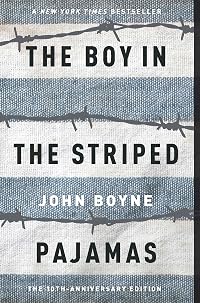
Why was this book so disappointing? I guess I didn't read much about the plot before I checked it out--I was hoping for another Boy in the Striped Pajamas. But whatever the reason, this story really failed to captivate in any meaningful way. I doubt I'll remember it a year from now. I would not necessarily recommend this book to parents or avid readers.
Different approach to war's end in Germany. 1955 time frame. The MC finds out he is really a Jewish child given up by his mother before she leaves for a concentration camp.
This is an exceptional book. Gloria Whelan is an award winning author. After the Train is what I believe is a piece of children's literature as opposed to children's "books." This story is flawless and Whelan's ability to keep the reader glued to the page is exceptional.
To read our full review, go to The Reading Tub®.
To read our full review, go to The Reading Tub®.
Members
- Recently Added By
Author Information

70+ Works 12,384 Members
Gloria Whelan was born on November 23, 1923 in Detroit, Michigan. She took a strong interest in reading early in life when she was bedridden for a year with rheumatic fever. She dictated stories to her sister who would then type them. She then went on to writing poetry and later editing her high school newspaper. She attended the University of show more Michigan and earned her B.S.degree and M.S.W. degree. She began working as a social worker in Minneapolis and Detroit. She soon became tired of Detroit's hectic pace and moved to a cabin in northern Michigan.This peace was disrupted by an oil company 's desire to drill on her property. Because she did not own the mineral rights, the drilling proceeded. This experience inspired Gloria Whelan to write her children's novel, A Clearing in the Forest in 1978, which was about a boy working on an oilrig. Gloria Whelan has written several works of fiction for children and adults, many set in rural Michigan. She has also written stories set in exotic places like China and India. She won the National Book Award for Young People's Literature in 2000 for Homeless Bird - the story of a young woman in India abandoned by her mother-in-law. show less
Awards and Honors
Awards
Notable Lists
Classifications
Statistics
- Members
- 81
- Popularity
- 392,649
- Reviews
- 9
- Rating
- (3.35)
- Languages
- English
- Media
- Paper, Ebook
- ISBNs
- 5
- ASINs
- 2