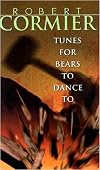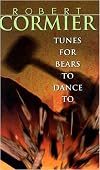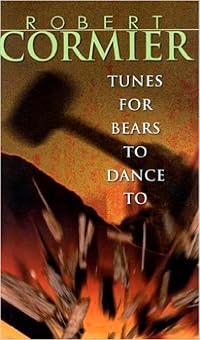
Tunes for Bears to Dance To
by Robert Cormier
On This Page
Description
Eleven-year-old Henry escapes his family's problems by watching the woodcarving of Mr. Levine, an elderly Holocaust survivor, but when Henry is manipulated into betraying his friend he comes to know true evil.Tags
Recommendations






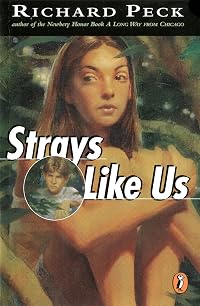
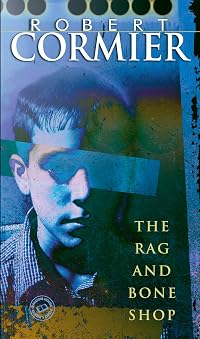
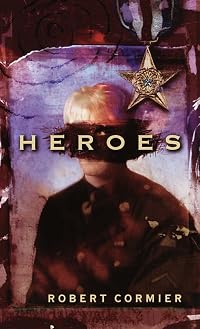





Member Recommendations

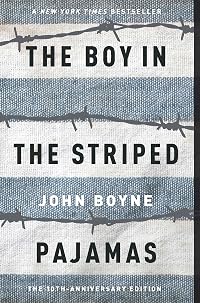
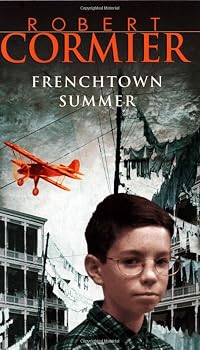
IAmMidnight The book has a similar examination of power that is so frequently found in Cormier's works.
Member Reviews
This Cormier book is suited for a younger audience, from about age eight on up, and lacks the violence and sex that often appears in his other books. Just because it's not as explicit, however, does not mean it's a fluffy read: it tackles weighty issues of prejudice and the need to take a stand against evil. 11-year-old Henry's family has been torn apart by the sudden death of his brother, but he finds solace in his friendship with Mr. Levine, a Jewish Holocaust survivor. Then Henry's boss, a child-abusing bigot named Mr. Hairston, threatens to destroy Henry's relationship with Mr. Levine, and Henry must decide between what is easy and what is right. This would be a good book to use to introduce younger children to the Holocaust, and to show more teach them about prejudice. show less
Harrowing novel about bullying and oppression. Henry's family have moved towns because his brother has died and they want to escape any memory of him. Henry works at the local corner store to help make ends meet under the hideous Mr. hairston, who hates everyone and beats his daughter. The only joy in his life comes from seeing holocaust survivor Mr. Levine carve a model replica of his village that was destroyed by the Nazis. Henry makes a terrible mistake in that he tells Mr. Hairston about Mr. Levine, and Mr. Hairston exercises his bullying power over Henry when he tells him to smash the model or his mother will lose her job and his brother won't get a headstone on his grave. A confronting novel about the power of bullies over the show more innocent. show less
Not my favorite of Cormier's books. It's got some interesting ideas, but the plot comes together too easily, and even though it's set in (I guess?) the early '50s and the language is trying to capture that, some of the terms the bigoted boss uses are offensive by 1992 standards. I get why they were used, but it just didn't feel true to the time to me. Or something. I dunno. This book just didn't do it for me, though I liked the title an awful lot.
This may be among my least useful reviews.
This may be among my least useful reviews.
11 year old Henry Cassavant is a good boy. His brother Eddy died a year ago and his father hasn’t spoken much since. Henry and his mother both work hard to make ends meet. She waitresses long hours while Henry works for Mr. Hairston, the grocer. He doesn’t like Mr. Hairston much, who always has something bad to say about everyone but Henry keeps that to himself. When Henry starts following the mysterious old man across the street, Henry finds out just how evil Mr. Hairston can be. The old man is a Jewish Holocaust survivor who spends his days carving his old village from wood. When Henry tells Mr. Hairston about it, he learns just how evil the grocer really is. Mr. Hairston then asks Henry to do the unthinkable in exchange for a show more stone for his brother’s grave and a raise for him and his mother. In a classic fight of good vs. evil, Henry must decide if he will destroy his friendship and Mr. Levine's hope in exchange for material goods. Middle Level readers on up will find Henry a like-able and endearing character and will not be disappointed by the conclusion. show less
Henry and his family are dealing with the recent death of his brother and decide to move to a new town. In this new town, Henry meets Mr. Hairston, his new boss at the grocery store, and Mr. Levine, an elderly Holocaust survivor. Mr. Hairston devises an evil plan to test Henry's character.
This story has a universal appeal in that it deals with good versus evil. I was anxious to find out what decision Henry would make. Readers who enjoy stories about people who are faced with making ethical decisions with huge risks will like this one.
Honors and Awards: None
This story has a universal appeal in that it deals with good versus evil. I was anxious to find out what decision Henry would make. Readers who enjoy stories about people who are faced with making ethical decisions with huge risks will like this one.
Honors and Awards: None
Grade Level: 6th-10th
Category: Realistic Fiction
Read-Alouds: pg. 66-70 [Mr. Hairston talks to Henry about ruining the old man’s village] pg. 27-32 [breakthrough moment between Henry and his mother]
Summary:
Henry and his parents moved to the city from a small town after his older brother was hit by a car and killed. Henry is a well behaved eleven year old boy who adores his parents, and most everyone around him. He works at a corner market for a racist man who talks bad about all of his customers once they leave. Henry meets an old holocaust survivor whom he can relate to as far as death is concerned. Henry watches closely for weeks while the old man re-creates his home village and loved ones by wood carving. The market owner uses show more his power of manipulation and intimidation to give Henry no option but to ruin the old man’s wooden village. The moral of the story is how power can influence even the good. Although smashing the wooden town was
Themes:
Once again Cormier has managed to use the use of power in yet another novel. Power is a huge theme in this story. Henry is a great little boy, trying to save money to buy a monument for his older brother, he gives his mother money to help support the family while his dad sits at home in a coma-like state. Henry cares about people and would never hurt a fly. However, Mr. Hairston, the store owner, threatened to ruin his mother’s career as well as not help Henry buy his brothers monument. Knowing Henry is only eleven years old; Mr. Hairston took advantage of his youth and his goodness by using his own power of manipulation.
Another theme in the story was good vs. evil. Henry was a young innocent boy who looked at things in a more positive way. Mr. Hairston, however, seemed to hate everyone but himself. He was constantly saying racist things about customers as they left and treating his wife and daughter poorly. Even though Henry accidently went through with ruining the old man’s village, he didn’t accept the gifts Mr. Hairston was going to give him for smashing the old man’s village. Henry is a good kid, he felt horrible for ruining a good friend’s project, and he refused to accept the gifts because he knew it would be wrong to do. Mr. Hairston was an evil man who didn’t even know the old man who created the village, all he knew about him was that he was a survivor of a Nazi concentration camp. Mr. Hairston told Henry his reason for wanting the village ruined was that the old man was a Jew.
Discussion Questions:
Mr. Hairston mentioned in the book that he liked being a dictator, he like making people wait for goods during the war. Who does he control in the story and how does he control them?
Why did Henry and his family move back to their old town?
Response:
I have never lost a sibling, but I have lost both sets of my grandparents. In that sense, I can relate to Henry. Losing people you love can be very hard on a family. As far as the old man, when George told the story of the concentration camp and how the old man had survived it, but his family did not, I wanted to cry. I have always found WWII to be a very interesting time period. The fact that one man can control the minds of thousands maybe even millions, astonishes me. It is amazing to me how one man can be responsible for all of the innocent lives that were lost in Germany. Because I have read two of Cormier’s books prior to reading this book, I figured he would create a not-so-good ending. As a reader, I always expect a great ending… happily ever after! However, Cormier does quite the opposite. When Mr. Hairston told Henry he wanted him to ruin the old man’s village, I knew Henry would do it one way or another, even thought I desperately did not want him to. I knew because of my prior knowledge of Cormier’s previous books. show less
Category: Realistic Fiction
Read-Alouds: pg. 66-70 [Mr. Hairston talks to Henry about ruining the old man’s village] pg. 27-32 [breakthrough moment between Henry and his mother]
Summary:
Henry and his parents moved to the city from a small town after his older brother was hit by a car and killed. Henry is a well behaved eleven year old boy who adores his parents, and most everyone around him. He works at a corner market for a racist man who talks bad about all of his customers once they leave. Henry meets an old holocaust survivor whom he can relate to as far as death is concerned. Henry watches closely for weeks while the old man re-creates his home village and loved ones by wood carving. The market owner uses show more his power of manipulation and intimidation to give Henry no option but to ruin the old man’s wooden village. The moral of the story is how power can influence even the good. Although smashing the wooden town was
Themes:
Once again Cormier has managed to use the use of power in yet another novel. Power is a huge theme in this story. Henry is a great little boy, trying to save money to buy a monument for his older brother, he gives his mother money to help support the family while his dad sits at home in a coma-like state. Henry cares about people and would never hurt a fly. However, Mr. Hairston, the store owner, threatened to ruin his mother’s career as well as not help Henry buy his brothers monument. Knowing Henry is only eleven years old; Mr. Hairston took advantage of his youth and his goodness by using his own power of manipulation.
Another theme in the story was good vs. evil. Henry was a young innocent boy who looked at things in a more positive way. Mr. Hairston, however, seemed to hate everyone but himself. He was constantly saying racist things about customers as they left and treating his wife and daughter poorly. Even though Henry accidently went through with ruining the old man’s village, he didn’t accept the gifts Mr. Hairston was going to give him for smashing the old man’s village. Henry is a good kid, he felt horrible for ruining a good friend’s project, and he refused to accept the gifts because he knew it would be wrong to do. Mr. Hairston was an evil man who didn’t even know the old man who created the village, all he knew about him was that he was a survivor of a Nazi concentration camp. Mr. Hairston told Henry his reason for wanting the village ruined was that the old man was a Jew.
Discussion Questions:
Mr. Hairston mentioned in the book that he liked being a dictator, he like making people wait for goods during the war. Who does he control in the story and how does he control them?
Why did Henry and his family move back to their old town?
Response:
I have never lost a sibling, but I have lost both sets of my grandparents. In that sense, I can relate to Henry. Losing people you love can be very hard on a family. As far as the old man, when George told the story of the concentration camp and how the old man had survived it, but his family did not, I wanted to cry. I have always found WWII to be a very interesting time period. The fact that one man can control the minds of thousands maybe even millions, astonishes me. It is amazing to me how one man can be responsible for all of the innocent lives that were lost in Germany. Because I have read two of Cormier’s books prior to reading this book, I figured he would create a not-so-good ending. As a reader, I always expect a great ending… happily ever after! However, Cormier does quite the opposite. When Mr. Hairston told Henry he wanted him to ruin the old man’s village, I knew Henry would do it one way or another, even thought I desperately did not want him to. I knew because of my prior knowledge of Cormier’s previous books. show less
Eleven-year-old Henry escapes his family's problems by watching the woodcarving of Mr. Levine, an elderly Holocaust survivor, but when Henry is manipulated into betraying his friend, he comes to know true evil.
Members
- Recently Added By
Talk Discussions
Past Discussions
Found: YA Fiction - 25 years+ ago - possible Holocaust theme in Name that Book (September 2021)
Author Information

30+ Works 14,265 Members
Robert Cormier began writing novels for adults, but established his reputation as an author of books for young adults, earning critical acclaim with three books, each of which were named New York Times Outstanding Book of the Year: The Chocolate War (1974), I Am the Cheese (1977), and After the First Dark (1979). Cormier was born on January 17, show more 1925, in Leominster, Mass., where his eighth-grade teacher first discovered his ability to write. Cormier worked as a commercial writer at WTAG-Radio in Worcester, Mass. He also worked as a newspaper reporter and columnist at the Worcester Telegram and Gazette and at the Fitchburg Sentinel. Cormier received the Best Human Interest Story of the Year Award from the Associated Press of New England in 1959 and 1973. He also earned the Best Newspaper Column Award from K.R. Thomson Newspapers, Inc., in 1974. Cormier, who is sometimes inspired by news stories or family events, is known for having serious themes in his work, such as manipulation, abuse of authority, and the ordinariness of evil. These themes are also evident in many of his more than 15 books. (Bowker Author Biography) show less
Awards and Honors
Awards
Distinctions
Common Knowledge
- Original title
- Tunes for Bears to Dance To
- Original publication date
- 1992-10
- People/Characters
- Henry Cassavant; Eddie Cassavant; Mrs. Cassavant; Mr. Cassavant; Mr. Jacob Levine; Mr. Hairston (show all 9); Doris Hairston; George Graham; Jackie Antonelli
- Important places
- Wickburg; Frenchtown
- Epigraph
- Human language is like a cracked kettle on which we beat out tunes for bears to dance to, when all the time we are longing to move the stars to pity.
—Gustave Flaubert
Deliver us from evil.
—Our Father - Dedication
- To Fabio Coen
With my great thanks - First words
- The old man came out of the crazy house every morning shortly before eight oʼclock and walked down the graveled path to the gate, carrying a small leather bag that swung like a pendulum from his right hand.
- Last words
- (Click to show. Warning: May contain spoilers.)He continued to kneel there as dusk deepened into night, bringing a chill that raced along his bare arms, and the bat and ball caught the first light of an emerging moon.
Classifications
- Genres
- Fiction and Literature, Teen, Young Adult
- DDC/MDS
- 813.54 — Literature & rhetoric American literature in English American fiction in English 1900-1999 1945-1999
- LCC
- PZ7 .C81634 .T — Language and Literature Fiction and juvenile belles lettres Fiction and juvenile belles lettres Juvenile belles lettres
- BISAC
Statistics
- Members
- 438
- Popularity
- 69,933
- Reviews
- 11
- Rating
- (3.59)
- Languages
- 5 — English, French, German, Italian, Swedish
- Media
- Paper, Audiobook, Ebook
- ISBNs
- 29
- ASINs
- 4