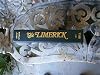
The Limerick
by Gershon Legman (Editor)
On This Page
Description
This is the classic collections of Limericks. Written by people of all nations in ribald and bawdy situations. Most of the risque verse is written in English but some are in French, German, and Latin and appear exactly as they were in the 1957 edition that was privately printed in Paris.Tags
Recommendations





















Member Reviews
What a vile, depraved, offensive, WONDERFUL volume. Gershon Legman was a fascinating and eccentric individual of the 20th century, obsessed with sex but also determined to bring America out of its needlessly repressed ways. (And also apparently a key contributor in bringing the origami fad to the Western world... Go figure.) This book was famously published in France rather than the US when Legman couldn't find a publisher, and because of this, he found himself without any copyright over the volume.
There are many variations on this publication, as a result, but my Panther edition collects 1700 limericks in two volumes. The first volume includes a decent introductory essay on the history of the poetic form, and the second volume show more contains a short "rhyming dictionary" at the end. Both volumes give extensive (and often dirty) notes on the limericks.
Every possible topic is covered - from incest and coprophilia to necrophilia and prostitution. If you're in any way offended by things, this may not be for you, and truthfully I hope no-one is completely comfortable with all 1700 poems herein! But the importance of Legman's work was just as much to challenge our assumptions, to make us - and particularly Americans - aware that their society's repression wasn't necessarily natural, that the "dirtiness" of 5-line poems was a completely legitimate way of enjoying oneself. Most interestingly in his inroduction, Legman comments that limericks are much more popular amongst the highly-educated. He suggests that the ornate fringes of the poetry, the inter-rhymes, the deceptively innocent opening lines, they all attract people more subtly attuned to the nuances of the joke, while the slight pretention makes them less attractive to people for whom dirty jokes alone are attractive. I think there's also the fact that, because limericks can be so depraved, they require a mind who can enjoy the joke without necessarily endorsing the sentiment in real life. If this cheeky volume is evidence, it's well worth it. show less
There are many variations on this publication, as a result, but my Panther edition collects 1700 limericks in two volumes. The first volume includes a decent introductory essay on the history of the poetic form, and the second volume show more contains a short "rhyming dictionary" at the end. Both volumes give extensive (and often dirty) notes on the limericks.
Every possible topic is covered - from incest and coprophilia to necrophilia and prostitution. If you're in any way offended by things, this may not be for you, and truthfully I hope no-one is completely comfortable with all 1700 poems herein! But the importance of Legman's work was just as much to challenge our assumptions, to make us - and particularly Americans - aware that their society's repression wasn't necessarily natural, that the "dirtiness" of 5-line poems was a completely legitimate way of enjoying oneself. Most interestingly in his inroduction, Legman comments that limericks are much more popular amongst the highly-educated. He suggests that the ornate fringes of the poetry, the inter-rhymes, the deceptively innocent opening lines, they all attract people more subtly attuned to the nuances of the joke, while the slight pretention makes them less attractive to people for whom dirty jokes alone are attractive. I think there's also the fact that, because limericks can be so depraved, they require a mind who can enjoy the joke without necessarily endorsing the sentiment in real life. If this cheeky volume is evidence, it's well worth it. show less
I guess that this is the definitive book on limericks. Why you would ever need such a book is a mystery, however, but, for some reason, I just had to get it. The introduction is scattershot and disjointed. Of course, it is also what you'd expect from a folklorist who collects limericks. There is some history in the intro, but since it is written so oddly, it is hard to really get the point. Still, the tidbits thrown out are good enough to let the weirdness slide. But what makes this book awesome to me is that it is annotated, numbered, and cited; there is an index and a rhyming index. This delights my bibliographic soul.
The limericks? Well, of course they are ribald and bawdy and raunchy. And sometimes disgustingly so. But, at least I show more now own the definitive book on limericks. show less
The limericks? Well, of course they are ribald and bawdy and raunchy. And sometimes disgustingly so. But, at least I show more now own the definitive book on limericks. show less
The Limerick: 1700 Examples, with notes variants and index, edited by G. Legman is probably the most comprehensive of this questionable art form available. Published in 1988, Mr. Legman has given us a wonderful introduction and history to the Limerick which I found to be fascinating. While these little ditties have been around for quite sometime now, they did not really hit their stride until the mid 1850s. Of course they have picked up speed since those long ago days, but as the reader of this work will find, they certainly have not become less profane, scatological, or…well for lack of a better words, “nasty and gross,” over time.
As others here have pointed out, if you are the least bit squeamish, are offended by gross doggerel, show more sexism, blatant misogyny and just plane simple filth, then you probably should avoid this one. Looking through this collection I could not find one offering I could record in this review that would get by the Amazon censors so that I could give you an example. Now I am considered, at the very least, a semi-jaded person, but to be quite frank, the large majority of these 1700 plus poems offended even me. Don’t get me wrong, I was interested in them and found them to the fascinating, as I always have, but was nevertheless offended. Perhaps I am mellowing with age.
The compiler of this collection has been kind enough to group the into categories such as Little Romances, Organs, Abuses of the Clergy, Zoophily, Excrement, Motherhood, Prostitution, Sex Substitutes, Chamber of Horrors, Virginity and many, oh so many, others. Trust me folks, there is some very, very grim reading here!
The introduction to this work is quite well done though. The author is quick to point out that the limerick, as we know it today, nor as we knew it in the past, is not the folk poetry of the poor or the uneducated, but is almost exclusive to the educated class. As he points out; “this is a type of literary revolt that almost no other social class cares to share. Few persons of non-college background know, or want to know, any limericks at all, whether clean or bawdy….” Limericks indeed, are the folk-expression almost solely of the college group, particularly the professors, concentrating specifically on the bawdy limerick. The bawdy limerick remains thereafter the special delectation of college-educated men (and a few disoriented women nowadays),…” You really need to read the introduction yourself as I cannot begin to do it justice here. If the dark corners of the human mind can conceive it, then it is recorded somewhere in these 517 pages.
If this work is to be read, it must be approached with a very open mind (as another reviewer has pointed out), and must be accepted as part of our Angelo-American Culture, for good or for bad. Sometimes it is best to stand back and view our worse traits, examine our own fears and anxieties (for indeed, limericks are a strong reflection of these fears and anxieties, have no doubt). I think it makes us better people in the long run. Was it not Pogo who stated “we have found the enemy, and he is us?” (If you do not know who Pogo was, then you are probably too young to be reading this review and you are sure too young to be reading the book being reviewed). show less
As others here have pointed out, if you are the least bit squeamish, are offended by gross doggerel, show more sexism, blatant misogyny and just plane simple filth, then you probably should avoid this one. Looking through this collection I could not find one offering I could record in this review that would get by the Amazon censors so that I could give you an example. Now I am considered, at the very least, a semi-jaded person, but to be quite frank, the large majority of these 1700 plus poems offended even me. Don’t get me wrong, I was interested in them and found them to the fascinating, as I always have, but was nevertheless offended. Perhaps I am mellowing with age.
The compiler of this collection has been kind enough to group the into categories such as Little Romances, Organs, Abuses of the Clergy, Zoophily, Excrement, Motherhood, Prostitution, Sex Substitutes, Chamber of Horrors, Virginity and many, oh so many, others. Trust me folks, there is some very, very grim reading here!
The introduction to this work is quite well done though. The author is quick to point out that the limerick, as we know it today, nor as we knew it in the past, is not the folk poetry of the poor or the uneducated, but is almost exclusive to the educated class. As he points out; “this is a type of literary revolt that almost no other social class cares to share. Few persons of non-college background know, or want to know, any limericks at all, whether clean or bawdy….” Limericks indeed, are the folk-expression almost solely of the college group, particularly the professors, concentrating specifically on the bawdy limerick. The bawdy limerick remains thereafter the special delectation of college-educated men (and a few disoriented women nowadays),…” You really need to read the introduction yourself as I cannot begin to do it justice here. If the dark corners of the human mind can conceive it, then it is recorded somewhere in these 517 pages.
If this work is to be read, it must be approached with a very open mind (as another reviewer has pointed out), and must be accepted as part of our Angelo-American Culture, for good or for bad. Sometimes it is best to stand back and view our worse traits, examine our own fears and anxieties (for indeed, limericks are a strong reflection of these fears and anxieties, have no doubt). I think it makes us better people in the long run. Was it not Pogo who stated “we have found the enemy, and he is us?” (If you do not know who Pogo was, then you are probably too young to be reading this review and you are sure too young to be reading the book being reviewed). show less
From the sea chanty to the folklore of the churn, we have lost all but the most bowdlerized stanzas of our work song. Nobody sings at Desktops. But the loin of the Limerick is hanging in there....with its seven line stanza in spondaic hexameter, alternating with amphibrachs and amphimacers.
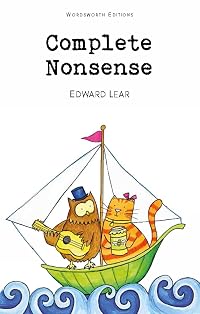
Limericks as a fad began in 1863 with a reprint of Edward Lear's 1846 Book of Nonsense, which inspired a serious stretch of publications in humorous magazine, PUNCH.[viii] The form has ancient roots in child nursery-rhyme [xiv], and nonsense song. Irish traditions go back 1000 years, and the form was also used by Thomas Moore, and Shakespeare [Edgar disguised as a beggar in King Lear, chants his spell, III.iv.120; Iago's drinking song in Othello, show more II.iii.70; Ophilia's mad song in Hamlet, IV.v.190].
Still, it remains, as presented here, a vehicle especially suited to silliness or shock. The scholarly editor has reprinted, in four languages, the Plumber's lament as a Little Romance: "There was a young plumber of Leigh/ Who was plumbing a girl by the sea./ She said, "Stop your plumbing,/ There's somebody coming!/ Said the plumber, still plumbing, 'It's me!'." [#60-#63] show less
Limericks as a fad began in 1863 with a reprint of Edward Lear's 1846 Book of Nonsense, which inspired a serious stretch of publications in humorous magazine, PUNCH.[viii] The form has ancient roots in child nursery-rhyme [xiv], and nonsense song. Irish traditions go back 1000 years, and the form was also used by Thomas Moore, and Shakespeare [Edgar disguised as a beggar in King Lear, chants his spell, III.iv.120; Iago's drinking song in Othello, show more II.iii.70; Ophilia's mad song in Hamlet, IV.v.190].
Still, it remains, as presented here, a vehicle especially suited to silliness or shock. The scholarly editor has reprinted, in four languages, the Plumber's lament as a Little Romance: "There was a young plumber of Leigh/ Who was plumbing a girl by the sea./ She said, "Stop your plumbing,/ There's somebody coming!/ Said the plumber, still plumbing, 'It's me!'." [#60-#63] show less
The canonical connection of limericks, dirty and otherwise. None are otherwise.
1700 very naughty limericks. You wouldn’t want to know about a more complete collection.
The limerick form is complex / Its contents run chiefly to sex. / It burgeons with virgeons / And masculine urgeons, / And swarms with erotic effex. -- # 1621 ; p. [334]
Members
- Recently Added By
Author Information

Work Relationships
Common Knowledge
Classifications
- Genres
- Poetry, Fiction and Literature
- DDC/MDS
- 808.81 — Literature & rhetoric Literature, rhetoric & criticism Rhetoric and collections of literary texts from more than two literatures Literature Collections Collections of poetry
- LCC
- PN6231 .L5 .L4 — Language and Literature Literature (General) Literature (General) Collections of general literature Wit and humor
- BISAC
Statistics
- Members
- 598
- Popularity
- 49,172
- Reviews
- 11
- Rating
- (3.92)
- Languages
- English
- Media
- Paper
- ISBNs
- 7
- ASINs
- 18