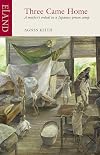
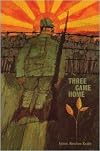
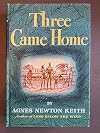
Three Came Home
by Agnes Newton Keith
On This Page
Description
When the Japanese swept through Borneo in 1942, Agnes Keith was captured with her two-year-old son. Even though keeping notes was a capital offence, she wrote a diary on the backs of labels and in the margins of old newspapers, which she buried in tins or sewed inside her sons home-made toys. Unlike many other narrators of camp life, Agnes Keith gives an honest and rounded description of her Japanese captors. The camp commander, Colonel Suga, was responsible for a forced march which killed show more all but three out of 2,970 prisoners; yet he regularly took children for joy-rides in his car, stuffing them with sweets, and sent them back to camp with armfuls of flowers from his garden. show lessTags
Recommendations


























Member Reviews
Agnes Newton Keith is what you would call "plucky." She is a straight shooter even in the presense of pain and suffering. As prisoners of war from January 19th, 1942 to September 11th, 1945 Keith, her husband Harry, and their infant son George are held captive by the Japanese on the island North Borneo. Because of Keith's reputation as a writer (previously publishing a book called Land Below the Wind) Keith is commissioned by Japanese Commander Major Suga to write "The Life and Times of an Internee" as proof his prisoners did not suffer in captivity. He wanted to convey actual happiness. Keith writes an account for Major Suga but at the same time she needs to tell her truth. Three Came Home is her written-in-secret journal of nearly show more three years as a prisoner. It documents not only her survival but her determination to be a good mother to George and a good wife to Henry. show less
When the Second World War broke out in the East, the author was a popular author, living a privileged colonial life in Borneo, with her civil servant husband and toddler son. Refusing opportunities to escape back to the USA, she found herself in a series of Japanese camps with other women and children . Ms Keith relays everyday life for them - ever-decreasing rations, only made tolerable by smuggling - violent punishments, disease and the fear for their menfolk in an adjoining camp, as the Japanese seek to get rid of their 'proudery and arrogance.'
Yet despite the war, there were instances of extreme kindness, as some Japanese smuggled food to their captives, such that Ms Keith was motivated to give a written testimonial to one guard to show more protect him against the Allies.
Wonderfully enlivened by little b/w line drawings by the author,
Great read that brings the War to life. show less
Yet despite the war, there were instances of extreme kindness, as some Japanese smuggled food to their captives, such that Ms Keith was motivated to give a written testimonial to one guard to show more protect him against the Allies.
Wonderfully enlivened by little b/w line drawings by the author,
Great read that brings the War to life. show less
A very worthy story, made tolerable by the author's matter-of-fact rendition. Occasionally soaring.
Life in a Japanese prison camp in Borneo. Humanity and inhumanity of war. Author writes fairly about everyone, including the Japanese guards. Astonishing and touching book, and one I'm surprised hasn't been heard of more.
4695. Three Came Home by Agnes Newton Keith (read 13 Apr 2010) This account of the author's time from May 1942 till Sept 11, 1945 in a Japanese camp on Borneo is very well written and while the account of the ordeal she and her son go through is tiring to read it admirably enhances the extremely poignant account of the liberation of her, her husband, and son on Sept 11, 1945, which account caused me to say that I must give this book the supreme accolade of five stars This has to be one of the best accounts of time spent as a prisoner of the Japanese I have ever read. Now I will have to read its prequel, Land Below the Wind!
A FIRST HAND ACCOUNT OF WESTERNERS LIVING UNDER JAPANESE RULE IN A JAPANESE PRISON CAMP
When the Second World War broke out in the East, the author was a popular author, living a privileged colonial life in Borneo, with her civil servant husband and toddler son. Refusing opportunities to escape back to the USA, she found herself in a series of Japanese camps with other women and children . Ms Keith relays everyday life for them - ever-decreasing rations, only made tolerable by smuggling - violent punishments, disease and the fear for their menfolk in an adjoining camp, as the Japanese seek to get rid of their 'proudery and arrogance.' Yet despite the war, there were instances of extreme kindness, as some Japanese smuggled food to their show more captives, such that Ms Keith was motivated to give a written testimonial to one guard to protect him against the Allies. Wonderfully enlivened by little b/w line drawings by the author,
Great read that brings the War to life.
I ordered this excellent book having seen the movie version, first as a child approximately 60 years ago (in a theater) and then in the last year on Turner Classic Movies. It tells the story of one family's, and their friends' and associates', resistance to the terrors of captivity inflicted upon them by a conquering, invading army. Those terrors included starvation, beatings, and the arbitrary use of force that only could exist in a slave and master relationship. And yes, it is the story of human endurance under horrific circumstances.
I read this book as a young woman. It was one of my dad's books and we hauled it (and boxes and boxes of others) all over the country from move to move. Then somewhere along the way it disappeared. I ordered this one, As I opened the box I let out a gasp! I was holding a piece of my past...brought tears to my eyes. I wondered if it was MY book? It's in really good condition. Excellent read. History, but not dry. The movie is great too. Claudette Colbert does a great job.
It is a fantastic realistic book about being POW's in a Japanese prison camp. Agnes Keith for various reasons was able to save her life and the life of son.
She was actually able to meet her husband and three of them led a normal life after WWII. show less
When the Second World War broke out in the East, the author was a popular author, living a privileged colonial life in Borneo, with her civil servant husband and toddler son. Refusing opportunities to escape back to the USA, she found herself in a series of Japanese camps with other women and children . Ms Keith relays everyday life for them - ever-decreasing rations, only made tolerable by smuggling - violent punishments, disease and the fear for their menfolk in an adjoining camp, as the Japanese seek to get rid of their 'proudery and arrogance.' Yet despite the war, there were instances of extreme kindness, as some Japanese smuggled food to their show more captives, such that Ms Keith was motivated to give a written testimonial to one guard to protect him against the Allies. Wonderfully enlivened by little b/w line drawings by the author,
Great read that brings the War to life.
I ordered this excellent book having seen the movie version, first as a child approximately 60 years ago (in a theater) and then in the last year on Turner Classic Movies. It tells the story of one family's, and their friends' and associates', resistance to the terrors of captivity inflicted upon them by a conquering, invading army. Those terrors included starvation, beatings, and the arbitrary use of force that only could exist in a slave and master relationship. And yes, it is the story of human endurance under horrific circumstances.
I read this book as a young woman. It was one of my dad's books and we hauled it (and boxes and boxes of others) all over the country from move to move. Then somewhere along the way it disappeared. I ordered this one, As I opened the box I let out a gasp! I was holding a piece of my past...brought tears to my eyes. I wondered if it was MY book? It's in really good condition. Excellent read. History, but not dry. The movie is great too. Claudette Colbert does a great job.
It is a fantastic realistic book about being POW's in a Japanese prison camp. Agnes Keith for various reasons was able to save her life and the life of son.
She was actually able to meet her husband and three of them led a normal life after WWII. show less
Story of a family that survived being prisoners of war under the japanese.
Members
- Recently Added By
Lists

Best Biographies, Autobiographies and Memoirs
465 works; 160 members
Author Information

9+ Works 712 Members
Some Editions
Awards and Honors
Distinctions
Series
Belongs to Publisher Series
Work Relationships
Has the adaptation
Common Knowledge
- Original publication date
- 1947-09-03
- People/Characters
- Agnes Keith; Harry Keith; George Keith
- Important places
- Borneo; North Borneo; Sabah, Malaysia
- Important events
- World War II
- Related movies
- Three Came Home (1950 | IMDb)
- Dedication
- For My Husband - for Every Reason
- First words
- We had always wanted a son.
- Quotations
- Food fastidiousness had disappeared. Prisoners pushed flowers, grass, weeds, dogs, cats, rats, snakes, grasshoppers and snails down their gullets, where desperation plus the force of gravity carried it to their stomachs, the... (show all) stomachs hurried it on to intestines, which hurried it on to the next place. The following day, we, as gardeners, passed it back to the potato beds. Somewhere along the yards of irritated mucous membrane we received the impression that we had had a meal.
These men (the Australian liberators) came into Kuching with blood on their hands, from heavy fighting in Borneo and the Celebes. They were soldiers known for their toughness, taking no prisoners, observing no laws; yet neve... (show all)r did we hear from them a word of impatience or anger, a rough speech or a curse, or see an unkind or unpleasant action. To us who were weak and were helpless they were gentle as angels from Heaven. We became proud then of men, as we had for years been ashamed. We wept for their kindness, as we had not wept for abuse. - Last words
- (Click to show. Warning: May contain spoilers.)God has been good.
Classifications
- Genres
- Biography & Memoir, Nonfiction, General Nonfiction, History
- DDC/MDS
- 940.547252 — History & geography History of Europe History of Europe 1918- Military history of World War II Prisoners of war; medical and social services Prisoner-of-War Camps
- LCC
- D805 .B6 .K4 — History of Europe, Asia, Africa and Oceania History (General) World War II (1939-1945)
- BISAC
Statistics
- Members
- 430
- Popularity
- 71,703
- Reviews
- 9
- Rating
- (4.31)
- Languages
- English, Malay
- Media
- Paper
- ISBNs
- 14
- ASINs
- 22