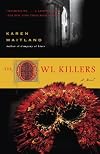
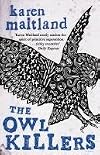
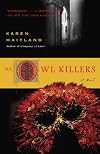
The Owl Killers
by Karen Maitland
On This Page
Description
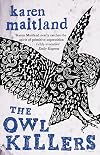
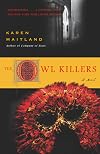
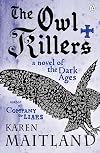
England, 1321. The tiny village of Ulewic teeters between survival and destruction, faith and doubt, God and demons. Shadowing the villagers' lives are men cloaked in masks and secrecy, ruling with violence, intimidation, and terrifying fiery rites: the Owl Masters. When the daughter of Ulewic's most powerful man is accepted into a beguinage, battle lines are drawn.Tags
Recommendations













Member Reviews
It is 1321 and England is in the grip of a famine. A group of women, beguines from Flanders and a few locals, have established their place of refuge outside the village of Ulewic in rural Norfolk, and tensions with the villagers increase after they defy the local priest in a number of disputes. With their prayers not being answered, the population turns to some old, pagan, beliefs but they only manage to unleash a demon.
Karen Maitland has already established herself as one of my favourite authors with Company of Liars and The Falcons of Fire and Ice with her masterful art of storytelling and atmosphere, as well as tackling topical ideas cloaked in the disguise of a historical novel. As in Falcons, Karen Maitland pitches the doctrine of show more the established Church against other forms of belief, in this case the old pagan traditions, the simpler faith of the beguines and the villagers’ superstitions. It is mysterious and filled with a dark sense of foreboding, suspenseful and terrifying in equal measures. The voices of the five narrators are discrete and distinct, entirely believable throughout, and you feel for each of them in turn. The whole book is brimming with evocative and atmospheric details that bring home the harsh realities of living in the 14th century, with a clear sense of the hardship, social order and mixture of religious faith and superstitions, yet it also manages to explore notions of free will and being different that still have resonance today. Highly recommended. show less
Karen Maitland has already established herself as one of my favourite authors with Company of Liars and The Falcons of Fire and Ice with her masterful art of storytelling and atmosphere, as well as tackling topical ideas cloaked in the disguise of a historical novel. As in Falcons, Karen Maitland pitches the doctrine of show more the established Church against other forms of belief, in this case the old pagan traditions, the simpler faith of the beguines and the villagers’ superstitions. It is mysterious and filled with a dark sense of foreboding, suspenseful and terrifying in equal measures. The voices of the five narrators are discrete and distinct, entirely believable throughout, and you feel for each of them in turn. The whole book is brimming with evocative and atmospheric details that bring home the harsh realities of living in the 14th century, with a clear sense of the hardship, social order and mixture of religious faith and superstitions, yet it also manages to explore notions of free will and being different that still have resonance today. Highly recommended. show less
(another stay up to midnight to finish book!). There was a sense of dread threaded throughout this story. I was worried this novel would be just one long, hopeless tragedy. I'm very happy that was not to be the case.
It's hard to tell which I like better, The Company of Liars or this (I'm leaning towards this one). They are both five starers, but each brings something different to the table.
I think this is more of an atmospheric novel, and it certainly delivers on that account. I felt completely immersed into the fourteenth-century East-Anglian fenlands. The action doesn't really get going until you're about 60% into the book. That's something I don't mind - when it's well written - and that's certainly the case here. But I know some show more people may be put off by that. Even though things didn't get hopping until later, the story still held me in a strong grip of suspense. I just knew something horrible and sinister was brewing up.
This book also has a few more elements of fantasy/mysticism. While I usually don't like that in my historical fiction, the way it's written here, it just works. I think it really complements and ads something to the whole story, rather than being a distraction or seeming to be tacked on as an afterthought. Of course a big party of this novel is about examining the conflict between Christianity and the early pagan beliefs of the people. So it makes sense that we are experiencing what the people themselves see and experience.
This book addresses a fascinating moment in the history of the middle ages. Not that the town, people and events described actually happened, but the environmental and resulting social upheaval going on at that time was certainly real enough. And it was fascinating to learn of the lady-religious, female-collective movement of the Beguinage Communities during these times.
I'm starting to think the most moving historical fiction novels are those about fictional people living thru real times/events, rather than those about real people.
(p.s. - quite an excellent chapter of historical notes, and glossary!) show less
It's hard to tell which I like better, The Company of Liars or this (I'm leaning towards this one). They are both five starers, but each brings something different to the table.
I think this is more of an atmospheric novel, and it certainly delivers on that account. I felt completely immersed into the fourteenth-century East-Anglian fenlands. The action doesn't really get going until you're about 60% into the book. That's something I don't mind - when it's well written - and that's certainly the case here. But I know some show more people may be put off by that. Even though things didn't get hopping until later, the story still held me in a strong grip of suspense. I just knew something horrible and sinister was brewing up.
This book also has a few more elements of fantasy/mysticism. While I usually don't like that in my historical fiction, the way it's written here, it just works. I think it really complements and ads something to the whole story, rather than being a distraction or seeming to be tacked on as an afterthought. Of course a big party of this novel is about examining the conflict between Christianity and the early pagan beliefs of the people. So it makes sense that we are experiencing what the people themselves see and experience.
This book addresses a fascinating moment in the history of the middle ages. Not that the town, people and events described actually happened, but the environmental and resulting social upheaval going on at that time was certainly real enough. And it was fascinating to learn of the lady-religious, female-collective movement of the Beguinage Communities during these times.
I'm starting to think the most moving historical fiction novels are those about fictional people living thru real times/events, rather than those about real people.
(p.s. - quite an excellent chapter of historical notes, and glossary!) show less
After reading and enjoying Maitland’s Company of Liars I was excited to read her next book the Owl Killers, and I was not disappointed. In fact I think this book was even more of a compelling read than the first.
Set in the 1320’s in England, a group of Christian women known as beguines come to the small (fictional) village of Ulewic from Burges to establish a beguinage (a self-sustaining community of women). They are met with suspicion and are immediately targeted as the root of all evil (floods, famine, sickness and death) by the Owl Men, a group of men who rule the village through paganism and fear.
The story is told through 5 different voices which I did not have a problem following. In fact I thought it added to the story showing show more different points of view and enhanced character development. I know other reviewers did not like this technique but I did not have a problem with it.
Maitland is a master of this era and it is fascinating to learn so much about everyday life at this time (the Church’s power, what people ate, what types of herbs were used for medicinal purposes etc). She does not let her historical knowledge of this time period overwhelm her overall story though and does an excellent job of keeping the reader engaged and wondering what will happen next. There are a couple of loose ends she leaves dangling (what happened to Servant Martha, the leader of the beguines, and Father Ulfrid, although we can guess he where is fate will lay), but these few details do not deter from the enjoyment of the story.
I also liked the touch towards the end of the book when she refers to the main character in the Company of Liars (set 20 years later) who will come along and find a book left by one of beguines. show less
Set in the 1320’s in England, a group of Christian women known as beguines come to the small (fictional) village of Ulewic from Burges to establish a beguinage (a self-sustaining community of women). They are met with suspicion and are immediately targeted as the root of all evil (floods, famine, sickness and death) by the Owl Men, a group of men who rule the village through paganism and fear.
The story is told through 5 different voices which I did not have a problem following. In fact I thought it added to the story showing show more different points of view and enhanced character development. I know other reviewers did not like this technique but I did not have a problem with it.
Maitland is a master of this era and it is fascinating to learn so much about everyday life at this time (the Church’s power, what people ate, what types of herbs were used for medicinal purposes etc). She does not let her historical knowledge of this time period overwhelm her overall story though and does an excellent job of keeping the reader engaged and wondering what will happen next. There are a couple of loose ends she leaves dangling (what happened to Servant Martha, the leader of the beguines, and Father Ulfrid, although we can guess he where is fate will lay), but these few details do not deter from the enjoyment of the story.
I also liked the touch towards the end of the book when she refers to the main character in the Company of Liars (set 20 years later) who will come along and find a book left by one of beguines. show less
Set in 1321, this book really exemplifies the old adage about life being "nasty, brutish and short" (I just looked it up and it was coined by Thomas Hobbes in 1651 who apparently wrote how, without central government, there would be no culture or society and people would be at war with each other). The village of Ulewic on the east coast of England is beset by crop failures compounded by serious flooding, cattle disease, pig disease, sicknesses affecting the human population, inbreeding - anyone who really "belongs" has webbed fingers - child abuse, the impossibility of paying the tithe (a tenth of a household's supposed wealth in either coin or goods) to the Church and also the burden of having to pay the tyrannical local lord. On top show more of all that, there is a nasty protection racket run by men who call themselves the Owl Masters. Their identities are unknown as they dress up in owl masks, but they are able to publicly murder anyone who steps out of line - even for having sex outside marriage, for example - and get away with it. Meanwhile the local priest is too scared to do anything and more worried about his feud with the bishop, which stems from his being caught having illicit sex when he was stationed in Norwich: he has been sent to this benighted coastal village as a punishment.
Into this environment has come a group of women who draw the ire and jealousy of the whole community. The women are beguines, a Medieval lay order which was extensive on the continent but never found a footing in what later became the United Kingdom. The women live a life of useful labour, and use their self-generated wealth to nurse the sick and feed the local poor. Unfortunately, this breeds resentment rather than gratitude, and unfounded accusations that they are whores or witches; ironic in view of the beguines' oath of chastity and their Christian beliefs. Their being 'foreigners' into the bargain makes matters even worse. But at that time women who were living a self supporting communal life without having to depend on men were the target of suspicion and even violence. And so it proves here, especially when the leader of the community, Servant Martha, feels compelled to intercede for a couple of unfortunate local girls.
This was an interesting although very dark read with an extremely brutal peasant lifestyle being vividly invoked. I did know about the beguines, though had not heard before that there was slight evidence that they might have tried to found a community in England. The vicious retalliation unleashed against them is all too convincing. I did wonder though if people at that time really did not know that a stroke was a natural ailment and not something inflicted by devils. It was also a bit sad that what seemed to be survivals of pagan beliefs had been retained only in the negative view of the Church - so that the mother goddess had been translated into Black Anu, a witch figure that lived in water and dragged men down to their deaths, for example. The original pagan beliefs would not have had such a negative view of women or treated them so badly as this distorted medieval notion, so ironically the pagan men in this novel seem to treat women even worse than the Church.
The story switches viewpoint between a number of characters. One in particular changes from initially sympathetic to out and out deranged. I did find the ending rather abrupt and disconnected as if a section might have been missing, though I more or less gathered what had occurred off stage. I did wonder why, given the tolerance of the beguines, the leper character had been abandoned. The twist about the identity of the person who attacked the young girl in the woods and what he had done to her previouslywas extremely nasty, but given his portrayal earlier I wasn't sure this man was physically fit enough to have managed to run round in woods at night. The story is also rather ambiguous, given that several characters seem to see apparently supernatural entities, as to who really did attack her. Partly for these reasons and partly because the unrelenting descriptions of diarrhoea, rot and filth were pretty wearing at times, I would rate this at 3 stars. show less
Into this environment has come a group of women who draw the ire and jealousy of the whole community. The women are beguines, a Medieval lay order which was extensive on the continent but never found a footing in what later became the United Kingdom. The women live a life of useful labour, and use their self-generated wealth to nurse the sick and feed the local poor. Unfortunately, this breeds resentment rather than gratitude, and unfounded accusations that they are whores or witches; ironic in view of the beguines' oath of chastity and their Christian beliefs. Their being 'foreigners' into the bargain makes matters even worse. But at that time women who were living a self supporting communal life without having to depend on men were the target of suspicion and even violence. And so it proves here, especially when the leader of the community, Servant Martha, feels compelled to intercede for a couple of unfortunate local girls.
This was an interesting although very dark read with an extremely brutal peasant lifestyle being vividly invoked. I did know about the beguines, though had not heard before that there was slight evidence that they might have tried to found a community in England. The vicious retalliation unleashed against them is all too convincing. I did wonder though if people at that time really did not know that a stroke was a natural ailment and not something inflicted by devils. It was also a bit sad that what seemed to be survivals of pagan beliefs had been retained only in the negative view of the Church - so that the mother goddess had been translated into Black Anu, a witch figure that lived in water and dragged men down to their deaths, for example. The original pagan beliefs would not have had such a negative view of women or treated them so badly as this distorted medieval notion, so ironically the pagan men in this novel seem to treat women even worse than the Church.
The story switches viewpoint between a number of characters. One in particular changes from initially sympathetic to out and out deranged. I did find the ending rather abrupt and disconnected as if a section might have been missing, though I more or less gathered what had occurred off stage. I did wonder why, given the tolerance of the beguines, the leper character had been abandoned. The twist about the identity of the person who attacked the young girl in the woods and what he had done to her previously
Set in the English village of Ulewic (fictional, but placed somewhere near Norwich) in 1321-22, The Owl Killers is the story of a village fighting against forces both known and unknown. At the story’s center is the town’s beguinage, a community of women originally from Bruges who came to England to lead lives independent of marriage or the convent. When the town suffers from flood and plague, and the women are unaffected, the people in the town start to suspect them of harboring a holy relic. Meanwhile, the village is controlled by a group of men called the Owl Masters and haunted by the specter of the Owlman, who delivers nothing but death and destruction to the places and people he visits.
The story is narrated by a number of show more characters, including the beguinage’s leader, Servant Martha; the angry and bitter beguine named Beatrice; the town’s self-righteous priest, Father Ulfrid; Osmanna, daughter of the lord of the manor who is sheltered by the beguines; and one of the village children. The novel contains a curious and intriguing combination of pagan belief and Christianity, witchcraft and superstition.
I don’t normally read books with supernatural themes, but The Owl Killers grabbed me from page one and refused to let me go. One of my favorite things about this book is the characters; each narrator has their own strong, unique voice (my favorite was the sensible, practical Servant Martha). Maitland shows the middle ages as they really were, and she does so perfectly. Maitland delivers the symbolism a little heavy-handedly (of the “a candle blows out and someone dies” variety), but I nevertheless enjoyed this novel. Read it, and you’ll never feel the same way about owls or men in masks again. show less
The story is narrated by a number of show more characters, including the beguinage’s leader, Servant Martha; the angry and bitter beguine named Beatrice; the town’s self-righteous priest, Father Ulfrid; Osmanna, daughter of the lord of the manor who is sheltered by the beguines; and one of the village children. The novel contains a curious and intriguing combination of pagan belief and Christianity, witchcraft and superstition.
I don’t normally read books with supernatural themes, but The Owl Killers grabbed me from page one and refused to let me go. One of my favorite things about this book is the characters; each narrator has their own strong, unique voice (my favorite was the sensible, practical Servant Martha). Maitland shows the middle ages as they really were, and she does so perfectly. Maitland delivers the symbolism a little heavy-handedly (of the “a candle blows out and someone dies” variety), but I nevertheless enjoyed this novel. Read it, and you’ll never feel the same way about owls or men in masks again. show less
I loved Company of Liars, Karen Maitland's previous book about the Middle Ages. This one just didn't hook me. I found the characters almost entirely unsympathetic or unlikable, and the setting incredibly bleak. For me that made it difficult to get through. That said, Maitland does have an eye for the Middle Ages and her use of multiple narrators is a nice touch. It's probably worth a read, but not my cup of tea. Company of Liars is a far better book.
This is the second Medieval historical novel I have read by this author. In a number of places, it feels more like fantasy or horror, rather than historical fiction, as there are unexplained supernatural events and it almost feels timeless, there being very few references to events in the outside world, other than generically. One of the very few exceptions is an anachronism, a mention of the notorious alleged way in which King Edward II was murdered in 1328 - but the novel is set in 1321-2. The author describes very well the sights, atmosphere and, in particular, the smells, of a Medieval village. Almost all the villagers are very unsympathetic characters; in the first half, the village priest was fairly sympathetic, showing concern show more for his poor parishioners against their oppressive masters, but then turning to the bad in the second half, albeit arguably under almost intolerable pressure. The beguines were an interesting movement, of which I had not previously heard, much less well known that the Cathars, for example. show less
Members
- Recently Added By
Lists

Animals in the Title
498 works; 11 members

ALA The Reading List
490 works; 28 members
Shirley Jackson Award Winners and Shortlist 2007-2020
77 works; 6 members
Author Information

16+ Works 3,705 Members
Awards and Honors
Awards
Distinctions
Common Knowledge
- Canonical title
- The Owl Killers
- Original publication date
- 2009
- People/Characters
- Servant Martha; Agatha/Osmanna; Beatrice; Father Ulfrid; Pisspuddle; Healing Martha
- Important places
- Ulewic, England, UK; England, UK
- Epigraph
- Tell proud Jove,
Between his power and thine there is no odds.
'Twas only fear first in the world made gods. - Ben Jonson, English dramatist, Sejanus (1603) - First words
- Giles knew they'd come for him, sooner or later.
- Last words
- (Click to show. Warning: May contain spoilers.)Fiercely, he dragged himself on, then turned, suddenly desperate for one last look at her, but the owl had vanished.
- Canonical DDC/MDS
- 823.92
- Canonical LCC
- PR6113.A35
Classifications
Statistics
- Members
- 705
- Popularity
- 40,476
- Reviews
- 33
- Rating
- (3.78)
- Languages
- 5 — Dutch, English, French, German, Italian
- Media
- Paper, Audiobook, Ebook
- ISBNs
- 17
- ASINs
- 6