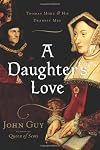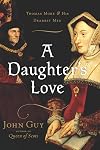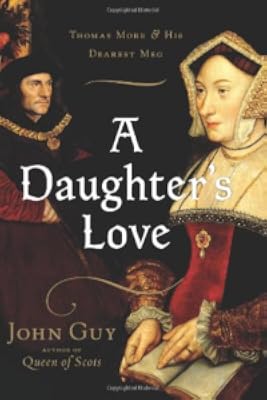
A Daughter's Love: Thomas More and His Dearest Meg
by John Guy
On This Page
Description
The Whitbread Award-winning author of Queen of Scots presents a "brilliantly observed" dual biography of Sir Thomas More and his daughter ( The New York Times ). Sir Thomas More's life is well known: his opposition to Henry VIII's marriage to Anne Boleyn, his arrest for treason, his execution and martyrdom. Yet a major figure in his life-his beloved daughter Margaret-has been largely airbrushed out of the story. Margaret was her father's closest confidant and played a critical role in show more safeguarding his intellectual legacy. In A Daughter's Love, John Guy restores her to her rightful place in Tudor history. Always her father's favorite child, Margaret was such an accomplished scholar by age eighteen that her work earned praise from Erasmus of Rotterdam. She remained devoted to her father after her marriage-and paid the price in estrangement from her husband. When More was thrown into the Tower of London, Margaret collaborated with him on his most famous letters from prison, smuggled them out at great personal risk, and even rescued his head after his execution. Drawing on original sources that have been ignored by generations of historians, Guy creates a dramatic new portrait of both Thomas More and the daughter whose devotion secured his place in history. show lessTags
Recommendations


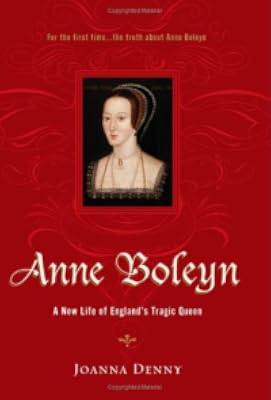
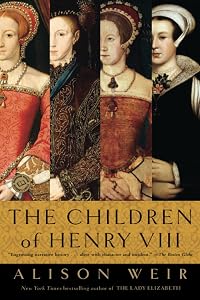
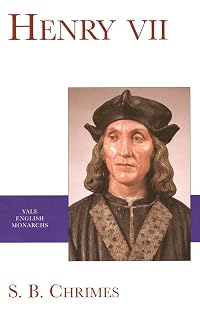

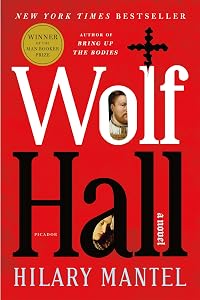



Member Recommendations
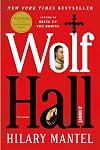
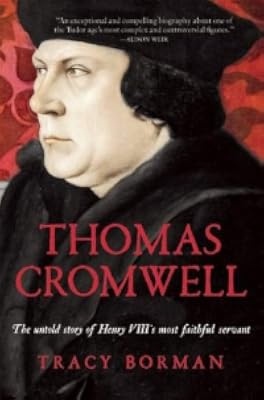
Limelite Same story from Thomas Cromwell's p.o.v.
Member Reviews
Even monsters have daughters who love them. This certainly knocked More off his pedestal for me. I can't blame the king for being a trifle annoyed. All the high flown idealism and intellectual ability was squandered on a grasping politician. Well written and researched biography of a highly flawed person.
This is a very readable biographical account in tandem of Sir Thomas More (author, scholar, statesman, martyr) and his eldest daughter, Margaret. While Thomas's story is very well known, the author shows that Meg herself was a philosopher and writer in her own right. There is plenty of primary source material to illustrate this; I am often reminded of Stephen Greenblatt's observation that it is astonishing to what extent this society valued contracts and writing things down in general.
Reading this today, it is sad and unfortunate that a first-class mind like Margaret's was prevented from fully participating in the intellectual world of her day ... but it's very in keeping with how we understand the culture of 16th century England. What show more seems absolutely unfathomable to me is how she married a guy who seemed like such a nasty little toad from the get-go, even with the realization that marriage at the time was viewed as more of a contact-based alliance system. Within this framework, she still seemed to get shafted, especially when compared to the more amenable matches her sisters and brother ended up with.
The climax of the story is Thomas's refusal to endorse the king's break with the Catholic church, and his subsequent imprisonment and beheading. During this time, it was Margaret who was his spiritual and intellectual companion, supporting him in his refusal to take the oath proclaiming Henry the head of the church in England. This book does a wonderful job of explaining the progression of events while at the same time presenting the emotional family story of the Mores. The account of his final days was especially harrowing. If my father was in the Tower, I'd cave in a minute, take the oath Dad! Take the oath, whatever! That is why no one in my family is ever going to achieve sainthood. show less
Reading this today, it is sad and unfortunate that a first-class mind like Margaret's was prevented from fully participating in the intellectual world of her day ... but it's very in keeping with how we understand the culture of 16th century England. What show more seems absolutely unfathomable to me is how she married a guy who seemed like such a nasty little toad from the get-go, even with the realization that marriage at the time was viewed as more of a contact-based alliance system. Within this framework, she still seemed to get shafted, especially when compared to the more amenable matches her sisters and brother ended up with.
The climax of the story is Thomas's refusal to endorse the king's break with the Catholic church, and his subsequent imprisonment and beheading. During this time, it was Margaret who was his spiritual and intellectual companion, supporting him in his refusal to take the oath proclaiming Henry the head of the church in England. This book does a wonderful job of explaining the progression of events while at the same time presenting the emotional family story of the Mores. The account of his final days was especially harrowing. If my father was in the Tower, I'd cave in a minute, take the oath Dad! Take the oath, whatever! That is why no one in my family is ever going to achieve sainthood. show less
This was a very readable biography of Sir Thomas More and, incidentally, of his daughter, Margaret Roper. I say incidentally, because she was treated with more depth than other family members and other background characters, but nto with nearly the same depth as More, the author of Utopia.
I really liked Guy's More. He was witty, jolly, fun-loving, socially conscious, and a loving family man. However, after I'd finished the book, and had a bit of time to digest what I'd read, I realized that he was the same person who condemned many people to horrible deaths as heretics. I couldn't help but think that his own fate at the hands of Henry VIII was a perfect example of poetic justice.
I really did find this a fascinating read. More was show more definitely an interesting man who was a deep thinker and very highly principled, although holding too tightly to those same principles led him to commit terrible acts, and, ulitmately, was his undoing. show less
I really liked Guy's More. He was witty, jolly, fun-loving, socially conscious, and a loving family man. However, after I'd finished the book, and had a bit of time to digest what I'd read, I realized that he was the same person who condemned many people to horrible deaths as heretics. I couldn't help but think that his own fate at the hands of Henry VIII was a perfect example of poetic justice.
I really did find this a fascinating read. More was show more definitely an interesting man who was a deep thinker and very highly principled, although holding too tightly to those same principles led him to commit terrible acts, and, ulitmately, was his undoing. show less
I enjoyed this book - especially after reading Wolf Hall (although that is fiction) as it gave a different perspective on Thomas More. I guess I need to see A Man for All Seasons...
Ratings
Members
- Recently Added By
Lists

Dual Biographies
38 works; 1 member
Author Information

55+ Works 3,885 Members
Common Knowledge
- People/Characters
- Thomas More; Margaret Roper (née More)
- Important places
- England, UK
Classifications
- Genres
- History, Nonfiction, Biography & Memoir, General Nonfiction, Religion & Spirituality
- DDC/MDS
- 942.05 — History & geography History of Europe England and Wales England 1485-1603, Tudors
- LCC
- DA335 .R6 .G89 — History of Europe, Asia, Africa and Oceania Great Britain History of Great Britain England History By period Modern, 1485- Tudors, 1485-1603
- BISAC
Statistics
- Members
- 218
- Popularity
- 149,612
- Reviews
- 4
- Rating
- (3.86)
- Languages
- English
- Media
- Paper, Ebook
- ISBNs
- 5
- UPCs
- 1
- ASINs
- 2