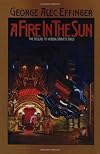
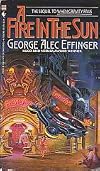
On This Page
Description
In a world filled with so many puppets, strings tend to get tangled. In this follow-up to the groundbreaking cyberpunk novel When Gravity Fails, the Budayeen is still a very dangerous place, a high-tech Arabian ghetto where power and murder go hand in hand. Marid Audran used to be a low-level street hustler, relying on his wits and independence. Now he's a cop planted in the force by Friedlander Bey, the powerful "godfather" of the Budayeen. Marid is supposed to simply be Bey's envoy into show more the police, but as a series of grisly murders piles up-children, prostitutes, a fellow officer-he is drawn deeper and deeper into the city's chaos. Would Marid give up all his newfound money and power to get out of this mess? Absolutely. If only he could. But answers are never that easy and choices are never completely one's own in the Budayeen. show lessTags
Recommendations




































Member Recommendations
Member Reviews
The techno and social cyberpunk element is in full force in this novel, whether it comes from grifting, thugging, or betrayals. The second novel in the trilogy feels almost like a day/night alteration in the MC after he's left open to so many enormous mods to his brain and spinal column, in how he has not only come to grips with and uses all the tools now in his toolbox despite his fear.
But this isn't only a novel of coming to grips with what is now himself, altered. It's also a novel about coming to grips with his family, his co-workers, of getting justice even though he has become an enforcer for a Muslim kingpin, of coming to grips with his old compatriots who had shunned him after he did what he had to do in the previous novel.
The show more world set around 200 years in the future is gloriously detailed and fascinating, while still remaining the same old shithole of Noir storytelling... in other words, it's still very much a cyberpunk tale, but the focus is more on power and dominance and just trying to eke out a niche in his world of steadily decreasing choices. Drug abuse helps, some, but he finds out that squashing his enemies is much more satisfying.
And more than anything, these are absolutely character novels. Marid is fascinating and complex and I can't help but feel sorry for him; he's a tragic figure that's modded to become a perfect tool... the perfect opposite of what he'd always wanted for himself.
And then the reveals are pretty sweet and tragic, too, because now he has even less ability to break free. I can't wait to see how the third and last novel plays out. This is very readable and steeped in a very non-western attitude, which only adds a lot of spice to the cyberpunk. :) show less
But this isn't only a novel of coming to grips with what is now himself, altered. It's also a novel about coming to grips with his family, his co-workers, of getting justice even though he has become an enforcer for a Muslim kingpin, of coming to grips with his old compatriots who had shunned him after he did what he had to do in the previous novel.
The show more world set around 200 years in the future is gloriously detailed and fascinating, while still remaining the same old shithole of Noir storytelling... in other words, it's still very much a cyberpunk tale, but the focus is more on power and dominance and just trying to eke out a niche in his world of steadily decreasing choices. Drug abuse helps, some, but he finds out that squashing his enemies is much more satisfying.
And more than anything, these are absolutely character novels. Marid is fascinating and complex and I can't help but feel sorry for him; he's a tragic figure that's modded to become a perfect tool... the perfect opposite of what he'd always wanted for himself.
And then the reveals are pretty sweet and tragic, too, because now he has even less ability to break free. I can't wait to see how the third and last novel plays out. This is very readable and steeped in a very non-western attitude, which only adds a lot of spice to the cyberpunk. :) show less
My reactions on reading this book in 1989.
It had a black, grim humor about it that glimmered on and off like a knife blade in an alley. I liked having Mârid Audran back as a policeman. He moves from the uncompromising, somewhat romantic and naive, character of When Gravity Fails, a character of fierce independence, to an owned creature: property of Friedlander Bey and his conscience. In the process, he finds, refreshingly, a reaffirmation of his Islamic faith, some of his past, and a tentative relationship with his mother. I liked Audran establishing his friendships again with the characters who abandoned him in When Gravity Fails.
Yasmin, Audran's sex-changed lover, was back as was the stupid (comically so -- some of the scenes with show more him serve no function but humor) as was Fuad Il-Manhous; the ferocious, emotional bar tender Chiriga; the perverse, but blackly funny homosexual (and lover of young boys), Saied the Half-Hajiz; the sinister, possibly mad and oddly devout Friedlander Bey, Audran's patron.
There were new, interesting characters: Shaknahyi the policeman and his oddly devout, stripper wife Indihar (who is so conservative she enjoyed being circumcised); the humorous, devoted, intelligent Slava Kumuzu; and the monstrous, perverted Abu Adil and his naively ambitous, sex-toy and personal assistant Umar Abdul-Qawy.
One of the delightful things about this novel is Effinger's further exploration of his mind-programming moddies showing everything from religious counseling moddies, moddies to do drudge work or feel stupid. Abu Adil has a truly sick propensity for moddies recorded off terminally ill people and mind-rape moddies recorded off tortured people.
More sleaze is here -- slavery, child prostitution, torture -- as are references to the Balkanized world of the future as well as Abu Adil and Friedlander Bey's roles as power brokers.
I, as in the first book, liked the Arab culture and its idiosyncracies. It is there, however, the book falls down. The novel is a tale of corruption, double-dealing, and power-broking. However, Effinger never really sets up the cultural, legal, and political rules of his world and that definately dulls the edge on a tale of corruption and mystery. Is Audran being corrupt in being on the police payroll as well as Freidlander Bey's? He is very open about it and gets little social sanction and no legal ones. Just how much influence do Adil and Bey have? Can they buy their way out of anything? If so, why does Adil fear the potential sanction of Islamic clergy? Is there something in Arabic culture that keeps Bey and Adil safe despite their lax security? Is there something in Arabic culture which stops Audran from killing Adil at novel's end? show less
It had a black, grim humor about it that glimmered on and off like a knife blade in an alley. I liked having Mârid Audran back as a policeman. He moves from the uncompromising, somewhat romantic and naive, character of When Gravity Fails, a character of fierce independence, to an owned creature: property of Friedlander Bey and his conscience. In the process, he finds, refreshingly, a reaffirmation of his Islamic faith, some of his past, and a tentative relationship with his mother. I liked Audran establishing his friendships again with the characters who abandoned him in When Gravity Fails.
Yasmin, Audran's sex-changed lover, was back as was the stupid (comically so -- some of the scenes with show more him serve no function but humor) as was Fuad Il-Manhous; the ferocious, emotional bar tender Chiriga; the perverse, but blackly funny homosexual (and lover of young boys), Saied the Half-Hajiz; the sinister, possibly mad and oddly devout Friedlander Bey, Audran's patron.
There were new, interesting characters: Shaknahyi the policeman and his oddly devout, stripper wife Indihar (who is so conservative she enjoyed being circumcised); the humorous, devoted, intelligent Slava Kumuzu; and the monstrous, perverted Abu Adil and his naively ambitous, sex-toy and personal assistant Umar Abdul-Qawy.
One of the delightful things about this novel is Effinger's further exploration of his mind-programming moddies showing everything from religious counseling moddies, moddies to do drudge work or feel stupid. Abu Adil has a truly sick propensity for moddies recorded off terminally ill people and mind-rape moddies recorded off tortured people.
More sleaze is here -- slavery, child prostitution, torture -- as are references to the Balkanized world of the future as well as Abu Adil and Friedlander Bey's roles as power brokers.
I, as in the first book, liked the Arab culture and its idiosyncracies. It is there, however, the book falls down. The novel is a tale of corruption, double-dealing, and power-broking. However, Effinger never really sets up the cultural, legal, and political rules of his world and that definately dulls the edge on a tale of corruption and mystery. Is Audran being corrupt in being on the police payroll as well as Freidlander Bey's? He is very open about it and gets little social sanction and no legal ones. Just how much influence do Adil and Bey have? Can they buy their way out of anything? If so, why does Adil fear the potential sanction of Islamic clergy? Is there something in Arabic culture that keeps Bey and Adil safe despite their lax security? Is there something in Arabic culture which stops Audran from killing Adil at novel's end? show less
The best cyberpunk that nobody knows. The drug and sex crazy Middle Eastern setting of the Buyadeen sets this apart from the usual chrome and black leather crowd, while the tech level is accurately 'like today, but a little bit different.' Book 2 of the Marid Audran trilogy follows our now neuro-enhanced protagonist as responsibility is forced on him, as well as a deadly secret about his employer and the system of governance he controls.
***
I reread this when Amazon had a deal on the whole series. This is a definite step down from When Gravity Fails. I could remember that book vividly, but this one had a vague "oh yeah, that's when that happens." While the scenes are good, the over all plot just doesn't make sense. There's some kind of show more covert war between the two major crime bosses of the city, but it turns out there's an overall alliance over a covert plan to share organs to favor underlings. Marid is at the mercy of hardened kills and walks out a few too many times for me to believe it. And as an underling in an organization and new moddy enthusiast, he's much less fun than the hustler of the first book. Still, I'm excited for to see how the series ends. show less
***
I reread this when Amazon had a deal on the whole series. This is a definite step down from When Gravity Fails. I could remember that book vividly, but this one had a vague "oh yeah, that's when that happens." While the scenes are good, the over all plot just doesn't make sense. There's some kind of show more covert war between the two major crime bosses of the city, but it turns out there's an overall alliance over a covert plan to share organs to favor underlings. Marid is at the mercy of hardened kills and walks out a few too many times for me to believe it. And as an underling in an organization and new moddy enthusiast, he's much less fun than the hustler of the first book. Still, I'm excited for to see how the series ends. show less
I found this just as good as the first. MC has become what he hates and remains a tool to be wielded by his patron. Threads and plots running deeper are coming to light, really curious to see what the trilogy finale has in store.
Marid begins to grow into his own in the second novel of Effinger's Marid Audran trilogy, and we learn more about the greater world, Arab and otherwise. This novel was less dark: bad things still happen, but Marid also gets to kick some ass. The plot involves a series of unsolved murders, child slavery, and the political struggle between Freidlander Bey and another powerful lord for control not only of the Budayeen but much of the world.
I was in love with the first volume of this series, When Gravity Fails. Not so much with the second. It reads as if written to a plot outline. The prose gets you from A to B to C as the author hits his plot twists. The characters seem flat as compared to book 1. The plot moves along but goes nowhere and ends at no particular place. It is a fun read and I only paid used price. At full price I would probably have felt cheated. I realize that doing a series is hard work as each volume must both stand on its own and advance the larger enterprise. To me this rates as a failure at this. Pity. The concept of a cyber noir future Arabia was neat and the initial drawing of characters and setting intriguing. Still I did just order the third volume show more so I have not yet abandoned hope. show less
This is a sequel to When Gravity Fails, which is a long-time favorite. The style is cyberpunk / noir / hard-boiled. The setting is a future Middle-East city (although actually it's based on the New Orleans French Quarter). The first-person protagonist is a street punk who's been picked out (for reasons unknown to him) by one of the local bosses for advancement. I like the book because of the Middle-Eastern cultural setting; I haven't come across a lot of SF&F done in such a setting. The way the culture is handled has the ring of accuracy, but I'm not from that part of the world so don't take my word for it. I also like that the protagonist is Muslim and his relationship with his religion changes throughout the series. I don't see a lot show more of SF&F books or detective books with this sort of treatment of religion.In this book, Effinger is more or less a subscriber of the Lois McMaster Bujold style of plot development, which could be summarized as "think of the worst thing that could happen to your character and then do that to him and see how he deals with it." Good solid entertainment for fans of the genres in question. show less
Members
- Recently Added By
Lists

Best Noir Fiction
160 works; 14 members

Best Cyberpunk
41 works; 7 members
Author Information

115+ Works 6,128 Members
Some Editions
Awards and Honors
Awards
Series

Belongs to Publisher Series
Présence du futur (516)
Work Relationships
Is contained in
Common Knowledge
- Original title
- A Fire in the Sun
- Original publication date
- 1989
- People/Characters
- Abu Adil; Marid Audran; Friedlander Bey; Fuad; Saied the Half-Hajj; Indihar (show all 7); Kmuzu
- Important places
- Budayeen
- Epigraph
- Children begin by loving their parents: after a time they judge them; rarely, if ever, do they forgive them. Oscar Wilde "The Picture of Dorian Gray"
- Dedication
- My grandfather, George Conrad Effinger, whom I never knew, was a police officer in the city of Cleveland during the Depression. He was killed in the line of duty. This book is dedicated to his memory, growing fainter now ea... (show all)ch year in the minds of those peole who did know him, except for his policeman's shield, Badge #374, hung with pride in a station house in Cleveland.
- First words
- We'd ridden for many days out the coast highway toward Mauretania, the part of Algeria where I'd been born.
- Quotations
- Marriage was something I thought happened only to other people, like fatal traffic accidents.
- Last words
- (Click to show. Warning: May contain spoilers.)"I should've let you kiss the ground good-bye, Audran, because you're never going to see the city again!"
- Blurbers
- Resnick, Mike; Card, Orson Scott; Silverberg, Robert; Martin, George R.R.; Lupoff, Richard A.
- Original language
- English
Classifications
Statistics
- Members
- 864
- Popularity
- 31,530
- Reviews
- 15
- Rating
- (3.93)
- Languages
- 6 — Czech, English, French, German, Italian, Spanish
- Media
- Paper, Audiobook, Ebook
- ISBNs
- 13
- ASINs
- 5