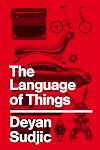
The Language of Things: Understanding the World of Desirable Objects
by Deyan Sudjic
On This Page
Description
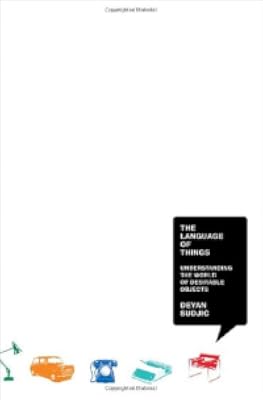
Sudjic charts our relationship--both innocent and knowing--with all things designed. From the opulent excesses of the catwalk to the playfulness of an Alessi jam jar, he shows how we can be manipulated and seduced by our possessions. With scintillating wit he addresses these questions and more, exploring the reasons why every designer yearns to put a personal stamp on a chair or an adjustable lamp, and where design ends and art begins.--From publisher description.Tags
Recommendations




Member Reviews
I am somewhat confused that a review quote on the back of ‘The Language of Things’ refers to it being part of a ‘backlash against mindless consumerism’. It didn’t strike me that way at all. This is no systematic critique of consumerism, rather a succinct analysis of consumer goods manufacture on the basis of various topics. I hadn’t previously read much analysis of design, so found this very interesting. It strikes me as pretty introductory and light on theory, but the wide use of illustrative examples makes it pretty compelling. In particular, I enjoyed the history of the anglepoise lamp. As one sits by my bedside, I read under the glow of an anglepoise lamp every night and this book made me aware of it as an object in a show more way I’ve never been before. It’s still basically a useful light source, but now I know it to be a design milestone too.
I also appreciated the discussion of the difference between art and design. Sudjic contends that the more useless the object, the closer it is to art and the further from design. He also notes that art always seems to carry a much higher monetary value to design, with important canvases fetching ten times the price of important furniture. I found the manner in which he expressed this theory especially interesting as a person who has studied economics. Sudjic talks of design having ‘utility’ while art does not. In economics, utility is a quasi-mystical concept that can never be absolute, only relative. It expresses preference not, as Sudjic seems to be saying, practical usefulness. In economic terms, the utility of art pieces, thus the justification for their high prices, includes the prestige of owning them, their visual appeal, and their investment value. Whereas Sudjic seems to be saying that a chair has greater utility than a painting because you can sit on a chair but not a painting (I suppose you could, it wouldn’t be very comfortable). This is obviously a deeply semantic distinction, however it seems worth considering because both art pieces and designed objects are, as this book makes clear, products. That situates them squarely in the realm of economics. I wonder if the economic notion of utility will in time dilute the narrower definition used here? The term (productive) efficiency has certainly spread itself far beyond the microeconomic theories that birthed it.
In fact, most of the thoughts that this interesting little book provoked were about defining specific words, as befits something with ‘language’ in the title. In the chapter on fashion, which argues that it has spread into cinema, architecture, etc, I contemplated the difference between the words ‘fashion’ and ‘trend’. Sudjic seemed to be equating fashion with clothing, despite the common tendency to talk of fashions in many other sectors and categories of products. Initially I thought he was just saying that in recent decades the faster turnover of trends and fads in fashion has been replicated in architecture and wider product design. However there is considerably more nuance to it than that, as Sudjic also talks of the ways in which fashion (ie the clothing industry) has used cinema, architecture, and museums to build brand identity and advertise. The chapter on how luxury can be defined is also rather fascinating. Overall, ‘The Language of Things’ raises some good questions about art, design, and consumption. I would have liked it to be longer and more in-depth, however that's only a mild criticism. Plus, I liked the inclusion of pictures. show less
I also appreciated the discussion of the difference between art and design. Sudjic contends that the more useless the object, the closer it is to art and the further from design. He also notes that art always seems to carry a much higher monetary value to design, with important canvases fetching ten times the price of important furniture. I found the manner in which he expressed this theory especially interesting as a person who has studied economics. Sudjic talks of design having ‘utility’ while art does not. In economics, utility is a quasi-mystical concept that can never be absolute, only relative. It expresses preference not, as Sudjic seems to be saying, practical usefulness. In economic terms, the utility of art pieces, thus the justification for their high prices, includes the prestige of owning them, their visual appeal, and their investment value. Whereas Sudjic seems to be saying that a chair has greater utility than a painting because you can sit on a chair but not a painting (I suppose you could, it wouldn’t be very comfortable). This is obviously a deeply semantic distinction, however it seems worth considering because both art pieces and designed objects are, as this book makes clear, products. That situates them squarely in the realm of economics. I wonder if the economic notion of utility will in time dilute the narrower definition used here? The term (productive) efficiency has certainly spread itself far beyond the microeconomic theories that birthed it.
In fact, most of the thoughts that this interesting little book provoked were about defining specific words, as befits something with ‘language’ in the title. In the chapter on fashion, which argues that it has spread into cinema, architecture, etc, I contemplated the difference between the words ‘fashion’ and ‘trend’. Sudjic seemed to be equating fashion with clothing, despite the common tendency to talk of fashions in many other sectors and categories of products. Initially I thought he was just saying that in recent decades the faster turnover of trends and fads in fashion has been replicated in architecture and wider product design. However there is considerably more nuance to it than that, as Sudjic also talks of the ways in which fashion (ie the clothing industry) has used cinema, architecture, and museums to build brand identity and advertise. The chapter on how luxury can be defined is also rather fascinating. Overall, ‘The Language of Things’ raises some good questions about art, design, and consumption. I would have liked it to be longer and more in-depth, however that's only a mild criticism. Plus, I liked the inclusion of pictures. show less
Sudjic is director of the Design Museum in London, so you might expect him to have plenty to say about design. And yet this book reads more like a series of lectures than a coherent manifesto. Perhaps that's due to the difficulty of pinning down what design actually is (and what it isn't) - and the fact that Sudjic is torn between liking nice things and being uncomfortable with the volume of modern consumption (he says he's 'disgusted' with it, but I think the niceness of things wins out).
Sudjic is writing for an audience au fait with design, but he is still accessible. My favourite part of the book was the chapter on design archetypes, which (after discussing the Anglepoise lamp) moved on to banknotes.
"With nothing more than an image show more and a choice of font ... a banknote has to convince us that it is worth more than the paper on which it is printed ... steel engravings still seem to denote a valuable piece of paper with more conviction than, say, a watercolour sketch. ... Look at the way that the states of the former Yugoslavia rushed to design themselves banknotes even before they had internationally recognized governments. Out went the heroic steelworkers and apple-cheeked peasant women bringing in the harvest ... you could tell that Macedonia was going to run into problems imply by looking at a national currency decorated with images of white-coated technicians sitting at computer screens, which projected - and had - the financial probity of a tram ticket."
Unfortunately, a lot of what Sudjic says in this book is either preposterous or banal. But it was worth reading for the occasional spot-on and acerbic comment - such as carbon offsetting being the modern equivalent of buying papal indulgences. show less
Sudjic is writing for an audience au fait with design, but he is still accessible. My favourite part of the book was the chapter on design archetypes, which (after discussing the Anglepoise lamp) moved on to banknotes.
"With nothing more than an image show more and a choice of font ... a banknote has to convince us that it is worth more than the paper on which it is printed ... steel engravings still seem to denote a valuable piece of paper with more conviction than, say, a watercolour sketch. ... Look at the way that the states of the former Yugoslavia rushed to design themselves banknotes even before they had internationally recognized governments. Out went the heroic steelworkers and apple-cheeked peasant women bringing in the harvest ... you could tell that Macedonia was going to run into problems imply by looking at a national currency decorated with images of white-coated technicians sitting at computer screens, which projected - and had - the financial probity of a tram ticket."
Unfortunately, a lot of what Sudjic says in this book is either preposterous or banal. But it was worth reading for the occasional spot-on and acerbic comment - such as carbon offsetting being the modern equivalent of buying papal indulgences. show less
It was an interesting book, until the last couple of chapters. I am finding that experts who write these sort of books can't help but put the spotlight on either a favorite artist or genre, whether or not if fits the book and this one was no different.
I enjoyed the look at the development and rise of design and it's place in our society. Where he started to loose me was when he tried to point out how undervalued design was compared to "high" art. I'm not sure how you can compare the monetary value of something that is mass produced vs. a one of a kind creation but he tried real, real hard to do so.
Some of my problems also come from when he started to go on and on about the modern art movement. This is a personal bias as I don't care show more much for modern art and think people who try to give it to much meaning and value are simply trying to hard to force something that doesn't exist. But also this is where he started to put his own interest in an art form over the theme of the book. Instead of just discussing the effect of modern art, he started listing artists and their work, without giving any images to back them up. That gets boring fast.
I enjoyed the first half of the book immensely, but feels he lost his way at the end, which is a shame as I now feel I don't know what his main point was through it all. show less
I enjoyed the look at the development and rise of design and it's place in our society. Where he started to loose me was when he tried to point out how undervalued design was compared to "high" art. I'm not sure how you can compare the monetary value of something that is mass produced vs. a one of a kind creation but he tried real, real hard to do so.
Some of my problems also come from when he started to go on and on about the modern art movement. This is a personal bias as I don't care show more much for modern art and think people who try to give it to much meaning and value are simply trying to hard to force something that doesn't exist. But also this is where he started to put his own interest in an art form over the theme of the book. Instead of just discussing the effect of modern art, he started listing artists and their work, without giving any images to back them up. That gets boring fast.
I enjoyed the first half of the book immensely, but feels he lost his way at the end, which is a shame as I now feel I don't know what his main point was through it all. show less
shelved at: 91 : Architecture / price : £20.00
shelved at: 91 : Architecture / price : £20.00
Nuestro móvil, nuestro ordenador, la alfombra del salón o el flexo bajo el que trabajamos cuentan una historia sobre nosotros. Deyan Dudjic, director del Design Museum de Londres, reflexiona en este libro sobre el papel que desempeñan los objetos en nuestra vida: por qué el diseño nos sirve de consuelo y de demostración de poder, y a dónde se nos está llevando el afán de poseer cada vez más. Una invitación a reflexionar sobre conceptos como el lujo, la moda o el arte en términos de cómo los vivimos... y de cuánto nos cuestan.
Mar 8, 2022Spanish
Members
- Recently Added By
Lists

Eton's list - the books every bright 16 year-old should read
40 works; 6 members
Author Information

59+ Works 1,458 Members
Some Editions
Classifications
- Genres
- Art & Design, Nonfiction, General Nonfiction, Philosophy
- DDC/MDS
- 745.401 — Arts & recreation Drawing & decorative arts Decorations & Handicrafts / Calligraphy Pure And Applied Philosophy And Psychology
- LCC
- NK1505 .S83 — Fine Arts 3600-(9990) Other arts and art industries Decorative arts Decoration and ornament. Design General works
- BISAC
Statistics
- Members
- 207
- Popularity
- 155,709
- Reviews
- 7
- Rating
- (3.64)
- Languages
- 7 — English, French, Italian, Polish, Portuguese, Russian, Spanish
- Media
- Paper, Ebook
- ISBNs
- 12
- ASINs
- 6