
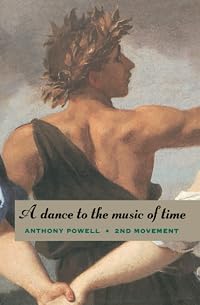
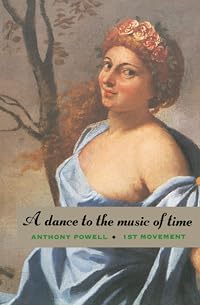
A Dance to the Music of Time: Second Movement, Summer
by Anthony Powell
A Dance to the Music of Time (Collections and Selections — 04-06)
On This Page
Description
Contains three novels that contribute to the continuing saga of Jenkins, Templer, Stringham, and Widmerpool, four men caught up in a whirl of marriages, adulteries, fashions, frivolities, personal triumphs, and failures in pre-World War II England.Tags
Recommendations












Member Reviews
"[T]he future is ever the consequence of the past." - Dr. Trelawney
Volumes #4 to #6 of Powell's epic sequence are collected here: At Lady Molly's, Casanova's Chinese Restaurant and The Kindly Ones. These volumes take place over a compressed period of time from about 1934 to 1939 (with a flashback to that last innocent summer of 1914, when our narrator was but a boy). Here, Powell expands considerably - both in scope and in literary achievement - by taking Nick Jenkins and Kenneth Widmerpool, and their various hangers-on, through the realities of adulthood. The world still feels rather prelapsarian, and the retrospective voice of our narrator regularly reminds us (without often saying it directly) that War is just around the corner. The show more cast widens substantially, and the reader may be surprised by which characters from Jenkins' early years play major roles and which ones don't.
Perhaps these novels will only be read in future by a select few determined Anglophiles. This was always a rare project, a rather niche collage compiled by a rather niche college artiste. From my vantage point in 21st century Australia, many of the issues contained herein seem irrelevant or even absurd. (You may have a different view; perhaps you too have often had to remind yourself to call your brother by his new landed title rather than his old landed title, neither of which are his first or last names!)
Yet the dedicated will be rewarded with moments of true insight, tableaux of joy and sorrow, of hope and woe. And I believe rereading of the series will enrich the experience even more. The famously large cast of characters features many who appear only at strategic moments laced intermittently through the series, but who are reflected in the eyes of several others. The reader, then, is left with a mindboggling sense of every characters as a complete person just out of our reach, more complex perhaps than Jenkins himself realises, and certainly moreso than many of their interlocutors. (Well, for the most part; Betty Templer seems like she's exactly as wacko as described.)
Powell was writing these well after the fact. He was fully aware that the way of life which he clung to was archaic and almost willfully rejected by the post-war world order. And while this rejection was the right decision, it is lovely to return to this alcohol-soaked, class-conscious, endlessly literate Wonderland... for a while, at least. show less
Volumes #4 to #6 of Powell's epic sequence are collected here: At Lady Molly's, Casanova's Chinese Restaurant and The Kindly Ones. These volumes take place over a compressed period of time from about 1934 to 1939 (with a flashback to that last innocent summer of 1914, when our narrator was but a boy). Here, Powell expands considerably - both in scope and in literary achievement - by taking Nick Jenkins and Kenneth Widmerpool, and their various hangers-on, through the realities of adulthood. The world still feels rather prelapsarian, and the retrospective voice of our narrator regularly reminds us (without often saying it directly) that War is just around the corner. The show more cast widens substantially, and the reader may be surprised by which characters from Jenkins' early years play major roles and which ones don't.
Perhaps these novels will only be read in future by a select few determined Anglophiles. This was always a rare project, a rather niche collage compiled by a rather niche college artiste. From my vantage point in 21st century Australia, many of the issues contained herein seem irrelevant or even absurd. (You may have a different view; perhaps you too have often had to remind yourself to call your brother by his new landed title rather than his old landed title, neither of which are his first or last names!)
Yet the dedicated will be rewarded with moments of true insight, tableaux of joy and sorrow, of hope and woe. And I believe rereading of the series will enrich the experience even more. The famously large cast of characters features many who appear only at strategic moments laced intermittently through the series, but who are reflected in the eyes of several others. The reader, then, is left with a mindboggling sense of every characters as a complete person just out of our reach, more complex perhaps than Jenkins himself realises, and certainly moreso than many of their interlocutors. (Well, for the most part; Betty Templer seems like she's exactly as wacko as described.)
Powell was writing these well after the fact. He was fully aware that the way of life which he clung to was archaic and almost willfully rejected by the post-war world order. And while this rejection was the right decision, it is lovely to return to this alcohol-soaked, class-conscious, endlessly literate Wonderland... for a while, at least. show less
Onweerstaanbare humor,spitante dialogen, aangrijpende metaforen, meesterstukken van melancholische sfeerschepping en dit alles in het mooiste Engels dat ik ooit las... Maar het is vooral het soort werk dat je nooit meer loslaat. Het is hierbij heel moeilijk uit te leggen waarom precies: het is niet echt en spannend verhaal, er gebeurt soms tientallen bladzijden weinig of niets. En toch weet je dat Stringham, Widmerpool, Uncle Giles en vele anderen in je leven voor goed binnengedrongen zijn. Literatuur in zijn fijnste en meest verfijnde vorm.
(12) I decided to plunge right in to the second movement despite trepidation. These are 3 more installments of Nick Jenkins adulthood before WW2. We still run into the old characters from the first movement of course (Widmerpool!) but Nick makes some new musical friends as well as meets the woman who will become his wife. That being said, Nick continues to be a cipher - this is really about the people and times around him, not his life. In fact, he says nothing of substance about his courtship and wife. We do go back in time in the last installment of the second movement and get some intel about his childhood and the lead-up to WW1. It is so preposterous (funny now I see) how the same people are threaded throughout his life and just so show more happen to make appearances in the most unlikely places as time goes by.
Something happened to me while reading this book that has never happened in my life despite the thousands of books I have read - in a new paperback copy of this book 20 pages were missing - the 20 pages that occur while in the titular 'Cassanova's Chinese Restaurant' - I finally decided to just read on without the knowledge those pages imparted and I did fine, but it felt such a betrayal. Anyway, I liked these additions about as much as the first movement - maybe a bit better now that I am familiar with the pattern of Powell's writing and the gimmicks he uses. I am starting to see the humor and I enjoy the spot-on snarky insights into human nature phrased in intelligent prose: A character is accused of being 'intellectually arrogant' and replies more or less - 'of course one is, it seems to me the right way to be.' It makes you chuckle inwardly as you recognize yourself in some of these barbs and retorts.
I will read on - Nick's time in WW2 is coming up and his wife is expecting their first child so it will be interesting to see how that shapes his optics. I suspect we will not even know the child's name, nor much about Nick's personal feelings about the military and killing - but we are sure to be treated to ironic observations regarding the quirky others old and new facing the same challenges. show less
Something happened to me while reading this book that has never happened in my life despite the thousands of books I have read - in a new paperback copy of this book 20 pages were missing - the 20 pages that occur while in the titular 'Cassanova's Chinese Restaurant' - I finally decided to just read on without the knowledge those pages imparted and I did fine, but it felt such a betrayal. Anyway, I liked these additions about as much as the first movement - maybe a bit better now that I am familiar with the pattern of Powell's writing and the gimmicks he uses. I am starting to see the humor and I enjoy the spot-on snarky insights into human nature phrased in intelligent prose: A character is accused of being 'intellectually arrogant' and replies more or less - 'of course one is, it seems to me the right way to be.' It makes you chuckle inwardly as you recognize yourself in some of these barbs and retorts.
I will read on - Nick's time in WW2 is coming up and his wife is expecting their first child so it will be interesting to see how that shapes his optics. I suspect we will not even know the child's name, nor much about Nick's personal feelings about the military and killing - but we are sure to be treated to ironic observations regarding the quirky others old and new facing the same challenges. show less
At Lady Molly's 3.5 stars
‘I’ve been reading something called Orlando,’ said the General. ‘Virginia Woolf. Ever heard of it?’ ‘I read it when it first came out.’‘What do you think of it?’ ‘Rather hard to say in a word.’ ‘You think so?’ ‘Yes.’ He turned to Frederica. ‘Ever read Orlando?’ ‘No,’ she said. ‘But I’ve heard of it.’ ‘Bertha didn’t like it,’ he said. 'Couldn't get on with it,' said Mrs. Conyers, emphatically. 'I wish St. John Clarke would write a new one. He hasn't published a book for years. l wonder whether he is dead. I used to love his novels, especially Fields of Amaranth.’ ‘Odd stuff, Orlando,’ said the General, who was not easily shifted from his subject. ‘Starts show more about a young man in the fifteen-hundreds. Then about eighteen-thirty he turns into a woman. You say you’ve read it?’ ‘Yes.’ ‘Did you like it? Yes or no?’ ‘Not greatly.’ ‘You didn’t?’ ‘No.’ ‘The Woman can write, you know.’ ‘Yes I can see that. I still didn’t like it.’
It is at this point in the series that I begin to quite dislike Nicholas Jenkins. He is so non-committal about everything, I would have expected him to be comfortable discussing Orlando, as an author himself, but the General has to forcibly drag an opinion out of him. Nick has a lot of friends' and acquaintances, but he never makes much of an effort to stay in touch with them. so they drift apart before coming together again when they meet at some social event or other. I'm not sure he actually likes any of them; he certainly takes an immediate dislike to both Erridge and Lady Molly Jeavons, and goes out of his way to annoy Quiggin while staying the weekend with him and Mona.
Nick meets his future wife, Isobel Tolland, and spends most of the book studying the relationships of the people around him, from the long-lasting happy marriage of his parent's friends General and Mrs Conyers, the unlikely marriage of Ted and Lady Molly Jeavons, and the lesbian relationship between Eleanor Walpole-Wilson and Norah Tolland, to the increasingly rocky relationship of Quiggin and Mona, and Widmerpool's bizarre, doomed engagement to a twice-widowed, much older woman.
Casanova's Chinese Restaurant 4 stars
Sunday luncheon at Katherine, Lady Warminster's, never, as it were, specially dedicated to meetings of the family, had in the course of time grown into an occasion when, at fairly regular intervals, several - sometimes too many - of the Tollands were collected together. Now and then more distant relations were present, once in a way a friend; but on the whole immediate Tollands predominated. Everyone expected to meet their 'in-laws'; and, among other characteristics, these parties provided, at least superficially, a kind of parade of different approaches to marriage.
I don't know whether Anthony Powell thought that he hadn't given Nick enough friends, wanted a reason for him to be involved in another of the arts, or thought that the marriages of his existing friends and in-laws weren't interesting enough, but the fifth book begins with a flashback to the time of book 2. Nick meets Mr Deacon while waiting for Barnby in a pub, and is introduced to four of his friends, Moreland the composer, Maclintick and Gossard who are music critics and Carolo, a famous violinist.
Back in the present, Nick's in-laws are worrying about the Abdication Crisis and the Spanish Civil War, as Frederica is a lady-in-waiting and Erridge decides to go to Spain (although his family are unable to picture him actually taking part in the fighting). Nick's attention is focussed on more personal matters, such as his wife's miscarriage and the relationships of his new friends, concentrating on a couple of marriages that are less happy and more unstable than those in "At Lady Molly's".
The Kindly Ones show less
‘I’ve been reading something called Orlando,’ said the General. ‘Virginia Woolf. Ever heard of it?’ ‘I read it when it first came out.’‘What do you think of it?’ ‘Rather hard to say in a word.’ ‘You think so?’ ‘Yes.’ He turned to Frederica. ‘Ever read Orlando?’ ‘No,’ she said. ‘But I’ve heard of it.’ ‘Bertha didn’t like it,’ he said. 'Couldn't get on with it,' said Mrs. Conyers, emphatically. 'I wish St. John Clarke would write a new one. He hasn't published a book for years. l wonder whether he is dead. I used to love his novels, especially Fields of Amaranth.’ ‘Odd stuff, Orlando,’ said the General, who was not easily shifted from his subject. ‘Starts show more about a young man in the fifteen-hundreds. Then about eighteen-thirty he turns into a woman. You say you’ve read it?’ ‘Yes.’ ‘Did you like it? Yes or no?’ ‘Not greatly.’ ‘You didn’t?’ ‘No.’ ‘The Woman can write, you know.’ ‘Yes I can see that. I still didn’t like it.’
It is at this point in the series that I begin to quite dislike Nicholas Jenkins. He is so non-committal about everything, I would have expected him to be comfortable discussing Orlando, as an author himself, but the General has to forcibly drag an opinion out of him. Nick has a lot of friends' and acquaintances, but he never makes much of an effort to stay in touch with them. so they drift apart before coming together again when they meet at some social event or other. I'm not sure he actually likes any of them; he certainly takes an immediate dislike to both Erridge and Lady Molly Jeavons, and goes out of his way to annoy Quiggin while staying the weekend with him and Mona.
Nick meets his future wife, Isobel Tolland, and spends most of the book studying the relationships of the people around him, from the long-lasting happy marriage of his parent's friends General and Mrs Conyers, the unlikely marriage of Ted and Lady Molly Jeavons, and the lesbian relationship between Eleanor Walpole-Wilson and Norah Tolland, to the increasingly rocky relationship of Quiggin and Mona, and Widmerpool's bizarre, doomed engagement to a twice-widowed, much older woman.
Casanova's Chinese Restaurant 4 stars
Sunday luncheon at Katherine, Lady Warminster's, never, as it were, specially dedicated to meetings of the family, had in the course of time grown into an occasion when, at fairly regular intervals, several - sometimes too many - of the Tollands were collected together. Now and then more distant relations were present, once in a way a friend; but on the whole immediate Tollands predominated. Everyone expected to meet their 'in-laws'; and, among other characteristics, these parties provided, at least superficially, a kind of parade of different approaches to marriage.
I don't know whether Anthony Powell thought that he hadn't given Nick enough friends, wanted a reason for him to be involved in another of the arts, or thought that the marriages of his existing friends and in-laws weren't interesting enough, but the fifth book begins with a flashback to the time of book 2. Nick meets Mr Deacon while waiting for Barnby in a pub, and is introduced to four of his friends, Moreland the composer, Maclintick and Gossard who are music critics and Carolo, a famous violinist.
Back in the present, Nick's in-laws are worrying about the Abdication Crisis and the Spanish Civil War, as Frederica is a lady-in-waiting and Erridge decides to go to Spain (although his family are unable to picture him actually taking part in the fighting). Nick's attention is focussed on more personal matters, such as his wife's miscarriage and the relationships of his new friends, concentrating on a couple of marriages that are less happy and more unstable than those in "At Lady Molly's".
The Kindly Ones show less
I'm reading one book per month of Anthony Powell's "A Dance to the Music of Time." This volume contains books four, five and six of the 12-book series, which I'll be reading in April, May and June 2014. I'm reviewing as I go just to make things easier on my memory.
"At Lady Molly's" is the fourth book in Powell's excellent series and it really doesn't disappoint. A new cast of characters is introduced here as our narrator Jenkins introduces characters that will likely figure fairly prominently later since he marries into the family. He also introduces his wife here, though she really barely gets a mention. Old favorites including the ever-present Widmerpool also figure here too. I liked the new characters a lot but Jenkins' detachment to show more his own life and circumstances grated a bit here. Still, I flew through this volume because the people were all so interesting. 4/5 stars.
"Casanova's Chinese Restaurant" was another solid book in Powell's series. Our narrator Jenkins, more irritatingly than usual, shows his complete inability to observe anything in his own life while dissecting the lives of those around him. I suppose I should stop expecting him to do so. The book focuses on a number of crumbling marriages -- and the inability to really understand what is going on in a particular marriage unless you're in it. As usual, there are great characters here who are both interesting and entertaining. 4/5 stars
"The Kindly Ones" was another great installment, though I was a bit put off at the beginning when Powell's nice, linear story went backwards in time. I had to keep reminding myself, while reading the story, that Nick Jenkins was a kid here, not a married adult (with a baby on the way, we soon learn.) Set at the start of World War II, Powell gives us a grand update on the whereabouts of most of the crucial characters. I am looking forward to next month's seventh installment when I'm sure we'll see where the war takes them all. 4/5 stars. show less
"At Lady Molly's" is the fourth book in Powell's excellent series and it really doesn't disappoint. A new cast of characters is introduced here as our narrator Jenkins introduces characters that will likely figure fairly prominently later since he marries into the family. He also introduces his wife here, though she really barely gets a mention. Old favorites including the ever-present Widmerpool also figure here too. I liked the new characters a lot but Jenkins' detachment to show more his own life and circumstances grated a bit here. Still, I flew through this volume because the people were all so interesting. 4/5 stars.
"Casanova's Chinese Restaurant" was another solid book in Powell's series. Our narrator Jenkins, more irritatingly than usual, shows his complete inability to observe anything in his own life while dissecting the lives of those around him. I suppose I should stop expecting him to do so. The book focuses on a number of crumbling marriages -- and the inability to really understand what is going on in a particular marriage unless you're in it. As usual, there are great characters here who are both interesting and entertaining. 4/5 stars
"The Kindly Ones" was another great installment, though I was a bit put off at the beginning when Powell's nice, linear story went backwards in time. I had to keep reminding myself, while reading the story, that Nick Jenkins was a kid here, not a married adult (with a baby on the way, we soon learn.) Set at the start of World War II, Powell gives us a grand update on the whereabouts of most of the crucial characters. I am looking forward to next month's seventh installment when I'm sure we'll see where the war takes them all. 4/5 stars. show less
The "second movement" of A Dance to the Music of Time is a collection of three novellas: At Lady Molly's, Casanova's Chinese Restaurant, and The Kindly Ones. Set in England during the years just before World War II, this dance includes many characters familiar to readers of the first movement. The protagonist, Nick Jenkins, is now an established writer working for a film company. In At Lady Molly's, Anthony Powell sets the stage by introducing readers to several new characters who will figure prominently in Nick's life. They include the Tolland family (several brothers & sisters, and their stepmother), and Chips Lovell, a professional colleague whose literary role is to introduce Nick to other people and situations. Social themes are show more introduced as well, particularly political developments in Germany, and society's preoccupation with psychoanalysis during this time period.
While the first novella has a seemingly endless cast, Casanova's Chinese Restaurant focuses on Nick, his new wife, and their close friends the Morelands. But the dance continues, with familiar characters moving in and out of their lives, including Nick's school friends Widmerpool, Templer, and Stringham. Finally in The Kindly Ones, Powell begins in Nick's childhood, providing a complete "back story" on certain characters and lending new context to their role in the dance.
There is very little "action" in these novels. Instead, there are a myriad of social situations where the dialogue moves the action along. For example, one character will tell a story about another, and in this way we learn of marriages, affairs, deaths, and so on. One of the intriguing aspects of this series is the way Powell conveys the passing of time. It's such a critical element, and yet is only expressed indirectly. Months and years are never mentioned, and rarely do we know someone's age. We get a sense of elapsed time primarily through historical or cultural cues (i.e.; the Abdication), and only occasionally by specific mention (i.e.; "several years passed ...").
I also love Powell's turns of phrase, like this bit:
She was immaculately free from any of the traditional blemishes of a mother-in-law; agreeable always; entertaining; even, in her own way, affectionate; but always a little alarming: an elegant, deeply experienced bird -- perhaps a bird of prey -- ready to sweep down and attack from the frozen mountain peaks upon which she preferred herself to live apart.
And, at the close of Casanova's Chinese Restaurant, this powerful paragraph:
I thought of his recent remark about the Ghost Railway. He loved these almost as much as he loved mechanical pianos. Once, at least, we had been on a Ghost Railway together at some fun fair or on a seaside pier; slowly climbing sheer gradients, sweeping with frenzied speed into inky depths, turning blind corners from which black, gibbering bogeys leapt to attack, rushing headlong towards iron-studded doors, threatened by imminent collision, fingered by spectral hands, moving at last with dreadful, ever increasing momentum towards a shape that lay across the line.
A Dance to the Music of Time is a unique work, and I'm looking forward to reading the rest of this series. show less
While the first novella has a seemingly endless cast, Casanova's Chinese Restaurant focuses on Nick, his new wife, and their close friends the Morelands. But the dance continues, with familiar characters moving in and out of their lives, including Nick's school friends Widmerpool, Templer, and Stringham. Finally in The Kindly Ones, Powell begins in Nick's childhood, providing a complete "back story" on certain characters and lending new context to their role in the dance.
There is very little "action" in these novels. Instead, there are a myriad of social situations where the dialogue moves the action along. For example, one character will tell a story about another, and in this way we learn of marriages, affairs, deaths, and so on. One of the intriguing aspects of this series is the way Powell conveys the passing of time. It's such a critical element, and yet is only expressed indirectly. Months and years are never mentioned, and rarely do we know someone's age. We get a sense of elapsed time primarily through historical or cultural cues (i.e.; the Abdication), and only occasionally by specific mention (i.e.; "several years passed ...").
I also love Powell's turns of phrase, like this bit:
She was immaculately free from any of the traditional blemishes of a mother-in-law; agreeable always; entertaining; even, in her own way, affectionate; but always a little alarming: an elegant, deeply experienced bird -- perhaps a bird of prey -- ready to sweep down and attack from the frozen mountain peaks upon which she preferred herself to live apart.
And, at the close of Casanova's Chinese Restaurant, this powerful paragraph:
I thought of his recent remark about the Ghost Railway. He loved these almost as much as he loved mechanical pianos. Once, at least, we had been on a Ghost Railway together at some fun fair or on a seaside pier; slowly climbing sheer gradients, sweeping with frenzied speed into inky depths, turning blind corners from which black, gibbering bogeys leapt to attack, rushing headlong towards iron-studded doors, threatened by imminent collision, fingered by spectral hands, moving at last with dreadful, ever increasing momentum towards a shape that lay across the line.
A Dance to the Music of Time is a unique work, and I'm looking forward to reading the rest of this series. show less
Powell’s comic magnum opus is beautifully illustrated with reflective passages that weave back and forth through time effortlessly. In short, Dance is a meditative social history which depicts the rhythm of life. It is an understated work that sometimes feels tedious, yet is often hilarious and quietly infectious. Patience is required when reading Powell, but his literary prowess is an apt reward.
Members
- Recently Added By
Lists

Favourite Books
1,817 works; 316 members

Books Read in 2021
5,361 works; 114 members
Author Information

61+ Works 13,440 Members
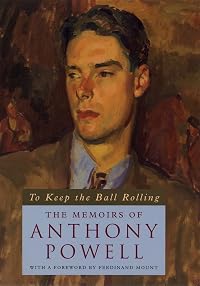
Anthony Powell was born on December 21, 1905 in Westminster, England and was educated at Eton College and Balliol College, Oxford. In 1926 he became an editor at Duckworth & Co. and later moved on to be a scriptwriter for Warner Brothers. By 1937 he was a regular contributor to The Spectator and the Daily Telegraph. From 1953-1959 Powell was the show more Literary Editor of Punch. His first book, The Barnard Letter, was published in 1928 and his first novel, Afternoon Men, was published in 1931. In 1951 Powell published A Question of Upbringing, which was the first of the 12-novel sequence A Dance to the Music of Time. In 1975 he published Hearing Secret Harmonies, which was the last novel of the sequence. Powell wrote Infants of the Spring, which is part of To Keep the Ball Rolling, his memoirs. He also published The Fisher King in 1986. Anthony Powell died peacefully at his home, The Chantry, aged 94 on March 28, 2000. (Bowker Author Biography) show less
Some Editions
Series

Work Relationships
Contains
Is abridged in
Has as a reference guide/companion
Common Knowledge
- Canonical title
- A Dance to the Music of Time: Second Movement, Summer
- Dedication
- For J.M.A.P.
- First words
- We had known General Conyers immemorially not because my father had ever served under him but through some long-forgotten connexion with my mother's parents, to one or other of whom he may even have been distantly related.
- Last words
- (Click to show. Warning: May contain spoilers.)Another stage of life was passed, just as finally, just as irrevocably, as on that day when childhood had come so abruptly to an end at Stonehurst.
- Disambiguation notice
- Omnibus volume of:
4 -- At Lady Molly's;
5 -- Casanova's Chinese Restaurant; and
6 -- The Kindly Ones.
NOTE: The Simon Vance audiobook, combined here, is unabridged.
Classifications
Statistics
- Members
- 1,005
- Popularity
- 25,885
- Reviews
- 21
- Rating
- (4.27)
- Languages
- English, Spanish
- Media
- Paper, Audiobook, Ebook
- ISBNs
- 7
- ASINs
- 16