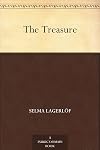
The Treasure
by Selma Lagerlöf
On This Page
Description
Set in northwest Sweden in the 16th century, Selma Lagerlof's The Treasure is an intricately plotted and very compelling tale of murder, long-delayed justice, and revenge. One night, a group of rowdy escaped prisoners attacks and plunders a clergyman's home, leaving behind a lone survivor, the family's adopted daughter Elsalill. She vows to punish the murderers—and receives assistance and support from a very unlikely source..
Tags
Recommendations


















Member Reviews
A gothic--and icy--folk tale.
In the mid 1500s, a traveling fish monger, plying his trade in a sleigh in the deep of winter of Northern Sweden, converses aloud to his silent dog. When they arrive at a parsonage, the dog begins to howl and does not want to enter. That is the first unheeded warning that something evil is afoot.
Thus begins the story of a night of brutal murders, of the following days of unrevenged ghosts and of the terrible dilemma of the sole survivor of the massacre, a young orphan maiden. Written by the first female Nobel-winner, Swedish Selma Lagerlöf, to read it is to spend time with simple folk who eek their living and who, by long tradition, welcome strangers. Especially during long icy winters.
Listened via show more Librivox, narrated by Lars Rolander with his melodious Scandinavian accent. https://librivox.org/the-treasure-by-lagerlof-selma/ show less
In the mid 1500s, a traveling fish monger, plying his trade in a sleigh in the deep of winter of Northern Sweden, converses aloud to his silent dog. When they arrive at a parsonage, the dog begins to howl and does not want to enter. That is the first unheeded warning that something evil is afoot.
Thus begins the story of a night of brutal murders, of the following days of unrevenged ghosts and of the terrible dilemma of the sole survivor of the massacre, a young orphan maiden. Written by the first female Nobel-winner, Swedish Selma Lagerlöf, to read it is to spend time with simple folk who eek their living and who, by long tradition, welcome strangers. Especially during long icy winters.
Listened via show more Librivox, narrated by Lars Rolander with his melodious Scandinavian accent. https://librivox.org/the-treasure-by-lagerlof-selma/ show less
I tracked down a used copy of this compelling novella after reading about it on another LTer's thread, and I'm delighted that I did. In beautiful prose, it tells the tale of Elsalill, a teenage orphan girl who escapes when three men invade the home where she is living, steal her foster father's treasure chest filled with silver money, kill everyone else including her beloved foster sister, and set fire to the home. Much ensues, including mysterious and supernatural events, as the dead foster sister cannot rest easy in her grave until her killer is punished and haunts both Elsaiill and the killer (who remains in town because the winter ice has blockaded the harbor well past the time when it usually breaks up). There is also, as the other show more LTer noted, a wonderful dog who understands things his master and other people cannot. Unknowingly, Elsalill falls in love with the wrong person, but eventually all is revealed and Elsalill has a terrible choice to make. Lagerlöf has wonderful pacing: I read this novella almost in one sitting and couldn't put it down as it reached its conclusion. I really loved this book!
PS A warning to anyone who reads the Daughters Inc. edition I read: do NOT read the foreword by June Arnold first as it contains spoilers that ruin the effect of some of the revelations in this book! show less
PS A warning to anyone who reads the Daughters Inc. edition I read: do NOT read the foreword by June Arnold first as it contains spoilers that ruin the effect of some of the revelations in this book! show less
The Treasure is a twisted fairy-tale, ghost story that begins with a grisly robbery-murder scene at a parsonage. The only survivor is the young orphan, Elsalill, foster-sister to parson's murdered niece. Elsalill soon faces a desperate choice -- to save her foster-sister from wandering restless through the world or to run away with a dashing Prince Charming, who may be her foster-sister's murderer. Lagerlof's tale is fairytale and allegory, steeped in Swedish folklore and tinged with feminist sentiment. A short, but highly satisfying read.
The Treasure aka Herr Arne's Hoard (1904), is a novella-length fable, or fairy-tale, by Nobel-Prize winning Swedish author Selma Lagerlöf. It is set in Bohuslaen on the West coast of Sweden in the middle of the 16th Century. In fairy-tales (and literature), female antagonism is an often-repeated storyline: the virgin/whore, angel/monster. There is a tradition of the pure, silent, virginal young girl on one side, and the powerful, sexual, wicked woman on the other. For example Bram Stoker’s Dracula compares sexually powerful Lucy with her three suitors, to monogamous and virtuous Mina who thinks only of her fiancé. Lucy ends up dead, staked through the heart, while Mina lives. It is a similar comparison in The Treasure between two show more sisters. The suitor is an exotic prince from distant shores, who has disguised himself and invaded the home and committed a murder. His dual nature is Vampire-ish, both seductive and repulsive, Prince charming and murderer. The ghost of the innocent murdered sister restlessly walks the earth seeking justice, while the living sister is seduced by the promise of wealth and power. The antagonism between the sisters is at the stories heart, and the heart is where the story finds its literal resolution, at the end of a steel blade - the only conclusion possible so that both sisters may find peace.
Lagerlöf has busted some myths and written an anti-fairy-tale. The leading male character, rather than saving the damsel in distress, turns out to be a villain in disguise. The leading female character, rather than being passive, takes an active role by turning the murderer in to the authorities. Finally, the antagonism between virgin/whore is resolved, not by one winning out over the other, but by both dieing to save the another. It is ultimately a story about the love of two sisters, the love of woman for woman. Lagerlöf herself was a lesbian and early feminist.
Lars Rolander's authentic Scandinavian accent brings this story forcefully alive with rolling R's strong enough to shake the bones of the dead, or the souls of the living. It is a prefect reading, thanks to Rolander and LibriVox.
The Treasure at LibriVox.
--Review by Stephen Balbach, via CoolReading (c) 2010 cc-by-nd show less
Lagerlöf has busted some myths and written an anti-fairy-tale. The leading male character, rather than saving the damsel in distress, turns out to be a villain in disguise. The leading female character, rather than being passive, takes an active role by turning the murderer in to the authorities. Finally, the antagonism between virgin/whore is resolved, not by one winning out over the other, but by both dieing to save the another. It is ultimately a story about the love of two sisters, the love of woman for woman. Lagerlöf herself was a lesbian and early feminist.
Lars Rolander's authentic Scandinavian accent brings this story forcefully alive with rolling R's strong enough to shake the bones of the dead, or the souls of the living. It is a prefect reading, thanks to Rolander and LibriVox.
The Treasure at LibriVox.
--Review by Stephen Balbach, via CoolReading (c) 2010 cc-by-nd show less
I didn't get this book. I didn't get the logic of it, nor the story, nor the events, nor the dialogue, nothing.
I'm not proud of the fact that this is the only book I've ever read from a Nobel laureate. And if I already suspected, after Saramago's "Blindness" (I went to see the movie, unfortunately), that I didn't speak this elite's language, now I am absolutely sure.
I'm not proud of the fact that this is the only book I've ever read from a Nobel laureate. And if I already suspected, after Saramago's "Blindness" (I went to see the movie, unfortunately), that I didn't speak this elite's language, now I am absolutely sure.
Estus bona opero. (Would make a good opera.)
Det begynder som en lille, facetsleben ædelsten. Funklende klar, smuk og skarp. Stor fryd at læse de første kapitler efter at have været gennem et par monstrøse, slappe fortællinger. Lagerlöf sætter rammen, præsenterer personer, sted og grum udåd. Hunden hyler og alt er uhyggeligt godt.
Desværre skifter tempo og uhygge bliver til forsmået og forviiret Elsepige-famlen. Med tempo trukket ud af hisorien, og uhyggen parkeret på gerningsstedet bliver det en støvet og noget uvedkommende læsning - og handlingen bliver først vedkommende igen hen mod slutningen, hvor vores omrejsende sildehandler, Turarin, kommer på banen.
Alletiders antihelt.
Desværre skifter tempo og uhygge bliver til forsmået og forviiret Elsepige-famlen. Med tempo trukket ud af hisorien, og uhyggen parkeret på gerningsstedet bliver det en støvet og noget uvedkommende læsning - og handlingen bliver først vedkommende igen hen mod slutningen, hvor vores omrejsende sildehandler, Turarin, kommer på banen.
Alletiders antihelt.
Mar 6, 2013Danish
Members
- Recently Added By
Lists

Historical Fiction
889 works; 91 members

Books Read in 2017
4,249 works; 129 members

Books Read in 2024
4,623 works; 126 members
Author Information

527+ Works 7,919 Members
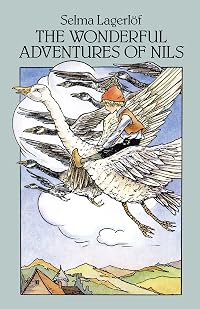
Selma Lagerlöf, winner of the Nobel Prize in 1909, was the first woman to be elected a member of the Swedish Academy. Her first novel, The Story of Gosta Berling (1891), assured her position as Sweden's greatest storyteller. She retold the folk tales of her native province, Varmland, in an original and poetic prose. As a woman writer, Lagerlöf show more gained a reputation as a naive purveyor of native traditions, but she herself compared writing a novel to solving a mathematical problem. Her artistry entails making her stories seem simple, but they are told with great attention to symbolism, psychology, and narrative technique. The Wonderful Adventures of Nils (1906) is a delightful fantasy written to teach children about Swedish geography, but it has found an international audience. Her third novel and masterpiece, Jerusalem (1901--02), the story of farmers from Dalarna who follow their faith to the Holy City, was widely praised for its insights into the lives of peasants searching for a spiritual ideal. During World War II, Lagerlöf helped many German artists and intellectuals escape the Nazis, even donating her gold Nobel Prize medal to a benefit fund to help Finland. She died of a stroke on March 16, 1940. (Bowker Author Biography) show less
Some Editions
Awards and Honors
Work Relationships
Is contained in
Common Knowledge
- Canonical title
- The Treasure
- Original title
- Herr Arnes penningar
- Original publication date
- 1903
- People/Characters
- Elsalill; Arne
- Important places*
- Bohuslän, Sweden
*Some information comes from Common Knowledge in other languages. Click "Edit" for more information.
Classifications
- Genres
- Fiction and Literature, General Fiction
- DDC/MDS
- 839.73 — Literature & rhetoric German & related literatures Other Germanic literatures Swedish literature Swedish fiction
- LCC
- PZ3 .L136 — Language and Literature Fiction and juvenile belles lettres Fiction and juvenile belles lettres Fiction in English
- BISAC
Statistics
- Members
- 190
- Popularity
- 172,221
- Reviews
- 9
- Rating
- (3.26)
- Languages
- 11 — Danish, Dutch, English, Esperanto, French, German, Norwegian (Bokmål), Norwegian, Portuguese, Russian, Swedish
- Media
- Paper, Audiobook, Ebook
- ISBNs
- 40
- ASINs
- 14