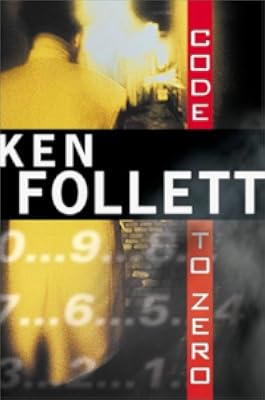
Code to Zero
by Ken Follett
On This Page
Description
In this classic Cold War thriller, #1 New York Times bestselling author Ken Follett puts his own electrifying twist on the space race between the U.S. and the Soviet Union. As the clock counts down to a shocking climax, "Code to Zero's split-second suspense proves that . . . [Follett is] still a hell of a storyteller" (Entertainment Weekly).January, 1958—the darkest hour of the Cold War and the early dawn of the space race. On the launch pad at Cape Canaveral sits America’s best hope show more to catch up with the Russians: the Explorer I satellite. But at the last moment, the launch is delayed due to weather, even though everyone can see it is a perfectly sunny day. The real reason for the delay rests deep in the mind of a NASA scientist who has awoken that morning to find his memory completely erased. Knowing only that he’s being followed and watched at every turn, he must find the clues to his own identity before he can discover who is responsible. But even more terrible is the dark secret that they want him to forget. A secret that can destroy the Explorer I—and America’s future. . . .
Praise for Code to Zero:
"This spy thriller is Follett at his best." —People
"Starts off fast and never slows down. . . . Follett creates a rousing story that never flags." —Chicago Tribune
"Gripping." —The New York Times
"Flawlessly plotted, tautly told, and suspenseful." —Minneapolis Star Tribune
"A winner . . . a jolting joyride." —St. Louis Post-Dispatch
. show less
Tags
Recommendations

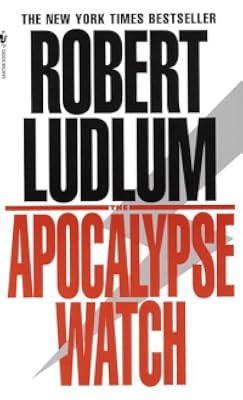
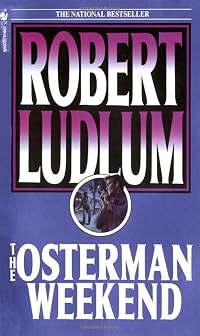
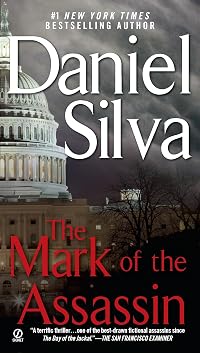
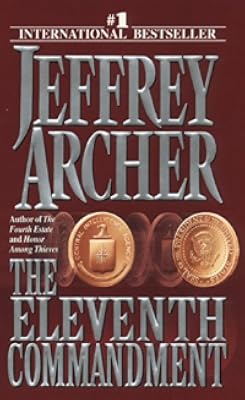










Member Reviews
Follett has written some fascinating historical novels, my favorite being [b:Pillars of the Earth|5043|The Pillars of the Earth|Ken Follett|http://photo.goodreads.com/books/1165517379s/5043.jpg|3359698], the story of building a medieval cathedral, but this is the first spy novel. It’s riveting.
Shortly before the launch of America’s first attempt at a response to Sputnik in 1958, a man awakens in the men’s room of Union Station in Washington, D.C. and he has absolutely no idea who he is. He’s covered in vomit and dressed like a bum, but at a local shelter he puzzles the priest in charge by displaying rather extraordinary crossword puzzle skills. He soon discovers that someone is following him, and that he seems to have all sorts show more of skills that unfathomably seem innate. By dint of some very clever self-analysis of these skills, he manages to go to a lecture where he is sure someone will recognize him and help him to restore his identity.
He learns he is Dr. Claude “Luke” Lucas, a well-known rocket scientist working with Werner von Braun and had been en route to Washington from Cape Canaveral to warn someone in the security agencies about something he can’t remember. Flashbacks inform the reader of the intricate relationships during his college years that he had had with Elspeth, his wife; Billie, a woman he once loved who is now a renowned memory expert; and Anthony Carroll, his former colleague in the OSS who ostensibly believes Luke is a Russian spy intent on sabotaging the American space program. Anthony, now a CIA operative, is the one behind the memory loss. His motive is to protect Luke, whom he still values as a friend, but now knows to be a Russian spy. He has proof that Like has been delivering blueprints to the Russians. At least that’s the cover story.
The United States is about to send the Explorer I spacecraft into space in hopes of thwarting the Russian dominance of space following its successful launch of Sputnik. Each chapter begins with a short piece about the mechanisms of the rocket — although one reviewer noted these sections are riddled (pun intended) with errors.
Luke begins to piece together who he is while trying to evade Anthony’s agents. It’s done very realistically with shades of the Manchurian Candidate — it’s even obliquely referred to by one of the characters who supposedly had submitted the manuscript to Hollywood.
Great fun. I'd give it 4 stars but it doesn't reach the level of masters like John Le Carre et al show less
Shortly before the launch of America’s first attempt at a response to Sputnik in 1958, a man awakens in the men’s room of Union Station in Washington, D.C. and he has absolutely no idea who he is. He’s covered in vomit and dressed like a bum, but at a local shelter he puzzles the priest in charge by displaying rather extraordinary crossword puzzle skills. He soon discovers that someone is following him, and that he seems to have all sorts show more of skills that unfathomably seem innate. By dint of some very clever self-analysis of these skills, he manages to go to a lecture where he is sure someone will recognize him and help him to restore his identity.
He learns he is Dr. Claude “Luke” Lucas, a well-known rocket scientist working with Werner von Braun and had been en route to Washington from Cape Canaveral to warn someone in the security agencies about something he can’t remember. Flashbacks inform the reader of the intricate relationships during his college years that he had had with Elspeth, his wife; Billie, a woman he once loved who is now a renowned memory expert; and Anthony Carroll, his former colleague in the OSS who ostensibly believes Luke is a Russian spy intent on sabotaging the American space program. Anthony, now a CIA operative, is the one behind the memory loss. His motive is to protect Luke, whom he still values as a friend, but now knows to be a Russian spy. He has proof that Like has been delivering blueprints to the Russians. At least that’s the cover story.
The United States is about to send the Explorer I spacecraft into space in hopes of thwarting the Russian dominance of space following its successful launch of Sputnik. Each chapter begins with a short piece about the mechanisms of the rocket — although one reviewer noted these sections are riddled (pun intended) with errors.
Luke begins to piece together who he is while trying to evade Anthony’s agents. It’s done very realistically with shades of the Manchurian Candidate — it’s even obliquely referred to by one of the characters who supposedly had submitted the manuscript to Hollywood.
Great fun. I'd give it 4 stars but it doesn't reach the level of masters like John Le Carre et al show less
"Code to Zero" was OK at best. I've never read Ken Follett and if this is representative of his other books, I'll probably not revisit him.
The premise of the story's not bad. It mostly takes place in early 1958 when the US is trying to answer the USSR's successful launch of Sputnik. Luke Lucas wakes up in a Union Station men's room with no idea who he is or how he got there. The first part of the book is him trying to figure all that out. Meanwhile, we see an old friend of his, who works in the CIA, clearly trying to keep Luke from discovering what's going on.
Part of the problem is that an author's note at the beginning of the book goes ahead and tells us the CIA worked to find ways of erasing people's memories. So we go into the story show more strongly assuming that's what happened to Luke. It would have been nice to discover that along with him.
Basically Luke is a rocket scientist who discovers information that he needs to get to Pentagon brass. But someone is doing their best to keep that from happening. There's a few OK twists here and there, but there was a little too much relationship melodrama along the way for me to truly enjoy what is supposed to be a spy thriller.
I do have to mention a HUGE error in the book, which happens to come at the very end. Each chapter begins with either a time or a date. In the epilogue, the date given is 1968. The content of said epilogue? The US landing on the moon. I mean, really? show less
The premise of the story's not bad. It mostly takes place in early 1958 when the US is trying to answer the USSR's successful launch of Sputnik. Luke Lucas wakes up in a Union Station men's room with no idea who he is or how he got there. The first part of the book is him trying to figure all that out. Meanwhile, we see an old friend of his, who works in the CIA, clearly trying to keep Luke from discovering what's going on.
Part of the problem is that an author's note at the beginning of the book goes ahead and tells us the CIA worked to find ways of erasing people's memories. So we go into the story show more strongly assuming that's what happened to Luke. It would have been nice to discover that along with him.
Basically Luke is a rocket scientist who discovers information that he needs to get to Pentagon brass. But someone is doing their best to keep that from happening. There's a few OK twists here and there, but there was a little too much relationship melodrama along the way for me to truly enjoy what is supposed to be a spy thriller.
I do have to mention a HUGE error in the book, which happens to come at the very end. Each chapter begins with either a time or a date. In the epilogue, the date given is 1968. The content of said epilogue? The US landing on the moon. I mean, really? show less
Firstlisted in Library Thing in 2013 when started using this site. Good tense story of espionage, treason and the space race set in 1950's America. Not sure that the detail at the head of each chapter with how a rocket works added to teh story in any way but some people may have found it interesting.
A very good and fast read. I loved the setting and the characters were interesting. It's amazing how much better this was than another rocket sabotage book that I read recently by Tom Clancy. Where that one was full of extraneous characters and extra locations and techno-babble, this book was streamlined and arrow sharp. I almost gave it less than a four-star rating due to the blandness of the prose and the somewhat predictable plot. However, the author managed to inject tension in every page and keep everything real, creating a definitely recommendable read.
Revised after the 2026 re-read: this story used to be one of my favourite Follett novels. The plot development and charaterizations are still quite excellent, but the plotting was occasionally unrealistic and I didn't like how drawn out it was in many of the chapters, not just at the end. That's something one discovers after the first whip through, since the pacing and excitement swamp the perception of extraneous scenarios and some repetitiveness.
Aside from the novel's overt theme, the depths of conviction that motivate a researcher are examined. A Soviet plot incapacitates an esteemed American scientist with a secret amnesiac drug. In recovering his past history, he discovers facts about his wife and colleagues that lead him to show more abort a plot to explode a space ship launch. Lost a star for an unrealistic security set-up and an overly drawn-out chase dénouement.
Note added in re-reading: in my edition, the epilogue shows 1969 as the date Neil Armstrong (Apollo 11) and 'Buzz' Aldrin walked on the moon. A different edition printed 1968, likely a typo. show less
Aside from the novel's overt theme, the depths of conviction that motivate a researcher are examined.
Note added in re-reading: in my edition, the epilogue shows 1969 as the date Neil Armstrong (Apollo 11) and 'Buzz' Aldrin walked on the moon. A different edition printed 1968, likely a typo. show less
Ken Follett is one of those authors who has the ability to create intriguing, thought provoking, and original work that keeps his readers interested from the first page to the last. "Code to Zero", was no exception. This historical fiction spans from 1941-1968, often going back and forth over the decades. It works with this novel. There are several twists and turns throughout the novel. Not all of the characters are what they appear to be. The plot comes together with both a surprise and predictable ending. If you're a Ken Follett fan, or enjoy novels that include history and espionage, I would definitely recommend.
At first, this seemed like a pretty typical espionage thriller and nothing too special or exciting. But as the story progressed, the more I got involved in it and enjoyed it. The space race element was intriguing, but it was the characters that really got me hooked. Through their history and relationships, which unfold to the reader as the amnesiac main character rediscovers them, Follett dramatizes how communism ultimately means the sacrifice of all one's own personal values, everything and everyone he holds most dear. This makes for high drama, conflict that is meaningful both intellectually and emotionally as these elements are united in the story. Quite well done.
Members
- Recently Added By
Lists

Books Read in 2015
3,299 works; 129 members
Author Information

179+ Works 129,254 Members
Ken Follett was born in Wales, United Kingdom on June 5, 1949. He received an Honours degree in philosophy from University College, London. He began his career as a newspaper reporter for the South Wales Echo and later with the London Evening News. He decided to switch to publishing and worked for a small London publishing house, Everest Books, show more eventually becoming Deputy Managing Director. His first bestselling novel, Eye of the Needle, was published in 1978 and won the Edgar Award. His other works include Triple, The Key to Rebecca, The Man from St. Petersburg, Lay Down with Lions, The Pillars of the Earth, The Third Twin, The Hammer of Eden, Code to Zero, Whiteout, World Without End, The Century Trilogy, and A Column of Fire. Many of his novels have been adapted into films and television miniseries. He has won numerous awards including the Corine Prize in 2003 for Jackdaws. His nonfiction works include On Wings of Eagles. (Bowker Author Biography) show less
Some Editions
Awards and Honors
Awards
Distinctions
Series
Belongs to Publisher Series
Bastei Lübbe Taschenbuch (27081)
Work Relationships
Is contained in
Set of 16 Techno-Thrillers by Ken Follett (Whiteout, Hornet Flight, Jackdaws, Code to Zero, Hammer of Eden, Third Twin, A Place Called Freedom, A Dangerous Fortune, Night Over Water, Lie Down with Lions, Man from St. Petersburg, Key to Rebecca, Triple, Eye of the Needle, Pillars of the Earth) by Ken Follett
Is abridged in
Reader's Digest Condensed Books: Code to Zero • Winter Solstice • High Risk • Beneath the Skin by Reader's Digest
Reader's Digest: Missions into Danger: Code to Zero / Eye of the Needle / Lie Down with Lions / The Hammer of Eden by Ken Follett
Code to Zero (K. Follett) / Envy (S. Brown) / Julie and Romeo (J. Ray) / The Other Side of Everest: Climbing the North Face Through the Killer Storm (M. Dickinson) by Reader's Digest
Reader's Digest Auswahlbücher, Bestseller-Sonderband - Das zweite Gedächtnis. Das schweigen des Glücks. Der Goldschmied by Reader's Digest
Livros Condensados: Contagem Decrescente | Corações Em Silêncio | Explosão de Cristal | Notícias do Lago by Reader's Digest
Readers Digest Select Editions: The Empty Chair / The Other Side of the Dale / Code to Zero / Nora, Nora by Reader's Digest
Reader's Digest Select Editions 2001 v01 #253: The Rescue / Even Steven / My Mother's Daughter / Code to Zero by Reader's Digest
Common Knowledge
- Canonical title
- Code to Zero
- Original title
- Code to Zero
- Original publication date
- 2000-12
- People/Characters
- Claude Lucas (Luke); Anthony Carroll; Elspeth Twomey; Bilhah Josephson (Billie); Bernard Rothsten (Bern); Pete Maxwell (show all 7); Marigold Clark
- Important places
- Cape Canaveral, Florida, USA; Harvard University, Cambridge, Massachusetts, USA; Washington, D.C., USA; Huntsville, Alabama, USA
- Important events
- Launch of Explorer I (1958-02-01); Cold War
- Epigraph
- HISTORICAL NOTE: The launch of the first American space satellite, Explorer I, was originally scheduled for Wednesday, January 29, 1958. Late that evening, it was postponed to the following day. The reason give... (show all)n was the weather. Observers at Cape Canaveral were puzzled: it was a perfect sunny Florida day. But the Army said that a high-altitude wind called the jet stream was unfavorable.
The next night, there was another postponement, and the same reason was given.
The launch was finally attempted on Friday, January 31.
From its beginning in 1947, the Central Intelligence Agency... has spent millions of dollars on a major problem of research to find drugs and other esoteric methods to bring ordinary people, willing and unwilling alike, ... (show all)under complete control - to act, to talk, to reveal the most precious secrets, even to forget on command.
- John Marks,
The Search for the "Manchurian Candidate":
The CIA and Mind Control, 1979 - First words
- The Jupiter C missile stands on the launch pad at Complex 26, Cape Canaveral.
- Last words
- (Click to show. Warning: May contain spoilers.)On March 31, 1970, it finally reentered the atmosphere over the Pacific Ocean near Easter Island, and burned up at 5:47 A.M., having circled the earth 58,376 times and travelled a total of 1.66 billion miles.
- Original language
- English
Classifications
Statistics
- Members
- 3,330
- Popularity
- 5,097
- Reviews
- 48
- Rating
- (3.43)
- Languages
- 17 — Chinese, Czech, Danish, Dutch, English, Finnish, French, German, Hungarian, Italian, Korean, Lithuanian, Norwegian (Bokmål), Polish, Spanish, Swedish, Portuguese (Portugal)
- Media
- Paper, Audiobook, Ebook
- ISBNs
- 109
- ASINs
- 33