On This Page
Description
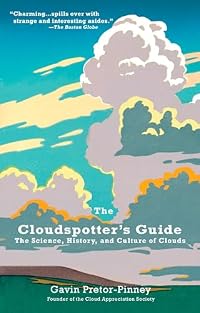
Discusses the history, types, and cultural fascination with clouds and explains what they mean in terms of climate and weather.Tags
Recommendations






















Member Recommendations

lascaux In the original French or in English translation

Member Reviews
As a popular science book, this is obviously supposed to be jaunty fun. I mean, it's a cloud spotters guide right, and everyone knows that there are a few basic clouds. There's cumulus, cumulonimbus, er, stratus and, er, white, black and…grey. How can you spin a book out of that?
You can't, so it's lucky that there are actually many different types of cloud, starting with a ground mist that clings to your ankles when you are tromping across a deserted moor all the way up to those vapor trails that jet aeroplanes full of tourists leave as they criss-cross an otherwise pristine sky. And then there are the sub-sets of the different clouds. Looking up has never been so complicated.
The message here is that clouds are fun and interesting, show more much more interesting than dull old blue sky. They add drama and excitement and romance and rain and snow and sleet and hail and, as long as you like white, black and every shade of grey in-between, colour. OK, they go pink and red too at dawn and sunset. And yes, yes, I know about rainbows.
I certainly do, because what this book is not short on is facts. Fun facts to be sure, but facts just the same. And science too. There's a lot of science in the book. The only issue is that once you get past the basic science of clouds (which is essentially moisture and temperature) you're into the more esoteric and brain-hurtee stuff. This is where the book starts to unravel a little.
Because this is popular science and the author is trying to make the science fun. More than that, he is enthusiastic about his subject. Science can be fun, ask any chemist who makes his own crystal meth, but it's something of an art. Organised fun is never fun. And the people who try to organise fun are about one step below war criminals in the 'threat to mankind' stakes.
Science is fun when your science teacher is a scrumpy drinking nutter who thinks it is a great idea to set off the sort of explosion that would register on a seismograph as an introduction to his class and, while a schoolroom full of traumatised kids are busy screaming, bleeding, sitting in pools of their own wee, says 'who can tell me what made that compound unstable?'. This book, I fear, is a little too much like the sort of science teacher who has a badge that says 'science is fun' and tries just that little bit too hard to be matey, so coming off as just a wee bit creepy.
The science and the fun never mixed. Maybe that was why I found this such hard going, which is a shame because I was prepared to like it. It's a lovely edition, with some beautiful, atmospheric (ho ho) illustrations. But the author isn't a good enough teacher to convey the advanced stuff in a sufficiently straightforward manner, and the matey stuff just grates after a while.
There are two redeeming features. The first is that something must have gone in somewhere, because I now have a much greater understanding of what's happening over my head and that understanding has greatly aided appreciation. Not only can I now see shapes in the clouds, I can pretty much know what sort of precipitation they will bring. This is a huge leap forward in the appreciation of the natural world and gives one a bit of an insight into what motivates, say, birdwatchers, or storm-chasers. And this beauty is transient. I didn't quite appreciate just how short lived a cloud is. I mean, who actually looks at the sky? One glances up and that's it. Now, My glance lingers.
The second saving grace is the last chapter, the story of the search for the 'morning glory', a particular sort of cloud native to Australia and which glider pilots surf in, in the same way that surfers surf the ocean. It was fascinating stuff and got to the heart of what being a cloud spotter is actually all about. More stories like that, men (it’s always men) in search of atmospheric phenomenon, would be something. show less
You can't, so it's lucky that there are actually many different types of cloud, starting with a ground mist that clings to your ankles when you are tromping across a deserted moor all the way up to those vapor trails that jet aeroplanes full of tourists leave as they criss-cross an otherwise pristine sky. And then there are the sub-sets of the different clouds. Looking up has never been so complicated.
The message here is that clouds are fun and interesting, show more much more interesting than dull old blue sky. They add drama and excitement and romance and rain and snow and sleet and hail and, as long as you like white, black and every shade of grey in-between, colour. OK, they go pink and red too at dawn and sunset. And yes, yes, I know about rainbows.
I certainly do, because what this book is not short on is facts. Fun facts to be sure, but facts just the same. And science too. There's a lot of science in the book. The only issue is that once you get past the basic science of clouds (which is essentially moisture and temperature) you're into the more esoteric and brain-hurtee stuff. This is where the book starts to unravel a little.
Because this is popular science and the author is trying to make the science fun. More than that, he is enthusiastic about his subject. Science can be fun, ask any chemist who makes his own crystal meth, but it's something of an art. Organised fun is never fun. And the people who try to organise fun are about one step below war criminals in the 'threat to mankind' stakes.
Science is fun when your science teacher is a scrumpy drinking nutter who thinks it is a great idea to set off the sort of explosion that would register on a seismograph as an introduction to his class and, while a schoolroom full of traumatised kids are busy screaming, bleeding, sitting in pools of their own wee, says 'who can tell me what made that compound unstable?'. This book, I fear, is a little too much like the sort of science teacher who has a badge that says 'science is fun' and tries just that little bit too hard to be matey, so coming off as just a wee bit creepy.
The science and the fun never mixed. Maybe that was why I found this such hard going, which is a shame because I was prepared to like it. It's a lovely edition, with some beautiful, atmospheric (ho ho) illustrations. But the author isn't a good enough teacher to convey the advanced stuff in a sufficiently straightforward manner, and the matey stuff just grates after a while.
There are two redeeming features. The first is that something must have gone in somewhere, because I now have a much greater understanding of what's happening over my head and that understanding has greatly aided appreciation. Not only can I now see shapes in the clouds, I can pretty much know what sort of precipitation they will bring. This is a huge leap forward in the appreciation of the natural world and gives one a bit of an insight into what motivates, say, birdwatchers, or storm-chasers. And this beauty is transient. I didn't quite appreciate just how short lived a cloud is. I mean, who actually looks at the sky? One glances up and that's it. Now, My glance lingers.
The second saving grace is the last chapter, the story of the search for the 'morning glory', a particular sort of cloud native to Australia and which glider pilots surf in, in the same way that surfers surf the ocean. It was fascinating stuff and got to the heart of what being a cloud spotter is actually all about. More stories like that, men (it’s always men) in search of atmospheric phenomenon, would be something. show less
A very british read. Informative, whimsical, humorous, filled with digressions, stories and quotes. A slight volume with great intellectual and emotional impact. A book to be savored as an absolutely essential read on an entirely ephemeral topic.
Really enjoyed this fun, informative book about how clouds work. Some of the more scientific bits I kind of skim read, but I really liked the way different clouds were linked into art and religion and the like. Could use more colour pictures.
The Cloudspotter's Guide's unpretentious title might lead you to believe it fills a functional niche, as a trainspotter's guide might. It does, but this book is much more. Mr Pretnor-Pinney draws on history, art, science, music, politics, literature, religion and adventure to explain what clouds are and how to identify them. He achieves it by rendering these indistinct and mutable patches of water in the sky memorable through the art of storytelling.
He explains the anatomy of a thunderous cumulonimbus through the half-closed eyes (and swollen skin, for he took a beating) of the pilot who fell 50,000 feet through one. He introduces man's inadvertent meddling with the climate through his attempt to harness the power in clouds to destroy show more the enemy in Vietnam, and by recounting the Mayor of Moscow's attempts to seed clouds to stop them raining on his parades (quite literally). He crowns the book with his quest for the ultimate cloud. The Morning Glory is a cloud the length of Britain that rolls triumphantly across the Australian Outback, witnessed by a handful of glider pilots with the courage to ride it and the determination to drive or fly thousands of kilometres on the off-chance they might see it. MrPretnor-Pinney, of course, travelled considerable further.
A harsher critic might complain that most of the pictures are low quality, and black and white, but it really is the words that matter. By the time you've read the Guide (it took me a week of train journeys to London) you'll be well equipped to identify the 10 basic types of cloud, and you won't even need to take the guide with you. But more than that, you'll appreciate them because this book isn't just for cloud spotters . It's for anyone that was ever curious about anything. It will fill you with child-like enthusiasm for knowledge. It's a blueprint for any writer who's aim is to inform by inspiring. show less
He explains the anatomy of a thunderous cumulonimbus through the half-closed eyes (and swollen skin, for he took a beating) of the pilot who fell 50,000 feet through one. He introduces man's inadvertent meddling with the climate through his attempt to harness the power in clouds to destroy show more the enemy in Vietnam, and by recounting the Mayor of Moscow's attempts to seed clouds to stop them raining on his parades (quite literally). He crowns the book with his quest for the ultimate cloud. The Morning Glory is a cloud the length of Britain that rolls triumphantly across the Australian Outback, witnessed by a handful of glider pilots with the courage to ride it and the determination to drive or fly thousands of kilometres on the off-chance they might see it. MrPretnor-Pinney, of course, travelled considerable further.
A harsher critic might complain that most of the pictures are low quality, and black and white, but it really is the words that matter. By the time you've read the Guide (it took me a week of train journeys to London) you'll be well equipped to identify the 10 basic types of cloud, and you won't even need to take the guide with you. But more than that, you'll appreciate them because this book isn't just for cloud spotters . It's for anyone that was ever curious about anything. It will fill you with child-like enthusiasm for knowledge. It's a blueprint for any writer who's aim is to inform by inspiring. show less
I loved this book so much it made me a cloud photographer. Instead of driving "blindly" into town, my visor is up and I am constantly hitting the brakes to leap out of the car and catch the image. Don't panic, I live in the Australian countryside and rarely come across other vehicles until near the town!
My profile photo is one I took across our farm paddocks called Sky Poetry.
For countryfolk weather is vital, so learning about the clouds and their impact on rain was excellent knowledge and apart from the b & w pictures, the info Gavin has put together is entertaining and educational. I was really interested in his comments on con-trails and their potential to change the formation of rain clouds.
A really good read. Among my favourite show more long-term books. show less
My profile photo is one I took across our farm paddocks called Sky Poetry.
For countryfolk weather is vital, so learning about the clouds and their impact on rain was excellent knowledge and apart from the b & w pictures, the info Gavin has put together is entertaining and educational. I was really interested in his comments on con-trails and their potential to change the formation of rain clouds.
A really good read. Among my favourite show more long-term books. show less
What a fun book. Gavin Pretor-Pinney isn't a meteorologist, just a guy who really geeks out on clouds. He started The Cloud Appreciation Society, an amateur cloud watching and photographing group in England and online.
The book goes through each of the different types of cloud categorized by meteorologists and gives an explanation of what type of weather you're likely to see them in and what underlying atmospheric conditions cause them. He also peppers the text with religious, artistic, and historical context to various cloud types and does it all with dry British humour and obvious enthusiasm. Since I started reading this guide, I've become much more aware of the different clouds in the sky and much more appreciative. Mission show more accomplished Mr. Pretor-Pinney. show less
The book goes through each of the different types of cloud categorized by meteorologists and gives an explanation of what type of weather you're likely to see them in and what underlying atmospheric conditions cause them. He also peppers the text with religious, artistic, and historical context to various cloud types and does it all with dry British humour and obvious enthusiasm. Since I started reading this guide, I've become much more aware of the different clouds in the sky and much more appreciative. Mission show more accomplished Mr. Pretor-Pinney. show less
This is a delightful book, written for enthusiasts, but containing enough good science to satisfy more expert readers. It does this and manages to be thoroughly entertaining too. The author's text is eminently readable and the technobabble is negligible and is augmented by clear diagrams and photos.
Interspersed throughout are digressions, discussions, cloud-lore and experiences relating to clouds, whether it be Turner's paintings or the effects of SAD (seasonal affective disorder). Some of these asides do tend to be somewhat whimsical, but fit in with the overall style of the book. The star anecdote has to be the experience of the jet fighter pilot who had to eject into the middle of a cumolonimbus thundercloud and lived to tell the show more tale.
The only thing missing is loads more colour photos.
A fun and informative read. show less
Interspersed throughout are digressions, discussions, cloud-lore and experiences relating to clouds, whether it be Turner's paintings or the effects of SAD (seasonal affective disorder). Some of these asides do tend to be somewhat whimsical, but fit in with the overall style of the book. The star anecdote has to be the experience of the jet fighter pilot who had to eject into the middle of a cumolonimbus thundercloud and lived to tell the show more tale.
The only thing missing is loads more colour photos.
A fun and informative read. show less
Members
- Recently Added By
Lists

Recommended Nature Writing
346 works; 180 members

Books Read in 2024
4,623 works; 126 members
Author Information

16 Works 2,492 Members
Gavin Pretor-Pinney is the founder of the Cloud Appreciation Society, author of The Ctoudspotter's Guide, and cofounder of the Idler magazine. Gavin loves watching waves in every form. He lives in Somerset, UK. Visit his website at WWw.thewavechannel.org.
All Editions
Series

Common Knowledge
- Original title
- The Cloudspotter's Guide
- Original publication date
- 2006
- People/Characters
- Lieutenant-Colonel William Rankin; Douglas Trumbull; Zhonghao Shou; Irving Langmuir; Vincent Schaefer; Bernard Vonnegut (show all 8); Yuri Luzhkov; Clouds
- Important places
- Burketown, Australia
- Important events
- Making of Close Encounters of the Third Kind; Battle of Milvian Bridge; Weather control; Cloud seeding; Vietnam War; global warming (show all 7); The Morning Glory cloud
- Dedication
- For Liz.
- First words
- Leonardo da Vinci once described clouds as 'bodies without surface', and you can see what he meant.
I've always loved looking at clouds. - Introduction - Last words
- (Click to show. Warning: May contain spoilers.)I had crossed the world only to find,as I have so many times since, that I was preaching to the converted.
- Original language
- English
Classifications
- Genres
- Science & Nature, Nonfiction, General Nonfiction
- DDC/MDS
- 551.576 — Natural sciences & mathematics Earth sciences; geology Geology, Hydrology Meteorology Atmosphere, Tornadoes, Hurricanes Moisture: rainfall, flow of streams, floods
- LCC
- QC921 .P78 — Science Physics Physics Meteorology. Climatology
- BISAC
Statistics
- Members
- 1,535
- Popularity
- 14,850
- Reviews
- 34
- Rating
- (3.83)
- Languages
- 11 — Chinese, Dutch, English, Finnish, French, German, Greek, Italian, Spanish, Swedish, Turkish
- Media
- Paper, Ebook
- ISBNs
- 21
- ASINs
- 5