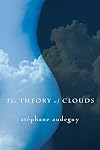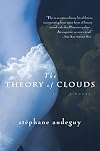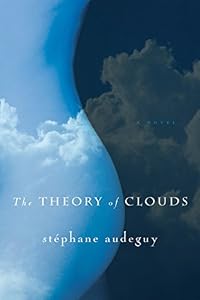
The Theory of Clouds
by Stephane Audeguy
On This Page
Description
**DEBUT FICTION** A kira Kumo, miraculous survivor of Hiroshima, reinvented himself as someone twenty years younger. Now an eccentric couturier and collector of all literature having to do with clouds and meteorology, he hires Virginie, a young librarian, to catalog his library. While she works, he tells her stories of those who have devoted their lives to clouds: the Quaker Luke Howard, contemporary of Napoleon and Goethe, who first classified clouds; the painter Carmichael (based on show more John Constable), who spent a year painting clouds; and the mysterious Abercrombie, a photographer who cataloged clouds around the world. Virginie's trip to London in search of the suppressed Abercrombie protocol becomes a quest no less wondrous and strange than Kumo's own. Sensual, hypnotic, and filled with stories both true and fanciful, The Theory of Clouds is a masterful first novel. show lessTags
Recommendations












































Member Reviews
This is a true little gem; definitely one of the most original novels I have read in quite a while.
I knew this book was about an eccentric old Japanese fashion designer living in Paris, about his collection of books on the history of meteorology and about a librarian. I thought that possibly it might be a tough nut to crack and for this reason the book has been on my to read pile for quite a while. Great was my surprise that this was a pleasure to read, and that apparently style and tone of voice are more important than subject matter. And that a good writer can make the most unseemly subject interesting, yes, so interesting that you wonder why you have ever thought that clouds might be boring. I found myself intrigued by the story, show more its characters, the clouds, and the obsessions surrounding them.
The story takes you through two centuries and through different continents. It unites a 19th century quaker, an obsessed painter, a mad scientist and the sad story of Hiroshima in a panoramic story. It touches on science, on love, on history and on the ethics of science without ever becoming boring or preaching. So, don't miss this! show less
I knew this book was about an eccentric old Japanese fashion designer living in Paris, about his collection of books on the history of meteorology and about a librarian. I thought that possibly it might be a tough nut to crack and for this reason the book has been on my to read pile for quite a while. Great was my surprise that this was a pleasure to read, and that apparently style and tone of voice are more important than subject matter. And that a good writer can make the most unseemly subject interesting, yes, so interesting that you wonder why you have ever thought that clouds might be boring. I found myself intrigued by the story, show more its characters, the clouds, and the obsessions surrounding them.
The story takes you through two centuries and through different continents. It unites a 19th century quaker, an obsessed painter, a mad scientist and the sad story of Hiroshima in a panoramic story. It touches on science, on love, on history and on the ethics of science without ever becoming boring or preaching. So, don't miss this! show less
“In the early years of the nineteenth century, Kumo told Virginie, a number of unheralded and seemingly ordinary men across Europe began gazing up at clouds in a way that was serious and respectful yet also filled with longing. They looked at clouds as if they were in love with them.” So begins the third paragraph in Stéphane Audeguy’s incredible début novel The Theory of Clouds. The novel received the 2005 prize Maurice Genevoix of the French Academy and has only recently become available in the a exquisite English translation by Timothy Bent.
The Theory of Clouds is a masterful, lush, and thoroughly unconventional historical novel about clouds and the men who have devoted their life to studying them over the course of the past show more two centuries. In particular, it is about the passionate fanaticism that lies just under the surface of an obsession.
I fell in love with the oddness and quiet allure of this work. The author weaves honest meteorological biography together with an equal quantity of fiction and, through a process akin to alchemy, comes up with something that feels more real than the truth.
The novel begins in the present day with the famous eccentric Japanese couturier Akira Kumo, owner and chief creative designer for a great clothing design house in Paris. Ten years earlier, Kumo had a life-altering event. When it resolved, he found that he had become obsessed with clouds. He started collecting every book he could get his hands on—in all the languages that he could read—concerning the subject. By the beginning of the novel, he has amassed a world-class collection consisting of “every single work devoted to clouds and more generally to meteorology written over the course of the last three centuries.” But Kumo was missing one legendary book, The Abercrombie Protocol, a lone manuscript of fundamental importance to the history of meteorology. Unfortunately The Protocol has remained outside his grasp. The manuscript remains concealed by the author’s family. Nobody outside the family has ever seen it. Kumo will do almost anything to be able to purchase this manuscript, or at least know what it contains.
To this end, he hires a librarian, Virginie, ostensibly to catalogue his collection. However, instead of putting her to work, Kumo starts telling her the stories that make up the history of meteorology—stories about the many famous men who have been in love with clouds. The tales begin in the early 19th-century with Luke Howard, the British Quaker who first came up with the idea of giving clouds names like cirrus, stratus, and cumulus. They continue right up to the present day, each story getting darker and more irrational. Many are drawn from real historical figures. Others are the author’s own creations. Some contain a strong undercurrent of eroticism, but these are not there for prurient interest; rather they appear to be included by the author to add synergy into these tales of passion.
Eventually, Kumo’s Scheherazade-like retelling of the history of cloud science seduces Virginie inside the web of his obsession. Finally, Kumo is ready to send her off to London to try to obtain The Abercrombie Protocol. She returns not with The Protocol, but rather with the story of The Protocol, and she proceeds to tell it to him in the same passionate style the Kumo has used to relate his stories to her.
This is undoubtedly a strange book. It will most likely not appeal to a wide range of readers. The plot is more a collection of many stories contained within the structure of another story—there is pure genius in the architecture and construction of the overall plot. But there is not the usual single strong driving story line that most readers seek. Also, many readers may be put off by the fact that all the characters in this book remain quite remote. No character is revealed completely in three dimensions; instead we witness each of these characters almost entirely as they engage with their obsessions. Many of the characters’ eroticism and sexual passion are also revealed. Stripped of everything but their passions, the author appears to be trying to focus the reader toward some all-encompassing universal concept of passion—passion in all its guises, as it exists in a variety of human beings—in this case, all infatuated with clouds. For me, the overall effect was deliciously cerebral, sensuous, and profoundly psychological.
There is much more to this novel than the stories, the delving into the nature of passion, and whatever accumulated understanding about meteorology that a reader may absorb. The author also has a number of thematic messages about man’s ability to domesticate the power of nature to his own ends, but I will leave these for the reader to discover.
The stories, the prose, and the architecture of the novel—all are at once subtle, sensual, and sublime. This novel enchanted me. I easily fell under its spell. I will treasure it and reread it again in a few years. Unfortunately, this is not a book that will have wide appeal, but I found it marvelous, and know that there are other readers out there who will also be overjoyed to find and read this odd little gem. I hope some of you read this review. show less
The Theory of Clouds is a masterful, lush, and thoroughly unconventional historical novel about clouds and the men who have devoted their life to studying them over the course of the past show more two centuries. In particular, it is about the passionate fanaticism that lies just under the surface of an obsession.
I fell in love with the oddness and quiet allure of this work. The author weaves honest meteorological biography together with an equal quantity of fiction and, through a process akin to alchemy, comes up with something that feels more real than the truth.
The novel begins in the present day with the famous eccentric Japanese couturier Akira Kumo, owner and chief creative designer for a great clothing design house in Paris. Ten years earlier, Kumo had a life-altering event. When it resolved, he found that he had become obsessed with clouds. He started collecting every book he could get his hands on—in all the languages that he could read—concerning the subject. By the beginning of the novel, he has amassed a world-class collection consisting of “every single work devoted to clouds and more generally to meteorology written over the course of the last three centuries.” But Kumo was missing one legendary book, The Abercrombie Protocol, a lone manuscript of fundamental importance to the history of meteorology. Unfortunately The Protocol has remained outside his grasp. The manuscript remains concealed by the author’s family. Nobody outside the family has ever seen it. Kumo will do almost anything to be able to purchase this manuscript, or at least know what it contains.
To this end, he hires a librarian, Virginie, ostensibly to catalogue his collection. However, instead of putting her to work, Kumo starts telling her the stories that make up the history of meteorology—stories about the many famous men who have been in love with clouds. The tales begin in the early 19th-century with Luke Howard, the British Quaker who first came up with the idea of giving clouds names like cirrus, stratus, and cumulus. They continue right up to the present day, each story getting darker and more irrational. Many are drawn from real historical figures. Others are the author’s own creations. Some contain a strong undercurrent of eroticism, but these are not there for prurient interest; rather they appear to be included by the author to add synergy into these tales of passion.
Eventually, Kumo’s Scheherazade-like retelling of the history of cloud science seduces Virginie inside the web of his obsession. Finally, Kumo is ready to send her off to London to try to obtain The Abercrombie Protocol. She returns not with The Protocol, but rather with the story of The Protocol, and she proceeds to tell it to him in the same passionate style the Kumo has used to relate his stories to her.
This is undoubtedly a strange book. It will most likely not appeal to a wide range of readers. The plot is more a collection of many stories contained within the structure of another story—there is pure genius in the architecture and construction of the overall plot. But there is not the usual single strong driving story line that most readers seek. Also, many readers may be put off by the fact that all the characters in this book remain quite remote. No character is revealed completely in three dimensions; instead we witness each of these characters almost entirely as they engage with their obsessions. Many of the characters’ eroticism and sexual passion are also revealed. Stripped of everything but their passions, the author appears to be trying to focus the reader toward some all-encompassing universal concept of passion—passion in all its guises, as it exists in a variety of human beings—in this case, all infatuated with clouds. For me, the overall effect was deliciously cerebral, sensuous, and profoundly psychological.
There is much more to this novel than the stories, the delving into the nature of passion, and whatever accumulated understanding about meteorology that a reader may absorb. The author also has a number of thematic messages about man’s ability to domesticate the power of nature to his own ends, but I will leave these for the reader to discover.
The stories, the prose, and the architecture of the novel—all are at once subtle, sensual, and sublime. This novel enchanted me. I easily fell under its spell. I will treasure it and reread it again in a few years. Unfortunately, this is not a book that will have wide appeal, but I found it marvelous, and know that there are other readers out there who will also be overjoyed to find and read this odd little gem. I hope some of you read this review. show less
I enjoy books that take a meditative look at the surroundings as they meander through people’s lives. This book manages to take the everyday occurrence of clouds and turn it into an interwoven story filled with comedy, tragedy, and history. It is a book that can take on different meanings, depending on the reader’s mood and inclination – it creates a mind picture (rather than a character-driven story) for me to contemplate and look at from various angles.
There is a slow reflective quality about the prose, building on the visual and academic sides of cloud study to produce a few loosely related characters. There is also a fuzzy quality to the book, the characters seem held at a distance and this adds to the effect of languor and show more meditation. The prose is simple and flows beautifully.
The obsession with clouds morphs into various subjects and the author borrows snippets of cloud history and formation, to illustrate his philosophy on the place of mankind in the Universe.
One of his historical characters is a scientist with an obsession for clouds, whose initial interest in clouds transforms into a pornographic photographic extravaganza of the female genitalia around the world. Obsessed is not a strong enough word and this character becomes increasingly bizarre and almost nonsensical.
Audeguy describes Krakatoa erupting in 1883 and the World War One poisonous gas. The catastrophic finale of the Hiroshima bomb falling in the mid 20th century takes cloud formation and human interference in nature to its ultimate tragedy.
In places bizarre, sometimes unbelievable, definitely unconventional, this novel is an enjoyable and reflective read that stays in your mind’s eye for days after the last page is finished. Read it for some mind candy, not for a story with character development. show less
There is a slow reflective quality about the prose, building on the visual and academic sides of cloud study to produce a few loosely related characters. There is also a fuzzy quality to the book, the characters seem held at a distance and this adds to the effect of languor and show more meditation. The prose is simple and flows beautifully.
The obsession with clouds morphs into various subjects and the author borrows snippets of cloud history and formation, to illustrate his philosophy on the place of mankind in the Universe.
One of his historical characters is a scientist with an obsession for clouds, whose initial interest in clouds transforms into a pornographic photographic extravaganza of the female genitalia around the world. Obsessed is not a strong enough word and this character becomes increasingly bizarre and almost nonsensical.
Audeguy describes Krakatoa erupting in 1883 and the World War One poisonous gas. The catastrophic finale of the Hiroshima bomb falling in the mid 20th century takes cloud formation and human interference in nature to its ultimate tragedy.
In places bizarre, sometimes unbelievable, definitely unconventional, this novel is an enjoyable and reflective read that stays in your mind’s eye for days after the last page is finished. Read it for some mind candy, not for a story with character development. show less
I'm not certain it's even possible for me to recommend this book highly enough. This is a twisty - but not twistED - novel, with a number of sub-plots that contribute towards and direct the action of the primary plot, that between an elderly collector and his archivist.
To be sure, Audeguy has been lucky in his translator, but there are certain flashes of - dare I say it - genius, which indicate masterful execution.
To be sure, Audeguy has been lucky in his translator, but there are certain flashes of - dare I say it - genius, which indicate masterful execution.
Have you ever gazed up into the sky and let your mind wonder and think about the clouds floating by? 200 years ago people first began to do so with a scientific perspective, classifying and naming. Each cloud is unique, ever changing, yet somehow the same. Clouds are made of water and so are human bodies, we die and evaporate and condense into clouds. Clouds can be peaceful, or fearsome such as a nuclear mushroom cloud. The themes of water and clouds intermingle in this story about the history of meteorology and the quest for a manuscript called the "Abercrombie Protocol"; it is a story about the search for love, and how all things are connected.
This is a many layered book and it certainly challenges the minds eye to see connections and show more meanings - yet it is also enjoyable as a story, it tracks multiple lives and generations revealing commonalities and patterns re-appearing, not unlike how patterns in clouds can cross space and time, like fractals. Although 266 pages it reads very quickly, I finished in about half the time I normally would for a book this length. Winner of a prize from the French Academy. Recommended.
--Review by Stephen Balbach, via CoolReading (c) 2008 cc-by-nd show less
This is a many layered book and it certainly challenges the minds eye to see connections and show more meanings - yet it is also enjoyable as a story, it tracks multiple lives and generations revealing commonalities and patterns re-appearing, not unlike how patterns in clouds can cross space and time, like fractals. Although 266 pages it reads very quickly, I finished in about half the time I normally would for a book this length. Winner of a prize from the French Academy. Recommended.
--Review by Stephen Balbach, via CoolReading (c) 2008 cc-by-nd show less
While not quite as 'diaphanous' as the reviews declare, The Theory of Clouds is nonetheless a clever and unconventional novel mixing past and present, fact and fiction about clouds and the people who are drawn to them. The translator for this book must be very talented, as the book reads beautifully.
A historical fiction about clouds and meteorology seems a bit unusual, but this book did hit a certain groove within me. A young woman, Virginie Latour, a young librarian in Paris, secures a parallel position cataloging the meteorological collection of a certain Akiro Kumo, a fashion entrepreneur. The story then delves into the history of cloud classification, led by a Luke Howard (a real historical figure). He is succeeded by two people who further stretch the field of weather reporting and prediction: the Scotsman, Richard Abercrombie; and the Swede, William S. Williamsson. These two appear to be somewhat based upon real meteorologists, Ralph Abercrmby and Hugo Hildebrand Hildebrandsson. There is quite a bit of competition in the show more novel between the two in the back story, but eventually the story settles on Abercrombie and his so-called "Protocol" which is eagerly anticipated. The front story is concerned with the securing of the manuscript. the life of Kumo, and how Virginie plays in all of this. The psychology of the players in this novel is well drawn, although some of the early sex seemed a little put-upon. But this pushes towards a rather interesting resolution at the end. show less
Members
- Recently Added By
Author Information

26 Works 417 Members
Awards and Honors
Awards
Distinctions
Series
Belongs to Publisher Series
Gallimard, Folio (4537)
Common Knowledge
- Original publication date
- 2005
- People/Characters
- Akira Kumo; Virginie Latour; Richard Abercrombie; Luke Howard; Carmichael
- Important places
- Paris, France; London, England, UK; Hiroshima, Japan
Classifications
Statistics
- Members
- 253
- Popularity
- 127,636
- Reviews
- 14
- Rating
- (3.54)
- Languages
- 7 — Dutch, English, French, German, Italian, Lithuanian, Spanish
- Media
- Paper
- ISBNs
- 10
- ASINs
- 2