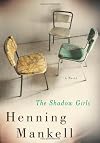
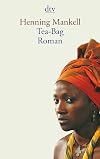
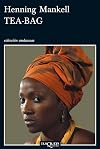
Tea-Bag
by Henning Mankell
On This Page
Description
Jesper Humlin is a poet of middling acclaim who is saddled by his underwhelming book sales, an exasperated girlfriend, a demanding mother, and a rapidly fading tan. His boy-wonder stockbroker has squandered Humlin's investments, and his editor, who says he must write a crime novel to survive, begins to pitch and promote the nonexistent book despite Humlin's emphatic refusals. Then, when he travels to Gothenburg to give a reading, he finds himself thrust into an entirely different world, show more where names shift, stories overlap, and histories are both deeply secret and in profound need of retelling. Leyla from Iran, Tanya from Russia, and Tea-Bag, who is from Africa but claims to be from Kurdistan (because Kurds might receive preferential treatment as refugees) these are the shadow girls who become Humlin's unlikely pupils in impromptu writing workshops. Though he had imagined their stories as fodder for his own book, soon their intertwining lives require him to play a much different role. show lessTags
Recommendations





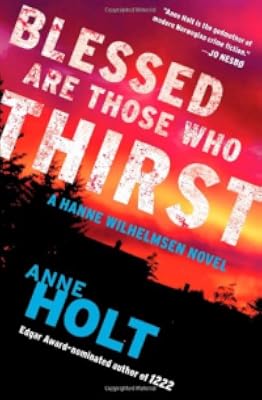

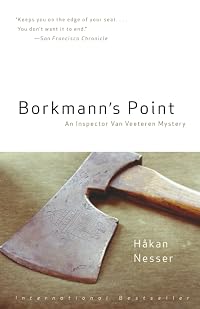
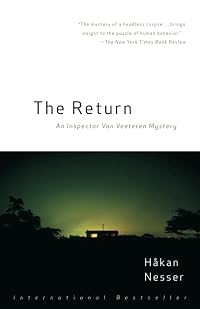
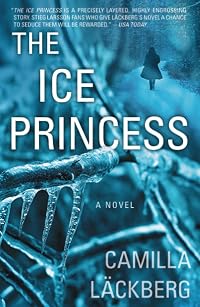













Member Reviews
I've long been a fan of Mankell's Wallander series, and I've enjoyed the other books I've read by him. The Shadow Girls was something special. There is something playful in the surreal world Mankell creates for Jesper Humlin. There are laugh out loud moments. And in amongst the surreal goings on, tempering the playfulness, is a serious message about immigration and the reasons people flee their countries, full of hope for a better life in Europe. It could have been preachy, but Mankell got the balance right. Really, really good.
Tea-bag har jätte bra personlighets skildringar, vilket gör att historien som redan är bra blir ännu bättre. Jag vill lära känna dessa personer, få veta hur de har levt och hur det kommer gå för de. Henning Mankell skriver med humör, bokens huvudkaraktär poeten Jesper Humlin är otursförföljd och det är med ett leende på läpparna som jag följer hans öde i boken.
En bok som fångade mig från första sidan.
Läs den ! Det är en vacker bok som berör.
En bok som fångade mig från första sidan.
Läs den ! Det är en vacker bok som berör.
Don't read this if you are looking for a Wallander mystery. This book deals with the lives and struggles of immigrants (refugees) from all over the world who leave terrible situations in their home country, hoping to reach somewhere they can call "home" and feel safe. It is so well written and presents so many quotable observations that I probably will re-read it just to let them resonate with me again. It is hard to read because of the appalling conditions the "shadow girls" survive, and because the Swedish poet whose writing workshops they attend is such a unsympathetic character. It's worth hanging in there, in my opinion.
A remarkable contrast develops when a self-absorbed Swedish poet meets three young migrant women, whose stories of struggle and exploitation are told in stark counterpoint to the pathetic emotional and financial relationships of the poet's normal life. I was totally annoyed by the poet, Humlin, but the girls' stories are compelling, emphasising the sense of disorientation engendered by such extreme experiences. And the structure of the novel is a bit odd, beginning with one of the girls, Tea-Bag, as the protagonist, but then shifting to Humlin for the rest of it, with the girls' stories provided in the context of bizarre writing seminars that Humlin gets involved in. So, yes, frustrating at times, but ultimately satisfying and show more thought-provoking. show less
A confusing and compelling read. I must admit that Jesper Humlin is a very irritating character and I know that is intentional but I did loose patience with him at times. Even though just about everyone in his life was difficult too. But the full story, the women in the shadows, was so gripping. It was a dark read but worth it.
"Writers writing about writing" is usually a kiss of death for me, but the beginning of this story was enjoyably comic: Jasper the poet, his idealism, his standards, his insecurities, and the running joke about everyone is now writng a crime novel. Wonderful, in every way, including the comic mother, and the love/hate relationship with the perfect Swedish girlfriend. Everything about the main character rings true in a Woody Allenish way.
And the rest of the story. Decent job capturing the beginnings of Jasper's travels into neighborhoods not like his own, and into the lives of people like he's never met. Also captured the ups/downs of trying to have helping relations with people who have been terrified, who are deeply scarred, and who show more are still flinching, jumping out of their skins at every shadow.
But to me he failed to capture the "shadow girls" themselves, these very real people -- they came off as caricatures, and the italicized stories were not effective. As a comparison, other authors who have done more memorable jobs of empathy building for traumatized immigrant characters: Isaac Bashevis Singer in Enemies A Love Story ; and Junot Diaz in Drown. There are others. Maybe its just that immigration and exile stories are more a part of my lexicon, my all American heritage, and that I have read from a greater treasure trove of stories from the people themselves, who have survived cruelty, crime, leaky boats, across rivers, deserts, and oceans, to lose their families, and to find the streets are not paved with gold. So, as an American I may have pretty high standards for this type of literature.
Nice try, author's heart is clearly in the right place, but misses the mark as storytelling. show less
And the rest of the story. Decent job capturing the beginnings of Jasper's travels into neighborhoods not like his own, and into the lives of people like he's never met. Also captured the ups/downs of trying to have helping relations with people who have been terrified, who are deeply scarred, and who show more are still flinching, jumping out of their skins at every shadow.
But to me he failed to capture the "shadow girls" themselves, these very real people -- they came off as caricatures, and the italicized stories were not effective. As a comparison, other authors who have done more memorable jobs of empathy building for traumatized immigrant characters: Isaac Bashevis Singer in Enemies A Love Story ; and Junot Diaz in Drown. There are others. Maybe its just that immigration and exile stories are more a part of my lexicon, my all American heritage, and that I have read from a greater treasure trove of stories from the people themselves, who have survived cruelty, crime, leaky boats, across rivers, deserts, and oceans, to lose their families, and to find the streets are not paved with gold. So, as an American I may have pretty high standards for this type of literature.
Nice try, author's heart is clearly in the right place, but misses the mark as storytelling. show less
I registered yjis book at BookCrossing.com!
http://www.BookCrossing.com/journal/14155029
I have read several - I think all - of Mankell's Wallander mysteries. So I have been exploring other books by him. This one is a strange one indeed, although it incorporates some familiar themes.
Jesper Humlin is a self-centered poet who has achieved a small amount of fame in Sweden. He is discovering that poetry books are selling fewer and fewer copies and he wants to break into some other kind of writing. A fellow poet tells him he is writing a thriller and Humlin's publisher wants the same from him. But he feels he can't debase himself that far.
Somewhat by accident Humlin finds himself giving a reading to a small group that includes young women show more who have fled from their native countries and are in Sweden illegally. One of them wants to write her story and Humlin offers to teach them all to write.
Interspersed with Humlin's story are stories from Tea-Bag and two others, although we come to wonder how much is true of each. Nevertheless, the stories are not uncommon and Humlin knows the essences are true. While besieged at times by his aggressive publisher, a complaining mother, and a woman friend, Humlin lets go of his own life and starts to see outside himself for once. Still thinking down the line of how he can exploit what he is learning, he gradually is overtaken by the power of the young women's stories on their own.
The story is oddly funny, as Mankell gives some of the characters behavior that is well outside normal, yet he does it in such a dry, almost telegraphic way that I hoped it would be more fleshed out. In general I have found Mankell to create characters who are only partially drawn, as if he is impatient, wants to get on with the story.
It is an odd mix of pathos and humor that left me wondering. show less
http://www.BookCrossing.com/journal/14155029
I have read several - I think all - of Mankell's Wallander mysteries. So I have been exploring other books by him. This one is a strange one indeed, although it incorporates some familiar themes.
Jesper Humlin is a self-centered poet who has achieved a small amount of fame in Sweden. He is discovering that poetry books are selling fewer and fewer copies and he wants to break into some other kind of writing. A fellow poet tells him he is writing a thriller and Humlin's publisher wants the same from him. But he feels he can't debase himself that far.
Somewhat by accident Humlin finds himself giving a reading to a small group that includes young women show more who have fled from their native countries and are in Sweden illegally. One of them wants to write her story and Humlin offers to teach them all to write.
Interspersed with Humlin's story are stories from Tea-Bag and two others, although we come to wonder how much is true of each. Nevertheless, the stories are not uncommon and Humlin knows the essences are true. While besieged at times by his aggressive publisher, a complaining mother, and a woman friend, Humlin lets go of his own life and starts to see outside himself for once. Still thinking down the line of how he can exploit what he is learning, he gradually is overtaken by the power of the young women's stories on their own.
The story is oddly funny, as Mankell gives some of the characters behavior that is well outside normal, yet he does it in such a dry, almost telegraphic way that I hoped it would be more fleshed out. In general I have found Mankell to create characters who are only partially drawn, as if he is impatient, wants to get on with the story.
It is an odd mix of pathos and humor that left me wondering. show less
Members
- Recently Added By
Author Information

146+ Works 53,948 Members
Henning Mankell was born in Stockholm, Sweden on February 3, 1948. He left secondary school at the age of 16 and worked as a merchant seaman. While working as a stagehand, he wrote his first play, The Amusement Park. His first novel, The Stone Blaster, was released in 1973. His other works included The Prison Colony that Disappeared, Daisy show more Sisters, The Eye of the Leopard, The Man from Beijing, Secrets in the Fire, The Chronicler of the Wind, Depths, and I Die, But My Memory Lives On. He also wrote the Kurt Wallander series, which have been adapted for film and television, and the Joel Gustafson Stories series. A Bridge to the Stars won the Rabén and Sjögren award for best children's book of the year. He was committed to the fight against AIDS. He helped build a village for orphaned children and devoted much of his spare time to his "memory books" project, where parents dying from AIDS are encouraged to record their life stories in words and pictures. He was also among the activists who were attacked and arrested by Israeli forces as they tried to sail to the Gaza strip with humanitarian supplies in June 2010. He died from cancer on October 5, 2015 at the age of 67. (Bowker Author Biography) show less
Some Editions
Series
Belongs to Publisher Series
L'Ull de Vidre (35)
dtv (13326)
Common Knowledge
- Canonical title*
- Tea-Bag
- Original title
- Tea Bag
- Alternate titles*
- Tea-Bag
- Original publication date
- 2001
- People/Characters*
- Tea-Bag; Jesper Humlin
- Important places
- Stockholm, Sweden; Göteborg, Sweden
- First words
- Det var en av de sista dagarna av seklet.
Het was een van de laatste dagen van de eeuw.
It was one of the last days of the twentieth century. - Quotations*
- 'Ik heet Per', zei de palmman. 'We maken een reportage over vluchtelingen. "Mensen zonder gezicht" heet de serie. Het gaat over jou.'
Iets in de manier van praten van de man maakte dat Tea-Bag niet alleen haar waakzaamheid... (show all) verscherpte. Ook haar glimlach flonkerde meer dan anders. Ze was echt kwaad.
'Ik heb een gezicht.' - Last words
- (Click to show. Warning: May contain spoilers.)En droomt hij van de rivier met het koude en heldere water die zijn bron heeft ver weg in Tea-Bags berg.
(Click to show. Warning: May contain spoilers.)And maybe it is dreaming about that cool, clear river with its source far away in Tea-Bag's mountains. - Original language
- Swedish
*Some information comes from Common Knowledge in other languages. Click "Edit" for more information.
Classifications
- Genres
- Fiction and Literature, General Fiction
- DDC/MDS
- 839.73 — Literature & rhetoric German & related literatures Other Germanic literatures Swedish literature Swedish fiction
- LCC
- PT9876.23 .A49 .T4313 — Language and Literature German, Dutch and Scandinavian literatures Swedish literature Individual authors or works 1961-2000
- BISAC
Statistics
- Members
- 619
- Popularity
- 46,810
- Reviews
- 30
- Rating
- (3.32)
- Languages
- 12 — Catalan, Danish, Dutch, English, Finnish, French, German, Italian, Norwegian (Bokmål), Portuguese, Spanish, Swedish
- Media
- Paper, Audiobook, Ebook
- ISBNs
- 66
- ASINs
- 6