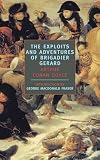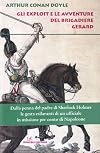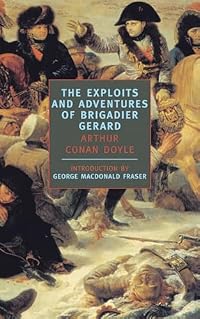
The Exploits and Adventures of Brigadier Gerard
by Sir Arthur Conan Doyle
Brigadier Gerard (Collections and Selections — 1 & 2)
On This Page
Description
There is no braver officer in Napoleon's cavalry than étienne Gerard - especially in his own opinion. Whether kidnapped by gangs of brigands or outnumbered by enemy troops, the plucky little soldier is constantly gallant, chivalrous and ready to face any danger, even if he doesn't always think before he acts. With great gusto Gerard recounts the swashbuckling exploits and adventures of his glittering military career - carrying out secret missions for Napoleon, eluding capture by the Duke of show more Wellington, making a daring break from an English prison, rescuing ladies in distress, duelling to the death against the dastardly Baron Straubenthal and even saving the day at the Battle of Waterloo. show lessTags
Recommendations


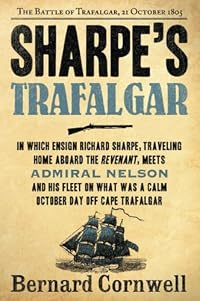
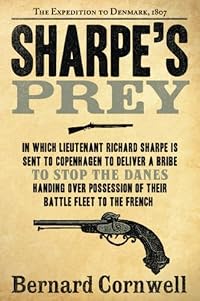
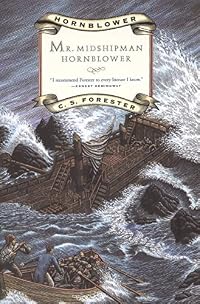
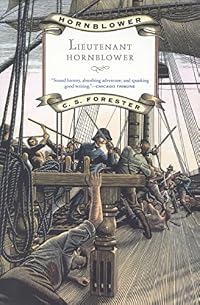







Member Reviews
Often funny, sometimes magnificent and never boring, these collected stories of Brigadier Gerard, a brave but vain French cavalryman in the Napoleonic wars, show Sir Arthur Conan Doyle at his best. Not his absolute best, of course – a deerstalker hat-shaped shadow looms over any such discussion – but Doyle is arguably the best popular short-storyteller in the English language and the Gerard stories evidence that.
The stories have an aging Brigadier Gerard in his sixties relating adventures from his years fighting in the Napoleonic Wars. These are classic adventure stories and scenarios, which is thrilling enough for any reader, but Doyle also writes excellently (the two Waterloo stories are supreme) and adds elements that really show more heighten the concept. While genuinely courageous, Gerard is also vain and naïve, peacocking with abandon, and much of the humour comes from him not realising the exasperation of those around him. As George MacDonald Fraser writes in his Introduction to this NYRB Classics edition, "Gerard being cunning is visible for miles" (pg. viii). The Brigadier lives in his own world, and we enjoy spending time with him there.
The fact that the afore-mentioned George MacDonald Fraser was heavily influenced by these stories in writing the Flashman series – by far my favourite novels – only deepens my fondness and enjoyment of the book. The breaking of the Old Guard at Waterloo (pp328-9), one of Conan Doyle's finest passages of writing, is practically a blueprint for how Fraser would go on to write such historical moments himself, as is the opening of 'Castle of Gloom' (pg. 113). Fraser added his own devilment and genius when carrying the influence over to Harry Flashman, a better and more consistently rewarding creation, but reading the entire Brigadier Gerard stories in this volume, I can recognise that he was standing on the shoulders of a very jolly giant. show less
The stories have an aging Brigadier Gerard in his sixties relating adventures from his years fighting in the Napoleonic Wars. These are classic adventure stories and scenarios, which is thrilling enough for any reader, but Doyle also writes excellently (the two Waterloo stories are supreme) and adds elements that really show more heighten the concept. While genuinely courageous, Gerard is also vain and naïve, peacocking with abandon, and much of the humour comes from him not realising the exasperation of those around him. As George MacDonald Fraser writes in his Introduction to this NYRB Classics edition, "Gerard being cunning is visible for miles" (pg. viii). The Brigadier lives in his own world, and we enjoy spending time with him there.
The fact that the afore-mentioned George MacDonald Fraser was heavily influenced by these stories in writing the Flashman series – by far my favourite novels – only deepens my fondness and enjoyment of the book. The breaking of the Old Guard at Waterloo (pp328-9), one of Conan Doyle's finest passages of writing, is practically a blueprint for how Fraser would go on to write such historical moments himself, as is the opening of 'Castle of Gloom' (pg. 113). Fraser added his own devilment and genius when carrying the influence over to Harry Flashman, a better and more consistently rewarding creation, but reading the entire Brigadier Gerard stories in this volume, I can recognise that he was standing on the shoulders of a very jolly giant. show less
You know Sherlock Holmes. You may even know Professor Challenger. But do you know Brigadier Etienne Gerard, the hero of eighteen short stories by Sir Arthur Conan Doyle? His Exploits and Adventures are collected in an NYRB classics edition (2001), and if you're in the mood for some humorous little stories of gallantry under fire, I recommend them highly.
Gerard, a plucky little cavalryman serving under his beloved Napoleon, may not always understand what's going on around him (the Emperor himself notes "I believe that if he has the thickest head he has also the stoutest heart in my army"), but he will always try his best to do what he thinks is expected of him (which is, usually, exactly the opposite of what really is expected of him).
In show more his introduction to the volume George MacDonald Fraser calls Brigadier Gerard Conan Doyle's "most likable and most human" character, and the brazen hussar certainly deserves both of those descriptors. It's impossible not to laugh at his misreadings of situations, his inability to withstand a pretty face, and his unwavering commitment to the cause of his Emperor.
Finding a new Conan Doyle character is always a delight; finding one as amusing as Brigadier Gerard is a rare treat indeed.
http://philobiblos.blogspot.com/2009/02/book-review-exploits-and-adventures-of.h... show less
Gerard, a plucky little cavalryman serving under his beloved Napoleon, may not always understand what's going on around him (the Emperor himself notes "I believe that if he has the thickest head he has also the stoutest heart in my army"), but he will always try his best to do what he thinks is expected of him (which is, usually, exactly the opposite of what really is expected of him).
In show more his introduction to the volume George MacDonald Fraser calls Brigadier Gerard Conan Doyle's "most likable and most human" character, and the brazen hussar certainly deserves both of those descriptors. It's impossible not to laugh at his misreadings of situations, his inability to withstand a pretty face, and his unwavering commitment to the cause of his Emperor.
Finding a new Conan Doyle character is always a delight; finding one as amusing as Brigadier Gerard is a rare treat indeed.
http://philobiblos.blogspot.com/2009/02/book-review-exploits-and-adventures-of.h... show less
The success of the Sherlock Holmes stories has overshadowed the fact that Sir Arthur Conan Doyle wrote many other stories of entirely different character. The New York Review of Books Classics has brought the `Exploits and Adventures of Brigadier Gerard' back to life. The Gerard character is said to be Conan Doyle's second best fictional invention.
The eight `Exploits' stories were published between 1894 and 1895 while the ten `Adventures' were published after a five year hiatus between 1900 and 1903. Like the Holmes tales, these pieces were published as serials in The Strand Magazine. Once again we owe a debt of happy gratitude to the NYRB for reviving this quirky, funny, heroic series of adventure tales.
The eponymous Gerard is one show more Etienne Gerard, a Hussar (a light cavalryman) in the French Army during the Napoleonic Wars. In other words, a character about as far removed from the dyspeptic intellectual detective of Baker Street as one can imagine. In the excellent introduction (one of the hallmarks of the NYRB Classics series), George Macdonald Fraser remarks on the courage Conan Doyle showed in showcasing a French hero fighting against the British less than 80 years after Napoleon was finally defeated (As Fraser notes "even today [the French ] are not notably popular north of the Channel"). Quite a feat of imagination.
Like Harry Flashman (Flashman: A Novel (Flashman)) and the lesser known Otto Prohaska (A Sailor of Austria: In Which, Without Really Intending to, Otto Prohaska Becomes Official War Hero No. 27 of the Habsburg Empire (The Otto Prohaska Novels)), Gerard is in his old age when he spins his stories to the reader. Gerard boasts that he is the greatest swordsman, horseman, and lover as well as the most loyal servant of Napoleon in the entire French army. And Conan Doyle permits Gerard to excel in all these measures and yet his excessive pride makes him obtuse. As Fraser put it Gerard is "vain, touchy, obstinate, reckless, boastful, and none too bright." He is entirely ingenuous, which repeatedly leads him to trouble and then he must slash his sword and dash away on his horse to escape. Gerard is charmingly unaware that he is a strutting French peacock; he assumes that others should and do recognize his exceptional qualities. Coming from a more self-aware man such cocksureness would be intolerable conceit.
I titled this review "What Would Harry Flashman Make of Etienne Gerard?" That's a fun question to speculate about. It would take a new Sir Arthur Conan Doyle or Sir George MacDonald Fraser to do it justice. My guess is Harry would laugh up his sleeve at Gerard until he saw Etienne's sword swinging dangerously toward his head. For his part, I expect Gerard would be blissfully unaware of Flashman's disdain, but might he also detect Harry's certain 'shyness'?
The `Exploits and Adventures of Brigadier Gerard' are wonderful entertainments. Like the Sherlock Holmes stories, the pity is there are so few of them. Highest recommendation. show less
The eight `Exploits' stories were published between 1894 and 1895 while the ten `Adventures' were published after a five year hiatus between 1900 and 1903. Like the Holmes tales, these pieces were published as serials in The Strand Magazine. Once again we owe a debt of happy gratitude to the NYRB for reviving this quirky, funny, heroic series of adventure tales.
The eponymous Gerard is one show more Etienne Gerard, a Hussar (a light cavalryman) in the French Army during the Napoleonic Wars. In other words, a character about as far removed from the dyspeptic intellectual detective of Baker Street as one can imagine. In the excellent introduction (one of the hallmarks of the NYRB Classics series), George Macdonald Fraser remarks on the courage Conan Doyle showed in showcasing a French hero fighting against the British less than 80 years after Napoleon was finally defeated (As Fraser notes "even today [the French ] are not notably popular north of the Channel"). Quite a feat of imagination.
Like Harry Flashman (Flashman: A Novel (Flashman)) and the lesser known Otto Prohaska (A Sailor of Austria: In Which, Without Really Intending to, Otto Prohaska Becomes Official War Hero No. 27 of the Habsburg Empire (The Otto Prohaska Novels)), Gerard is in his old age when he spins his stories to the reader. Gerard boasts that he is the greatest swordsman, horseman, and lover as well as the most loyal servant of Napoleon in the entire French army. And Conan Doyle permits Gerard to excel in all these measures and yet his excessive pride makes him obtuse. As Fraser put it Gerard is "vain, touchy, obstinate, reckless, boastful, and none too bright." He is entirely ingenuous, which repeatedly leads him to trouble and then he must slash his sword and dash away on his horse to escape. Gerard is charmingly unaware that he is a strutting French peacock; he assumes that others should and do recognize his exceptional qualities. Coming from a more self-aware man such cocksureness would be intolerable conceit.
I titled this review "What Would Harry Flashman Make of Etienne Gerard?" That's a fun question to speculate about. It would take a new Sir Arthur Conan Doyle or Sir George MacDonald Fraser to do it justice. My guess is Harry would laugh up his sleeve at Gerard until he saw Etienne's sword swinging dangerously toward his head. For his part, I expect Gerard would be blissfully unaware of Flashman's disdain, but might he also detect Harry's certain 'shyness'?
The `Exploits and Adventures of Brigadier Gerard' are wonderful entertainments. Like the Sherlock Holmes stories, the pity is there are so few of them. Highest recommendation. show less
This book was one of Philip Pullman's top 40 books for Waterstones and I am grateful for the pointer to a work which had inexplicably passed me by. The stories of Etienne Gerard's adventures in Napoleon's army are told from the viewpoint of old age and lubricated by wine of varying quality donated by the listeners. If half of what Gerard tells us is true, he is undoubtedly a skilful swordsman, a great horseman and a successful womaniser. It is impossible to question his courage, although his actions not infrequently remove him from serious danger. His insight is near non-existent, both in respect of his own actions and in what others think of him, but in spite of this he seems to be well liked by most who are involved with him.
It is show more good to see the Napoleonic wars from the other side for a change but, perhaps because the stories were written by a very English writer, Gerard comes over with rather British attitudes (with major exceptions over cricket and fox-hunting).
The stories themselves tend to turn around a single, and sometimes predictable, plot device but are pacy and to the point. Conan Doyle is comfortable with short stories and these, while inevitably overshadowed by Holmes and Watson, are undemanding entertainment well worth investigating. show less
It is show more good to see the Napoleonic wars from the other side for a change but, perhaps because the stories were written by a very English writer, Gerard comes over with rather British attitudes (with major exceptions over cricket and fox-hunting).
The stories themselves tend to turn around a single, and sometimes predictable, plot device but are pacy and to the point. Conan Doyle is comfortable with short stories and these, while inevitably overshadowed by Holmes and Watson, are undemanding entertainment well worth investigating. show less
Gerard is a fantastic character. I love the mix of humour and adventure here. Personally, I would happily have settled for fewer Sherlock Holmes stories in exchange for a few more of Gerard.
Ratings
Members
- Recently Added By
Author Information

3,987+ Works 169,129 Members
The most famous fictional detective in the world is Arthur Conan Doyle's Sherlock Holmes. However, Doyle was, at best, ambivalent about his immensely successful literary creation and, at worst, resentful that his more "serious" fiction was relatively ignored. Born in Edinburgh, Doyle studied medicine from 1876 to 1881 and received his M.D. in show more 1885. He worked as a military physician in South Africa during the Boer War and was knighted in 1902 for his exceptional service. Doyle was drawn to writing at an early age. Although he attempted to enter private practice in Southsea, Portsmouth, in 1882, he soon turned to writing in his spare time; it eventually became his profession. As a Liberal Unionist, Doyle ran, unsuccessfully, for Parliament in 1903. During his later years, Doyle became an avowed spiritualist. Doyle sold his first story, "The Mystery of the Sasassa Valley," to Chambers' Journal in 1879. When Doyle published the novel, A Study in Scarlet in 1887, Sherlock Holmes was introduced to an avid public. Doyle is reputed to have used one of his medical professors, Dr. Joseph Bell, as a model for Holmes's character. Eventually, Doyle wrote three additional Holmes novels and five collections of Holmes short stories. A brilliant, though somewhat eccentric, detective, Holmes employs scientific methods of observation and deduction to solve the mysteries that he investigates. Although an "amateur" private detective, he is frequently called upon by Scotland Yard for assistance. Holmes's assistant, the faithful Dr. Watson, provides a striking contrast to Holmes's brilliant intellect and, in Doyle's day at least, serves as a character with whom the reader can readily identify. Having tired of Holmes's popularity, Doyle even tried to kill the great detective in "The Final Problem" but was forced by an outraged public to resurrect him in 1903. Although Holmes remained Doyle's most popular literary creation, Doyle wrote prolifically in other genres, including historical adventure, science fiction, and supernatural fiction. Despite Doyle's sometimes careless writing, he was a superb storyteller. His great skill as a popular author lay in his technique of involving readers in his highly entertaining adventures. (Bowker Author Biography) show less

Arthur Conan Doyle has a Legacy Library. Legacy libraries are the personal libraries of famous readers, entered by LibraryThing members from the Legacy Libraries group.
Some Editions
Series

Belongs to Publisher Series
Work Relationships
Is contained in
Common Knowledge
Classifications
Statistics
- Members
- 263
- Popularity
- 123,013
- Reviews
- 5
- Rating
- (3.99)
- Languages
- English, French, Italian, Spanish
- Media
- Paper, Ebook
- ISBNs
- 9
- ASINs
- 3