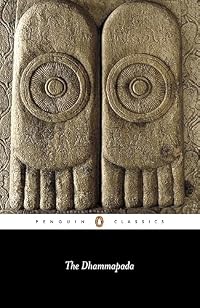
The Dhammapada
by Anonymous
On This Page
Description
Whether you're a serious practitioner of Buddhism or someone who is interested in learning more about this ancient spiritual tradition, The Dhammapada offers a fascinating glimpse inside the Buddhist ethos. Comprised of verses attributed to the Buddha as well as commentary and parables, this sacred text is a must-read for those interested in one of the world's oldest religions..
Tags
Recommendations

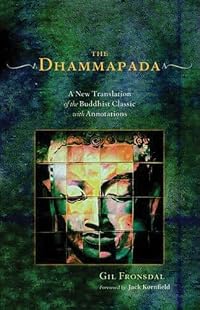
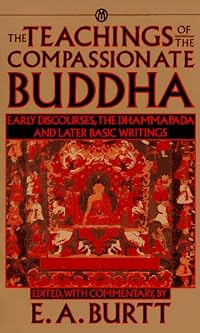
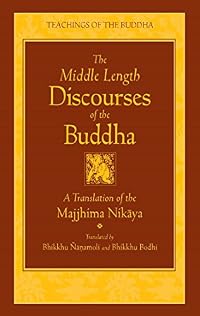


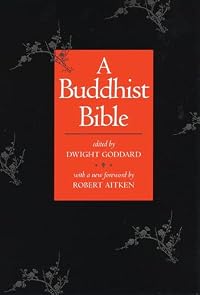

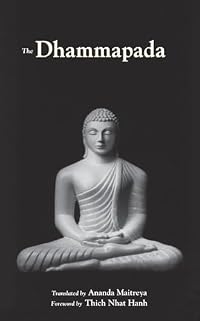













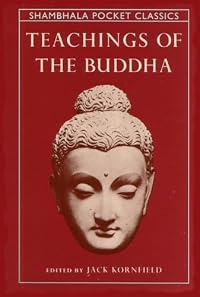

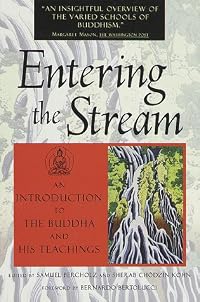





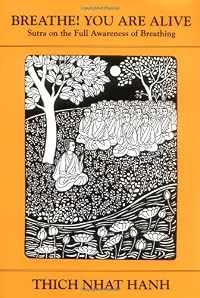
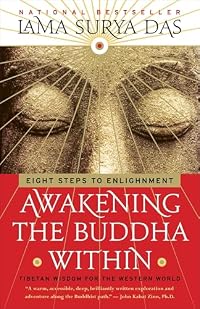
Member Recommendations

Member Reviews
I doubt I have anything original to say about The Dhammapada, but I'll offer my tuppence-worth anyway.
Its message is a deceptively simple one, in essence "be kind, be mindful". In that, as the editor of my edition, Juan Mascaró, says, it has a commonality with the essence of every major world religion. I guess the differences between religions are mainly in the particular cultural presentation of universal truths (and, perhaps, the lengths to which we go to justify deviating from the clearly marked path).
The passages in the Dhammapada which particularly resonated for me on this reading were those that chime with the person-centred worldview based on the psychological theory of Carl R. Rogers. So, for example, chapters one and two show more (Contrary Ways and Watchfulness) had meaning for me in respect of Rogers' quality of Congruence: the awareness of the flow of thought and feeling in ourselves and how they arise and are more or less distorted through the lens of past experience and psychological defensiveness. Other chapters speak to me of the process of personality change and the movement from rigid, pre-defined views of the world, to a more fluid, in-the-moment 'way of being' (to borrow the title of one of Rogers' books). There are, for me, other correspondences (though I wouldn't go so far as to say there are exact matches throughout) which I won't elaborate on, but which added to the richness of my reading this time around.
I find it fascinating that a secular, science-based approach to understanding the nature of being human can arrive at some very similar conclusions to those underlying our oldest religious traditions. This is why, as an atheist, I'm still interested in religion. It's part of who we are and the tendency towards religious ways of experiencing is likely to continue unabated as a part of us.
I'm not personally inclined towards a belief in godhead, but the numinous feeling of universal oneness which I have sometimes (rarely) felt speaks to me of the deep relatedness which, at our best, we can recognise for each other as persons of intrinsic worth, regardless of any other perceived differences. show less
Its message is a deceptively simple one, in essence "be kind, be mindful". In that, as the editor of my edition, Juan Mascaró, says, it has a commonality with the essence of every major world religion. I guess the differences between religions are mainly in the particular cultural presentation of universal truths (and, perhaps, the lengths to which we go to justify deviating from the clearly marked path).
The passages in the Dhammapada which particularly resonated for me on this reading were those that chime with the person-centred worldview based on the psychological theory of Carl R. Rogers. So, for example, chapters one and two show more (Contrary Ways and Watchfulness) had meaning for me in respect of Rogers' quality of Congruence: the awareness of the flow of thought and feeling in ourselves and how they arise and are more or less distorted through the lens of past experience and psychological defensiveness. Other chapters speak to me of the process of personality change and the movement from rigid, pre-defined views of the world, to a more fluid, in-the-moment 'way of being' (to borrow the title of one of Rogers' books). There are, for me, other correspondences (though I wouldn't go so far as to say there are exact matches throughout) which I won't elaborate on, but which added to the richness of my reading this time around.
I find it fascinating that a secular, science-based approach to understanding the nature of being human can arrive at some very similar conclusions to those underlying our oldest religious traditions. This is why, as an atheist, I'm still interested in religion. It's part of who we are and the tendency towards religious ways of experiencing is likely to continue unabated as a part of us.
I'm not personally inclined towards a belief in godhead, but the numinous feeling of universal oneness which I have sometimes (rarely) felt speaks to me of the deep relatedness which, at our best, we can recognise for each other as persons of intrinsic worth, regardless of any other perceived differences. show less
One of the few books that continually provides me with peace in the darkest times of my life and more often than not manages to rid my mind of most of its whirling thoughts that cause great suffering to it.
One of the rare books that changes on subsequent reads - not because you know the plot better or anything - but because you yourself are now changed. I don't know how to explain it, really.
This is also the best translation of this text as far as I'm concerned. There's a passage that roughly reads - "Enmity aren't quenched by enmity. Enmity are quenched by lack of enmity.". Other translators have often substituted it as "Enmity aren't quenched by enmity. Enmity are quenched by love." - which is totally different. Mr. Carter, however, show more successfully manages to retain the neutrality of The Buddha's teachings while maintaining the poetry The Buddha was so clearly fond of.
Its a book I can truly say has taken the attention of my mind through its words and has slowly, carefully, moulded it in a way that it now is permanently changed - for the better.
How many books, can you say, have the capacity to do that? show less
One of the rare books that changes on subsequent reads - not because you know the plot better or anything - but because you yourself are now changed. I don't know how to explain it, really.
This is also the best translation of this text as far as I'm concerned. There's a passage that roughly reads - "Enmity aren't quenched by enmity. Enmity are quenched by lack of enmity.". Other translators have often substituted it as "Enmity aren't quenched by enmity. Enmity are quenched by love." - which is totally different. Mr. Carter, however, show more successfully manages to retain the neutrality of The Buddha's teachings while maintaining the poetry The Buddha was so clearly fond of.
Its a book I can truly say has taken the attention of my mind through its words and has slowly, carefully, moulded it in a way that it now is permanently changed - for the better.
How many books, can you say, have the capacity to do that? show less
A collection of sayings attributed to the Buddha. It's gentle and earnest, perhaps a bit soporific in its repetitiveness (though I guess that works well for memorisation, recitation, and meditation). Some of what is included here seems very obvious, though I guess the rub is that what seems obvious about ethical behaviour can also sometimes be the most difficult thing to put into practice. See, for example, some things that read in a very pointed manner in 2025:
Who wishes his own pleasure,
By imposing misery on others,
Who is contaminated by the contact of hate,
He is not released from hate.
Better than an iron ball be eaten,
Glowing, like a flame of fire,
Than that one should eat a country's alms food,
Being poor in virtue, lacking control.
Who wishes his own pleasure,
By imposing misery on others,
Who is contaminated by the contact of hate,
He is not released from hate.
Better than an iron ball be eaten,
Glowing, like a flame of fire,
Than that one should eat a country's alms food,
Being poor in virtue, lacking control.
The Dhammapada is a collection of aphorisms that illustrate the moral teachings of Buddha - the spiritual path to the supreme Truth. Probably compiled in the third century BCE, the verses are arranged according to theme, covering ideas such as self-possession, good and evil, watchfulness and endurance. Together they describe how an individual can attain the enlightenment of Nirvana, the supreme goal of Buddhism. The road to Nirvana, as illustrated in The Dhammapada, is narrow and difficult to negotiate, but the reward of eternal life gives hope and determination to the traveller.
I'm not silly enough to review the Dhammapada; I'm reviewing this edition. So, just know that the Roebuck translation in Penguin Classics is probably not great if you don't know much about Buddhism, but is glorious if you do. The notes are mostly stories that have been used to explain individual verses, which are often very fun, and give you more insight into the religion than more sanitized, Western readings (in which Buddhism is mostly about stabilizing your brain-wave patterns).
Roebuck's introduction focuses on the textual history of the Dhammapada, which is useful for some scholarly purposes, I'm sure, but, again, not very useful if you're coming to ancient Buddhism for the first time. The glossary is very useful, though.
So, all show more in all, a very nice edition. The translation is readable without straining for poetry, which I liked. show less
Roebuck's introduction focuses on the textual history of the Dhammapada, which is useful for some scholarly purposes, I'm sure, but, again, not very useful if you're coming to ancient Buddhism for the first time. The glossary is very useful, though.
So, all show more in all, a very nice edition. The translation is readable without straining for poetry, which I liked. show less
This is a lovely translation, but the word choices lean towards the Christan mind set.
This is a slim volume of Buddhist teachings- only a page or two per topic. It ranges from Anger, to Old Age. The wisdom presented is easily understood, but difficult to master. Regardless of what you believe, or religion you follow, there will be something for you to ponder on.
Members
- Recently Added By
Lists

Buddhism, books there in
23 works; 4 members

Books Read in 2017
4,249 works; 130 members

Shaykh Hamza's Book Recommendations
439 works; 3 members

Philip Ward's Lifetime Reading Plan
592 works; 22 members

Books About Non-Abrahamic Religions
98 works; 2 members
Author Information
1 Work 3,379 Members
All Editions
Some Editions
Awards and Honors
Series
Belongs to Publisher Series
Work Relationships
Common Knowledge
- Canonical title
- The Dhammapada
- Original title
- धर्मपद
- Original publication date
- ca. 300 BC
- First words
- Our life is shaped by our mind; we become what we think.
What we are today comes from our thoughts of yesterday, and our present thoughts build our life of tomorrow; our life is the creation of our mind. - Last words
- (Click to show. Warning: May contain spoilers.)All that he had to do is done: he has become one with all life.
(Click to show. Warning: May contain spoilers.)He who knows the river of his past lives and is free from life that ends in death, who knows the joys of heaven and the sorrows of hell, for he is a seer whose vision is pure, who in perfection is one with the Supreme Perfection - him I call a Brahmin. - Publisher's editor
- Radice, Betty
- Original language
- Sanskrit
- Canonical DDC/MDS
- 294.38
Classifications
Statistics
- Members
- 3,437
- Popularity
- 4,842
- Reviews
- 27
- Rating
- (4.09)
- Languages
- 8 — English, Finnish, French, German, Italian, Pali, Sanskrit, Spanish
- Media
- Paper, Audiobook, Ebook
- ISBNs
- 90
- UPCs
- 3
- ASINs
- 46
