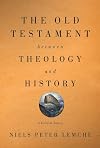
The Old Testament between Theology and History: A Critical Survey
by Niels Peter Lemche
On This Page
Description
From its inception at the time of the Enlightenment until the mid-twentieth century, the historical-critical method constituted the dominant paradigm in Old Testament studies. In this magisterial overview, Niels Peter Lemche surveys the development of the historical-critical method and the way it changed the scholarly perception of the Old Testament. He describes the rise and influence of historical-critical approaches and traces their decline and fall. Then, he discusses the identity of the show more authors of the Old Testament, based on the content of the literature they wrote, demonstrating that the "collapse of history" does not preclude critical study. Lemche goes on to investigates the theological consequences of this "collapse" and surveys Old Testament and biblical theology in its various manifestations in the twentieth century. An appendix includes a history of Palestine from the Stone Age to modern times, constructed without recourse to the Old Testament. show lessTags
Recommendations







Member Reviews
Niels Peter Lemche claims that about 200 years ago Western Christians started asking the question “Did it really happen?” about events in the Old Testament. About the same time the Romantic idea of the nation state grew out of revolutions and rebellions. Kings no longer defined people. We began to speak of nations as “She”, and attributed actions to nations.
The combination of using the Bible as a source book for a history of Ancient Israel and the rise of nationalism was a disaster. Lemche claims that imperialistic nations felt justified in treating the inhabitants of places they conquered in the same manner as Joshua had treated the Canaanites. Because Israel, that ancient nation in the story had ignored, mistreated, show more dehumanised and only just tolerated the ongoing presence of the original inhabitants of the land God was giving them, so the English in Australia or the French in Africa could do the same.
It may be that the Holocaust happened partly because European Christians had asked of the Old Testament, “Did it really happen?” The German nation put to the ban the enemies of Christ, who were defined as not even really human beings. And paradoxically, the Israeli nation may be absorbing the same thinking when she continues to expand her settlements as if there were no Palestinians living where she seeks to build.
Lemche, who is Professor at the Department for Biblical Exegesis at the University of Copenhagen in Denmark, reveals the process by which the critical-historical method of understanding the Old Testament has unravelled. Again and again he shows that proofs of historical events in the Bible are based on circular reasoning. No evidence for a wide-spread empire based around southern Palestine in the 9th or 10th Centuries BCE has ever been found. There is no evidence for Kings David and Solomon outside of the Bible. Lemche shows how hopeful scholars make their claims for David and Solomon from the Books of Samuel and Kings and then use the same books as evidence for those claims.
There is attestation outside the Bible in the 8th Century for a small “House of Omri”, which the Bible calls the northern kingdom of Israel. There is precious little other corroborating evidence for the events or the personalities described in the Bible.
What then should we do? Discard the Old Testament as simply unreliable? Overall Professor Lemche calls us to look afresh both at the original purpose of the Old Testament and at the history of the area we call Palestine.
Lemche believes the Old Testament was written much later than scholars have previously argued, perhaps in the 2nd or 1st Centuries BC. It was certainly written in a time of diaspora and written for the Jews to respond to the fact that they were scattered from their land. They were in possession of two foundation myths, those of exodus and exile, so the purpose in writing was to weave these themes into an exhortation to stand apart from the people around them by turning to the God who led them out of slavery and alienation.
Their purpose was not to write a coherent documentary of the past; it was to create an expectation that God was continuing to act among God’s people, and that a Messiah would come to rescue them. The book of Psalms, for example, is ordered to reveal this messianic agenda.
The first Christians often quoted the Old Testament. In the time of Jesus, there was certainly no bound volume in Hebrew or Greek called “The Old Testament”. The New Testament authors quoted usually from the Greek translation of Old Testament books. The way Christians picked up from these books the themes of Law and Gospel, Promise and Fulfilment is covered briefly. These sections were tantalising. I wanted more on this.
In a lengthy Appendix, Lemche uses the tools of a modern historian to sketch a history of Palestine from pre-historic times to modern Israel: using the long perspective of the geography and fauna of the land, to the middle perspective of human occupation and land use, to the shorter perspective of the social and political groupings in Palestine. History is still important; but it is found from evidence, not from books that were always intended to be read as theology and for spiritual encouragement.
Professor Lemche describes himself and his colleagues in the “Copenhagen School” as “radical theologians”. He asserts that the “collapse of history” in Old Testament studies has liberated the Hebrew Bible. As he says, “We now have the stories unmolested.”
In this volume Professor Lemche has written a comprehensive survey of Old Testament scholarship of the last 50 years. As I read it, I felt he was putting into this book his whole journey of scholarship and discovery. It is not always easy to read. He wrote it originally in Danish, and then translated it himself with help from Professor Jim West and the book’s American publisher. The result is uneven. It changes register abruptly from academic style to colloquial. The sentences are sometimes long and convoluted. For such a summative work, a thorough edit or a skilled translator would have been helpful.
But I found the book well worth persevering with. For some Christians, the idea of “the collapse of history” will be challenging; but for most of us, refocusing the Bible on its theological foundations and letting go of the need to find dates for the Exodus or prove Abraham existed clears the way to read afresh the Old Testament and its promise of a Messiah. show less
The combination of using the Bible as a source book for a history of Ancient Israel and the rise of nationalism was a disaster. Lemche claims that imperialistic nations felt justified in treating the inhabitants of places they conquered in the same manner as Joshua had treated the Canaanites. Because Israel, that ancient nation in the story had ignored, mistreated, show more dehumanised and only just tolerated the ongoing presence of the original inhabitants of the land God was giving them, so the English in Australia or the French in Africa could do the same.
It may be that the Holocaust happened partly because European Christians had asked of the Old Testament, “Did it really happen?” The German nation put to the ban the enemies of Christ, who were defined as not even really human beings. And paradoxically, the Israeli nation may be absorbing the same thinking when she continues to expand her settlements as if there were no Palestinians living where she seeks to build.
Lemche, who is Professor at the Department for Biblical Exegesis at the University of Copenhagen in Denmark, reveals the process by which the critical-historical method of understanding the Old Testament has unravelled. Again and again he shows that proofs of historical events in the Bible are based on circular reasoning. No evidence for a wide-spread empire based around southern Palestine in the 9th or 10th Centuries BCE has ever been found. There is no evidence for Kings David and Solomon outside of the Bible. Lemche shows how hopeful scholars make their claims for David and Solomon from the Books of Samuel and Kings and then use the same books as evidence for those claims.
There is attestation outside the Bible in the 8th Century for a small “House of Omri”, which the Bible calls the northern kingdom of Israel. There is precious little other corroborating evidence for the events or the personalities described in the Bible.
What then should we do? Discard the Old Testament as simply unreliable? Overall Professor Lemche calls us to look afresh both at the original purpose of the Old Testament and at the history of the area we call Palestine.
Lemche believes the Old Testament was written much later than scholars have previously argued, perhaps in the 2nd or 1st Centuries BC. It was certainly written in a time of diaspora and written for the Jews to respond to the fact that they were scattered from their land. They were in possession of two foundation myths, those of exodus and exile, so the purpose in writing was to weave these themes into an exhortation to stand apart from the people around them by turning to the God who led them out of slavery and alienation.
Their purpose was not to write a coherent documentary of the past; it was to create an expectation that God was continuing to act among God’s people, and that a Messiah would come to rescue them. The book of Psalms, for example, is ordered to reveal this messianic agenda.
The first Christians often quoted the Old Testament. In the time of Jesus, there was certainly no bound volume in Hebrew or Greek called “The Old Testament”. The New Testament authors quoted usually from the Greek translation of Old Testament books. The way Christians picked up from these books the themes of Law and Gospel, Promise and Fulfilment is covered briefly. These sections were tantalising. I wanted more on this.
In a lengthy Appendix, Lemche uses the tools of a modern historian to sketch a history of Palestine from pre-historic times to modern Israel: using the long perspective of the geography and fauna of the land, to the middle perspective of human occupation and land use, to the shorter perspective of the social and political groupings in Palestine. History is still important; but it is found from evidence, not from books that were always intended to be read as theology and for spiritual encouragement.
Professor Lemche describes himself and his colleagues in the “Copenhagen School” as “radical theologians”. He asserts that the “collapse of history” in Old Testament studies has liberated the Hebrew Bible. As he says, “We now have the stories unmolested.”
In this volume Professor Lemche has written a comprehensive survey of Old Testament scholarship of the last 50 years. As I read it, I felt he was putting into this book his whole journey of scholarship and discovery. It is not always easy to read. He wrote it originally in Danish, and then translated it himself with help from Professor Jim West and the book’s American publisher. The result is uneven. It changes register abruptly from academic style to colloquial. The sentences are sometimes long and convoluted. For such a summative work, a thorough edit or a skilled translator would have been helpful.
But I found the book well worth persevering with. For some Christians, the idea of “the collapse of history” will be challenging; but for most of us, refocusing the Bible on its theological foundations and letting go of the need to find dates for the Exodus or prove Abraham existed clears the way to read afresh the Old Testament and its promise of a Messiah. show less
Ratings
Members
- Recently Added By
Author Information

13+ Works 248 Members
Niels Peter Lemche is Professor Emeritus in the Department of Biblical Exegesis at the University of Copenhagen, Denmark.
Classifications
- Genres
- Nonfiction, Religion & Spirituality, History, General Nonfiction, Literature Studies and Criticism
- DDC/MDS
- 221.6 — Religion The Bible Old Testament (Tanakh) Bible. O.T.--exegesis
- LCC
- BS1171.3 .L46 — Philosophy, Psychology and Religion The Bible The Bible Old Testament Works about the Old Testament Criticism and interpretation
- BISAC
Statistics
- Members
- 29
- Popularity
- 954,201
- Reviews
- 1
- Rating
- (4.00)
- Languages
- English
- Media
- Paper, Ebook
- ISBNs
- 1
- ASINs
- 1