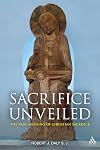
For me, rather than ‘unveil’ the meaning of sacrifice – as promised in the title – Fr Daly’s Sacrifice Unveiled joins the dots of things I knew, or half-knew.
It certainly challenges three myths that I have been taught:
Myth 1. The idea that the ‘Words of Institution’ are, if not the moment of transformation of bread and wine, are (as my teacher Dr Max Thomas at Trinity College in Melbourne, used to say) at least a ‘psychological high point’ in the Eucharist.
Myth 2. The idea that the priest should consume the elements before the people do because this somehow ‘completes the sacrifice’.
Archbishop Kay Goldsworthy shattered this myth for me when she was Rector of the Parish of Applecross, insisting that she would take the bread and wine after everyone else. She was modelling the idea that the priest is not more important than the congregation. Rather the celebrant is its servant. In the parish setting, Kay normally received communion last and usually from the hands of laypeople.
Myth 3. The odd idea that the whole Thanksgiving Prayer from the Sursum Corda until the celebrant has consumed the bread and wine must always be completed, even if the church was burning or falling down. The priest had a duty to remain at the altar while the congregation evacuated the building.
Having read Robert Daly’s exhaustive examination of the notion of Christian sacrifice, I can now proclaim with certainty that these three ideas are all poppycock, massive show more misunderstandings of what is happening when we, the Church, gather to celebrate the Eucharist.
I normally don’t use the language of ‘sacrifice’ or ‘the Mass’, but the same set of ideas has come down to me from the Church’s long tradition.
Father Daly’s years of research leads him first to a negative conclusion. The ‘sacrifice’ in the Eucharist is not ‘sacrifice’ in the History of Religions sense. The Eucharist is not a sacrifice where human worshippers destroy a victim to appease a wronged and angry deity.
Daly takes us through the Biblical references to sacrifice (yes, the New Testament has a different take on the idea of sacrifice than parts of the Old), the Patristic evidence, through Medieval ideas to the Reformation (and Roman Catholic reaction to it) and up to the ecumenical convergence of the present day.
He concludes that sacrifice in the Eucharist is not, and cannot be, the action of human beings. Sacrifice is the loving action of the Father. Atonement, the goal of sacrifice, is not achieved by the destruction of the Son on the Cross to ‘pay the price of our sin’. Far from it: The Father freely and lovingly gives the gift of His Son, a human being and yet His very self, so that all humanity may identify with Him, and the Holy Spirit transform us more and more into the Father’s likeness. St Athanasius picks up this theme of divinisation, writing, "For the Son of God became man so that we might become God." (De incarnatione 54,3)
The purpose of the Eucharist, the ‘sacrifice’, is the transformation of the worshippers into greater and greater love. This sacrifice does not depend on the priest’s authority. The Eucharist is the prayer of the people, the whole body of the faithful. Priests don’t need to worry about getting the Words of Institution exactly right, or ‘completing’ the sacrifice while being immolated in burning buildings, because the priests are members of the whole body. They say words and complete actions simply as the facilitator for the congregation’s prayer.
Robert Daly’s book is written for informed laity as well as for priests. While it is a thorough theological survey of the meaning of the Eucharist, he has written for non-academics as well as theologians.
This book clears the mind. It clears the mind of commonly held myths about the Eucharist. He clears the mind so that our hearts may be more open to the transformation into greater love, ‘… so that we might become God.’
Fr Daly repeatedly quotes St Paul in Romans 5:5, seeing in this verse a summation of the whole truth of the Gospel and the whole meaning of the Eucharistic sacrifice. ‘For the love of God has been poured into our hearts through the Holy Spirit who was given to us.’ show less
It certainly challenges three myths that I have been taught:
Myth 1. The idea that the ‘Words of Institution’ are, if not the moment of transformation of bread and wine, are (as my teacher Dr Max Thomas at Trinity College in Melbourne, used to say) at least a ‘psychological high point’ in the Eucharist.
Myth 2. The idea that the priest should consume the elements before the people do because this somehow ‘completes the sacrifice’.
Archbishop Kay Goldsworthy shattered this myth for me when she was Rector of the Parish of Applecross, insisting that she would take the bread and wine after everyone else. She was modelling the idea that the priest is not more important than the congregation. Rather the celebrant is its servant. In the parish setting, Kay normally received communion last and usually from the hands of laypeople.
Myth 3. The odd idea that the whole Thanksgiving Prayer from the Sursum Corda until the celebrant has consumed the bread and wine must always be completed, even if the church was burning or falling down. The priest had a duty to remain at the altar while the congregation evacuated the building.
Having read Robert Daly’s exhaustive examination of the notion of Christian sacrifice, I can now proclaim with certainty that these three ideas are all poppycock, massive show more misunderstandings of what is happening when we, the Church, gather to celebrate the Eucharist.
I normally don’t use the language of ‘sacrifice’ or ‘the Mass’, but the same set of ideas has come down to me from the Church’s long tradition.
Father Daly’s years of research leads him first to a negative conclusion. The ‘sacrifice’ in the Eucharist is not ‘sacrifice’ in the History of Religions sense. The Eucharist is not a sacrifice where human worshippers destroy a victim to appease a wronged and angry deity.
Daly takes us through the Biblical references to sacrifice (yes, the New Testament has a different take on the idea of sacrifice than parts of the Old), the Patristic evidence, through Medieval ideas to the Reformation (and Roman Catholic reaction to it) and up to the ecumenical convergence of the present day.
He concludes that sacrifice in the Eucharist is not, and cannot be, the action of human beings. Sacrifice is the loving action of the Father. Atonement, the goal of sacrifice, is not achieved by the destruction of the Son on the Cross to ‘pay the price of our sin’. Far from it: The Father freely and lovingly gives the gift of His Son, a human being and yet His very self, so that all humanity may identify with Him, and the Holy Spirit transform us more and more into the Father’s likeness. St Athanasius picks up this theme of divinisation, writing, "For the Son of God became man so that we might become God." (De incarnatione 54,3)
The purpose of the Eucharist, the ‘sacrifice’, is the transformation of the worshippers into greater and greater love. This sacrifice does not depend on the priest’s authority. The Eucharist is the prayer of the people, the whole body of the faithful. Priests don’t need to worry about getting the Words of Institution exactly right, or ‘completing’ the sacrifice while being immolated in burning buildings, because the priests are members of the whole body. They say words and complete actions simply as the facilitator for the congregation’s prayer.
Robert Daly’s book is written for informed laity as well as for priests. While it is a thorough theological survey of the meaning of the Eucharist, he has written for non-academics as well as theologians.
This book clears the mind. It clears the mind of commonly held myths about the Eucharist. He clears the mind so that our hearts may be more open to the transformation into greater love, ‘… so that we might become God.’
Fr Daly repeatedly quotes St Paul in Romans 5:5, seeing in this verse a summation of the whole truth of the Gospel and the whole meaning of the Eucharistic sacrifice. ‘For the love of God has been poured into our hearts through the Holy Spirit who was given to us.’ show less
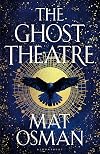
The stage is illuminated by just four candles. A boat’s prow appears behind the curtain at the back. A blue cloth billows across the stage, making the boat appear to gyre in the waves. A firecracker above and the drum-roll of wood on metal rock the stage. Cleopatra appears in the bow of the boat. She waits her moment and then speaks. She knows her power. The prompt just below the front of the stage is thrown again as Cleopatra strays off-script.
But she knows her public.
The fifty or so audience members are mesmerised by every word, every stage trick, everything that makes up the theatre experience in 1603 London.
The theatre in Mat Osman’s gorgeous novel is modelled closely on the real Blackfriars Boys, even to the extent that the impresario who owns the boys is named Evans (the historical Henry Evans held the licence for the Blackfriars).
The actor who plays Cleopatra so captivatingly is ‘Lord’ Nonesuch, a 15-year-old boy whose acting brings him fame, ‘name recognition’, throughout the 400,000 residents of the city. Adoring girls wait for him at the theatre door.
A dark side soon appears: the boys are forced to perform for parties at Evans’ house and the houses of other rich gentlemen. Nonesuch is painted white and stands on a plinth for the aristocrats’ diversion. Osman does not directly describe these tableaux; he appeals to our imagination to fill in the detail – or not.
In a clever misdirection, Nonesuch at first appears to be the main protagonist show more in The Ghost Theatre. He is so charismatic, and so much the leader of the boys (and girls) of the theatre, that Osman makes us admire him and worry for him. His backstory is dire. He is no Lord, but when he was ten, Evans bought him for sixpence from his drunken parents.
Shay passes as a boy to earn pennies as a messenger. She avoids the crammed streets by running the rooftops like urban runners in the 21st Century.
She lives on the marsh in Southwark. She and her dying father are members of the Aviscultans, a community outside the law (in Elizabeth’s England you have to be Church of England, or else), and is slated to take over from her late mother as the soothsayer who interprets the murmuration of the starlings. In the City, she hides her shaven and tattooed head with a cap.
She is so intrigued by her chance meeting with Nonesuch that she returns with him to the theatre and quickly becomes part of the little world of the boys and special effects girl Alouette and costume maker Blanch, a West Indian diver.
A quiet connection is established with Alvery Trussell, the quiet, clumsy boy who can’t quite learn his lines, and is everything that Nonesuch is not; at least in Nonesuch’s eyes.
Nonesuch is introduced to the rooftops. Their teenage romance is warm and beautiful. The other Blackfriars boys are generously happy for Nonesuch to share his cot with Shay in the dormitory.
Trying to gain a little freedom from Evans he and Shay set up pop-up theatres in pubs and alleyways, the Ghost Theatre. They had to be careful of the Queen’s enforcers, the Swifts, because theatre could only be performed with a licence.
They quickly make enemies. The villains in The Ghost Theatre are portrayed by the actions of their hoodlums; Gilmour’s men are after them, Elizabeth, the dying Queen deploys her Swifts with ruthless cruelty. Evans is ambitious in his cruelty. He is a thoroughgoing nasty man.
As their popularity grows, Shay and Nonesuch are inevitably drawn into these dangerous politics just as the plague hits. They flee the ‘sick city of 1603’ to perform in the country.
The politics and the relationships of the main characters pull the reader to a big dénouement involving a brutally repressed revolt of apprentices (in reality, the Tower Hill riot took place in 1595, so the novel skews the timeline – to good effect).
I loved this novel. The theatre world is drawn with careful detail, and the descriptions of London are alive and rich. The characters are all lovingly brought to life, and as the plot twists so do Nonesuch, Shay and Thrussell.
Historical fiction fans will enjoy this living, breathing, dirty, roiling London. Although teenage romance is at the heart of the novel, it is a book for all romantics. Shay and Nonesuch may be only 15 but, in order to survive in such a vicious place, they have a dignified maturity.
And, if you love theatre, you will savour the Three Acts of this Thrilling Tale. It is my standout book of 2023. show less
But she knows her public.
The fifty or so audience members are mesmerised by every word, every stage trick, everything that makes up the theatre experience in 1603 London.
The theatre in Mat Osman’s gorgeous novel is modelled closely on the real Blackfriars Boys, even to the extent that the impresario who owns the boys is named Evans (the historical Henry Evans held the licence for the Blackfriars).
The actor who plays Cleopatra so captivatingly is ‘Lord’ Nonesuch, a 15-year-old boy whose acting brings him fame, ‘name recognition’, throughout the 400,000 residents of the city. Adoring girls wait for him at the theatre door.
A dark side soon appears: the boys are forced to perform for parties at Evans’ house and the houses of other rich gentlemen. Nonesuch is painted white and stands on a plinth for the aristocrats’ diversion. Osman does not directly describe these tableaux; he appeals to our imagination to fill in the detail – or not.
In a clever misdirection, Nonesuch at first appears to be the main protagonist show more in The Ghost Theatre. He is so charismatic, and so much the leader of the boys (and girls) of the theatre, that Osman makes us admire him and worry for him. His backstory is dire. He is no Lord, but when he was ten, Evans bought him for sixpence from his drunken parents.
Shay passes as a boy to earn pennies as a messenger. She avoids the crammed streets by running the rooftops like urban runners in the 21st Century.
She lives on the marsh in Southwark. She and her dying father are members of the Aviscultans, a community outside the law (in Elizabeth’s England you have to be Church of England, or else), and is slated to take over from her late mother as the soothsayer who interprets the murmuration of the starlings. In the City, she hides her shaven and tattooed head with a cap.
She is so intrigued by her chance meeting with Nonesuch that she returns with him to the theatre and quickly becomes part of the little world of the boys and special effects girl Alouette and costume maker Blanch, a West Indian diver.
A quiet connection is established with Alvery Trussell, the quiet, clumsy boy who can’t quite learn his lines, and is everything that Nonesuch is not; at least in Nonesuch’s eyes.
Nonesuch is introduced to the rooftops. Their teenage romance is warm and beautiful. The other Blackfriars boys are generously happy for Nonesuch to share his cot with Shay in the dormitory.
Trying to gain a little freedom from Evans he and Shay set up pop-up theatres in pubs and alleyways, the Ghost Theatre. They had to be careful of the Queen’s enforcers, the Swifts, because theatre could only be performed with a licence.
They quickly make enemies. The villains in The Ghost Theatre are portrayed by the actions of their hoodlums; Gilmour’s men are after them, Elizabeth, the dying Queen deploys her Swifts with ruthless cruelty. Evans is ambitious in his cruelty. He is a thoroughgoing nasty man.
As their popularity grows, Shay and Nonesuch are inevitably drawn into these dangerous politics just as the plague hits. They flee the ‘sick city of 1603’ to perform in the country.
The politics and the relationships of the main characters pull the reader to a big dénouement involving a brutally repressed revolt of apprentices (in reality, the Tower Hill riot took place in 1595, so the novel skews the timeline – to good effect).
I loved this novel. The theatre world is drawn with careful detail, and the descriptions of London are alive and rich. The characters are all lovingly brought to life, and as the plot twists so do Nonesuch, Shay and Thrussell.
Historical fiction fans will enjoy this living, breathing, dirty, roiling London. Although teenage romance is at the heart of the novel, it is a book for all romantics. Shay and Nonesuch may be only 15 but, in order to survive in such a vicious place, they have a dignified maturity.
And, if you love theatre, you will savour the Three Acts of this Thrilling Tale. It is my standout book of 2023. show less
Memoir in the form of a travelogue and romance bringing together South American and Australian cultures.
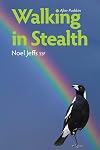
Luminously beautiful poetry
My first pass at reading Brother Noel Jeff’s second book of poetry, Walking in Stealth, left me bewildered. I could see the beautiful edifice of the poems, but I felt I was on the outside walking around looking for a way in. These are complex and mysterious poems. Many are in sonnet-like forms, with rhymes that surprise and an attention to musicality, both in the sounds of words and the overall effect of the poems. They are best appreciated read aloud.
Writing in the New Yorker about the 19th Century symbolist French poet Stéphane Mallarmé, Alex Ross said, ‘After only a few lines of Mallarmé, you are engulfed in fine mist, and terror sets in.’ I had a similar sense of being put off balance by Noel Jeff’s 18 poems.
These poems ‘were [Noel’s] morning meditations as the sun rose over [his] right shoulder and dawned the day…’ The way into the poems, I am finding, is to stand in imagination next to the poet and look at the dawn with him. The different elements of the morning – the sky, especially, and ‘the grace of birds’, ‘the creating moon’ don’t exactly come into focus, but they float around in the beauty of the words creating an abstract painting.
As these images come into view, the concerns of the poet bubble to the surface of the words: awe before the opening sky, contrasts between the simple beauty of a ‘limpid lake’ and ‘spokes of noise’ (22), the constraints of the human body, the paradox of the beauty show more and the destructive power of the sun. (31) Physical desire is ‘Crotches burning’ which ‘spin this top in a world’ (30). There are no final answers, just abstract shapes, beautiful Rorschach blots. It’s probably no coincidence that Brother Noel trained as a psychotherapist.
A reader could hunt through these poems simply for arresting images: ‘my own ram’s horn to make a shawm’ (18) takes me straight to Psalms and the Jewish shofar. ‘try perfume lathering’ (13) mixes delight into the two senses of smell and touch.
I found hints of the Franciscan Dun Scotus’s theology of the ‘Word’. Each creature, Scotus taught, is a little ‘Word’ opening itself to the viewer and telling its story of the Creator. Each word in the poems likewise opens into a celebration of the Creator. Noel Jeff’s vocation as an Anglican Franciscan friar is at home in this Creation Theology.
Ultimately, however, Brother Noel’s delight is in words, their beauty and how the meaning of words shape-shifts.
It was said of Mallarmé that the challenge was not to translate his French poetry into English; what was needed was a translation into French! You could say the same for these poems; they would be impossible to translate into English! And yet, they deserve time, opening yourself as readers to the play of meaning, the gambol of musical words, and finding an ineffable effect on you, drawing you back into the words.
I know too little about Pushkin to understand the link with Pushkin, but Noel Jeff’s poems can be enjoyed without knowing the connections. The reader simply needs time to find a way in. They are beautiful on the inside as on the out. show less
My first pass at reading Brother Noel Jeff’s second book of poetry, Walking in Stealth, left me bewildered. I could see the beautiful edifice of the poems, but I felt I was on the outside walking around looking for a way in. These are complex and mysterious poems. Many are in sonnet-like forms, with rhymes that surprise and an attention to musicality, both in the sounds of words and the overall effect of the poems. They are best appreciated read aloud.
Writing in the New Yorker about the 19th Century symbolist French poet Stéphane Mallarmé, Alex Ross said, ‘After only a few lines of Mallarmé, you are engulfed in fine mist, and terror sets in.’ I had a similar sense of being put off balance by Noel Jeff’s 18 poems.
These poems ‘were [Noel’s] morning meditations as the sun rose over [his] right shoulder and dawned the day…’ The way into the poems, I am finding, is to stand in imagination next to the poet and look at the dawn with him. The different elements of the morning – the sky, especially, and ‘the grace of birds’, ‘the creating moon’ don’t exactly come into focus, but they float around in the beauty of the words creating an abstract painting.
As these images come into view, the concerns of the poet bubble to the surface of the words: awe before the opening sky, contrasts between the simple beauty of a ‘limpid lake’ and ‘spokes of noise’ (22), the constraints of the human body, the paradox of the beauty show more and the destructive power of the sun. (31) Physical desire is ‘Crotches burning’ which ‘spin this top in a world’ (30). There are no final answers, just abstract shapes, beautiful Rorschach blots. It’s probably no coincidence that Brother Noel trained as a psychotherapist.
A reader could hunt through these poems simply for arresting images: ‘my own ram’s horn to make a shawm’ (18) takes me straight to Psalms and the Jewish shofar. ‘try perfume lathering’ (13) mixes delight into the two senses of smell and touch.
I found hints of the Franciscan Dun Scotus’s theology of the ‘Word’. Each creature, Scotus taught, is a little ‘Word’ opening itself to the viewer and telling its story of the Creator. Each word in the poems likewise opens into a celebration of the Creator. Noel Jeff’s vocation as an Anglican Franciscan friar is at home in this Creation Theology.
Ultimately, however, Brother Noel’s delight is in words, their beauty and how the meaning of words shape-shifts.
It was said of Mallarmé that the challenge was not to translate his French poetry into English; what was needed was a translation into French! You could say the same for these poems; they would be impossible to translate into English! And yet, they deserve time, opening yourself as readers to the play of meaning, the gambol of musical words, and finding an ineffable effect on you, drawing you back into the words.
I know too little about Pushkin to understand the link with Pushkin, but Noel Jeff’s poems can be enjoyed without knowing the connections. The reader simply needs time to find a way in. They are beautiful on the inside as on the out. show less

It is no accident that contemporary roads often trace the paths of the ancient trails used by the Aboriginal people of this State for trade and ceremony. The topography of the land often dictates the best route to travel whether on foot or in modern vehicles.
This captivating coffee-table book explores the State from the Kimberley to the Eucla, from Gaambera country in the far north to Noongar country in the south-west and tells the story of the roads and trails of WA.
The details of these journey ways are depicted in clear maps, but what makes the book stand out for me is the lavish illustrations of Aboriginal art and glorious photos from many parts.
Stories from every time in our 60,000 year history are told: ancient stories, alongside the recollections of colonisation of Indigenous folk and summaries of more Western knowledge are included.
It’s intriguing and humbling to learn that it took five to ten thousand years after first settlement for the First Peoples to spread from the north to the south-west. Even that arrival date is still 35 to 40 thousand years before Homer, before Stonehenge was built, or scribes began to write the Old Testament. These time-periods are truly astonishing.
I grew up in tiny Tambellup, a Great Southern town on the borders between Koreng and Minang Country. Of course I checked to see whether Tambellup was represented in the volume.. There were vivid descriptions of Tambellup and recollections of Elders from there – so I was well show more satisfied! I was interested to know that Aunty Gabrielle Hanson derives the town’s name from the tamar wallaby. I have heard other versions that say the town was named after the Nyoongar word for ‘thunder. (Though this is unlikely: the usual Noongar word for 'thunder' is 'malkar'.
Noongar knowledge-keeper Uncle Noel Nannup OAM and social work academic Associate Professor Francesca Robertson have collaborated on this and three earlier books (published by Batchelor Press) sharing their research of how people have moved around this State for tens of thousands of years.
I recall the research of Uncle Len Collard showing that about 50% of place names in WA are Aboriginal names. We have done better than other parts of Australia in remembering the names of this ancient country.
But this current book brings to mind many more place names and how the places were connected one with another. Indigenous people speak of their efforts in bringing language and culture back to life after nearly 200 years of colonisation in WA. Aboriginal Journey Ways revives even more of this Country for all of us – Indigenous and wajelah.
I am so enjoying the quality of the photos and artwork in this book that I wish I did not have to return it to the library! If you can find it in a library, it is a book I highly commend. show less
This captivating coffee-table book explores the State from the Kimberley to the Eucla, from Gaambera country in the far north to Noongar country in the south-west and tells the story of the roads and trails of WA.
The details of these journey ways are depicted in clear maps, but what makes the book stand out for me is the lavish illustrations of Aboriginal art and glorious photos from many parts.
Stories from every time in our 60,000 year history are told: ancient stories, alongside the recollections of colonisation of Indigenous folk and summaries of more Western knowledge are included.
It’s intriguing and humbling to learn that it took five to ten thousand years after first settlement for the First Peoples to spread from the north to the south-west. Even that arrival date is still 35 to 40 thousand years before Homer, before Stonehenge was built, or scribes began to write the Old Testament. These time-periods are truly astonishing.
I grew up in tiny Tambellup, a Great Southern town on the borders between Koreng and Minang Country. Of course I checked to see whether Tambellup was represented in the volume.. There were vivid descriptions of Tambellup and recollections of Elders from there – so I was well show more satisfied! I was interested to know that Aunty Gabrielle Hanson derives the town’s name from the tamar wallaby. I have heard other versions that say the town was named after the Nyoongar word for ‘thunder. (Though this is unlikely: the usual Noongar word for 'thunder' is 'malkar'.
Noongar knowledge-keeper Uncle Noel Nannup OAM and social work academic Associate Professor Francesca Robertson have collaborated on this and three earlier books (published by Batchelor Press) sharing their research of how people have moved around this State for tens of thousands of years.
I recall the research of Uncle Len Collard showing that about 50% of place names in WA are Aboriginal names. We have done better than other parts of Australia in remembering the names of this ancient country.
But this current book brings to mind many more place names and how the places were connected one with another. Indigenous people speak of their efforts in bringing language and culture back to life after nearly 200 years of colonisation in WA. Aboriginal Journey Ways revives even more of this Country for all of us – Indigenous and wajelah.
I am so enjoying the quality of the photos and artwork in this book that I wish I did not have to return it to the library! If you can find it in a library, it is a book I highly commend. show less
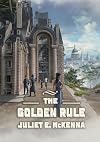
Juliet E. McKenna's novella The Golden Rule (Newcon Press 2022), set in Victorian London during the build up to Victoria’s Jubilee celebrations, tells the story of ambitious Constable David Price. Constable Price wants to be promoted to Detective, but, as the novel opens, he is on the beat keeping the Queen’s peace.
He encounters groups of Lascars (Indian sailors) and Africans, who have been stranded in England because of the Empire’s cruelty and indifference to the lives of any who are not British. He is drawn into the ambit of a mysterious Indian Princess who has established a charity to help her fellow-Indians. The network of the Princess is supported by new technologies, including a prototype Eastman Kodak camera.
When Price learns some of the truth about the foreigners, his integrity is tested, but he is able to be true to his obligations as a policeman and also to assist the Princess in foiling a complex plot against the Jubilee processions. In the process, the reader enjoys getting to know his character. I did find it a little too convenient that, in such a short novella, the story is advanced twice by Constable Price becoming the victim of bashings.
Overall, the story works a bit like one of the automata made by the Princess’s people: it has many moving parts which come together at the end.
He encounters groups of Lascars (Indian sailors) and Africans, who have been stranded in England because of the Empire’s cruelty and indifference to the lives of any who are not British. He is drawn into the ambit of a mysterious Indian Princess who has established a charity to help her fellow-Indians. The network of the Princess is supported by new technologies, including a prototype Eastman Kodak camera.
When Price learns some of the truth about the foreigners, his integrity is tested, but he is able to be true to his obligations as a policeman and also to assist the Princess in foiling a complex plot against the Jubilee processions. In the process, the reader enjoys getting to know his character. I did find it a little too convenient that, in such a short novella, the story is advanced twice by Constable Price becoming the victim of bashings.
Overall, the story works a bit like one of the automata made by the Princess’s people: it has many moving parts which come together at the end.
 This review was written for LibraryThing Early Reviewers.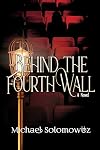
Behind the Fourth Wall is a sweet novel about a playwright coming to terms with the deaths of his beloved daughter and wife.
Noah Miller takes time off from his job writing play reviews in New York to spend time in Cape Cod where his agent friend Jerry is producing Noah’s play.
Noah ends up directing the play and falling for his leading lady but dealing with grief is the main theme of the novel.
The ‘fourth wall’ is the idea in theatre that the stage has three walls and there is a fourth wall between the actors and the audience. The image gives Solomowitz licence to play with the idea: on which side of the fourth wall is ‘real life? Is there, as some actors say, only dead people on the other side of the fourth wall?
Michael Solomowitz is well-regarded as a scriptwriter for TV and film, and as a freelance sports journalist. Behind the Fourth Wall is his first novel. I enjoyed the writing. It is clear and declarative. Probably drawing on his experience as a scriptwriter, Solomowitz brings the characters alive with witty dialogue. The butterfly, the image for which Noah remembers his daughter, is beautifully handled.
As an amateur actor and neophyte playwright, I especially enjoyed the details of putting on a play. I imagine most people would find this aspect of the novel intriguing. It certainly provides good opportunities to introduce and develop characters!
Behind the Fourth Wall is a novel that explores the depth of grief with a delicate touch.
Noah Miller takes time off from his job writing play reviews in New York to spend time in Cape Cod where his agent friend Jerry is producing Noah’s play.
Noah ends up directing the play and falling for his leading lady but dealing with grief is the main theme of the novel.
The ‘fourth wall’ is the idea in theatre that the stage has three walls and there is a fourth wall between the actors and the audience. The image gives Solomowitz licence to play with the idea: on which side of the fourth wall is ‘real life? Is there, as some actors say, only dead people on the other side of the fourth wall?
Michael Solomowitz is well-regarded as a scriptwriter for TV and film, and as a freelance sports journalist. Behind the Fourth Wall is his first novel. I enjoyed the writing. It is clear and declarative. Probably drawing on his experience as a scriptwriter, Solomowitz brings the characters alive with witty dialogue. The butterfly, the image for which Noah remembers his daughter, is beautifully handled.
As an amateur actor and neophyte playwright, I especially enjoyed the details of putting on a play. I imagine most people would find this aspect of the novel intriguing. It certainly provides good opportunities to introduce and develop characters!
Behind the Fourth Wall is a novel that explores the depth of grief with a delicate touch.
This review was written for LibraryThing Early Reviewers.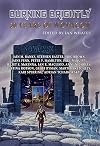
Novacon, the UK science-fiction convention celebrated its 50th year in 2021. To commemorate the half-century, they have published this collection of 14 short stories, 10 selected from previous Novacon Souvenir Booklets, and four originals for this anthology.
As with all collections, there are some stories that attract the reader more than others, but I was impressed by the breadth of imagination – and imaginative worlds – represented in these stories. Some pick up the theme of climate change; others ask perennial questions about what it is to be a human being; at least one references the lockdowns and quarantine measures imposed on us by COVID-19.
By and large, I enjoyed the read. In one or two stories, I became quite lost, and, because I was reading on my Kindle device, found it difficult to go back and pick up threads. My Kindle only shows a black and white cover: the coloured cover with its gold-embossed boast “50 YEARS OF NOVACON” is much more impressive.
It is difficult to write a meaningful review of such a wide variety of science fiction, fantasy and speculation, other than to say that it was well worth the read.
As with all collections, there are some stories that attract the reader more than others, but I was impressed by the breadth of imagination – and imaginative worlds – represented in these stories. Some pick up the theme of climate change; others ask perennial questions about what it is to be a human being; at least one references the lockdowns and quarantine measures imposed on us by COVID-19.
By and large, I enjoyed the read. In one or two stories, I became quite lost, and, because I was reading on my Kindle device, found it difficult to go back and pick up threads. My Kindle only shows a black and white cover: the coloured cover with its gold-embossed boast “50 YEARS OF NOVACON” is much more impressive.
It is difficult to write a meaningful review of such a wide variety of science fiction, fantasy and speculation, other than to say that it was well worth the read.
This review was written for LibraryThing Early Reviewers.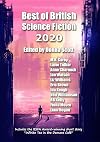
This collection lives up to its name. Each of the 26 stories is unique. Many are thought-provoking, asking the questions about time and human limits that speculative fiction does so well.
R.B. Kelly’s ‘Pineapples are not the Only Bromeliad’ uses the point of view of a sentient robot to ask what is love and can only humans experience it. Mathematician Amy Holloway, PhD in mathematics discovers how dangerous the number 70 is in Thatcher’s Britain in C.R Berry’s ‘What Happened to 70?’
I liked Lavie Tidhar’s quirky ‘Blue and Blue and Blue and Pink’, riffing on quarantine and communicable diseases. Several of the stories take us on space travel, most exploring the physical and emotional dimensions of journeys over decades and years.
Ida Keogh won the BFSA Best Short Fiction Award for 2020 with ‘Infinite Tea in the Demara Café’, evoking café culture in multiverses with beautiful prose shaping a reflection on romance.
Overall, a good selection of stories. If this is the best of British short Science Fiction, it inspires me to look out for more like these.
R.B. Kelly’s ‘Pineapples are not the Only Bromeliad’ uses the point of view of a sentient robot to ask what is love and can only humans experience it. Mathematician Amy Holloway, PhD in mathematics discovers how dangerous the number 70 is in Thatcher’s Britain in C.R Berry’s ‘What Happened to 70?’
I liked Lavie Tidhar’s quirky ‘Blue and Blue and Blue and Pink’, riffing on quarantine and communicable diseases. Several of the stories take us on space travel, most exploring the physical and emotional dimensions of journeys over decades and years.
Ida Keogh won the BFSA Best Short Fiction Award for 2020 with ‘Infinite Tea in the Demara Café’, evoking café culture in multiverses with beautiful prose shaping a reflection on romance.
Overall, a good selection of stories. If this is the best of British short Science Fiction, it inspires me to look out for more like these.
This review was written for LibraryThing Early Reviewers.The Ministry of Women in the New Testament: Reclaiming the Biblical Vision for Church Leadership by Dorothy A. Lee
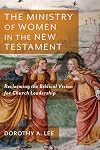
Dorothy Lee’s excellent survey of the New Testament evidence for the ministry of women opens by noting that the argument for equal ministry of women and men in the Church has not been won. Roman Catholic scholars are looking for ways to advance the argument in a church that has declared that even discussing the ordination of women to the priesthood is forbidden. Other more evangelical scholars are promulgating conservative views to a new generation of Christians.
The Reverend Professor Dorothy Lee, Research Professor of New Testament at Trinity College in the University of Divinity, Melbourne, has written a sturdy and thorough survey of all the books of the New Testament, shining a light both on the explicit ministry of women, and the many ways in which the text hides their presence.
It is women who are the first witnesses of the resurrection, the men having faded away in fear. Mary Magdalene’s role as a leader of the women disciples and in the wider circle of apostles in clearly drawn.
Professor Lee situates Paul’s commands for women to be subject to their husbands in Greco-Roman culture, where women, children and slaves were considered mere property of the man of the house. Paul does not advocate for an overthrow of the cultural norms – it would have been unlikely to have succeeded or been a wise witness to the wider society – but he provokes a slow-burning revolution by insisting on the mutual respect of husbands for wives, masters for slaves.
Should women be show more ordained as priests? Lee addresses this issue somewhat tangentially, because the three-fold pattern of deacons, priests and bishops, had not yet solidified. However, the clear fact that women throughout the New Testament were equal with the male apostles, were leaders in their churches, and were engaged in every form of ministry is New Testament times is the strongest argument for equal access to ordination.
I found The Ministry of Women in the New Testament engaging and persuasive. Do we need this book in our Province? Doesn’t a female Archbishop mean that the case is closed? This book will confirm and encourage the supporters of women’s ordination. By its clear and close reading of the New Testament, it should challenge and even persuade our fellow-Christians that there are no bars to leadership and ministry in a Church where there is no longer slave nor free, Jew nor Gentile, male nor female, for we are all one in Christ Jesus. (Galatians 3:28) show less
The Reverend Professor Dorothy Lee, Research Professor of New Testament at Trinity College in the University of Divinity, Melbourne, has written a sturdy and thorough survey of all the books of the New Testament, shining a light both on the explicit ministry of women, and the many ways in which the text hides their presence.
It is women who are the first witnesses of the resurrection, the men having faded away in fear. Mary Magdalene’s role as a leader of the women disciples and in the wider circle of apostles in clearly drawn.
Professor Lee situates Paul’s commands for women to be subject to their husbands in Greco-Roman culture, where women, children and slaves were considered mere property of the man of the house. Paul does not advocate for an overthrow of the cultural norms – it would have been unlikely to have succeeded or been a wise witness to the wider society – but he provokes a slow-burning revolution by insisting on the mutual respect of husbands for wives, masters for slaves.
Should women be show more ordained as priests? Lee addresses this issue somewhat tangentially, because the three-fold pattern of deacons, priests and bishops, had not yet solidified. However, the clear fact that women throughout the New Testament were equal with the male apostles, were leaders in their churches, and were engaged in every form of ministry is New Testament times is the strongest argument for equal access to ordination.
I found The Ministry of Women in the New Testament engaging and persuasive. Do we need this book in our Province? Doesn’t a female Archbishop mean that the case is closed? This book will confirm and encourage the supporters of women’s ordination. By its clear and close reading of the New Testament, it should challenge and even persuade our fellow-Christians that there are no bars to leadership and ministry in a Church where there is no longer slave nor free, Jew nor Gentile, male nor female, for we are all one in Christ Jesus. (Galatians 3:28) show less
Mordew by Alex Pheby
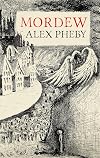
Alex Pheby’s Mordew is a satisfying fantasy. Mordew (the name is said to be derived from the French mort and Dieu, death and God) seethes with all sorts of life and unlife. There is the Living Mud. There are flukes, non-viable life-forms in the shape of human body parts. Other babies and conceived and born in the normal way by human beings. There are chilling gill men who guard the city’s ports and the houses of the very rich.
A magic glass road leads up from the Slums, through the mercantile section to the Manse where the Master, the creator of this dystopia, lives and weaves his magic.
Nathan Treeves, a boy from the slums, is recruited into a gang consisting of the leader Gam, the Joeys (are they conjoined twins?) and Prissy, whose sister works as a prostitute. Nathan believes they may help him fund medicine for this dying father.
Nathan catches the Master’s eye. We don’t learn the reason for this adoption until much later in the novel. The Master sets Nathan up, under the eye of the faithful Bellows, in luxury in the Manse, where he is educated. The end point of the education is for Nathan to learn the Magic which sustains Mordew and the other worlds.
Where Nathan himself ends up is a surprise, and I am not sure that I liked Nathan’s destination, although the fact that his destructive spree is his destiny is clearly drawn.
The story is fast paced. The many weird and intriguing characters, the vicious Fagan-like Mr Padge among them, help or hinder Nathan on his show more discoveries.
The last quarter of the book, after the conclusion of the narrative, is a glossary setting out the world of Mordew in detail, how the Magic works, the connection between the material and immaterial realms, the place of time and some of the history of the worlds. I savoured this ‘theological’ section as well, even though it was not necessary to the telling of the story.
If you enjoy dystopian fantasy with a steampunk-like aesthetic, you will find much to like in Mordew. show less
A magic glass road leads up from the Slums, through the mercantile section to the Manse where the Master, the creator of this dystopia, lives and weaves his magic.
Nathan Treeves, a boy from the slums, is recruited into a gang consisting of the leader Gam, the Joeys (are they conjoined twins?) and Prissy, whose sister works as a prostitute. Nathan believes they may help him fund medicine for this dying father.
Nathan catches the Master’s eye. We don’t learn the reason for this adoption until much later in the novel. The Master sets Nathan up, under the eye of the faithful Bellows, in luxury in the Manse, where he is educated. The end point of the education is for Nathan to learn the Magic which sustains Mordew and the other worlds.
Where Nathan himself ends up is a surprise, and I am not sure that I liked Nathan’s destination, although the fact that his destructive spree is his destiny is clearly drawn.
The story is fast paced. The many weird and intriguing characters, the vicious Fagan-like Mr Padge among them, help or hinder Nathan on his show more discoveries.
The last quarter of the book, after the conclusion of the narrative, is a glossary setting out the world of Mordew in detail, how the Magic works, the connection between the material and immaterial realms, the place of time and some of the history of the worlds. I savoured this ‘theological’ section as well, even though it was not necessary to the telling of the story.
If you enjoy dystopian fantasy with a steampunk-like aesthetic, you will find much to like in Mordew. show less
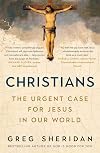
Greg Sheridan introduces his new book on the people of Christianity with his cheerful description of our faith:
‘On the inside, Christianity is full of feast days and family, full of fellowship, full of friendship. And everyone is welcome, surely never more so than at Christmas. It’s full of care for the sick and elderly, and for infants. It’s full of sport and play, hard work and rest. It’s full of good music and laughter, happy rituals and lots and lots of food (it’s very big on food). It is the principle of human solidarity. It’s the search for decency. It’s a conversation with each other and with God. As John Denver might have put it, in Christianity you routinely speak to God and rejoice at the casual reply.’ (Page 11)
Christians is Greg Sheridan’s second book in defence of Christianity. Sheridan writes of a large Christianity, catholic in the widest way. One of his principal arguments, first advanced in his 2018 God is Good for You, is that it is more reasonable to believe in God than not. The first book was mainly a rejoinder to the new atheists. In it, he took on writers like Richard Dawkins and Christopher Hitchens and showed how much bigger Christianity is than the caricature Dawkins and Hitchens attack.
In this second book, Sheridan tells stories: the stories of Jesus, Mary and the remarkable Paul. Stories of the faith of Scott Morrison, Alpha’s Nicky Gumbel and the Melbourne Anglican founder of Converge, Jenny George. He tells the story of show more China’s Christians, and the difference they may make to the future of China. In London, he compares the neighbouring churches of Holy Trinity Brompton (HTB) and the Brompton Oratory, where traditional and informal liturgies, high classical church music and Matt Redman’s Gospel songs are all quite different and all nourish believers.
Christians compresses Christianity to its simple heart. For a reader like me, Sheridan sometimes makes Christianity seem too simple. But his purpose is to provide an attractive portrayal of Christianity for those who do not share the faith. In that, Christians reminds me of C.S. Lewis’ Mere Christianity, and Christians is a more entertaining read than Lewis
Greg Sheridan’ s writing is compelling and accessible. He works as foreign editor for the Australian newspaper. In Christians, he is open about his political stance (he describes himself as centre-right). In a throwaway line, he suggests that Christians are likely to be centre-right or centre-left in their politics. Extremes are likely to lack love.
Christians is endorsed by well-known journalists and by church leaders as diverse as Russell Evans from Planetshakers International, Peter Comensoli, Catholic Archbishop of Melbourne and Pastor Samuel Rodriguez, President of the US National Hispanic Christian Leadership Conference.
It is a book that can be shared both with non-Christians and Christians alike. Those unfamiliar with our faith will find an attractive picture of how Christian faith is lived, and Christians will be encouraged that such a positive book will speak to such a challenging time. show less
‘On the inside, Christianity is full of feast days and family, full of fellowship, full of friendship. And everyone is welcome, surely never more so than at Christmas. It’s full of care for the sick and elderly, and for infants. It’s full of sport and play, hard work and rest. It’s full of good music and laughter, happy rituals and lots and lots of food (it’s very big on food). It is the principle of human solidarity. It’s the search for decency. It’s a conversation with each other and with God. As John Denver might have put it, in Christianity you routinely speak to God and rejoice at the casual reply.’ (Page 11)
Christians is Greg Sheridan’s second book in defence of Christianity. Sheridan writes of a large Christianity, catholic in the widest way. One of his principal arguments, first advanced in his 2018 God is Good for You, is that it is more reasonable to believe in God than not. The first book was mainly a rejoinder to the new atheists. In it, he took on writers like Richard Dawkins and Christopher Hitchens and showed how much bigger Christianity is than the caricature Dawkins and Hitchens attack.
In this second book, Sheridan tells stories: the stories of Jesus, Mary and the remarkable Paul. Stories of the faith of Scott Morrison, Alpha’s Nicky Gumbel and the Melbourne Anglican founder of Converge, Jenny George. He tells the story of show more China’s Christians, and the difference they may make to the future of China. In London, he compares the neighbouring churches of Holy Trinity Brompton (HTB) and the Brompton Oratory, where traditional and informal liturgies, high classical church music and Matt Redman’s Gospel songs are all quite different and all nourish believers.
Christians compresses Christianity to its simple heart. For a reader like me, Sheridan sometimes makes Christianity seem too simple. But his purpose is to provide an attractive portrayal of Christianity for those who do not share the faith. In that, Christians reminds me of C.S. Lewis’ Mere Christianity, and Christians is a more entertaining read than Lewis
Greg Sheridan’ s writing is compelling and accessible. He works as foreign editor for the Australian newspaper. In Christians, he is open about his political stance (he describes himself as centre-right). In a throwaway line, he suggests that Christians are likely to be centre-right or centre-left in their politics. Extremes are likely to lack love.
Christians is endorsed by well-known journalists and by church leaders as diverse as Russell Evans from Planetshakers International, Peter Comensoli, Catholic Archbishop of Melbourne and Pastor Samuel Rodriguez, President of the US National Hispanic Christian Leadership Conference.
It is a book that can be shared both with non-Christians and Christians alike. Those unfamiliar with our faith will find an attractive picture of how Christian faith is lived, and Christians will be encouraged that such a positive book will speak to such a challenging time. show less
Animals' Best Friends: Putting Compassion to Work for Animals in Captivity and in the Wild by Barbara J. King

I wanted this book to be better than it is. Barbara King’s plea is for every human being to find their own ways to exercise compassionate action for animals. Although we cannot know exactly how animals experience the world, they share with us the gift of life. Each individual animal has a moral right to the best possible existence.
Professor King’s position on care for animals is deliberately in the middle of the scale which, at one end, attributes to animals the ability to feel pain and to be conscious of their desire for a good life, to the other end of animals not being self-aware in any way.
I concur with Barbara King that an attentive encounter with an animal is a real communion. I remember the thrill of being aboard a whale-watching boat in Albany when a magnificent humpback whale interacted with us for about 20 minutes.
I share with her the joyful fascination of extraordinary creatures like WA’s brightly-coloured peacock spider.
And I agree with her assertion that we human beings must do our best to help animals flourish. But her book disappointed me. She gave many enchanting examples of animals – and other disturbing accounts of the mistreatment of animals in laboratories, in roadside zoos, chained as private pets.
The book promised links to fascinating footage, YouTube videos and so on. Unfortunately, at least in my Kindle edition, there were no hyperlinks, so I was discouraged from looking these up.
The book is carefully researched balancing science and show more anecdote. But there was little new in the book to challenge or inspire. It may be a beginners’ book for people who have done little thinking on animals’ own perspectives. The best thing for me was the plea to continue to look further into the animal world; to find new creatures to delight in, especially the unlovable ones! show less
Professor King’s position on care for animals is deliberately in the middle of the scale which, at one end, attributes to animals the ability to feel pain and to be conscious of their desire for a good life, to the other end of animals not being self-aware in any way.
I concur with Barbara King that an attentive encounter with an animal is a real communion. I remember the thrill of being aboard a whale-watching boat in Albany when a magnificent humpback whale interacted with us for about 20 minutes.
I share with her the joyful fascination of extraordinary creatures like WA’s brightly-coloured peacock spider.
And I agree with her assertion that we human beings must do our best to help animals flourish. But her book disappointed me. She gave many enchanting examples of animals – and other disturbing accounts of the mistreatment of animals in laboratories, in roadside zoos, chained as private pets.
The book promised links to fascinating footage, YouTube videos and so on. Unfortunately, at least in my Kindle edition, there were no hyperlinks, so I was discouraged from looking these up.
The book is carefully researched balancing science and show more anecdote. But there was little new in the book to challenge or inspire. It may be a beginners’ book for people who have done little thinking on animals’ own perspectives. The best thing for me was the plea to continue to look further into the animal world; to find new creatures to delight in, especially the unlovable ones! show less
This review was written for LibraryThing Early Reviewers.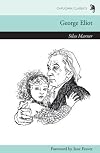
George Eliot (Mary Ann Evans 1819-1880) wrote Silas Marner as her version of Pilgrim’s Progress. Like Bunyan’s masterpiece, Silas Marner also has the feel of a universal fable, the redemption of a man from desolation to love and riches.
Unlike Progress, however, the characters in Silas Marner are well-drawn and invite sympathy. Knowing how shabbily Silas has been treated and knowing the inner journey of Silas and the nasty young Squire, makes the reader care about the characters.
Eppie, the toddler who appears in Silas’ life after his precious gold has been taken, is less believable as an individual. She is beautiful in body and soul, humble in aspiration and devoted to Silas. But she is lovely because she is so deeply loved by Silas, her ‘Papa’.
The inner journey Silas makes is not like the ‘ascent’ of Pilgrim to the river and the City of Heaven. Nor is it in the tradition of the ‘ascent’ to God mapped by medieval mystics like Bonaventure and Richard of Saint Victor.
Silas’ journey to redemption stays in the gritty reality of Victorian poverty. Grace – in the form of the toddler he names Hephzibah (Eppie) – comes to Silas once and all at once. The name Hephzibah means ‘My delight is in her’, and it is used in the Hebrew Scriptures as the symbolic name for the restored Jerusalem (Isaiah 62:4). The redemption takes the miser, Silas, with his short-sight and propensity to fitting, and teaches him how to love deeply.
Eliot contrasts the emotional show more and spiritual poverty of his former state with the richness of loving and being loved: the gold is even returned to Silas and secrets, liberating once shared, are brought to light.
Names are important to Eliot: Silas is named for the companion of the Apostle Paul. The New Testament’s Silas and Paul are put in prison and God releases them. God also releases Silas Marner from the darkness of the cultish Lantern Yard and from his self-imposed prison and. Both the New Testament and the village of Raveloe rejoice greatly at Silas’ release.
Is the name ‘Marner’ a reference to Coleridge’s Ancient Mariner published 90 years earlier?
Silas Marner is my introduction to George Eliot. I found the novel charming and satisfying. There is a central goodness in the novel which will be evident to readers whether or not they are Christian believers. But it is ultimately a Christian novel, an exploration of the journey we all in our own ways make in Christ. show less
Unlike Progress, however, the characters in Silas Marner are well-drawn and invite sympathy. Knowing how shabbily Silas has been treated and knowing the inner journey of Silas and the nasty young Squire, makes the reader care about the characters.
Eppie, the toddler who appears in Silas’ life after his precious gold has been taken, is less believable as an individual. She is beautiful in body and soul, humble in aspiration and devoted to Silas. But she is lovely because she is so deeply loved by Silas, her ‘Papa’.
The inner journey Silas makes is not like the ‘ascent’ of Pilgrim to the river and the City of Heaven. Nor is it in the tradition of the ‘ascent’ to God mapped by medieval mystics like Bonaventure and Richard of Saint Victor.
Silas’ journey to redemption stays in the gritty reality of Victorian poverty. Grace – in the form of the toddler he names Hephzibah (Eppie) – comes to Silas once and all at once. The name Hephzibah means ‘My delight is in her’, and it is used in the Hebrew Scriptures as the symbolic name for the restored Jerusalem (Isaiah 62:4). The redemption takes the miser, Silas, with his short-sight and propensity to fitting, and teaches him how to love deeply.
Eliot contrasts the emotional show more and spiritual poverty of his former state with the richness of loving and being loved: the gold is even returned to Silas and secrets, liberating once shared, are brought to light.
Names are important to Eliot: Silas is named for the companion of the Apostle Paul. The New Testament’s Silas and Paul are put in prison and God releases them. God also releases Silas Marner from the darkness of the cultish Lantern Yard and from his self-imposed prison and. Both the New Testament and the village of Raveloe rejoice greatly at Silas’ release.
Is the name ‘Marner’ a reference to Coleridge’s Ancient Mariner published 90 years earlier?
Silas Marner is my introduction to George Eliot. I found the novel charming and satisfying. There is a central goodness in the novel which will be evident to readers whether or not they are Christian believers. But it is ultimately a Christian novel, an exploration of the journey we all in our own ways make in Christ. show less
A short murder mystery where the nature of the murder and its method are cleverly concealed until the last minute. P.D. James is always terrific1
I was intrigued by this novel set in Spain’s Seville at the time of the Holy Inquisition. Isaac Alvarez is an official in the city. As a Jew who has converted to Catholicism but is still secretly attending Jewish prayers, he and his family are vulnerable to being denounced.
A boy is murdered, and the story is circulated that he was killed so that his blood could be drunk in some secret Jewish ritual - the ‘blood libel’ of the title.
The story is told through the written testimony of Friar Alonso, the assistant to Torquemada, alternating with a third person narrative from Isaac’s point of view. This method of telling the story works so that the motivations of both characters can be explored.
Occasionally this was spoiled by an attempt to be cinematic, for example, concluding a chapter with one-line descriptions of everyone’s predicament. ‘Isabel is locked in her cell. Isaac is in the bar. Alonso is praying in his tiny cell, etc’. As a means of building tension, I found the device superfluous.
Generally, the story is professionally presented and edited; a pleasure to read, and a delight to be so carefully taken into 15th Century Spain just at the moment when Inquisitors like Tomas Torquemada were breaking down the fragile peace between Spanish Catholics, Muslims and Jews.
I look forward to reading more of Señor Isaac Alvarez as his work takes him closer to King Ferdinand.
A boy is murdered, and the story is circulated that he was killed so that his blood could be drunk in some secret Jewish ritual - the ‘blood libel’ of the title.
The story is told through the written testimony of Friar Alonso, the assistant to Torquemada, alternating with a third person narrative from Isaac’s point of view. This method of telling the story works so that the motivations of both characters can be explored.
Occasionally this was spoiled by an attempt to be cinematic, for example, concluding a chapter with one-line descriptions of everyone’s predicament. ‘Isabel is locked in her cell. Isaac is in the bar. Alonso is praying in his tiny cell, etc’. As a means of building tension, I found the device superfluous.
Generally, the story is professionally presented and edited; a pleasure to read, and a delight to be so carefully taken into 15th Century Spain just at the moment when Inquisitors like Tomas Torquemada were breaking down the fragile peace between Spanish Catholics, Muslims and Jews.
I look forward to reading more of Señor Isaac Alvarez as his work takes him closer to King Ferdinand.
Trust and Leadership: The Australian Army Approach to Mission Command by Association of the U.S. Army
All organisations have leaders who organise and inspire their members to promote the mission of the organisation. Leaders should be accountable for their work as leaders continuously improving their actions.
Trust and Leadership explores how well the leaders in the Australian Armed Forces have used the official doctrine of mission command. The concept is that leaders should provide orders that clearly state the end result of their troops’ activities. Junior leaders are left free to work out the methods and tactics by which these effects will be reached. The principle is that the closer they are to the action, junior officers will have a better understanding of the situation on the ground, so are the best to decide how to carry out the superior’s orders.
This book is a series of essays arranged historically from World War I to disaster relief in Queensland in 2012. The authors are both academics and officers providing a breadth of commentary from the practical to the theoretical. It’s worth noting that some of the serving officers who wrote these essays also have academic qualifications, resulting in a thoughtful and authoritative account.
The thesis of the book is that the concept of ‘mission command’ has been used by officers since Gallipoli, even before the term entered official policy. Australian soldiers should be adept at taking responsibility at their level, partly because of the Australian character and its scepticism towards authority.
This willingness show more of soldiers to forge their own way turns out also to be a weakness. The account of the 2RAR Battalion in Afghanistan is searingly honest. Colonel Chris Smith describes the disbelief of a few soldiers when he attempted to enforce discipline. Their passive aggressive response to his orders arose from the soldiers’ sense of entitlement to conduct themselves as they saw fit without supervision. ‘It seemed as though some were confusing mission command with “hands-off” leadership,’ Col. Smith comments. (p. 291 Advanced Reader’s Edition).
In recent weeks, Australians have been shocked by accusations of murder and mistreatment of Afghan prisoners by Special Services troops. These allegations have of course coloured my reading of Trust and Leadership. Is it possible that these attitudes towards mission command and supervision by superior officers created the culture in which crimes could be committed? I hope that leaders’ role in these prosecutions will be carefully examined by the prosecutors, otherwise the concept of mission command will itself be bankrupted.
As a (retired) leader in church organisations, I found Trust and Leadership to be a helpful analysis of the role of leadership to embody the purpose of the organisation and to inspire others to work towards that purpose. In reflecting on leadership, former Archbishop Peter Carnley AO used a similar concept of ‘subsidiarity’ (decisions to be made at the lowest level possible). If this book helps our armed forces to continuously improve subsidiarity, it will have served a useful purpose. show less
Trust and Leadership explores how well the leaders in the Australian Armed Forces have used the official doctrine of mission command. The concept is that leaders should provide orders that clearly state the end result of their troops’ activities. Junior leaders are left free to work out the methods and tactics by which these effects will be reached. The principle is that the closer they are to the action, junior officers will have a better understanding of the situation on the ground, so are the best to decide how to carry out the superior’s orders.
This book is a series of essays arranged historically from World War I to disaster relief in Queensland in 2012. The authors are both academics and officers providing a breadth of commentary from the practical to the theoretical. It’s worth noting that some of the serving officers who wrote these essays also have academic qualifications, resulting in a thoughtful and authoritative account.
The thesis of the book is that the concept of ‘mission command’ has been used by officers since Gallipoli, even before the term entered official policy. Australian soldiers should be adept at taking responsibility at their level, partly because of the Australian character and its scepticism towards authority.
This willingness show more of soldiers to forge their own way turns out also to be a weakness. The account of the 2RAR Battalion in Afghanistan is searingly honest. Colonel Chris Smith describes the disbelief of a few soldiers when he attempted to enforce discipline. Their passive aggressive response to his orders arose from the soldiers’ sense of entitlement to conduct themselves as they saw fit without supervision. ‘It seemed as though some were confusing mission command with “hands-off” leadership,’ Col. Smith comments. (p. 291 Advanced Reader’s Edition).
In recent weeks, Australians have been shocked by accusations of murder and mistreatment of Afghan prisoners by Special Services troops. These allegations have of course coloured my reading of Trust and Leadership. Is it possible that these attitudes towards mission command and supervision by superior officers created the culture in which crimes could be committed? I hope that leaders’ role in these prosecutions will be carefully examined by the prosecutors, otherwise the concept of mission command will itself be bankrupted.
As a (retired) leader in church organisations, I found Trust and Leadership to be a helpful analysis of the role of leadership to embody the purpose of the organisation and to inspire others to work towards that purpose. In reflecting on leadership, former Archbishop Peter Carnley AO used a similar concept of ‘subsidiarity’ (decisions to be made at the lowest level possible). If this book helps our armed forces to continuously improve subsidiarity, it will have served a useful purpose. show less
This review was written for LibraryThing Early Reviewers.
Franciscan Footprints, like much of Franciscan spirituality, is deceptively simple. In this helpful and engaging book, Sister Helen Julian, Minister General of the Anglican Community of St Francis, tells the story of about 100 Franciscans over the last 800 years – from Saints Francis and Clare in the 12th Century to Padre Pio and Algy Robertson SSF in the 20th Century.
The stories of mainly individuals and some organisations are presented in nine thematic chapters. The first two chapters tell the stories of the original founders, the two Assisi saints (Francis and Clare), and the founders of the Anglican Franciscans, including Sister Rosina Mary CSF, who founded the Community of Saint Francis in 1905.
The titles of further chapters, ‘Thinkers and Writers’, ‘Mystics and Spiritual Writers’, ‘Social Care, Social Justice’, ‘Martyrs’, ‘Missionaries and Preachers’, ‘Pastors’ and ‘Simply Living’, display the breadth of the Franciscan way of life. Placing each of her characters into these themes allows Sister Helen to ‘follow the followers’ and explore the many paths along which Franciscans follow Jesus.
The Franciscan intellectual tradition is represented strongly by the 13th Century Bonaventure and the 21st Century Sister Ilia Delio.
Many of these Franciscans are new to me. Felix of Cantalice (born 1515) was a ploughman who became a lay Franciscan friar. He begged for the friars in Rome for many years, and was known as Brother Deo Gratias, show more because he exclaimed, ‘Thanks be to God’ (Deo Gratias) for every gift. He sang simple songs in the street and was beloved of children and the poor. His story is told under ‘Simply Living’: his life was seemingly uneventful, but by faithfully being who he was attracted many.
It was good to see the United Nations NGO Franciscans International in its context as an expression of the Franciscan family’s social care and social justice.
I commend Franciscan Footprints warmly. It is a good book to share within the Franciscan family and beyond.
At his death, Saint Francis said, ‘I have done what is mine to do. May Christ teach you what is yours.’ Helen Julian’s book will help both long-term Franciscans and the curious to learn what Christ is teaching them what their life might be. The characters in her book have made their Franciscan footprints. Readers will find much in this book to help them make their own Franciscan Footprints. show less
The stories of mainly individuals and some organisations are presented in nine thematic chapters. The first two chapters tell the stories of the original founders, the two Assisi saints (Francis and Clare), and the founders of the Anglican Franciscans, including Sister Rosina Mary CSF, who founded the Community of Saint Francis in 1905.
The titles of further chapters, ‘Thinkers and Writers’, ‘Mystics and Spiritual Writers’, ‘Social Care, Social Justice’, ‘Martyrs’, ‘Missionaries and Preachers’, ‘Pastors’ and ‘Simply Living’, display the breadth of the Franciscan way of life. Placing each of her characters into these themes allows Sister Helen to ‘follow the followers’ and explore the many paths along which Franciscans follow Jesus.
The Franciscan intellectual tradition is represented strongly by the 13th Century Bonaventure and the 21st Century Sister Ilia Delio.
Many of these Franciscans are new to me. Felix of Cantalice (born 1515) was a ploughman who became a lay Franciscan friar. He begged for the friars in Rome for many years, and was known as Brother Deo Gratias, show more because he exclaimed, ‘Thanks be to God’ (Deo Gratias) for every gift. He sang simple songs in the street and was beloved of children and the poor. His story is told under ‘Simply Living’: his life was seemingly uneventful, but by faithfully being who he was attracted many.
It was good to see the United Nations NGO Franciscans International in its context as an expression of the Franciscan family’s social care and social justice.
I commend Franciscan Footprints warmly. It is a good book to share within the Franciscan family and beyond.
At his death, Saint Francis said, ‘I have done what is mine to do. May Christ teach you what is yours.’ Helen Julian’s book will help both long-term Franciscans and the curious to learn what Christ is teaching them what their life might be. The characters in her book have made their Franciscan footprints. Readers will find much in this book to help them make their own Franciscan Footprints. show less
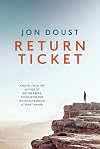
Return Ticket is the third and final instalment of Jon Doust’s trilogy of memoir/novels following the adventures of the hot-headed Jack Muir. It follows the acclaimed Boy on a Wire, where Muir pursues justice for a boy bullied at the boarding school Jack attended. To the Highlands charts Muir as a wild young bank johnnie in Papua New Guinea, his hot-headed and heavy drinking lifestyle a snap-back against the repressive hypocrisy of his school. At the end of To the Highlands, Jack Muir is a damaged drifter.
Return Ticket is set first in South Africa, where Muir encounters laid-back marijuana smokers and the vicious racism of the apartheid regime. In two kibbutzim in Israel, a failed love affair and arduous work begin the task of redeeming the man. Jack Muir’s sense of justice, first kindled by the bullying at his boarding school, is honed by the socialist and utopian vision of the kibbutz.
Muir returns to Western Australia, where he loses the moral compass of the kibbutz and drifts dangerously again. Eventually his mother, despairing of her alcoholic son, gives Jack the money for a return ticket to Israel. There in a different kibbutz, Jack eschews alcohol and drugs and meets a woman who loves him, damaged as he is.
Jack feels he is a grown-up man and returns to Western Australia to mend relationships with his family. His reconciliation with his father on a riverboat on the Blackwood River is a touching episode.
As with the former two books, it is hard to know in The show more Return Ticket where memoir ends and novel begins. While Jack Muir is fiction, Doust has mined his own life and experience to bring this trilogy to life. The broad outline of Jack Muir’s life has many parallels with Jon Doust’s own life, but the real life is skilfully crafted into a narrative that reveals an arc from damage to restoration.
I have a sliver of insight into the narrow path Doust is treading between memoir and fiction. I was in Jon’s year at boarding school, and I am honoured to continue to call him friend 60 years on.
The books are each self-contained and can be read as separate novels. However, reading the three books reveals the larger themes and triples the reading satisfaction.
The key theme of Return Ticket is that one person’s genuine love for another can draw that person out of the neediness of addiction into responsive love. It is a timely and timeless message.
The writing has about it clarity and beauty. Jon made much of his living since returning to Australia as a comedian. As you would expect, a dry Australian humour permeates the narrative and lightens the serious themes. Buy your Return Ticket to Jack Muir’s story; it is an entertaining and thought-provoking journey. show less
Return Ticket is set first in South Africa, where Muir encounters laid-back marijuana smokers and the vicious racism of the apartheid regime. In two kibbutzim in Israel, a failed love affair and arduous work begin the task of redeeming the man. Jack Muir’s sense of justice, first kindled by the bullying at his boarding school, is honed by the socialist and utopian vision of the kibbutz.
Muir returns to Western Australia, where he loses the moral compass of the kibbutz and drifts dangerously again. Eventually his mother, despairing of her alcoholic son, gives Jack the money for a return ticket to Israel. There in a different kibbutz, Jack eschews alcohol and drugs and meets a woman who loves him, damaged as he is.
Jack feels he is a grown-up man and returns to Western Australia to mend relationships with his family. His reconciliation with his father on a riverboat on the Blackwood River is a touching episode.
As with the former two books, it is hard to know in The show more Return Ticket where memoir ends and novel begins. While Jack Muir is fiction, Doust has mined his own life and experience to bring this trilogy to life. The broad outline of Jack Muir’s life has many parallels with Jon Doust’s own life, but the real life is skilfully crafted into a narrative that reveals an arc from damage to restoration.
I have a sliver of insight into the narrow path Doust is treading between memoir and fiction. I was in Jon’s year at boarding school, and I am honoured to continue to call him friend 60 years on.
The books are each self-contained and can be read as separate novels. However, reading the three books reveals the larger themes and triples the reading satisfaction.
The key theme of Return Ticket is that one person’s genuine love for another can draw that person out of the neediness of addiction into responsive love. It is a timely and timeless message.
The writing has about it clarity and beauty. Jon made much of his living since returning to Australia as a comedian. As you would expect, a dry Australian humour permeates the narrative and lightens the serious themes. Buy your Return Ticket to Jack Muir’s story; it is an entertaining and thought-provoking journey. show less
Bruce Wilson explores life after suffering a heart attack and complications. As he rides the roller-coaster ride of his emotions through hospital and in recovery, Bishop Wilson comes to a new understanding of himself, his place in God’s world, and the nature of God.
Bruce Wilson’s pastoral experience as bush bishop, city priest and University chaplain is evident everywhere. Where necessary, Bishop Bruce explains theological concepts in shaded text that could possibly be skipped.
I devoured Bless You Heart Attack in a day. I related to the experience of submitting to medical indignities which take away identity. One of Bishop Bruce’s key learnings is that, after serious illness, you cannot go back to being the person you were.
For Bruce after serious illness, ideas of God-hood must be exploded and expanded to something new and more mysterious.
Bless You Heart Attack tells a compelling story; the opening hook so compelling and funny that I won’t reveal it here! It is a deeply honest account of illness aimed at a general readership. I would highly recommend it to people whose life-direction has been steered by sudden illness or disaster – but with caution: the reader is invited to a similar honesty of emotional reflection.
The book could have been improved by more judicious editing. In his effort to maintain the conversational style, the Bishop sometimes writes in clauses, not sentences, which I found jarring. I also wondered at the sensitivity of putting Uluru on show more the cover, as if enough cultural appropriation has not already taken place!
I heartily recommend Bishop Bruce’s honesty of emotion and clarity of reflection. If life throws up bad stuff, read it!
* * * *
Review published in Anglican Messenger (Diocese of Perth), February 2020 (https://www.perth.anglican.org/what-we-do/anglican-messenger/) show less
Bruce Wilson’s pastoral experience as bush bishop, city priest and University chaplain is evident everywhere. Where necessary, Bishop Bruce explains theological concepts in shaded text that could possibly be skipped.
I devoured Bless You Heart Attack in a day. I related to the experience of submitting to medical indignities which take away identity. One of Bishop Bruce’s key learnings is that, after serious illness, you cannot go back to being the person you were.
For Bruce after serious illness, ideas of God-hood must be exploded and expanded to something new and more mysterious.
Bless You Heart Attack tells a compelling story; the opening hook so compelling and funny that I won’t reveal it here! It is a deeply honest account of illness aimed at a general readership. I would highly recommend it to people whose life-direction has been steered by sudden illness or disaster – but with caution: the reader is invited to a similar honesty of emotional reflection.
The book could have been improved by more judicious editing. In his effort to maintain the conversational style, the Bishop sometimes writes in clauses, not sentences, which I found jarring. I also wondered at the sensitivity of putting Uluru on show more the cover, as if enough cultural appropriation has not already taken place!
I heartily recommend Bishop Bruce’s honesty of emotion and clarity of reflection. If life throws up bad stuff, read it!
* * * *
Review published in Anglican Messenger (Diocese of Perth), February 2020 (https://www.perth.anglican.org/what-we-do/anglican-messenger/) show less
The Second Sleep is set several centuries into the future after the great collapse of civilisation. A powerful – and fundamentalist – church has taken power while England has returned to pre-industrial conditions: there are no cars, and therefore roads are poor. The fastest travel is horse-back. Village life centres around small-scale horticulture, providing just enough for the villagers.
A young priest is sent to a tiny village in Exmoor to bury the parish priest who has died after decades in the same parish. He discovers a world of secrets, from the housekeeper’s relationship to the old priest, to the illegal search for evidence of pre-collapse civilisation.
Many of his discoveries take place between the first and second sleeps, as people have reverted to the pre-electric light habit of having a period of waking between two stretches of sleep. ‘The Second Sleep’ begins to take on more meanings as the novel progresses.
Robert Harris is known for his novels of Ancient Rome (Imperium, Lustrum, Pompeii) and of institutions under stress including the army and the church (An Officer and a Spy, Conclave). He writes page-turners, and his writing is simple and clear. You feel the mud and slush of unpaved streets and the smell of animals sharing living space with humans.
The Second Sleep is a compelling novel of the new genre of cli-fi (climate science fiction). Itis a meditation on our world on the brink of great destruction, perhaps brought about by climate change, show more perhaps not, and our values of freedom and progress.
Harris makes no final judgement as to which is worse, our world or his dystopia, but The Second Sleep is an appeal to maintain an open society in which power is shared between citizens and not centralised in a power-hungry institution.
It is also a novel of finding love and the difficulty of holding onto love in a repressive society. After a slow start with the characters, I enjoyed the priest Fairfax, his Lady, Sarah Durston, and Captain Hancock. show less
A young priest is sent to a tiny village in Exmoor to bury the parish priest who has died after decades in the same parish. He discovers a world of secrets, from the housekeeper’s relationship to the old priest, to the illegal search for evidence of pre-collapse civilisation.
Many of his discoveries take place between the first and second sleeps, as people have reverted to the pre-electric light habit of having a period of waking between two stretches of sleep. ‘The Second Sleep’ begins to take on more meanings as the novel progresses.
Robert Harris is known for his novels of Ancient Rome (Imperium, Lustrum, Pompeii) and of institutions under stress including the army and the church (An Officer and a Spy, Conclave). He writes page-turners, and his writing is simple and clear. You feel the mud and slush of unpaved streets and the smell of animals sharing living space with humans.
The Second Sleep is a compelling novel of the new genre of cli-fi (climate science fiction). Itis a meditation on our world on the brink of great destruction, perhaps brought about by climate change, show more perhaps not, and our values of freedom and progress.
Harris makes no final judgement as to which is worse, our world or his dystopia, but The Second Sleep is an appeal to maintain an open society in which power is shared between citizens and not centralised in a power-hungry institution.
It is also a novel of finding love and the difficulty of holding onto love in a repressive society. After a slow start with the characters, I enjoyed the priest Fairfax, his Lady, Sarah Durston, and Captain Hancock. show less
Christos Tsiolkas tells the story of Saint Paul in such a gritty fashion that I nearly gave up on the novel several times. It is not for the faint-hearted. Greek-Australian novelist Christos Tsiolkas is known for his hard-hitting and relentlessly honest writing. The Slap, a suburban novel exploring whether adults other than parents can administer corporal punishment, provoked controversy.
Tsiolkas’ previous novels, including Barracuda and The Slap, have been turned into movies. I wonder whether anyone will dare to make Damascus – The Movie. The novel skates on blasphemy – not a new charge against Tsiolkas – and its depiction of the brutality of the pagan empire surrounding and threatening the early Christians is sickening. The love between Paul and Timothy, and between Timothy and Thomas, is at the least obsessive, if not outright sexual. This factor alone will make it difficult for many Christians to accept the novel.
Three axes explore the different directions in which the early church was developing: Paul and Timothy represent the more orthodox view, that Jesus is the Saviour, that he has appeared after the resurrection, and that he will return soon and take into the resurrected life all the baptised.
Paul and Able (as Tsiolkas names the ex-slave Onesimus) represent the dilemma faced by the early church when Jesus does not return. Able believes that the Christians should ditch this teaching, and also baptise infants.
The third axis is Timothy and Thomas. This show more represents the view of some early Christians that Jesus was a great teacher and prophet who died – end of story. (Tsiolkas confesses in the afterword that this is closest to his view.)
The conflicts between these emerging theologies drive the story.
There are underlying themes that are common to Tsiolkas’ other work. The intense relationships between the men in the story reflect Tsiolkas’ own struggles with sexuality. The severity of a faith which requires its apostles to forsake family is portrayed fiercely. The treatment of the refugees who pour out of Judea after the destruction of the temple resonates with today.
I would not recommend this novel to fellow-Christians unless you really want to be challenged. It may be the book for a friend who is amoral and extremely secular, a lover of the violence in the Vikings series or Game of Thrones. Damascus has a depth and a challenge to believe that is absent from those.
Whoever reads Damascus will be moved and outraged. It will divide readers. Any novelist that can achieve those outcomes so forcefully is to be respected! show less
Tsiolkas’ previous novels, including Barracuda and The Slap, have been turned into movies. I wonder whether anyone will dare to make Damascus – The Movie. The novel skates on blasphemy – not a new charge against Tsiolkas – and its depiction of the brutality of the pagan empire surrounding and threatening the early Christians is sickening. The love between Paul and Timothy, and between Timothy and Thomas, is at the least obsessive, if not outright sexual. This factor alone will make it difficult for many Christians to accept the novel.
Three axes explore the different directions in which the early church was developing: Paul and Timothy represent the more orthodox view, that Jesus is the Saviour, that he has appeared after the resurrection, and that he will return soon and take into the resurrected life all the baptised.
Paul and Able (as Tsiolkas names the ex-slave Onesimus) represent the dilemma faced by the early church when Jesus does not return. Able believes that the Christians should ditch this teaching, and also baptise infants.
The third axis is Timothy and Thomas. This show more represents the view of some early Christians that Jesus was a great teacher and prophet who died – end of story. (Tsiolkas confesses in the afterword that this is closest to his view.)
The conflicts between these emerging theologies drive the story.
There are underlying themes that are common to Tsiolkas’ other work. The intense relationships between the men in the story reflect Tsiolkas’ own struggles with sexuality. The severity of a faith which requires its apostles to forsake family is portrayed fiercely. The treatment of the refugees who pour out of Judea after the destruction of the temple resonates with today.
I would not recommend this novel to fellow-Christians unless you really want to be challenged. It may be the book for a friend who is amoral and extremely secular, a lover of the violence in the Vikings series or Game of Thrones. Damascus has a depth and a challenge to believe that is absent from those.
Whoever reads Damascus will be moved and outraged. It will divide readers. Any novelist that can achieve those outcomes so forcefully is to be respected! show less
The Patient Ferment of the Early Church: The Improbable Rise of Christianity in the Roman Empire by Alan Kreider
How did the church grow so quickly in the first three centuries – from 120 on the day of Pentecost to up to 10% of the six million-strong Roman Empire?
The late Alan Kreider, former Professor of Church History and Mission at the Anabaptist Mennonite Biblical Seminary in Indiana, disputes this number. He doubts that it was ever that high but affirms that the improbable but real growth in numbers of the early church has not been really explained. The Patient Ferment of the Early Church is Kreider’s attempt to clear up that mystery.
Professor Kreider shows that the early church concentrated on encouraging a cluster of Christ-like behaviours, especially those that demonstrated the virtue of patience. This cluster of habitual actions Kreider calls their habitus.
These Christians who were in business were patient. They resisted taking others to court to settle affairs. Following Matthew 5:37 (‘Simply let your yes be yes and your no no’) they refused to take oaths in a society were oaths were central. They refrained from taking life, and any soldiers who wished to be admitted to the years-long training before baptism, the catechumenate, had to convince the bishop that they would not kill. Usually they had to leave the army before they would be admitted as catechumens.
Kreider writes,
‘Habitually, Christians will share economically and care for the poor and the sick, widows and orphans; habitually, they will engage in business with truthfulness, without usury, and show more without pursuing profit to the extent of going before pagan judges; habitually, they will be a community of contentment and sexual restraint; habitually, they will behave with the multifaceted nonviolence of patience.’ (169)
The catechumens were not permitted to stay for worship. Three aspects of worship marked the early Christians as counter-cultural.
Firstly, the kiss of peace. Only equals in Roman society could kiss, and usually only in the family. For slaves and highborn, family and strangers to all kiss each other was shocking, and cemented the solidarity of the church.
Secondly, the prayers. Praying for one’s needs and the needs of others was a noisy and exuberant time. A poor man might pray for the day’s food and happen to be standing next to a rich man who could answer that prayer. Praying for those with the plague, led Christians outside their own community to nurse the sick. Praying for the dying led Christians to offer burial to those who could not afford it.
Because they believed God answers prayers, they could take risks, live lives that were eventful and imprudent, and be faithful to a superstitio that could get them into hot water. There was power here, and outsiders got a whiff of it and wanted in. 211)
Thirdly, they shared food. In early years, the food was a meal, and following Paul’s instructions, the rich were mandated to share with those with less. By the third century, the main worship had shifted from Saturday evening to early Sunday morning, and the food shared was symbolic, the bread and wine of communion.
(I was pleased to see Kreider reference my former colleague Andrew McGowan’s academic work on the subject of food and the Eucharist in the early church.)
Kreider calls this way of being church a ‘ferment’. Like yeast, the secret activity at the heart of the Christian family, changes the whole society, subtly, slowly, patiently, but thoroughly.
The emphasis in the first three centuries on patience and on habitus, behaviour, changed with Emperor Constantine and Bishop Augustine of Hippo. Constantine, who put off the catechumenate until shortly before his death, constantly intervened in the life of the church to make it grow.
Under Constantine, two classes of Christian evolved. The serious ones continued to refrain from taking life. Others, less rigid in their interpretation of the sixth commandment, could continue to serve in the army and kill if they had to. Some Christians continued to avoid oath-taking. Others, who wanted to get along in the new administration, relaxed this rule and took oaths when asked.
Augustine re-defined the virtue of patience as a sub-set of love, changing the emphasis from behaviour to intention, and creating situational ethics rather than an agreed habitus.
Alan Kreider credits both Constantine and Augustine with good intentions but regrets the outcomes of their actions.
This raised for me some questions.
• Is it idealistic to imagine we could return to a time where forming Christians is the church’s main activity, and allowing God to do God’s work of increase?
• Can we go back to a time where Christians are genuine in avoiding killing and oath-taking?
• Can we re-invest the liturgical kiss of peace with the intimacy and equality known by the early church?
I think, that as a Mennonite, Professor Kreider would have approved these questions! show less
The late Alan Kreider, former Professor of Church History and Mission at the Anabaptist Mennonite Biblical Seminary in Indiana, disputes this number. He doubts that it was ever that high but affirms that the improbable but real growth in numbers of the early church has not been really explained. The Patient Ferment of the Early Church is Kreider’s attempt to clear up that mystery.
Professor Kreider shows that the early church concentrated on encouraging a cluster of Christ-like behaviours, especially those that demonstrated the virtue of patience. This cluster of habitual actions Kreider calls their habitus.
These Christians who were in business were patient. They resisted taking others to court to settle affairs. Following Matthew 5:37 (‘Simply let your yes be yes and your no no’) they refused to take oaths in a society were oaths were central. They refrained from taking life, and any soldiers who wished to be admitted to the years-long training before baptism, the catechumenate, had to convince the bishop that they would not kill. Usually they had to leave the army before they would be admitted as catechumens.
Kreider writes,
‘Habitually, Christians will share economically and care for the poor and the sick, widows and orphans; habitually, they will engage in business with truthfulness, without usury, and show more without pursuing profit to the extent of going before pagan judges; habitually, they will be a community of contentment and sexual restraint; habitually, they will behave with the multifaceted nonviolence of patience.’ (169)
The catechumens were not permitted to stay for worship. Three aspects of worship marked the early Christians as counter-cultural.
Firstly, the kiss of peace. Only equals in Roman society could kiss, and usually only in the family. For slaves and highborn, family and strangers to all kiss each other was shocking, and cemented the solidarity of the church.
Secondly, the prayers. Praying for one’s needs and the needs of others was a noisy and exuberant time. A poor man might pray for the day’s food and happen to be standing next to a rich man who could answer that prayer. Praying for those with the plague, led Christians outside their own community to nurse the sick. Praying for the dying led Christians to offer burial to those who could not afford it.
Because they believed God answers prayers, they could take risks, live lives that were eventful and imprudent, and be faithful to a superstitio that could get them into hot water. There was power here, and outsiders got a whiff of it and wanted in. 211)
Thirdly, they shared food. In early years, the food was a meal, and following Paul’s instructions, the rich were mandated to share with those with less. By the third century, the main worship had shifted from Saturday evening to early Sunday morning, and the food shared was symbolic, the bread and wine of communion.
(I was pleased to see Kreider reference my former colleague Andrew McGowan’s academic work on the subject of food and the Eucharist in the early church.)
Kreider calls this way of being church a ‘ferment’. Like yeast, the secret activity at the heart of the Christian family, changes the whole society, subtly, slowly, patiently, but thoroughly.
The emphasis in the first three centuries on patience and on habitus, behaviour, changed with Emperor Constantine and Bishop Augustine of Hippo. Constantine, who put off the catechumenate until shortly before his death, constantly intervened in the life of the church to make it grow.
Under Constantine, two classes of Christian evolved. The serious ones continued to refrain from taking life. Others, less rigid in their interpretation of the sixth commandment, could continue to serve in the army and kill if they had to. Some Christians continued to avoid oath-taking. Others, who wanted to get along in the new administration, relaxed this rule and took oaths when asked.
Augustine re-defined the virtue of patience as a sub-set of love, changing the emphasis from behaviour to intention, and creating situational ethics rather than an agreed habitus.
Alan Kreider credits both Constantine and Augustine with good intentions but regrets the outcomes of their actions.
This raised for me some questions.
• Is it idealistic to imagine we could return to a time where forming Christians is the church’s main activity, and allowing God to do God’s work of increase?
• Can we go back to a time where Christians are genuine in avoiding killing and oath-taking?
• Can we re-invest the liturgical kiss of peace with the intimacy and equality known by the early church?
I think, that as a Mennonite, Professor Kreider would have approved these questions! show less
The cover image for Simon Morden’s Bright Morning Star rather spoils the mental picture I built up for the ‘Robot’ who is the main character of this speculative story.
An alien probe lands on earth and finds itself in the midst of humans fighting. The probe’s task is simply to investigate and report back to Mother (the spaceship in orbit). The probe is self-aware and begins to forensically examine the corpses of victims of a mass shooting.
It then realises that there is intelligent life on earth and decides to study this life-form more fully. It gradually becomes aware that the shooting is part of a proxy war between Russia and the USA. The name of the nation-state which first protects him is not given, but this reader gained the impression that it was a fictional version of Ukraine.
As the probe gains understanding of the ramifications of the war, it deduces that war is inefficient and should be replaced by peace and cooperation. The humans who fall under his influence begin to realise that without international cooperation, the human race will never succeed at space-faring and will tear itself apart.
Bright Morning Star is told entirely from the perspective of the ‘Robot’ and in its voice. Simon Morden has taken a risk in making a logic machine the main character in his novel, but ‘Robot’ learns to behave empathetically and forms attachments with different humans.
I gained the impression that ‘Robot’ was much less massive than the cover image: its show more emerging personality was writ large, not its physical attributes.
Bright Morning Star is a good read and its appeal to the best in humanity worth hearing again. show less
An alien probe lands on earth and finds itself in the midst of humans fighting. The probe’s task is simply to investigate and report back to Mother (the spaceship in orbit). The probe is self-aware and begins to forensically examine the corpses of victims of a mass shooting.
It then realises that there is intelligent life on earth and decides to study this life-form more fully. It gradually becomes aware that the shooting is part of a proxy war between Russia and the USA. The name of the nation-state which first protects him is not given, but this reader gained the impression that it was a fictional version of Ukraine.
As the probe gains understanding of the ramifications of the war, it deduces that war is inefficient and should be replaced by peace and cooperation. The humans who fall under his influence begin to realise that without international cooperation, the human race will never succeed at space-faring and will tear itself apart.
Bright Morning Star is told entirely from the perspective of the ‘Robot’ and in its voice. Simon Morden has taken a risk in making a logic machine the main character in his novel, but ‘Robot’ learns to behave empathetically and forms attachments with different humans.
I gained the impression that ‘Robot’ was much less massive than the cover image: its show more emerging personality was writ large, not its physical attributes.
Bright Morning Star is a good read and its appeal to the best in humanity worth hearing again. show less
This review was written for LibraryThing Early Reviewers.
REVIEW BY JOAN PARKE
I have just read The White Dove and enjoyed it. One part of me likes being left with the suspense and imagining what would happen, would Lance get the family farm back etc, the other part wants to read more so that I would get the answer as per you would, as the writer, uncover for me! If this was developed into a full novel, I would be keen to read it! When I was young, I used to raid our book-shelves that had quite a number of war-based stories (true and fictionalised) on the exploits of courageous escapes by captured British soldiers from German prisoner of war camps. I always liked them; not because of the war aspect but the courage displayed by those who were determined to escape. I guess I always like the idea of those who in any aspect of life are able to, or enabled by others, to rise above adversity. Emily, The White Dove, seems to be one of these people.
Joan Parke
I have just read The White Dove and enjoyed it. One part of me likes being left with the suspense and imagining what would happen, would Lance get the family farm back etc, the other part wants to read more so that I would get the answer as per you would, as the writer, uncover for me! If this was developed into a full novel, I would be keen to read it! When I was young, I used to raid our book-shelves that had quite a number of war-based stories (true and fictionalised) on the exploits of courageous escapes by captured British soldiers from German prisoner of war camps. I always liked them; not because of the war aspect but the courage displayed by those who were determined to escape. I guess I always like the idea of those who in any aspect of life are able to, or enabled by others, to rise above adversity. Emily, The White Dove, seems to be one of these people.
Joan Parke

Many have noticed the flaws in democracy. These days, you have only to glance at Trump, or watch Britain unravel over Brexit, or notice the hung parliaments and unconvincing votes around the world. Is it time to find a new system?
Climate change has defeated democratic decision making. The main parties are beholden to the big end of town, especially coal and gas, and rather than choosing to oversee a rational transition to renewable sources, politicians have dug their heels in and promoted products and practices that add to harmful emissions. The science is indisputable – or should be.
Don’t imagine that politicians are happy with their alliances with coal and banks. Their overreactions to the #Extinction Rebellion sit-ins have revealed how sensitive they are to criticism. To suggest mandatory jail and cutting protestors’ welfare payments is despotic. Messrs Littleproud and Canavan should note: Blocking roads is not new: I can remember sitting on Riverside Drive at peak-hour in 1969 to protest the danger for pedestrians crossing to and from The University of WA.
The argument in This is Not a Drill, a series of opinion pieces by supporters of Extinction Rebellion (Penguin 2019) is that the democratic process has failed us by not taking dramatic action to mitigate climate change. In Australia, emissions are increasing, and sales of coal are growing. Younger people fear for their future: coastal flooding, the melting of polar ice, wildfires year-round and cycles of show more severe drought should cause fear. The mass extinction of many species, the destruction of much of the world’s coral reefs, including the beautiful Great Barrier Reef, should be cause for alarm and grief.
#Extinction Rebellion aims, in part, to shut down capital cities until governments declare a climate emergency. No one likes the disruption to daily life this causes, but it is far less that the disruption that climate change unchecked will bring.
Writers in This is Not a Drill argue that not only must clean energy be generated and coal and gas phased out, but also the whole economy must be re-made. The ‘free market’ with its dependence on growth and consumer addiction to constant purchasing are the cause of climate change. These writers argue for a more distributive economy, local and equitable. As they say if fewer than 10% control more than 80% of the wealth, the system is loaded for reform.
The #Extinction Rebellion street actions have an element of fun. Some placards are humorous, playful floats function as centrepieces. Food shared generously creates a party atmosphere. Rowan Williams, formerly Archbishop of Canterbury, pleads for a place for delight: this if God’s world we are trying to preserve, and our Scriptures describe the act of creation as a form of divine play. If there is no joy, but only earnest protest, #Extinction Rebellion becomes a negative, maybe destructive force. With the element of delight, however, the movement is showing what a renewed world will be like.
The claims of #Extinction Rebellion disturb me deeply. Has democracy failed? Can a new and loving politics replace it? I fear the answer to both questions is ‘Yes’. We owe it to our children and grandchildren to act to preserve their world. Democracy will evolve – it must – but we must fight for the future. show less
Climate change has defeated democratic decision making. The main parties are beholden to the big end of town, especially coal and gas, and rather than choosing to oversee a rational transition to renewable sources, politicians have dug their heels in and promoted products and practices that add to harmful emissions. The science is indisputable – or should be.
Don’t imagine that politicians are happy with their alliances with coal and banks. Their overreactions to the #Extinction Rebellion sit-ins have revealed how sensitive they are to criticism. To suggest mandatory jail and cutting protestors’ welfare payments is despotic. Messrs Littleproud and Canavan should note: Blocking roads is not new: I can remember sitting on Riverside Drive at peak-hour in 1969 to protest the danger for pedestrians crossing to and from The University of WA.
The argument in This is Not a Drill, a series of opinion pieces by supporters of Extinction Rebellion (Penguin 2019) is that the democratic process has failed us by not taking dramatic action to mitigate climate change. In Australia, emissions are increasing, and sales of coal are growing. Younger people fear for their future: coastal flooding, the melting of polar ice, wildfires year-round and cycles of show more severe drought should cause fear. The mass extinction of many species, the destruction of much of the world’s coral reefs, including the beautiful Great Barrier Reef, should be cause for alarm and grief.
#Extinction Rebellion aims, in part, to shut down capital cities until governments declare a climate emergency. No one likes the disruption to daily life this causes, but it is far less that the disruption that climate change unchecked will bring.
Writers in This is Not a Drill argue that not only must clean energy be generated and coal and gas phased out, but also the whole economy must be re-made. The ‘free market’ with its dependence on growth and consumer addiction to constant purchasing are the cause of climate change. These writers argue for a more distributive economy, local and equitable. As they say if fewer than 10% control more than 80% of the wealth, the system is loaded for reform.
The #Extinction Rebellion street actions have an element of fun. Some placards are humorous, playful floats function as centrepieces. Food shared generously creates a party atmosphere. Rowan Williams, formerly Archbishop of Canterbury, pleads for a place for delight: this if God’s world we are trying to preserve, and our Scriptures describe the act of creation as a form of divine play. If there is no joy, but only earnest protest, #Extinction Rebellion becomes a negative, maybe destructive force. With the element of delight, however, the movement is showing what a renewed world will be like.
The claims of #Extinction Rebellion disturb me deeply. Has democracy failed? Can a new and loving politics replace it? I fear the answer to both questions is ‘Yes’. We owe it to our children and grandchildren to act to preserve their world. Democracy will evolve – it must – but we must fight for the future. show less
As kids, my brother and I used to go through phases of collecting Aboriginal grindstones on our farm. These artefacts were ironstone. They weighed perhaps a kilogram and fitted into the palm of an adult hand. A smooth area had been scooped out of the top. Our Dad told us to look for the other part of the machine, a smaller smooth stone. It was evident that seeds or berries were placed in the scooped-out area and the second stone used to grind.
There were two inferences we didn’t make as kids. The first was that there is no ironstone near Tambellup. The nearest deposits are in the Mid-West 800 kilometres north. The existence of the grindstones proved there was active system of trade around the State.
The second inference was that the people who used this device must then have gone on to mix the milled seeds with water and cooked them. In Young Dark Emu Bruce Pascoe comments that, if this happened 65,000 years ago, this is the earliest known invention of bread, pre-dating Ancient Egypt by an astonishing 13,000 years. (p. 16)
The basic thesis of Young Dark Emu is twofold: one is that pre-contact Aboriginal culture included sophisticated farming and settled village life, and two that the early ‘explorers’ saw these facts – huge fields under yam cultivation, well-constructed huts that could accommodate 40 people easily – and wrote about them in their journals. By the 1880s the settlers had both deliberately and inadvertently destroyed all this evidence. For example, show more the hard cloven feet of sheep compacted the soil so that it became too hard to plant yams or seeds.
Young Dark Emu is a version of Bruce Pascoe’s book for older readers, Dark Emu. Young Dark Emu would be suitable for children upwards of 10 years old. Both books are a plea to learn from the land use and fire regimes that Indigenous people developed over 80,000 years (or more) of occupation of this continent. They adapted their crops aquaculture and food storage to the soils and climate of this place.
The book takes its name from the Emu constellation. Traditional Aborigines named constellations not for the patterns made by bright stars, as Europeans did, but by the patterns in the dark spaces between them: a unique way of seeing.
Young Dark Emu invites readers to many levels of diverse ways of seeing. All Australians should read it or Dark Emu. show less
There were two inferences we didn’t make as kids. The first was that there is no ironstone near Tambellup. The nearest deposits are in the Mid-West 800 kilometres north. The existence of the grindstones proved there was active system of trade around the State.
The second inference was that the people who used this device must then have gone on to mix the milled seeds with water and cooked them. In Young Dark Emu Bruce Pascoe comments that, if this happened 65,000 years ago, this is the earliest known invention of bread, pre-dating Ancient Egypt by an astonishing 13,000 years. (p. 16)
The basic thesis of Young Dark Emu is twofold: one is that pre-contact Aboriginal culture included sophisticated farming and settled village life, and two that the early ‘explorers’ saw these facts – huge fields under yam cultivation, well-constructed huts that could accommodate 40 people easily – and wrote about them in their journals. By the 1880s the settlers had both deliberately and inadvertently destroyed all this evidence. For example, show more the hard cloven feet of sheep compacted the soil so that it became too hard to plant yams or seeds.
Young Dark Emu is a version of Bruce Pascoe’s book for older readers, Dark Emu. Young Dark Emu would be suitable for children upwards of 10 years old. Both books are a plea to learn from the land use and fire regimes that Indigenous people developed over 80,000 years (or more) of occupation of this continent. They adapted their crops aquaculture and food storage to the soils and climate of this place.
The book takes its name from the Emu constellation. Traditional Aborigines named constellations not for the patterns made by bright stars, as Europeans did, but by the patterns in the dark spaces between them: a unique way of seeing.
Young Dark Emu invites readers to many levels of diverse ways of seeing. All Australians should read it or Dark Emu. show less
Insanity, they say, is doing the same thing over and over and expect a different result. We Christians at the beginning of the 21st Century should recognise that kind of insanity: if we expect our usual patterns of worship, however contemporary and relevant, to continue to draw people into Christ, then we shall continue to be disappointed by the Church.
There is a place for ministry to aging Baby Boomers using traditional worship, but every member of the congregation is aware that the mean age of our fellow church-goers is increasing. In other words, Baby Boomers are aging, dying and not being replaced by younger people. Older people in their eighties continue trying to keep up the level of Christian activity that had when younger, and are experiencing burnout and disillusionment.
The answer is not more of the same. The Anglican pattern of gathering everyone for the Sunday Eucharist is only 60 years old, going back to the Parish and People Movement of the 1950s. We can dare to envisage new ways of being church.
Bunbury’s new Bishop, Ian Stuart, has been circulating copies of Surprise the World! as he visits parishes in his diocese. Bishop Ian states that responding to the Good News of Christ is pretty simple, really. Loving each other so that we want to reach out and love others.
He has chosen a book that all Anglicans can use and act on. The book is about “shar[ing] your faith in surprisingly simple ways.” Michael Frost, Co-founder of the Forge Mission Training show more Network, an Australian evangelist, encourages us to follow is model of B.E.L.L.S.: “We BLESS people, both inside and outside the church. We EAT together, sharing meals with believers and non-believers alike. We LISTEN to the … Holy Spirit. We intimately LEARN CHRIST, … [and] we see ourselves as SENT by God to everywhere life takes us.”
The strength of this model is that it does not assume that every Christian is a gifted evangelist. Few Christians are: we are to live our lives so that they provoke questions, “living a questionable life”, and answer them simply and directly as they arise out of our mixing with nonbelievers.
Frost emphasises that the B.E.L.L.S. model is not a one-off program, but the cultivation of life-long habits that will feed this evangelistic lifestyle. The model is described is not difficult or complicated, and it sounds fun, social justice will be practised and beauty will be encountered.
I am impressed by this little book. As a Franciscan tertiary, my first aim is “make Christ known and loved everywhere”. These habits will speed my steps to opening doors to conversations about the Good News.
I am also in ongoing pain, a misfiring of my nervous system. Pain is closely related to depression: if you have pain, the pain will eventually make you depressed. Two spiritual strategies to defeat the depression, and so modulate the pain, are to reach out to others in need and put yourself out in the community (and not hide away in dangerous isolation). B.E.L.L.S. gives me means to do that (Blessing and Eating) and also shows how to nurture these activities through prayer and Bible study (Listening and Learning Christ).
There are questions for discussion for each chapter of Surprise the World! These will help readers take in what they have discovered and put the five habits into practise.
I am delighted that Bishop Ian recommended the book to me, and that he is encouraging others to discover B.E.L.L.S. and whistles (no whistles actually!) I read the book in three hours. Now I want to find three people to meet with, discuss the book, and get busy. Hopefully, B.E.L.L.S. will lead away from insanity! show less
There is a place for ministry to aging Baby Boomers using traditional worship, but every member of the congregation is aware that the mean age of our fellow church-goers is increasing. In other words, Baby Boomers are aging, dying and not being replaced by younger people. Older people in their eighties continue trying to keep up the level of Christian activity that had when younger, and are experiencing burnout and disillusionment.
The answer is not more of the same. The Anglican pattern of gathering everyone for the Sunday Eucharist is only 60 years old, going back to the Parish and People Movement of the 1950s. We can dare to envisage new ways of being church.
Bunbury’s new Bishop, Ian Stuart, has been circulating copies of Surprise the World! as he visits parishes in his diocese. Bishop Ian states that responding to the Good News of Christ is pretty simple, really. Loving each other so that we want to reach out and love others.
He has chosen a book that all Anglicans can use and act on. The book is about “shar[ing] your faith in surprisingly simple ways.” Michael Frost, Co-founder of the Forge Mission Training show more Network, an Australian evangelist, encourages us to follow is model of B.E.L.L.S.: “We BLESS people, both inside and outside the church. We EAT together, sharing meals with believers and non-believers alike. We LISTEN to the … Holy Spirit. We intimately LEARN CHRIST, … [and] we see ourselves as SENT by God to everywhere life takes us.”
The strength of this model is that it does not assume that every Christian is a gifted evangelist. Few Christians are: we are to live our lives so that they provoke questions, “living a questionable life”, and answer them simply and directly as they arise out of our mixing with nonbelievers.
Frost emphasises that the B.E.L.L.S. model is not a one-off program, but the cultivation of life-long habits that will feed this evangelistic lifestyle. The model is described is not difficult or complicated, and it sounds fun, social justice will be practised and beauty will be encountered.
I am impressed by this little book. As a Franciscan tertiary, my first aim is “make Christ known and loved everywhere”. These habits will speed my steps to opening doors to conversations about the Good News.
I am also in ongoing pain, a misfiring of my nervous system. Pain is closely related to depression: if you have pain, the pain will eventually make you depressed. Two spiritual strategies to defeat the depression, and so modulate the pain, are to reach out to others in need and put yourself out in the community (and not hide away in dangerous isolation). B.E.L.L.S. gives me means to do that (Blessing and Eating) and also shows how to nurture these activities through prayer and Bible study (Listening and Learning Christ).
There are questions for discussion for each chapter of Surprise the World! These will help readers take in what they have discovered and put the five habits into practise.
I am delighted that Bishop Ian recommended the book to me, and that he is encouraging others to discover B.E.L.L.S. and whistles (no whistles actually!) I read the book in three hours. Now I want to find three people to meet with, discuss the book, and get busy. Hopefully, B.E.L.L.S. will lead away from insanity! show less

I didn’t expect, at age 70, to have to contend again with the dark. Not the dark of my childhood, when I feared a dressing gown draped over the door was an alien axe-wielding murderer, but the darkness of not knowing the God of my Christian faith.
Each time the darkness comes, I find it is easy to forget all I have been taught. Each time the darkness comes, I feel shame; shame as if the relationship with God I thought I had was sham; shame as if the faith I have taught I no longer experience; shame at the thought of having to profess publicly that I was wrong.
Along with the shame comes fear. At age 70, my thoughts turn healthily to my coming death and whatever follows. What if there is no “life after death”? What if there is no “beatific vision”? What if there is nothing? What value then do I have?
So it is good to be reminded by French Franciscan Thaddée Matura, in his essay An Ardent Absence, that darkness in Christian life is the norm, that grand encounters with God are infrequent and fleeting. Matura recalls us to the teaching that God is a fiery furnace, and if we were to encounter him as he is, we would immediately be burnt to nothing. It is his grace that we do not see him face-to-face in this lifetime.
Father Matura also reminds us that despite the darkness, we can continue to follow the paths to God to which we are committed. We are to prepare for the beatific vision, for the great meeting that will raise us to God’s presence.
The darkness is hard. show more As we pass through it, we do not know what we are doing. We experience both fear and boredom. We may encounter the ‘plague that destroys at noonday’ (Psalm 91), the acedie of the desert fathers and mothers, as we question the whole of Christian life; we wonder if this darkness is the normal, then why? Why?
But I hang on to those fleeting moments of revelation, those traces, hints of reality. A realisation grew through 1969, the year of the Leighton Ford crusade, that friendship with Christ is the heart of Christian living. I remind myself of the dove I saw [in my mind] flying up and expanding its wings over the congregation after we had received communion one Sunday in 1974 in St Mark’s, Fitzroy. I revisit my tears when, meditating in the hard seats in the chapel in Perth’s Wollaston College, I felt enveloped by love. I feel my heart jump when the icon of St Francis behind the chapel of the Franciscan Missionaries of Mary in Brisbane appeared to move and gaze back at me.
And I can simply be affirmed by Thaddée Matura, as I am by St John of the Cross, by St Francis, by St Richard of Victor, by a lengthy list of Christian teachers, that we make our way through this world blind, in darkness, and our joy is real — but anticipatory.
George Appleton, the prayerful Archbishop of Perth during the 1960s, once wrote, ‘I go on in cold faith only because you push me.’ That push from an-Other keeps me going.
tedwitham.com/in-the-dark
Share this: show less
Each time the darkness comes, I find it is easy to forget all I have been taught. Each time the darkness comes, I feel shame; shame as if the relationship with God I thought I had was sham; shame as if the faith I have taught I no longer experience; shame at the thought of having to profess publicly that I was wrong.
Along with the shame comes fear. At age 70, my thoughts turn healthily to my coming death and whatever follows. What if there is no “life after death”? What if there is no “beatific vision”? What if there is nothing? What value then do I have?
So it is good to be reminded by French Franciscan Thaddée Matura, in his essay An Ardent Absence, that darkness in Christian life is the norm, that grand encounters with God are infrequent and fleeting. Matura recalls us to the teaching that God is a fiery furnace, and if we were to encounter him as he is, we would immediately be burnt to nothing. It is his grace that we do not see him face-to-face in this lifetime.
Father Matura also reminds us that despite the darkness, we can continue to follow the paths to God to which we are committed. We are to prepare for the beatific vision, for the great meeting that will raise us to God’s presence.
The darkness is hard. show more As we pass through it, we do not know what we are doing. We experience both fear and boredom. We may encounter the ‘plague that destroys at noonday’ (Psalm 91), the acedie of the desert fathers and mothers, as we question the whole of Christian life; we wonder if this darkness is the normal, then why? Why?
But I hang on to those fleeting moments of revelation, those traces, hints of reality. A realisation grew through 1969, the year of the Leighton Ford crusade, that friendship with Christ is the heart of Christian living. I remind myself of the dove I saw [in my mind] flying up and expanding its wings over the congregation after we had received communion one Sunday in 1974 in St Mark’s, Fitzroy. I revisit my tears when, meditating in the hard seats in the chapel in Perth’s Wollaston College, I felt enveloped by love. I feel my heart jump when the icon of St Francis behind the chapel of the Franciscan Missionaries of Mary in Brisbane appeared to move and gaze back at me.
And I can simply be affirmed by Thaddée Matura, as I am by St John of the Cross, by St Francis, by St Richard of Victor, by a lengthy list of Christian teachers, that we make our way through this world blind, in darkness, and our joy is real — but anticipatory.
George Appleton, the prayerful Archbishop of Perth during the 1960s, once wrote, ‘I go on in cold faith only because you push me.’ That push from an-Other keeps me going.
tedwitham.com/in-the-dark
Share this: show less

The downside to studying theology at Melbourne’s Trinity College in the 1970s was the lack of explicit input concerning Anglicanism. The upside, of course, was access to the best lecturers in Australia regardless of denomination, and the cross-fertilisation between Methodists, Presbyterians, Roman Catholics and Anglicans.
We needed both, of course; the grounding in our own tradition, and tools to engage with others. Overall, Trinity didn’t do too badly, but I have felt my lack of knowledge about our Anglican tradition – until now. Reading Diarmaid MacCulloch’s Thomas Cromwell was like a semester-length course in the English Reformation with a particularly knowledgeable and clear communicator of Church History.
The first and obvious thing I learned was that the clichés of Henry VIII starting the Church of England solely to have his marriage to Queen Katherine annulled, and of Cromwell, the systematic destroyer of monasteries, are both wrong.
Cromwell did become one of Henry’s chief ministers, rising to Lord Privy Seal and Vice-Gerent of the Church before being torn down by enemies like the Duke of Norfolk and finally beheaded on the King’s orders. Henry and Cromwell were both politicians who needed each other, but MacCulloch subtly discerns their different agendas. Henry was at times obsessed with the Queen question, but he also sought to be the Supreme Head of a Church with the best of Lutheran theology and the conservation of many papist ideas, especially show more the real presence of the Lord in the bread and wine of Holy Communion.
Henry was a progressive Catholic, believing he could achieve a middle way conserving the best of Rome and political stability. Luther had given rise to great instability, so it was wisest while presenting Henry with Lutheran books, not to mention the name!
MacCulloch, who is Professor of the History of the Church at Oxford University, argues that Thomas Cromwell pursued a consistent ‘evangelical’ agenda, ‘evangelical’ being the term he chooses to describe those pressing for reform. Cromwell knew how to use the power King Henry gave him as his Vice-Gerent of the Church. He put himself above all the bishops, even above his friend Archbishop Cranmer of Canterbury. He invited scholars from Geneva to bring reformed ideas to England. He promoted his ‘evangelical’ friends to important bishoprics. He encouraged printers to produce tracts that expressed his ’evangelical’ ideas, and was not afraid to explore even more radical views.
Cromwell’s role in the dissolution of the monasteries is dissected with clarity, explaining why Cromwell ordered some to hand over their property to the king, while remaining friends with the Abbots and Priors of others.
Following on from his early mentor Cardinal Wolsey, Cromwell wanted to reform monastic life. In particular, he wanted them to become centres of bible study, social justice (including proper provision for the poor) and morality. Cromwell made sure there were proper pensions or livings for the monks after the lands of their monastery were distributed to the wealthy. The Anglican Church never condemned the principle of monasticism, just its corruption.
He promoted the principle of ordinary Christians reading the Bible, sometimes risking the King’s anger. He manoeuvred the King and Parliament into insisting that every church have an English Bible. Henry finally took pride in the Great Bible whose influence carried through all English translations. Cromwell often turned to the friar Miles Coverdale to carry out the work of translation.
It was the King, particularly when he needed more and more money to build up the coastal defences, who saw the dissolution of monasteries as a cash cow. He often left the details to his minister.
Thomas Cromwell was skilled in getting things done. He generated the contacts, he used his power ruthlessly, and he did more than others in centralising the organisation of the kingdom. He divided Wales into shires, and put in charge there a trusted lieutenant. He tried the same, without great success, in Ireland.
Cromwell played a leading part in turning Tudor England from an island backwater into a major power. As a Member of Parliament responsible for managing the King’s business first in the Commons and then in the House of Lords, Cromwell threw himself with great energy into the detail of legislation and process.
It may well be that Thomas Cromwell was the reason England did not experience violence as did Germany and other reforming countries.
The mystery of Thomas Cromwell is how he rose from the yeoman class to the most powerful Lord in the land after his King. Little is known of his early life. He learned several languages, presumably while in Europe. It was probably then that he developed his interest in the reform of the Church. He made friends with a number of Europeans, and used them to grow an import business. At some time, he was picked up by Cardinal Wolsey who trained him as a politician.
Professor Macculloch traces the life of a great man whose influence in the development of England and the Anglican Church was long-lasting. Cromwell teased out the interdependence for England of Church and State. He served Henry VIII, that difficult master, with deep loyalty. He also inspired deep enmity, and conservative noble churchmen like the Duke of Norfolk were ever ready to bring down the upstart.
Though they succeeded, within a year, the King was complaining that he had lost his best advisor. Many of the men he had put into positions of power remained there after his death and extended their mentor’s influence in their lifetime.
Diarmaid Macculloch has written a highly readable biography which should be a standard text for students of Anglicanism. For me, I am grateful that a large gap in my theological education has been filled so thoroughly and enjoyably. show less
We needed both, of course; the grounding in our own tradition, and tools to engage with others. Overall, Trinity didn’t do too badly, but I have felt my lack of knowledge about our Anglican tradition – until now. Reading Diarmaid MacCulloch’s Thomas Cromwell was like a semester-length course in the English Reformation with a particularly knowledgeable and clear communicator of Church History.
The first and obvious thing I learned was that the clichés of Henry VIII starting the Church of England solely to have his marriage to Queen Katherine annulled, and of Cromwell, the systematic destroyer of monasteries, are both wrong.
Cromwell did become one of Henry’s chief ministers, rising to Lord Privy Seal and Vice-Gerent of the Church before being torn down by enemies like the Duke of Norfolk and finally beheaded on the King’s orders. Henry and Cromwell were both politicians who needed each other, but MacCulloch subtly discerns their different agendas. Henry was at times obsessed with the Queen question, but he also sought to be the Supreme Head of a Church with the best of Lutheran theology and the conservation of many papist ideas, especially show more the real presence of the Lord in the bread and wine of Holy Communion.
Henry was a progressive Catholic, believing he could achieve a middle way conserving the best of Rome and political stability. Luther had given rise to great instability, so it was wisest while presenting Henry with Lutheran books, not to mention the name!
MacCulloch, who is Professor of the History of the Church at Oxford University, argues that Thomas Cromwell pursued a consistent ‘evangelical’ agenda, ‘evangelical’ being the term he chooses to describe those pressing for reform. Cromwell knew how to use the power King Henry gave him as his Vice-Gerent of the Church. He put himself above all the bishops, even above his friend Archbishop Cranmer of Canterbury. He invited scholars from Geneva to bring reformed ideas to England. He promoted his ‘evangelical’ friends to important bishoprics. He encouraged printers to produce tracts that expressed his ’evangelical’ ideas, and was not afraid to explore even more radical views.
Cromwell’s role in the dissolution of the monasteries is dissected with clarity, explaining why Cromwell ordered some to hand over their property to the king, while remaining friends with the Abbots and Priors of others.
Following on from his early mentor Cardinal Wolsey, Cromwell wanted to reform monastic life. In particular, he wanted them to become centres of bible study, social justice (including proper provision for the poor) and morality. Cromwell made sure there were proper pensions or livings for the monks after the lands of their monastery were distributed to the wealthy. The Anglican Church never condemned the principle of monasticism, just its corruption.
He promoted the principle of ordinary Christians reading the Bible, sometimes risking the King’s anger. He manoeuvred the King and Parliament into insisting that every church have an English Bible. Henry finally took pride in the Great Bible whose influence carried through all English translations. Cromwell often turned to the friar Miles Coverdale to carry out the work of translation.
It was the King, particularly when he needed more and more money to build up the coastal defences, who saw the dissolution of monasteries as a cash cow. He often left the details to his minister.
Thomas Cromwell was skilled in getting things done. He generated the contacts, he used his power ruthlessly, and he did more than others in centralising the organisation of the kingdom. He divided Wales into shires, and put in charge there a trusted lieutenant. He tried the same, without great success, in Ireland.
Cromwell played a leading part in turning Tudor England from an island backwater into a major power. As a Member of Parliament responsible for managing the King’s business first in the Commons and then in the House of Lords, Cromwell threw himself with great energy into the detail of legislation and process.
It may well be that Thomas Cromwell was the reason England did not experience violence as did Germany and other reforming countries.
The mystery of Thomas Cromwell is how he rose from the yeoman class to the most powerful Lord in the land after his King. Little is known of his early life. He learned several languages, presumably while in Europe. It was probably then that he developed his interest in the reform of the Church. He made friends with a number of Europeans, and used them to grow an import business. At some time, he was picked up by Cardinal Wolsey who trained him as a politician.
Professor Macculloch traces the life of a great man whose influence in the development of England and the Anglican Church was long-lasting. Cromwell teased out the interdependence for England of Church and State. He served Henry VIII, that difficult master, with deep loyalty. He also inspired deep enmity, and conservative noble churchmen like the Duke of Norfolk were ever ready to bring down the upstart.
Though they succeeded, within a year, the King was complaining that he had lost his best advisor. Many of the men he had put into positions of power remained there after his death and extended their mentor’s influence in their lifetime.
Diarmaid Macculloch has written a highly readable biography which should be a standard text for students of Anglicanism. For me, I am grateful that a large gap in my theological education has been filled so thoroughly and enjoyably. show less