
Michael Solomowitz
Author of Behind the Fourth Wall: A Novel
Works by Michael Solomowitz
Tagged
Common Knowledge
There is no Common Knowledge data for this author yet. You can help.
Members
Reviews
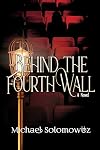
BEHIND THE FOURTH WALL by Michael Solomowitz
Published by: Black Rose Writing
Publication date: January 13, 2022
Pages: 293
Genres: Literary Fiction (classified by publisher); (and from me:) flashes of Speculative Historical Fiction, a dose of graphic Erotica, and a large dose of Magical Realism
POV:
third person, single POV, past tense (for about half the chapters) shifting to omniscient for about half the chapters
first person, past tense (roughly one chapter out of every four to six show more chapters)
occasional second person narration
Narrator: authorial, with sparks of omniscience across heads or space and time
Opening setting: An urban city restaurant, Butera's; not present day
Other significant locations: New York City; Cape Cod, Cape Playhouse in Dennis, Massachusetts
Number of named, identified or described characters: 83
Publisher's Summary:
New York playwright Noah Miller had it all–a supportive wife, a precocious daughter, a promising career. Then, suddenly, all is lost.
Still mourning his family, Noah reluctantly agrees to oversee the summer production of his play on Cape Cod. There he befriends a woman who sympathizes with his grief. But her true objectives run deeper–into his very soul–and Noah becomes an unwitting victim of her deception.
Immersed in his production, he begins an affair with one of his actors but the guilt from their relationship leads to tragic consequences. Then, on the anniversary of his wife's passing, Noah discovers the harrowing mystery behind her unexpected death and the part he played in it.
Harboring this devastating secret, his show about to open without one of its lead actors, and a dubious figure harassing him, Behind the Fourth Wall is a story of hope and redemption, forgiveness and second chances, and ultimately, the courage to face one's darkest fears.
My Review:
If you like these genres, consider reading this book that opens with a prologue in which Noah, overcoming a series of challenges, proposes marriage to Jessie, Jess, Jessica and receives a seemingly odd acceptance. Chapter one shows Noah, riding a ferry, having departed Connecticut, sans his job at the firm, his rental house, and his family, now relocating. In a Seinfeld-esque flashback, Noah learns his dusted off play, Committed, is potentially running on the Cape.
I was immediately drawn to the voice and spirit of downtrodden Noah and his longtime friend, Jerry, who both seemed about 65 years old to me. Who doesn't love an underdog or a struggling writer? Noah is troubled.
But I couldn't determine the time setting: my guesses: the prologue was 15 - 30 years earlier, chapter one opener was about 15 years ago, and the flashback in chapter one was at least a decade earlier. Noah's age was a mystery in the early scenes, with scant clues: drinking scotch, proposing marriage years back, leaving a firm, losing a family, meeting a college "crony," using the word tush, one mention of one number in a phone--otherwise zero cell phones in the first third of the book. At 5% (Kindle progress) of the way into the book, we learn Noah is currently 42 years old, and not long after we're able to piece together some significant events in the last few months that planted a seed of change in Noah. At about 7%, it seems like the year 2000 or 2001--still no signposts advertising the setting year. Suddenly at 19% there are electric bikes and an Uber. Current day? If we're in present day, such as 2021 or 2022, the music--maybe a dozen songs liked and sung along by Noah and Jerry, these two 42 year-olds, are from before they were born, as is their favorite movie actor, who died when they were two or three years old. There were many older details from bygone times: Communists, Scarlet O'Hara, TaB Diet Cola, a dozen songs of the 1960s and early 1970s, direct mail sweepstakes, Jimmy Stewart. I never figured this discontinuity out.
Part of the joy of the vague timelines came from the mystery created by that void. Without spoilers, the vacuum raises questions about two central characters, which are answered slowly and artfully with tiny breadcrumbs quite far apart. For me, this trail pulled me through the story even as it meandered from poignant to dark to abysmal. I've lost a few people very close to me, and I could relate to these characters harboring deep feelings, which was told through authentic raw language and emotions.
Touching details showed up often, such as at a funeral early in the book when a surprising event took focus off what was really going on--a great technique for a writer to make the scene not about what the scene was about.
Some scenes were hilarious, not the least of which was a neurotic dream sequence deep in Noah's troubled brain that works itself into his play.
One poignant scene stems from discussing early career failures, culminating in a thought almost lost in passing about how futures could be eclipsed by first job successes, often wanted so badly at the time, but how early job failures often lead to changes and future treasured moments. I would have enjoyed spending more time on that notion.
Early on, Noah has a wandering eye for the ladies and an unstoppable sexualized inner monologue that is hair triggered by an inordinately high number of model-like women orbiting around him, each of whom don short skirts or tight clothes. But his friend Jerry is ten times worse. The sexualization of women was omnipresent, including Noah's belief that a young college aged-man was derelict in his duties because he was distracted ogling the prancing older sisters of four-year-olds or their young mothers--the age calculations jarred me away from the book for awhile.
Witnessing the production of the play, building it up from scratch, was fun and interesting and a great parallel to the structure of an unfolding novel. I enjoyed learning many things about the art of rehearsing and putting on a play, including the fear and anxiety of all the ways it could fail. Love the title, which tied into play-craft.
Following a childish fight between the playwright and the director regarding a potential rewrite (which explodes in front of the whole crew and is gossiped to outsiders), they return to rehearsals a couple days later to practice the very scene of artistic disagreement, but although they run through the entire scene, there is absolutely no mention of this argument or disagreement, which could have been brutal--luckily, it festers and does come up again. Another missed opportunity was when the producer made a massive decision and change for the play--only we never see the point at which he makes the decision--it's all sort of implied between the lines, nor do we see the crew being informed of the decision or the ensuing afternoon rehearsal, any of which could have made for high tension and stakes.
When I finally saw what I knew was coming for half the book--a tragedy from Noah's past--I was disconnected from the event because, to me, it felt like a description of a flashback, much of which didn't seem in scene for Noah. I thought he was describing the memory to himself in his mind. I couldn't connect until I got to Noah's reflections on what he had lost, which seemed deep, painful, and authentic. Later, when Noah forces himself to confront his role in the tragedy, the prose drew me in and held me in Noah's sorrow and self-torture.
There's a moment three fourths of the way through the book when I lost interest in Noah due to his habit of making everything about him. When one of his loved ones went through a deep loss, not only did he not have empathy for them, his reaction was to contrive something that two other people did into a plot against himself.
I didn't buy a plot twist of an argument between two of the characters late in the book--felt stilted and forced, and it distracted me, and then I figured the only reason for the argument was to force a setup for the next event that occurred. Then Noah managed to turn both situations into something about him, even though someone else got hauled away in the ambulance. On the other hand, I'm sort of disappointed in myself for not expecting egotistic behavior, even narcissism, from Noah who wrote a play about himself, especially when he dehumanized the other two real people in the play--both his real life girlfriends--by combining them into one character. His focus on himself increased in every chapter, even turning another person's darkest day into a situation where that person should have been concerned about how they would impact Noah. One more chapter, and another person is nearly killed, which again Noah turned into something about him. One chapter later, human-Noah showed up with empathy, and I liked him again.
The POV changes didn't work for me. After a few of the switches from third person to first person, I figured out those were all flashbacks into Noah's head to lay out his backstory, but those were difficult to identify since there were no time signposts. There were many other flashbacks that were in third person, so the first person switches just pulled me out of the story. I didn't understand the oscillation between third person and third person, omniscient.
There is a great mirror symmetry between where the story starts and where it ends, and I loved that. There are also many great artifacts in this tale, some recur and span much of the book while some show up for only a short period, and they all added a texture to the narrative that felt good.
This book set up a great spiritual and philosophical question that I will leave hidden so you can discover it. The question is perhaps one of the most important questions humans can contemplate, and I enjoyed considering it as part of this read.
The book holds mysteries, including one of the character's hidden identity, which most readers should unlock about 11% of the way into the book, although it was flourished as a big reveal about three quarters of the way through.
(Spoiler Alert) For me, the Native American subplot didn't work, particularly because there is a huge passing of the baton to Noah that he doesn't seem to recognize or contemplate the massive duties bestowed upon him. Someone suggests he has been chosen for a huge role in the tribe, and he asks, "For what?" Great question. While the tribe is mentioned one more time, he makes nothing of his caretaker / leader role which felt to me like a last ditch effort to save these peoples by anointing him as their savior. The horrors bestowed on this particular tribe on Cape Cod is worthy of its own book where it could be dealt with fully.
(Spoiler Alert) There's a ton of speculative fiction or magical realism in this book, including time traveling historic crowds; magic insects; a turban-clad, time-warping fortuneteller; time traveling by present day characters; and a shape-shifting ghost or perhaps an angel who can erase thoughts.
But you should read about this playwright and decide what you think.
I received an advanced copy of this book in exchange for an honest review. All thoughts and opinions in this review are my own. show less
Published by: Black Rose Writing
Publication date: January 13, 2022
Pages: 293
Genres: Literary Fiction (classified by publisher); (and from me:) flashes of Speculative Historical Fiction, a dose of graphic Erotica, and a large dose of Magical Realism
POV:
third person, single POV, past tense (for about half the chapters) shifting to omniscient for about half the chapters
first person, past tense (roughly one chapter out of every four to six show more chapters)
occasional second person narration
Narrator: authorial, with sparks of omniscience across heads or space and time
Opening setting: An urban city restaurant, Butera's; not present day
Other significant locations: New York City; Cape Cod, Cape Playhouse in Dennis, Massachusetts
Number of named, identified or described characters: 83
Publisher's Summary:
New York playwright Noah Miller had it all–a supportive wife, a precocious daughter, a promising career. Then, suddenly, all is lost.
Still mourning his family, Noah reluctantly agrees to oversee the summer production of his play on Cape Cod. There he befriends a woman who sympathizes with his grief. But her true objectives run deeper–into his very soul–and Noah becomes an unwitting victim of her deception.
Immersed in his production, he begins an affair with one of his actors but the guilt from their relationship leads to tragic consequences. Then, on the anniversary of his wife's passing, Noah discovers the harrowing mystery behind her unexpected death and the part he played in it.
Harboring this devastating secret, his show about to open without one of its lead actors, and a dubious figure harassing him, Behind the Fourth Wall is a story of hope and redemption, forgiveness and second chances, and ultimately, the courage to face one's darkest fears.
My Review:
If you like these genres, consider reading this book that opens with a prologue in which Noah, overcoming a series of challenges, proposes marriage to Jessie, Jess, Jessica and receives a seemingly odd acceptance. Chapter one shows Noah, riding a ferry, having departed Connecticut, sans his job at the firm, his rental house, and his family, now relocating. In a Seinfeld-esque flashback, Noah learns his dusted off play, Committed, is potentially running on the Cape.
I was immediately drawn to the voice and spirit of downtrodden Noah and his longtime friend, Jerry, who both seemed about 65 years old to me. Who doesn't love an underdog or a struggling writer? Noah is troubled.
But I couldn't determine the time setting: my guesses: the prologue was 15 - 30 years earlier, chapter one opener was about 15 years ago, and the flashback in chapter one was at least a decade earlier. Noah's age was a mystery in the early scenes, with scant clues: drinking scotch, proposing marriage years back, leaving a firm, losing a family, meeting a college "crony," using the word tush, one mention of one number in a phone--otherwise zero cell phones in the first third of the book. At 5% (Kindle progress) of the way into the book, we learn Noah is currently 42 years old, and not long after we're able to piece together some significant events in the last few months that planted a seed of change in Noah. At about 7%, it seems like the year 2000 or 2001--still no signposts advertising the setting year. Suddenly at 19% there are electric bikes and an Uber. Current day? If we're in present day, such as 2021 or 2022, the music--maybe a dozen songs liked and sung along by Noah and Jerry, these two 42 year-olds, are from before they were born, as is their favorite movie actor, who died when they were two or three years old. There were many older details from bygone times: Communists, Scarlet O'Hara, TaB Diet Cola, a dozen songs of the 1960s and early 1970s, direct mail sweepstakes, Jimmy Stewart. I never figured this discontinuity out.
Part of the joy of the vague timelines came from the mystery created by that void. Without spoilers, the vacuum raises questions about two central characters, which are answered slowly and artfully with tiny breadcrumbs quite far apart. For me, this trail pulled me through the story even as it meandered from poignant to dark to abysmal. I've lost a few people very close to me, and I could relate to these characters harboring deep feelings, which was told through authentic raw language and emotions.
Touching details showed up often, such as at a funeral early in the book when a surprising event took focus off what was really going on--a great technique for a writer to make the scene not about what the scene was about.
Some scenes were hilarious, not the least of which was a neurotic dream sequence deep in Noah's troubled brain that works itself into his play.
One poignant scene stems from discussing early career failures, culminating in a thought almost lost in passing about how futures could be eclipsed by first job successes, often wanted so badly at the time, but how early job failures often lead to changes and future treasured moments. I would have enjoyed spending more time on that notion.
Early on, Noah has a wandering eye for the ladies and an unstoppable sexualized inner monologue that is hair triggered by an inordinately high number of model-like women orbiting around him, each of whom don short skirts or tight clothes. But his friend Jerry is ten times worse. The sexualization of women was omnipresent, including Noah's belief that a young college aged-man was derelict in his duties because he was distracted ogling the prancing older sisters of four-year-olds or their young mothers--the age calculations jarred me away from the book for awhile.
Witnessing the production of the play, building it up from scratch, was fun and interesting and a great parallel to the structure of an unfolding novel. I enjoyed learning many things about the art of rehearsing and putting on a play, including the fear and anxiety of all the ways it could fail. Love the title, which tied into play-craft.
Following a childish fight between the playwright and the director regarding a potential rewrite (which explodes in front of the whole crew and is gossiped to outsiders), they return to rehearsals a couple days later to practice the very scene of artistic disagreement, but although they run through the entire scene, there is absolutely no mention of this argument or disagreement, which could have been brutal--luckily, it festers and does come up again. Another missed opportunity was when the producer made a massive decision and change for the play--only we never see the point at which he makes the decision--it's all sort of implied between the lines, nor do we see the crew being informed of the decision or the ensuing afternoon rehearsal, any of which could have made for high tension and stakes.
When I finally saw what I knew was coming for half the book--a tragedy from Noah's past--I was disconnected from the event because, to me, it felt like a description of a flashback, much of which didn't seem in scene for Noah. I thought he was describing the memory to himself in his mind. I couldn't connect until I got to Noah's reflections on what he had lost, which seemed deep, painful, and authentic. Later, when Noah forces himself to confront his role in the tragedy, the prose drew me in and held me in Noah's sorrow and self-torture.
There's a moment three fourths of the way through the book when I lost interest in Noah due to his habit of making everything about him. When one of his loved ones went through a deep loss, not only did he not have empathy for them, his reaction was to contrive something that two other people did into a plot against himself.
I didn't buy a plot twist of an argument between two of the characters late in the book--felt stilted and forced, and it distracted me, and then I figured the only reason for the argument was to force a setup for the next event that occurred. Then Noah managed to turn both situations into something about him, even though someone else got hauled away in the ambulance. On the other hand, I'm sort of disappointed in myself for not expecting egotistic behavior, even narcissism, from Noah who wrote a play about himself, especially when he dehumanized the other two real people in the play--both his real life girlfriends--by combining them into one character. His focus on himself increased in every chapter, even turning another person's darkest day into a situation where that person should have been concerned about how they would impact Noah. One more chapter, and another person is nearly killed, which again Noah turned into something about him. One chapter later, human-Noah showed up with empathy, and I liked him again.
The POV changes didn't work for me. After a few of the switches from third person to first person, I figured out those were all flashbacks into Noah's head to lay out his backstory, but those were difficult to identify since there were no time signposts. There were many other flashbacks that were in third person, so the first person switches just pulled me out of the story. I didn't understand the oscillation between third person and third person, omniscient.
There is a great mirror symmetry between where the story starts and where it ends, and I loved that. There are also many great artifacts in this tale, some recur and span much of the book while some show up for only a short period, and they all added a texture to the narrative that felt good.
This book set up a great spiritual and philosophical question that I will leave hidden so you can discover it. The question is perhaps one of the most important questions humans can contemplate, and I enjoyed considering it as part of this read.
The book holds mysteries, including one of the character's hidden identity, which most readers should unlock about 11% of the way into the book, although it was flourished as a big reveal about three quarters of the way through.
(Spoiler Alert) For me, the Native American subplot didn't work, particularly because there is a huge passing of the baton to Noah that he doesn't seem to recognize or contemplate the massive duties bestowed upon him. Someone suggests he has been chosen for a huge role in the tribe, and he asks, "For what?" Great question. While the tribe is mentioned one more time, he makes nothing of his caretaker / leader role which felt to me like a last ditch effort to save these peoples by anointing him as their savior. The horrors bestowed on this particular tribe on Cape Cod is worthy of its own book where it could be dealt with fully.
(Spoiler Alert) There's a ton of speculative fiction or magical realism in this book, including time traveling historic crowds; magic insects; a turban-clad, time-warping fortuneteller; time traveling by present day characters; and a shape-shifting ghost or perhaps an angel who can erase thoughts.
But you should read about this playwright and decide what you think.
I received an advanced copy of this book in exchange for an honest review. All thoughts and opinions in this review are my own. show less
 This review was written for LibraryThing Early Reviewers.
Behind the Fourth Wall is not only the name of Michael Solomowitz’s debut novel, it’s also a phrase that portrays the space which separates a performer or performance from its audience.
While that definition works well for the setting of this story, it also foreshadows the perceived space between real and unreal, those present and those gone. Its complexity forms a perfect symbolism for Noah Miller’s unimaginable loss and chaotic struggle to find himself through a multi-faceted set of show more people, events, realities, and unrealities.
I found this to be a challenging read. Getting inside Noah’s head and heart to understand his choices, decisions, and motivations kept me fully engaged in the story. The author did a wonderful job of keeping the plot progressive without making the journey too easy on his readers. Sometimes I felt a step ahead of Noah and at other times I felt more lost than Noah himself.
Be prepared to ride an emotional bullet train through disbelief, grief, anger, shock, and so much more while immersing yourself in the world of live theater. There is so much going on in this book. It amazes me how the author kept all the layers and threads together. His characters are diverse and some of them are all too real, making them impossible to forget.
Plan to spend some time analyzing the surreal events and perceptions Noah experiences. I guarantee they will keep you guessing.
I believe readers who enjoy the unusual and imaginative will find this story an intriguing and satisfying experience. And if you’re anything like me, it will leave you with a lot to think about. show less
While that definition works well for the setting of this story, it also foreshadows the perceived space between real and unreal, those present and those gone. Its complexity forms a perfect symbolism for Noah Miller’s unimaginable loss and chaotic struggle to find himself through a multi-faceted set of show more people, events, realities, and unrealities.
I found this to be a challenging read. Getting inside Noah’s head and heart to understand his choices, decisions, and motivations kept me fully engaged in the story. The author did a wonderful job of keeping the plot progressive without making the journey too easy on his readers. Sometimes I felt a step ahead of Noah and at other times I felt more lost than Noah himself.
Be prepared to ride an emotional bullet train through disbelief, grief, anger, shock, and so much more while immersing yourself in the world of live theater. There is so much going on in this book. It amazes me how the author kept all the layers and threads together. His characters are diverse and some of them are all too real, making them impossible to forget.
Plan to spend some time analyzing the surreal events and perceptions Noah experiences. I guarantee they will keep you guessing.
I believe readers who enjoy the unusual and imaginative will find this story an intriguing and satisfying experience. And if you’re anything like me, it will leave you with a lot to think about. show less
Noah Miller takes time off from his job as a theatre reviewer in New York to oversee a production of his one and only play in a small venue in Cape Cod.
Still not recovered from the death of his wife Noah seeks to use the play as a distraction from the reality of his life without her.
A fallout with the play’s director, an affair with the leading lady and a woman who seems to know a little too much about Noah give the book plenty to play with as we are taken on a ride with Noah until his show more family secrets are laid bare.
Very well written with a mix of character driven story and interesting behind the scenes detail of putting on a play. Add in some nice scene setting in the beautiful area around the cape and you’ve got a riveting story that keeps the pages turning show less
Still not recovered from the death of his wife Noah seeks to use the play as a distraction from the reality of his life without her.
A fallout with the play’s director, an affair with the leading lady and a woman who seems to know a little too much about Noah give the book plenty to play with as we are taken on a ride with Noah until his show more family secrets are laid bare.
Very well written with a mix of character driven story and interesting behind the scenes detail of putting on a play. Add in some nice scene setting in the beautiful area around the cape and you’ve got a riveting story that keeps the pages turning show less
This review was written for LibraryThing Early Reviewers.Behind the Fourth Wall is a sweet novel about a playwright coming to terms with the deaths of his beloved daughter and wife.
Noah Miller takes time off from his job writing play reviews in New York to spend time in Cape Cod where his agent friend Jerry is producing Noah’s play.
Noah ends up directing the play and falling for his leading lady but dealing with grief is the main theme of the novel.
The ‘fourth wall’ is the idea in theatre that the stage has three walls and there is a show more fourth wall between the actors and the audience. The image gives Solomowitz licence to play with the idea: on which side of the fourth wall is ‘real life? Is there, as some actors say, only dead people on the other side of the fourth wall?
Michael Solomowitz is well-regarded as a scriptwriter for TV and film, and as a freelance sports journalist. Behind the Fourth Wall is his first novel. I enjoyed the writing. It is clear and declarative. Probably drawing on his experience as a scriptwriter, Solomowitz brings the characters alive with witty dialogue. The butterfly, the image for which Noah remembers his daughter, is beautifully handled.
As an amateur actor and neophyte playwright, I especially enjoyed the details of putting on a play. I imagine most people would find this aspect of the novel intriguing. It certainly provides good opportunities to introduce and develop characters!
Behind the Fourth Wall is a novel that explores the depth of grief with a delicate touch. show less
Noah Miller takes time off from his job writing play reviews in New York to spend time in Cape Cod where his agent friend Jerry is producing Noah’s play.
Noah ends up directing the play and falling for his leading lady but dealing with grief is the main theme of the novel.
The ‘fourth wall’ is the idea in theatre that the stage has three walls and there is a show more fourth wall between the actors and the audience. The image gives Solomowitz licence to play with the idea: on which side of the fourth wall is ‘real life? Is there, as some actors say, only dead people on the other side of the fourth wall?
Michael Solomowitz is well-regarded as a scriptwriter for TV and film, and as a freelance sports journalist. Behind the Fourth Wall is his first novel. I enjoyed the writing. It is clear and declarative. Probably drawing on his experience as a scriptwriter, Solomowitz brings the characters alive with witty dialogue. The butterfly, the image for which Noah remembers his daughter, is beautifully handled.
As an amateur actor and neophyte playwright, I especially enjoyed the details of putting on a play. I imagine most people would find this aspect of the novel intriguing. It certainly provides good opportunities to introduce and develop characters!
Behind the Fourth Wall is a novel that explores the depth of grief with a delicate touch. show less
This review was written for LibraryThing Early Reviewers.Statistics
- Works
- 1
- Members
- 23
- Popularity
- #537,597
- Rating
- 3.4
- Reviews
- 11
- ISBNs
- 1
