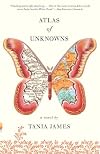
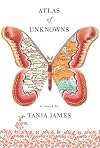
Atlas of Unknowns
by Tania James
On This Page
Description
In the wake of their mother's mysterious death, Linno and Anju Vallara are raised in Kerala by their father and grandmother. When seventeen-year-old Anju wins a scholarship to study in New York, she jumps at the chance to embrace all that America has to offer, but in so doing commits an act of betrayal that severs her relationship with her sister.When Anju's lies catch up with her, she runs away, helped by a kindly stranger who somehow knows things about Anju's past. Meanwhile, Linno has show more begun a journey of her own: towards her sister, towards the memory of their mother, and towards a future she could never have imagined.Atlas of Unknowns is an unforgettable tale of two sisters whose bonds are powerfully tested, and the secret histories and hilarious eccentricities of families everywhere. show lessTags
Recommendations










Member Reviews
For starters, this book is more like a 4.5 star rating. It was much better than I expected and I'm glad I picked it up, however long ago that was.
Atlas of Unknowns follows the story of two sisters, Anju and Linno, who live very different lives. Anju, the youngest, is the star pupil and outshines her older sister in school. Linno is a victim of a firework incident and lost her right hand, but despite this disability, she is an incredible artist. Anju and Linno lost their mother when they were young and were raised by their father and grandmother. Anju is offered an opportunity to study in New York and is desperately grabs at this opportunity that may not only help her but her entire family. Anju is awarded the scholarship but at a show more devastating cost to her relationship with her sister. The novel follows Anju's experience in New York city as well as Linno's continued existence back in India.
For James' debut novel, her style of writing is exquisite and a delight to read. Her way with words crafted characters that were utterly realistic and gave you an open invitation to this family saga. I loved the subtle slides into flashbacks that contrasted with the main plot excellently. I was so glad that we got to know their mother, as well as her relationship with Bird. I did wish there was a more satisying conclusion that included Bird but I understand that the ending that occurred was more realistic and it doesn't often occur in reality that goodbyes are as perfect as they should be.
Both Anju and Linno were undeniably realistic and relatable characters and I loved Linno with her stubbornness as well as modest talent. Anju seemed, at some times, selfish, but as she is sixteen during the novel, it is realistic for a sixteen year old to not think things through. I thought Anju reacted to each situation understandably and I just loved her. The ongoing comparisons between both Anju and Linno, and their mother were artistic and well placed. This book felt like a piece of art to digest.
Now onto the plot. This isn't a particularly fast paced novel but it wasn't predictable, which is what I liked about it. For the most part of the book, I was thinking that it would end a specific way, but in retrospect that would've been like glossing over the little hardships. Like tying a ribbon around an impossible situation so that the audience would sigh and go 'isnt that just wonderful'. It is not common that storytellers opt for the more realistic endings over a pretty ending and I'm so glad that this was the situation in Atlas of Unknowns. Life doesn't always work out the way we plan but that doesn't mean it won't work out. This realistic theme made the book relatable and wonderful.
This book is a pleasure to read and I would recommend it to anyone. show less
Atlas of Unknowns follows the story of two sisters, Anju and Linno, who live very different lives. Anju, the youngest, is the star pupil and outshines her older sister in school. Linno is a victim of a firework incident and lost her right hand, but despite this disability, she is an incredible artist. Anju and Linno lost their mother when they were young and were raised by their father and grandmother. Anju is offered an opportunity to study in New York and is desperately grabs at this opportunity that may not only help her but her entire family. Anju is awarded the scholarship but at a show more devastating cost to her relationship with her sister. The novel follows Anju's experience in New York city as well as Linno's continued existence back in India.
For James' debut novel, her style of writing is exquisite and a delight to read. Her way with words crafted characters that were utterly realistic and gave you an open invitation to this family saga. I loved the subtle slides into flashbacks that contrasted with the main plot excellently. I was so glad that we got to know their mother, as well as her relationship with Bird. I did wish there was a more satisying conclusion that included Bird but I understand that the ending that occurred was more realistic and it doesn't often occur in reality that goodbyes are as perfect as they should be.
Both Anju and Linno were undeniably realistic and relatable characters and I loved Linno with her stubbornness as well as modest talent. Anju seemed, at some times, selfish, but as she is sixteen during the novel, it is realistic for a sixteen year old to not think things through. I thought Anju reacted to each situation understandably and I just loved her. The ongoing comparisons between both Anju and Linno, and their mother were artistic and well placed. This book felt like a piece of art to digest.
Now onto the plot. This isn't a particularly fast paced novel but it wasn't predictable, which is what I liked about it. For the most part of the book, I was thinking that it would end a specific way, but in retrospect that would've been like glossing over the little hardships. Like tying a ribbon around an impossible situation so that the audience would sigh and go 'isnt that just wonderful'. It is not common that storytellers opt for the more realistic endings over a pretty ending and I'm so glad that this was the situation in Atlas of Unknowns. Life doesn't always work out the way we plan but that doesn't mean it won't work out. This realistic theme made the book relatable and wonderful.
This book is a pleasure to read and I would recommend it to anyone. show less
For starters, this book is more like a 4.5 star rating. It was much better than I expected and I'm glad I picked it up, however long ago that was.
Atlas of Unknowns follows the story of two sisters, Anju and Linno, who live very different lives. Anju, the youngest, is the star pupil and outshines her older sister in school. Linno is a victim of a firework incident and lost her right hand, but despite this disability, she is an incredible artist. Anju and Linno lost their mother when they were young and were raised by their father and grandmother. Anju is offered an opportunity to study in New York and is desperately grabs at this opportunity that may not only help her but her entire family. Anju is awarded the scholarship but at a show more devastating cost to her relationship with her sister. The novel follows Anju's experience in New York city as well as Linno's continued existence back in India.
For James' debut novel, her style of writing is exquisite and a delight to read. Her way with words crafted characters that were utterly realistic and gave you an open invitation to this family saga. I loved the subtle slides into flashbacks that contrasted with the main plot excellently. I was so glad that we got to know their mother, as well as her relationship with Bird. I did wish there was a more satisying conclusion that included Bird but I understand that the ending that occurred was more realistic and it doesn't often occur in reality that goodbyes are as perfect as they should be.
Both Anju and Linno were undeniably realistic and relatable characters and I loved Linno with her stubbornness as well as modest talent. Anju seemed, at some times, selfish, but as she is sixteen during the novel, it is realistic for a sixteen year old to not think things through. I thought Anju reacted to each situation understandably and I just loved her. The ongoing comparisons between both Anju and Linno, and their mother were artistic and well placed. This book felt like a piece of art to digest.
Now onto the plot. This isn't a particularly fast paced novel but it wasn't predictable, which is what I liked about it. For the most part of the book, I was thinking that it would end a specific way, but in retrospect that would've been like glossing over the little hardships. Like tying a ribbon around an impossible situation so that the audience would sigh and go 'isnt that just wonderful'. It is not common that storytellers opt for the more realistic endings over a pretty ending and I'm so glad that this was the situation in Atlas of Unknowns. Life doesn't always work out the way we plan but that doesn't mean it won't work out. This realistic theme made the book relatable and wonderful.
This book is a pleasure to read and I would recommend it to anyone. show less
Atlas of Unknowns follows the story of two sisters, Anju and Linno, who live very different lives. Anju, the youngest, is the star pupil and outshines her older sister in school. Linno is a victim of a firework incident and lost her right hand, but despite this disability, she is an incredible artist. Anju and Linno lost their mother when they were young and were raised by their father and grandmother. Anju is offered an opportunity to study in New York and is desperately grabs at this opportunity that may not only help her but her entire family. Anju is awarded the scholarship but at a show more devastating cost to her relationship with her sister. The novel follows Anju's experience in New York city as well as Linno's continued existence back in India.
For James' debut novel, her style of writing is exquisite and a delight to read. Her way with words crafted characters that were utterly realistic and gave you an open invitation to this family saga. I loved the subtle slides into flashbacks that contrasted with the main plot excellently. I was so glad that we got to know their mother, as well as her relationship with Bird. I did wish there was a more satisying conclusion that included Bird but I understand that the ending that occurred was more realistic and it doesn't often occur in reality that goodbyes are as perfect as they should be.
Both Anju and Linno were undeniably realistic and relatable characters and I loved Linno with her stubbornness as well as modest talent. Anju seemed, at some times, selfish, but as she is sixteen during the novel, it is realistic for a sixteen year old to not think things through. I thought Anju reacted to each situation understandably and I just loved her. The ongoing comparisons between both Anju and Linno, and their mother were artistic and well placed. This book felt like a piece of art to digest.
Now onto the plot. This isn't a particularly fast paced novel but it wasn't predictable, which is what I liked about it. For the most part of the book, I was thinking that it would end a specific way, but in retrospect that would've been like glossing over the little hardships. Like tying a ribbon around an impossible situation so that the audience would sigh and go 'isnt that just wonderful'. It is not common that storytellers opt for the more realistic endings over a pretty ending and I'm so glad that this was the situation in Atlas of Unknowns. Life doesn't always work out the way we plan but that doesn't mean it won't work out. This realistic theme made the book relatable and wonderful.
This book is a pleasure to read and I would recommend it to anyone. show less
I am not sure why I finished this book. Maybe it's just because I love stationery and enjoyed the invitation card subplot. Because I wasn't really engaged with the characters, most of whom I found flat, and much of what happened I found either overdone (like the documentary film thing and the points about immigration, which were excellent points but were handled in too heavy-handed a fashion to feel very poignant to me).
And the ending was a particular disappointment. Characters acted in ways that I found inconsistent, and the portrayal of seven-year-old Linno didn't seem realistic to me. Based both on my experience of seven-year-olds and on the way James wrote her parents, I find it highly unlikely that Linno would have been aware of show more the America debate, much less reflecting on it to the depth that she did.
Two things I found interesting:
1. Near the end, James writes, "a person is more important in her absence than in her presence." (315) This is a theme that features prominently in Marilynne Robinson's Housekeeping, which I read (and loved) earlier this year. It was interesting seeing it here because it's an idea that I particularly enjoy turning over in my mind, and its brief mention in Atlas of Unknowns has given me a chance to reflect on why it worked well for me in Robinson's novel but not in James's. I think the difference is that Robinson allowed the theme to weave itself throughout the story---Ruthie and Lucille's mother's absence is present all the time, even when it's not mentioned directly (which it rarely is)---while James just mentions it briefly in that one direct statement. It seems almost like an afterthought rather than an integral part of James's novel.
2. Linno's confession reminded me of a scene in Lauren Groff's Fates and Furies in which a main character reflects on the long-term effects of something that happens as a child. I didn't particularly enjoy Groff's novel, but after reading James's novel, I have a greater appreciation for that scene and her handling of it and the surrounding theme. I had thought that Groff's scene was overly shocking, but now I appreciate both that she just went for it and that she circled around it a few times before she did so. If something really, really affects someone as a core part of her life, it's not just going to suddenly resurface as a whole all at once. It's going to come back in bits and pieces triggered by daily occurrences---smells, sounds, actions, the slant of the light. We really have no inkling of this memory of Linno's before she confesses it; I find that not only unrealistic but lacking in punch.
I wouldn't say that I regret finishing this book, but I probably could have stopped about a third of the way through and not suffered any ill effects. Tania James has some very good ideas and has the capacity to write a scene that's both sensorially and emotionally vibrant, especially in the beginning of the novel, like in the telling of Linno's accident. But I got the sense that she tried to do too much in Atlas of Unknowns. She seemed not to really have a strong sense of what the novel was about at its core. Is it about immigration? Is it about sister relationships? Is it about arranged marriage? Culture's effect on our actions? Religion? Friendship? Parental loss? Cultural or dispositional disorientation? In the novel, James touched on a lot of these things but never delved in deeply enough for my taste. show less
And the ending was a particular disappointment. Characters acted in ways that I found inconsistent, and the portrayal of seven-year-old Linno didn't seem realistic to me. Based both on my experience of seven-year-olds and on the way James wrote her parents, I find it highly unlikely that Linno would have been aware of show more the America debate, much less reflecting on it to the depth that she did.
Two things I found interesting:
1. Near the end, James writes, "a person is more important in her absence than in her presence." (315) This is a theme that features prominently in Marilynne Robinson's Housekeeping, which I read (and loved) earlier this year. It was interesting seeing it here because it's an idea that I particularly enjoy turning over in my mind, and its brief mention in Atlas of Unknowns has given me a chance to reflect on why it worked well for me in Robinson's novel but not in James's. I think the difference is that Robinson allowed the theme to weave itself throughout the story---Ruthie and Lucille's mother's absence is present all the time, even when it's not mentioned directly (which it rarely is)---while James just mentions it briefly in that one direct statement. It seems almost like an afterthought rather than an integral part of James's novel.
2. Linno's confession reminded me of a scene in Lauren Groff's Fates and Furies in which a main character reflects on the long-term effects of something that happens as a child. I didn't particularly enjoy Groff's novel, but after reading James's novel, I have a greater appreciation for that scene and her handling of it and the surrounding theme. I had thought that Groff's scene was overly shocking, but now I appreciate both that she just went for it and that she circled around it a few times before she did so. If something really, really affects someone as a core part of her life, it's not just going to suddenly resurface as a whole all at once. It's going to come back in bits and pieces triggered by daily occurrences---smells, sounds, actions, the slant of the light. We really have no inkling of this memory of Linno's before she confesses it; I find that not only unrealistic but lacking in punch.
I wouldn't say that I regret finishing this book, but I probably could have stopped about a third of the way through and not suffered any ill effects. Tania James has some very good ideas and has the capacity to write a scene that's both sensorially and emotionally vibrant, especially in the beginning of the novel, like in the telling of Linno's accident. But I got the sense that she tried to do too much in Atlas of Unknowns. She seemed not to really have a strong sense of what the novel was about at its core. Is it about immigration? Is it about sister relationships? Is it about arranged marriage? Culture's effect on our actions? Religion? Friendship? Parental loss? Cultural or dispositional disorientation? In the novel, James touched on a lot of these things but never delved in deeply enough for my taste. show less
In Atlas of Unknowns, first time novelist Tania James, tells the funny and honest story of two sisters trying to find their places in this world amidst betrayal and haunting secrets. The older sister, Linno, is scarred by an unfortunate accident and the truth behind her mother's death. She's a gifted artist, yet does not shine the way her younger sister, Anju, does academically. Anju is so successful in school that she applies for and receives a scholarship to attend an elite private school in New York. Though she wins the scholarship under false pretenses, she thinks this will be her opportunity to improve her family's situation. There's also a good supporting cast of characters. These include Anju's Hindu host family, the Sankalis, show more whose matriarch is a cohost on an American talk show that seems to be a caricature of a real life four woman hosted show and a son who defers college to pursue documentary film making. Then there's Bird, who brings Anju some semblance of comfort in the midst of culture shock and has a secret tie to her. Set in Kerala, India and New York, we see two sisters navigate issues like marriage, family, post 9/11 immigration, and self-discovery.
"For such a small world, the space from person to person can span a whole sea."
This describes the relationship between Anju and Linno both emotionally and physically. However, the emotional divide lessens once the spatial divide becomes a factor.
I absolutely loved this book! At first, I thought this was going to be a story about one fortunate, scheming sister and the other talented and woeful. But, this isn't the case. Even though Linno lacks self-confidence early in the story, when Anju stabs her in the back, Linno calls her out. And like you would hope sisters would do, Linno still supports Anju's temporary success and she desperately tries to get to her when everything falls apart. I cheered Linno on through her self discovery and all but spewed venom at Anju, even after she loses everything. I did, however, sympathize with their father Melvin once he finds himself working for the wealthy man who was once betrothed to his deceased wife. James has a keen sense of narrative. Her characters are well developed, relative, and recognizable. She handles the issues of immigration in a post 9/11 America and a young Indian woman challenging marital customs with honesty. I felt very satisfied once finished with this. A small part of me didn't want it to end, and that's when you know you've read something really special. show less
"For such a small world, the space from person to person can span a whole sea."
This describes the relationship between Anju and Linno both emotionally and physically. However, the emotional divide lessens once the spatial divide becomes a factor.
I absolutely loved this book! At first, I thought this was going to be a story about one fortunate, scheming sister and the other talented and woeful. But, this isn't the case. Even though Linno lacks self-confidence early in the story, when Anju stabs her in the back, Linno calls her out. And like you would hope sisters would do, Linno still supports Anju's temporary success and she desperately tries to get to her when everything falls apart. I cheered Linno on through her self discovery and all but spewed venom at Anju, even after she loses everything. I did, however, sympathize with their father Melvin once he finds himself working for the wealthy man who was once betrothed to his deceased wife. James has a keen sense of narrative. Her characters are well developed, relative, and recognizable. She handles the issues of immigration in a post 9/11 America and a young Indian woman challenging marital customs with honesty. I felt very satisfied once finished with this. A small part of me didn't want it to end, and that's when you know you've read something really special. show less
Atlas of Unknowns is the story of a family torn apart by betrayal and separated geographically by thousands of miles. Linno and Anju Vallara are the sisters at the center of the family who must learn to navigate the difficult life choices that dictate the complexity of life's journey. The story unfolds as the sisters learn from and reflect on the difficult moments that have brought them to their present circumstances.
Nathan Englander’s cover blurb calls Tania James “a natural born storyteller,” but that epigraph diminishes the artistry of James’s narrative. The story develops artfully, weaving through the past and the present to create a holistic view of the family from many different perspectives. Each family member contributes show more a voice, and each voice is striking in its unique perspective. No character has all the answers, but together they are able to tell the full story of their family.
The story’s prose is delightful, with many truly beautiful turns of phrase, and James is masterful in her ability to so seamlessly tie Indian culture into her story. Where for the non-native reader Arundhati Roy’s The God of Small Things fails to fully integrate the culture into the narrative, Atlas of Unknowns subtly reveals the little details that color a culture and a geographic location. For example, instead of telling the reader that in India, there are lizards on the walls in some homes, James simply mentions the presence of a wall lizard in her description of a scene in the Vallara family’s home. These subtle colorings help the reader to feel more a passive observer of the scene, rather than having culture instructed through a series of carefully wrought explanations.
James also aptly manages a very difficult subject: loyalty and betrayal, as part of a coming-of-age story. The story feels in some ways like Allegra Goodman’s Intuition, in that the characters are feeling their way through right and wrong, and exploring their inner motivations in an attempt to make sense of the world around them. But James’s characters feel much more real, and their situations are more universal and broadly accessible. The characters’ flaws, in the bildungsroman context, may also be more forgivable, and certainly the lessons are more easily swallowed.
In addition, the bi-continental setting allows exploration of a number of important themes, including multiculturalism, immigration (legal and illegal), prejudice and cultural bias, technology and progress, and dreams and aspirations (contemporary social mobility?). No one character is ever right – each is flawed in his or her own way – but the variety of character perspectives that James crafts contributes to the rich dialogue on these and other themes.
Overall, a captivating read and a highly recommended first book from Tania James! show less
Nathan Englander’s cover blurb calls Tania James “a natural born storyteller,” but that epigraph diminishes the artistry of James’s narrative. The story develops artfully, weaving through the past and the present to create a holistic view of the family from many different perspectives. Each family member contributes show more a voice, and each voice is striking in its unique perspective. No character has all the answers, but together they are able to tell the full story of their family.
The story’s prose is delightful, with many truly beautiful turns of phrase, and James is masterful in her ability to so seamlessly tie Indian culture into her story. Where for the non-native reader Arundhati Roy’s The God of Small Things fails to fully integrate the culture into the narrative, Atlas of Unknowns subtly reveals the little details that color a culture and a geographic location. For example, instead of telling the reader that in India, there are lizards on the walls in some homes, James simply mentions the presence of a wall lizard in her description of a scene in the Vallara family’s home. These subtle colorings help the reader to feel more a passive observer of the scene, rather than having culture instructed through a series of carefully wrought explanations.
James also aptly manages a very difficult subject: loyalty and betrayal, as part of a coming-of-age story. The story feels in some ways like Allegra Goodman’s Intuition, in that the characters are feeling their way through right and wrong, and exploring their inner motivations in an attempt to make sense of the world around them. But James’s characters feel much more real, and their situations are more universal and broadly accessible. The characters’ flaws, in the bildungsroman context, may also be more forgivable, and certainly the lessons are more easily swallowed.
In addition, the bi-continental setting allows exploration of a number of important themes, including multiculturalism, immigration (legal and illegal), prejudice and cultural bias, technology and progress, and dreams and aspirations (contemporary social mobility?). No one character is ever right – each is flawed in his or her own way – but the variety of character perspectives that James crafts contributes to the rich dialogue on these and other themes.
Overall, a captivating read and a highly recommended first book from Tania James! show less
When she was a little girl in India, Linno lost her right hand in an accident with fireworks. Ever since, she has been ashamed, dropping out of school and becoming the caretaker for her grandmother. The only thing that she treasures is her art, as she trains her left hand to create the beautiful pictures which were so effortless with her right. Her little sister Anju is incredibly intelligent. When Anju applies for a scholarship to study for a year in New York City, this is perceived as the opportunity to get her family out of India and to the US. Anju must succeed. When confronted with evidence of her own awkwardness and lack of originality during her interview, Anju decides to claim Linno’s pictures as her own and wins the show more scholarship on the basis of her sister’s talent. In New York City, Anju is haunted by her lies and by a friend of the mother who killed herself so many years ago. When she can no longer hide, Anju must confront the difficulties she’s created for herself and find out what really matters to her.
I really loved this book. My favorite part was how well the characters were drawn. Linno in particular was my favorite. She grows amazingly over the course of the novel, from the injured, mocked little girl into an amazing young woman fully capable of using her talents and getting what she’s dreamed. She confronts the evils of her own past and makes her own choices rather than getting married to another semi-disabled person and hiding in borrowed wealth.
Anju, while less appealing because of her pathological lies, is also a completely believable character. She’s forced to confront some hard truths in this book about who she is and what she is doing; she falls from the top of the world into its nasty underworld and honestly, it feels like she really learns that things aren’t going to be given to her and that grades aren’t all that matter in the world. People throughout the novel are set to use Anju for their own personal gain, to take her story and make it their own; by the end of the novel Anju has decided to take control of her story for herself. The other, less central characters are also fascinating, like Melvin and Bird and Gracie, Linno and Anju’s deceased mother.
The multi-culturalism in this novel was similarly interesting to me. I think one of the scenes that captures this best is when Linno has to make an invitation for a woman who does not want an authentic Asian design but rather one that reflects what she has seen on TV and in films. Linno has to struggle with her own knowledge of cultures and the way that they are perceived by outsiders, which I found to be a very interesting contrast. Anju experiences similar problems through her relationship with her host mother, a famous TV personality who while intent on enlightening people about Indian problems, has a worldview which doesn’t match up at all with the India that Anju was born and lived in. This always makes me wonder how different actual cultures are from the packaged versions presented on TV, in movies, and to tourists on visits. I’m not sure how accurate a picture books can give me, but I would hope that they push the boundaries a bit.
All in all, this is a great book. There are many layers to it but overall, it’s an engaging story. I grew to care about the characters and wished for them to succeed. I was sorry to let them go at the end of the novel, but I’ve been left with quite a bit to think about. This is readable literary fiction at its best. I completely recommend it.
http://chikune.com/blog/?p=1018 show less
I really loved this book. My favorite part was how well the characters were drawn. Linno in particular was my favorite. She grows amazingly over the course of the novel, from the injured, mocked little girl into an amazing young woman fully capable of using her talents and getting what she’s dreamed. She confronts the evils of her own past and makes her own choices rather than getting married to another semi-disabled person and hiding in borrowed wealth.
Anju, while less appealing because of her pathological lies, is also a completely believable character. She’s forced to confront some hard truths in this book about who she is and what she is doing; she falls from the top of the world into its nasty underworld and honestly, it feels like she really learns that things aren’t going to be given to her and that grades aren’t all that matter in the world. People throughout the novel are set to use Anju for their own personal gain, to take her story and make it their own; by the end of the novel Anju has decided to take control of her story for herself. The other, less central characters are also fascinating, like Melvin and Bird and Gracie, Linno and Anju’s deceased mother.
The multi-culturalism in this novel was similarly interesting to me. I think one of the scenes that captures this best is when Linno has to make an invitation for a woman who does not want an authentic Asian design but rather one that reflects what she has seen on TV and in films. Linno has to struggle with her own knowledge of cultures and the way that they are perceived by outsiders, which I found to be a very interesting contrast. Anju experiences similar problems through her relationship with her host mother, a famous TV personality who while intent on enlightening people about Indian problems, has a worldview which doesn’t match up at all with the India that Anju was born and lived in. This always makes me wonder how different actual cultures are from the packaged versions presented on TV, in movies, and to tourists on visits. I’m not sure how accurate a picture books can give me, but I would hope that they push the boundaries a bit.
All in all, this is a great book. There are many layers to it but overall, it’s an engaging story. I grew to care about the characters and wished for them to succeed. I was sorry to let them go at the end of the novel, but I’ve been left with quite a bit to think about. This is readable literary fiction at its best. I completely recommend it.
http://chikune.com/blog/?p=1018 show less
Atlas of Unknowns is the story of the Vallara sisters--reticent Linno and impulsive Anju--growing up in (and away from) India. After a disfiguring childhood accident and less than stellar academic career it falls on Linno, a natural homebody, to take care of the family (her widowed father Melvin and his superstitious mother, called Ammachi). Bright Anju, on the other hand, competes for an academic scholarship to an elite New York City school, but lacks an extra something to set her apart and resorts to a bold lie. The lie launches the story as it rips the sisters apart, both emotionally and geographically. Haunting the entire Vallara family is the girls' deceased mother, Gracie, and her past relationship with an Indian actress named show more Birdie, who is now a beautician in New York City.
From James' expert handling of multiple story lines and attention to detail (never giving the reader more than they need yet never leaving them in the dark), you would never guess this book is her debut novel. She is able to address many contentious issues in today's world with subtlety and skill. As a stickler for endings who has read more than a few contemporary novels with endings that feel lazy or tacked-on, this, would-be writers, is how you bring a great book to a conclusion befitting it! show less
From James' expert handling of multiple story lines and attention to detail (never giving the reader more than they need yet never leaving them in the dark), you would never guess this book is her debut novel. She is able to address many contentious issues in today's world with subtlety and skill. As a stickler for endings who has read more than a few contemporary novels with endings that feel lazy or tacked-on, this, would-be writers, is how you bring a great book to a conclusion befitting it! show less
 This review was written for LibraryThing Early Reviewers.
Members
- Recently Added By
Author Information

5+ Works 867 Members
Awards and Honors
Distinctions
Common Knowledge
- Canonical title*
- Atlas des Unbekannten: Roman über zwei Schwestern
- Original title
- Atlas of Unknowns
- Original publication date
- 2009-04
*Some information comes from Common Knowledge in other languages. Click "Edit" for more information.
Classifications
Statistics
- Members
- 232
- Popularity
- 139,858
- Reviews
- 20
- Rating
- (3.66)
- Languages
- 5 — Dutch, English, French, German, Spanish
- Media
- Paper, Audiobook, Ebook
- ISBNs
- 17
- ASINs
- 3