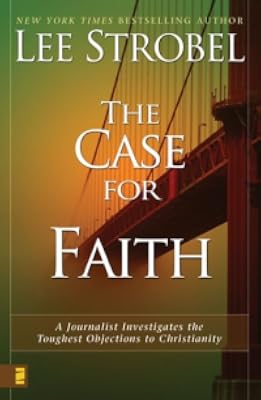
The Case for Faith: A Journalist Investigates the Toughest Objections to Christianity
by Lee Strobel
The Case for ... (2)
On This Page
Description
This timeless, compelling, and thought-provoking book on the Christian faith, now updated, includes two all-new chapters, a current list of recommended resources for further study, and a new discussion guide. In The Case for Faith, bestselling author, journalist, and former atheist Lee Strobel turns his investigative skills to the most persistent emotional objections to belief in God- the eight "heart barriers" to faith: - "Since evil and suffering exist, a loving God cannot" - "Since show more miracles contradict science, they cannot be true" - "Evolution explains life, so God isn't needed" - "God isn't worthy of worship if he kills innocent children" - "It's offensive to claim Jesus is the only way to God" - "A loving God would never torture people in hell" - "Church history is littered with oppression and violence" - "I still have doubts, so I can't be a Christian" This bestselling book is for those who may be feeling attracted to Jesus but who are faced with difficult questions standing squarely in their path. For Christians, it will deepen their convictions and give them fresh confidence in defending their faith to skeptical friends, or during the hardest of times, when they have to defend their faith to themselves in moments of doubt. show lessTags
Recommendations
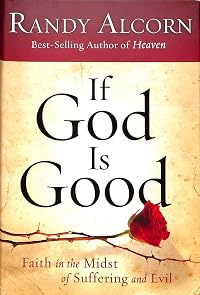
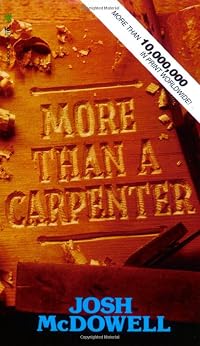
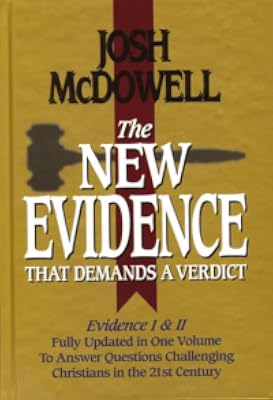
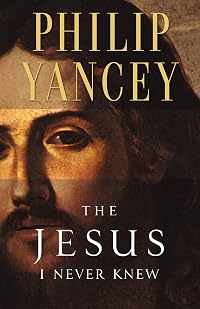
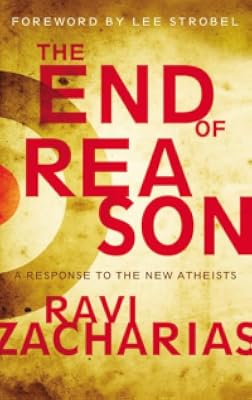
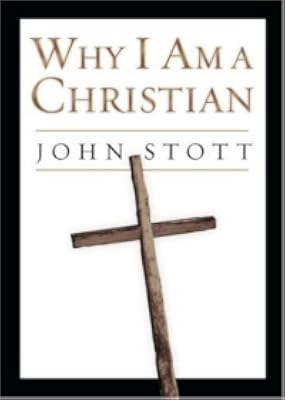
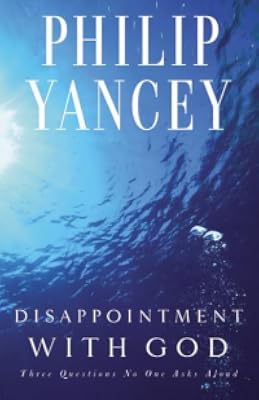
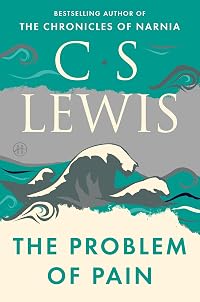

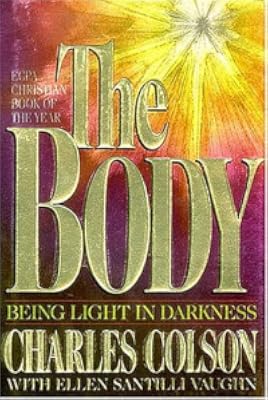
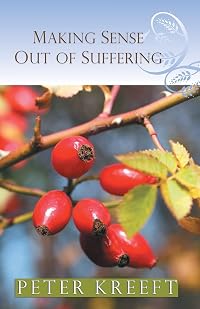
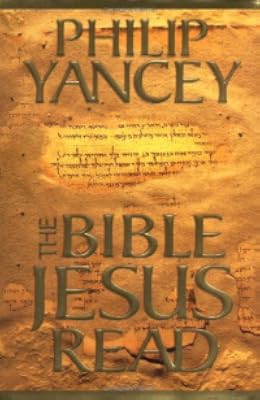
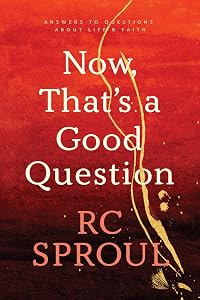

Member Recommendations
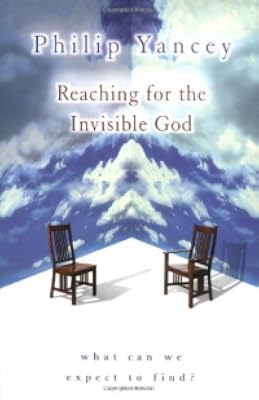
fulner Case for faith is the sequel to car for Christ. After journalist investigation if Jesus was a real person Stobel continues with an investigation if one really needs to put faith in this member of the part. Mass of the early Christians investigates how the early believers celebrated their faith in Christ through their eyes without trying to tie it to today's Evangelical practice.
Member Reviews
I somehow had the urge, on Christmas day, no less, to review this... maybe as explanation for why I'm not sitting in church right now... a "bah, humbug" review, I suppose. I used to identify as Christian. I read this book. I'm now agnostic. Obviously, losing faith isn't that simple, correlation doesn't imply causation, and this book may be great for some people, but I want to add my reaction because I'm concerned for anyone who reads this book while troubled about their faith...it may be a really, really bad idea.
I grew up in the church, but I've always had doubts. I'm a logician at heart, and there are a lot of direct contradictions in the Bible. There are also a lot of teachings which have been discarded in light of our culture(e.g. show more the role of women, most of the Old Testament laws, etc) and my very tautological mindset has issues with pick-and-choose precepts. Anyway, growing up in the church, I learned quickly that hard questions were not welcomed. (Yes, this includes those alpha groups. I tried a few--after getting questions shut down, I tried contacting the leaders and asking if it was ok for me to come...I was gently told that my concerns might "contaminate" others.) That "don't confuse me with the facts" mentality is what eventually made me give up. And this book has it in spades.
I was given this book (as a Christmas gift, incidentally) quite a few years ago by a truly kind and compassionate member of my church who hadn't read it but thought it might help me with those "hard questions." As it turns out, it didn't, and in fact helped to kill most of my remaining faith. I found Strobel's God to be one much more interested in righteousness and justice than forgiveness or compassion. He felt to me like the other side of the coin of C.S. Lewis's God of joy and love.
Strobel sets out a bunch of "laws" and "rules" dogmatically, not all of which (I felt) are biblically supported. Take, as one example, the fun parts of the Old Testament where God orders pillage, rape, murder and genocide. I sort of developed a comfort with the "continuing revelation" view of the Bible--that God first reveals himself to Abraham as in some ways a god of the mountain, and that as he continued to reveal himself, people understood more clearly about mercy as opposed to hard justice. Strobel doesn't agree. I also never believed in inerrancy--it's the whole direct contradiction issue--and Strobel does. So that means he actually had the fun task of arguing that the genocides and rapes and slaughters,of, say, the Canaanites in the Old Testament were justified. Strobel's response: they were bad people, so they--and their children and camels--deserved what was coming to them.
Another section that bothered me was about exclusivity. I've always believed (I know, I know, this automatically shows why I couldn't survive in the church) that God must be bigger than the labels and regimented doctrine of Judeo-Christianity. Why would he limit himself to only one small group? What happened to people born before then? What happens to someone who never learned of Jesus? Why could God not have been continually revealing himself to people throughout time, to people who never fully grasp Him and therefore splinter themselves into various religions? (I know, it's heresy. But then, I'm no longer Christian...maybe I never really was.) Strobel asks some of these in his interview...but comes up with neatly packaged answers supporting exclusivity. He argues that God being God, God must somehow give everyone the opportunity. And apparently, all other religions are "wrong" and "arrogant" for "daring" to consider their religion better than Christianity. I cannot reconcile with a God who sends backbiting Christians to Heaven because they jump through some hoops and get all their names right while sending, say, faithful, righteous, and compassionate Muslims to Hell.
And speaking of Hell...there's an entire chapter devoted to it. It is actually possible, if you're careful, to read what Jesus says about Hell, the weeping and gnashing of teeth, as simply ending rather than eternal torment. For me, that was OK. I'm comfortable with ending and becoming nothing. Eternity scares me. Eternal Hell also seems to me to contradict the argument that God uses earthly pain as a teaching tool like a parent making a child do his homework. (Speaking of which, apparently children get a free pass--Strobel "saves" the children from Hell via the "age of accountability" doctrine--apparently there's a mystical cutoff at which point you become responsible and can go darkside. I don't understand this, and I see no biblical support.) What parent, no matter how sick, twisted, and bad, could ever send their child to eternal time-out, let alone Hell? How could God? According to Strobel and his interviewee, God thinks we each have "intrinsic value", so shoving us in hopeless Hell from which there is no chance of redemption somehow "saves" that "value", whereas nonexistence would destroy it. That sounds dangerously close to a sociopathic viewpoint to me. And how could anyone be happy in Heaven knowing anyone--no matter how bad--was being eternally tormented? Apparently, they're just dandy with that "value" thing. Look, if Strobel's right, I'm headed straight to Hell without passing go or collecting $200. I can't picture my parents feeling happy knowing that I'm eternally tormented. They'd rather I was just gone. The only reason to keep us there would be the CS Lewis Great Divorce style redemption--where even after death, people could be reconciled to God. No chance, says Strobel, because if God is infinitely wise, how could anyone die without having sufficient opportunities? This touches home, as (like most people) I know people who have committed suicide due to serious mental depression (and possibly poor medical treatment for it). According to Strobel, they're downstairs being tortured right now, and will scream in Hell for all eternity.
The last section is about how it's OK to have doubts. But before you start feeling better, they have to be the "right" doubts. And of course, they will be magically resolved via prayer and supplication and a relationship with God. To be honest, I've tried and agonized. I've never felt God. I've never had a relationship. And I still have (pardon the pun) a Hell of a lot of doubts.
I'm no longer Christian. This book isn't the only reason why, but it certainly was a contributing factor to my sense of alienation from the church and the community. I want to dismiss it, ignore it, erase it from my mind, but I never can. Much of it also has a significant amount of biblical support. This book scares me, and while it promises me eternal torment for not towing the line, it also makes me physically unable to do so. I worry that for doubters like me, this book is dangerous and toxic to faith. But again, everyone reacts differently; maybe some people will benefit from it. If you are firm in your faith, it may be a very interesting read to contrast with C.S.Lewis. show less
I grew up in the church, but I've always had doubts. I'm a logician at heart, and there are a lot of direct contradictions in the Bible. There are also a lot of teachings which have been discarded in light of our culture(e.g. show more the role of women, most of the Old Testament laws, etc) and my very tautological mindset has issues with pick-and-choose precepts. Anyway, growing up in the church, I learned quickly that hard questions were not welcomed. (Yes, this includes those alpha groups. I tried a few--after getting questions shut down, I tried contacting the leaders and asking if it was ok for me to come...I was gently told that my concerns might "contaminate" others.) That "don't confuse me with the facts" mentality is what eventually made me give up. And this book has it in spades.
I was given this book (as a Christmas gift, incidentally) quite a few years ago by a truly kind and compassionate member of my church who hadn't read it but thought it might help me with those "hard questions." As it turns out, it didn't, and in fact helped to kill most of my remaining faith. I found Strobel's God to be one much more interested in righteousness and justice than forgiveness or compassion. He felt to me like the other side of the coin of C.S. Lewis's God of joy and love.
Strobel sets out a bunch of "laws" and "rules" dogmatically, not all of which (I felt) are biblically supported. Take, as one example, the fun parts of the Old Testament where God orders pillage, rape, murder and genocide. I sort of developed a comfort with the "continuing revelation" view of the Bible--that God first reveals himself to Abraham as in some ways a god of the mountain, and that as he continued to reveal himself, people understood more clearly about mercy as opposed to hard justice. Strobel doesn't agree. I also never believed in inerrancy--it's the whole direct contradiction issue--and Strobel does. So that means he actually had the fun task of arguing that the genocides and rapes and slaughters,of, say, the Canaanites in the Old Testament were justified. Strobel's response: they were bad people, so they--and their children and camels--deserved what was coming to them.
Another section that bothered me was about exclusivity. I've always believed (I know, I know, this automatically shows why I couldn't survive in the church) that God must be bigger than the labels and regimented doctrine of Judeo-Christianity. Why would he limit himself to only one small group? What happened to people born before then? What happens to someone who never learned of Jesus? Why could God not have been continually revealing himself to people throughout time, to people who never fully grasp Him and therefore splinter themselves into various religions? (I know, it's heresy. But then, I'm no longer Christian...maybe I never really was.) Strobel asks some of these in his interview...but comes up with neatly packaged answers supporting exclusivity. He argues that God being God, God must somehow give everyone the opportunity. And apparently, all other religions are "wrong" and "arrogant" for "daring" to consider their religion better than Christianity. I cannot reconcile with a God who sends backbiting Christians to Heaven because they jump through some hoops and get all their names right while sending, say, faithful, righteous, and compassionate Muslims to Hell.
And speaking of Hell...there's an entire chapter devoted to it. It is actually possible, if you're careful, to read what Jesus says about Hell, the weeping and gnashing of teeth, as simply ending rather than eternal torment. For me, that was OK. I'm comfortable with ending and becoming nothing. Eternity scares me. Eternal Hell also seems to me to contradict the argument that God uses earthly pain as a teaching tool like a parent making a child do his homework. (Speaking of which, apparently children get a free pass--Strobel "saves" the children from Hell via the "age of accountability" doctrine--apparently there's a mystical cutoff at which point you become responsible and can go darkside. I don't understand this, and I see no biblical support.) What parent, no matter how sick, twisted, and bad, could ever send their child to eternal time-out, let alone Hell? How could God? According to Strobel and his interviewee, God thinks we each have "intrinsic value", so shoving us in hopeless Hell from which there is no chance of redemption somehow "saves" that "value", whereas nonexistence would destroy it. That sounds dangerously close to a sociopathic viewpoint to me. And how could anyone be happy in Heaven knowing anyone--no matter how bad--was being eternally tormented? Apparently, they're just dandy with that "value" thing. Look, if Strobel's right, I'm headed straight to Hell without passing go or collecting $200. I can't picture my parents feeling happy knowing that I'm eternally tormented. They'd rather I was just gone. The only reason to keep us there would be the CS Lewis Great Divorce style redemption--where even after death, people could be reconciled to God. No chance, says Strobel, because if God is infinitely wise, how could anyone die without having sufficient opportunities? This touches home, as (like most people) I know people who have committed suicide due to serious mental depression (and possibly poor medical treatment for it). According to Strobel, they're downstairs being tortured right now, and will scream in Hell for all eternity.
The last section is about how it's OK to have doubts. But before you start feeling better, they have to be the "right" doubts. And of course, they will be magically resolved via prayer and supplication and a relationship with God. To be honest, I've tried and agonized. I've never felt God. I've never had a relationship. And I still have (pardon the pun) a Hell of a lot of doubts.
I'm no longer Christian. This book isn't the only reason why, but it certainly was a contributing factor to my sense of alienation from the church and the community. I want to dismiss it, ignore it, erase it from my mind, but I never can. Much of it also has a significant amount of biblical support. This book scares me, and while it promises me eternal torment for not towing the line, it also makes me physically unable to do so. I worry that for doubters like me, this book is dangerous and toxic to faith. But again, everyone reacts differently; maybe some people will benefit from it. If you are firm in your faith, it may be a very interesting read to contrast with C.S.Lewis. show less
Continuing my little Lenten project, I'm trying to continue to read something of faith every morning when having my breakfast.
The author of this books takes some of the most difficult issues that people have against Christianity and examines the arguments for and against. For example, creation versus the Big Bang, why suffering exists if there is a God and why would a loving God allow Hell to exist.
I enjoyed this book. It was concise yet thought-provoking, and above all reminded me that Christianity doesn't expect any of us to have faith that is never shaken.
4 stars - recommended for both Christians and atheists alike who are interested in this ultimate life debate.
The author of this books takes some of the most difficult issues that people have against Christianity and examines the arguments for and against. For example, creation versus the Big Bang, why suffering exists if there is a God and why would a loving God allow Hell to exist.
I enjoyed this book. It was concise yet thought-provoking, and above all reminded me that Christianity doesn't expect any of us to have faith that is never shaken.
4 stars - recommended for both Christians and atheists alike who are interested in this ultimate life debate.
What an incredible unworthy follow up to The Case for Christ. The problem is, of course, that Strobel is not a great theologian. His approach to doctrine is very man-focused rather than Christ-focused.
Now, when you are investigating the historical evidence to the Bible, the details of your theology don't matter all that much. Because of that, The Case for Christ is a great work in apologetics. But that is not at all the approach of this work. Instead of looking at actual hard evidence, Strobel instead turns to philosophy to answer tough questions like, "If God is good, then why is there evil in the world."
Fair question, but Strobel, being very pragmatic and man-focused, turns to like-minded philosophers for his answers. So instead of show more biblically-based responses (even if we don't want to hear them), we have a bunch of people trying to twist their brains to defend God's actions in history. We have one philosopher trying to claim that hell exists because it is less dehumanizing than simple annihilation (p. 253), that all children who die go to heaven because they are not old enough to know better (p. 169), and that human free will is the driving force in the universe (throughout).
The problem, of course, is having a wrong understanding of God in the first place. When you are Strobel, and you come to this book with the belief that God is helpless against free will, then you have a God who either cannot or will not help. That is not the God of the Bible. The true God is sovereign over all things. He is moving the tides of history by His will. He allows evil for a time, but He moves all thing for His glory and for the good of His children. He is guiding this world to a place that we cannot even imagine right now, and yet every moment will be seen in the end as purposeful and for the good. He is merciful to allow evil for a time, for we are sinful, and if He were to avenge evil fully in this moment, then He would destroy us as well. But in mercy He has given us time, for He is long suffering. He has given us this very day that we might repent and believe in Him and be saved.
The book is not all bad. Ravi Zacharias has a very fine interview. But on the whole, this is an exercise in bad philosophy trying to remake God in our own image instead of ourselves being conformed to the image of Jesus. I'll stick with Strobel's more historic-based books in the future. show less
Now, when you are investigating the historical evidence to the Bible, the details of your theology don't matter all that much. Because of that, The Case for Christ is a great work in apologetics. But that is not at all the approach of this work. Instead of looking at actual hard evidence, Strobel instead turns to philosophy to answer tough questions like, "If God is good, then why is there evil in the world."
Fair question, but Strobel, being very pragmatic and man-focused, turns to like-minded philosophers for his answers. So instead of show more biblically-based responses (even if we don't want to hear them), we have a bunch of people trying to twist their brains to defend God's actions in history. We have one philosopher trying to claim that hell exists because it is less dehumanizing than simple annihilation (p. 253), that all children who die go to heaven because they are not old enough to know better (p. 169), and that human free will is the driving force in the universe (throughout).
The problem, of course, is having a wrong understanding of God in the first place. When you are Strobel, and you come to this book with the belief that God is helpless against free will, then you have a God who either cannot or will not help. That is not the God of the Bible. The true God is sovereign over all things. He is moving the tides of history by His will. He allows evil for a time, but He moves all thing for His glory and for the good of His children. He is guiding this world to a place that we cannot even imagine right now, and yet every moment will be seen in the end as purposeful and for the good. He is merciful to allow evil for a time, for we are sinful, and if He were to avenge evil fully in this moment, then He would destroy us as well. But in mercy He has given us time, for He is long suffering. He has given us this very day that we might repent and believe in Him and be saved.
The book is not all bad. Ravi Zacharias has a very fine interview. But on the whole, this is an exercise in bad philosophy trying to remake God in our own image instead of ourselves being conformed to the image of Jesus. I'll stick with Strobel's more historic-based books in the future. show less
In this follow-up book to the Case for Christ, Mr. Strobel turns his investigative eye to his religious doubts. Beginning with the problem of pain, he interviews experts about the "big eight" objections to the Christian faith. His inspiration for this project came from an interview with a devout Christian turned bitter atheist, Charles Templeton. Though I didn't find this book particularly convincing, I thought it was helpful to look at the list of the most commonly cited doubts of unbelievers. Ultimately, each must wrestle with these questions in the privacy of their own hearts. No amount of confident testimony of others can strengthen a wavering faith.
Reason read: TIOLI challenge. This is an investigative report into faith and all the challenges to faith, Christianity. In the end, true faith is a verb and it is a choice. Faith does not require facts and in fact, facts would make it not faith. I enjoyed listening to it and would recommend it.
The Case for Faith is a must-read for those who want to believe in the promise of Christianity yet feel hindered by nagging doubts. This book looks at 8 major issues that keep many people from truly accepting Christ. As a major skeptic, I read this book and found that the scholars interviewed within the pages offered convincing arguments as to why we should believe. Like many others, I had a hard time believing that a loving God could exist when there is so much pain and suffering in the world; that is one of eight issues explored within the book. Strobel does not rely on his own ponderings to answer these fundamental questions to the validity of Christianity; rather, he interviews scholars and scientists, all of whom give thoroughly show more researched answers, not vague dogmatic assertions. show less
I've been a Christian for years, and this book still brought up some of the questions I had. I loved how they were answered - we won't always have the answers to things, but the answers we do have should be enough.
Members
- Recently Added By
Lists

Christianity Books You've Read
179 works; 19 members
Author Information

150+ Works 34,785 Members
Atheist-turned-Christian Lee Strobel is a former award-winning legal editor of the Chicago Tribune and a New York Times bestselling author of more than forty books and curricula that have sold fourteen million copies. He was described in the Washington Post as "one of the evangelical community's most popular apologists." He currently leads the Lee show more Strobel Center for Evangelism and Applied Apologetics at Colorado Christian University. Lee and his wife, Leslie, have been married for nearly fifty years. Visit him at LeeStrobel.com. show less
Series

Work Relationships
Is contained in
Common Knowledge
- Original title
- The Case for Faith
- Alternate titles
- 為何說不 : 基督信仰再思. English
- Original publication date
- 2000
- Related movies
- The Case for Faith (2008 | IMDb)
- First words
- William Franklin Graham steadied himself by gripping both sides of the podium.
- Last words
- (Click to show. Warning: May contain spoilers.)For the details that support this summary, please refer to The Case for Christ.
Classifications
Statistics
- Members
- 5,587
- Popularity
- 2,385
- Reviews
- 35
- Rating
- (3.72)
- Languages
- 11 — Chinese, English, French, German, Japanese, Norwegian (Bokmål), Romanian, Slovak, Spanish, Swedish, Portuguese (Portugal)
- Media
- Paper, Audiobook, Ebook
- ISBNs
- 51
- UPCs
- 16
- ASINs
- 12