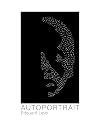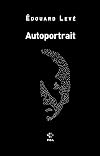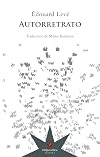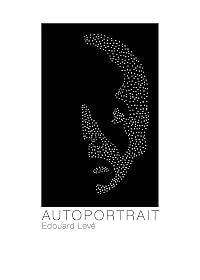
Autoportrait
by Édouard Levé
On This Page
Description
In this brilliant and sobering self-portrait, Edouard Lev? hides nothing from his readers, setting out his entire life, more or less at random, in a string of declarative sentences. "Autoportrait" is a physical, psychological, sexual, political, and philosophical triumph. Beyond "sincerity," Lev? works toward an objectivity so radical it could pass for crudeness, triviality, even banality: the author has stripped himself bare. With the force of a set of maxims or morals, Lev?'s prose seems show more at first to be an autobiography without sentiment, as though written by a machine--until, through the accumulation of detail, and the author's dry, quizzical tone, we find ourselves disarmed, enthralled, and enraptured by nothing less than the perfect fiction... made entirely of facts. show lessTags
Recommendations





Member Recommendations
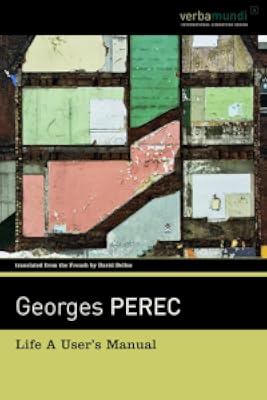
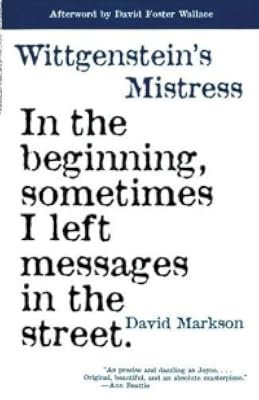
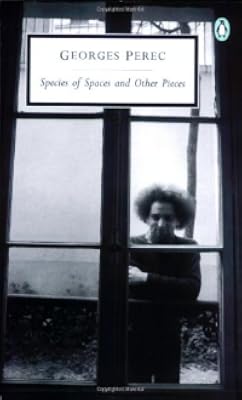
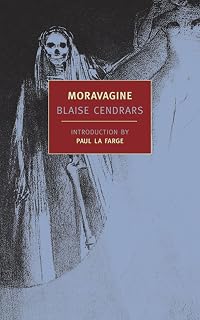
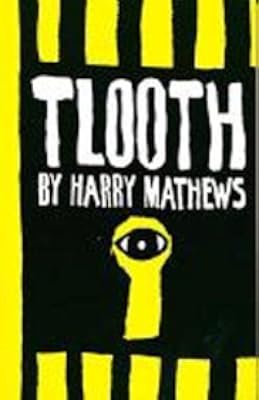
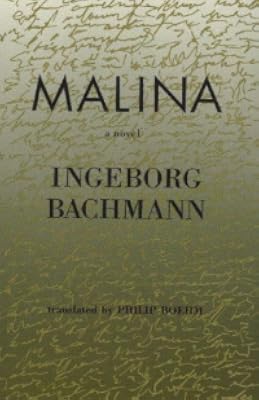
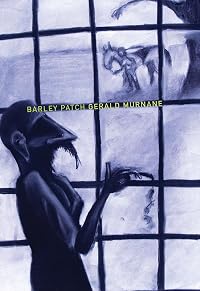
bluepiano Autoportrait is strongly reminiscent of the Perec piece and of the work on which Perec based his, I Remember by Joe Brainard; in fact Leve mentions in Autoportrait his admiration of Joe Brainard and was doubtless influenced by both works.
Member Reviews
Édouard Levé was writing this book at age 39. He hanged himself at age 42. Somewhere I read a review that said something to the effect of, in starting to read the book you will either be immediately annoyed or immediately captivated. I was the latter. The format is deceptively simple; Levé writes dispassionate descriptive sentences about himself, one after another, with no breaks in the text. Over time threads grow and a portrait of this man begins to fill out. It is possible that Levé shares enough details about himself that anyone can find something to identify with in the text. To me, this is true writing. It is an anti-autobiography for there is likely no embellishment. There is also no narrative arc. It is flat and seemingly show more one-dimensional. But it is not really that. We know that Levé took his own life. But we also know that at some point he expected to die at the age of eighty-five, or so he writes in this book. We also learn that he'd attempted suicide before, been medicated, hospitalized. There is much to think about. While many of the individual bits and pieces Levé shares with us are interesting in their own right, there is also the wide-angle shot to consider and what it encompasses, what it tells us about ourselves if we dare to look close enough. show less
In this brilliant and sobering self-portrait, Édouard Levé hides nothing from his readers, setting out his entire life, more or less at random, in a string of declarative sentences. Autoportrait is a physical, psychological, sexual, political, and philosophical triumph. Beyond'sincerity,'Levé works toward an objectivity so radical it could pass for crudeness, triviality, even banality: the author has stripped himself bare. With the force of a set of maxims or morals, Levé's prose seems at first to be an autobiography without sentiment, as though written by a machine—until, through the accumulation of detail, and the author's dry, quizzical tone, we find ourselves disarmed, enthralled, and enraptured by nothing less than the show more perfect fiction... made entirely of facts. Shortlisted for the Best Translated Book Award in 2013. show less
"Autoportrait" is a series of factual statements which, over the course of 117 pages, build to a portrait of the author which goes far beyond the superficial without ever crossing into subjectivity. It could be seen as a really strange way of writing an orderless autobiography that borders on abstraction though it is made entirely out of facts. We get the feeling that we know Léve better, perhaps, than those closest to him, as if he used this idea as a way to pour himself onto paper either for a great catharsis or so that he himself can exist without having to do so in a physical body. He did state that he finds that he reveals more about himself to stranger in the course of 2 hours than he ever has to his friends. Anyways, it's a show more strange little book, delving many times into controversial subject matter without the batting of an eye or sentimentality of any sort. Having said all that, the book leaves me somewhat indifferent. It's an interesting experience, but one that hasn't affected me much in any way apart from perhaps the exposure to the peculiar ideas that Léve tends to have. It's not mediocre by any means, but it isn't of greatness either. It could be a terrible book when all is said and done, but that just makes it all the more interesting, which is the best way to describe this work. show less
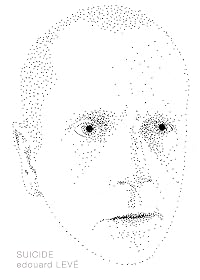
Levé has a unique way of inviting his readers into his melancholy; reading this, I was reminded of Suicide and what I can only term—and this is a project on which I'm currently working as well—Levé's performance of melancholy. While many people feel that depression, melancholy, and despair are highly individualized emotional states that the majority do not speak about, Levé channels some of the confessional school in his work (both photographic and literary) but suggests that he needs an interlocutor in order to fully feel his way through the anguish.
Which is not to say that Autoportrait is a depressing read; like Suicide, it is full of a macabre humor and a very dry wit. I think it was wise on the part of Lorin Stein to render show more the title in the original French rather than as "self-portrait": the quick, declarative sentences here are almost machine-like in their monotony at first. It is almost as if Levé is confessing mechanically and automatically rather than organically, but as the confessions continue we see some repetitions (we even see a few places where Levé contradicts himself while still insisting on speaking only the truth) and we acclimate ourselves to Levé's confession.
We get to know him inside and out through this short 120-page book, in fragments and at random. One comes away from Autoportrait feeling as though one has learned all there is to know about this man's life, his thoughts, his views on art and his work, his obsessive meanderings about his body, his childhood memories, his sex live, his hatred for the color green in interior design, and a host of other desires, worries, joys, and regrets that make Levé who he is. It also makes one wonder, as a reader, what this strange yet intimate relationship is between Levé and his reader, what is this insistent need for company in the midst of chaos. show less
Which is not to say that Autoportrait is a depressing read; like Suicide, it is full of a macabre humor and a very dry wit. I think it was wise on the part of Lorin Stein to render show more the title in the original French rather than as "self-portrait": the quick, declarative sentences here are almost machine-like in their monotony at first. It is almost as if Levé is confessing mechanically and automatically rather than organically, but as the confessions continue we see some repetitions (we even see a few places where Levé contradicts himself while still insisting on speaking only the truth) and we acclimate ourselves to Levé's confession.
We get to know him inside and out through this short 120-page book, in fragments and at random. One comes away from Autoportrait feeling as though one has learned all there is to know about this man's life, his thoughts, his views on art and his work, his obsessive meanderings about his body, his childhood memories, his sex live, his hatred for the color green in interior design, and a host of other desires, worries, joys, and regrets that make Levé who he is. It also makes one wonder, as a reader, what this strange yet intimate relationship is between Levé and his reader, what is this insistent need for company in the midst of chaos. show less
Levé's Autoportrait is a unique text. It's not a novel, but it's certainly not a memoir. Composed largely by short declarative sentences relating personal facts about the author's experiences and thoughts, the form of the text imitates the mundane, yet the spaces between each pause marked by a period continuously deepen into a valley of meaning so that by the end of the work you are moved as a reader by what appears to be just a long string of almost random statements. You know a great deal about the author by the time you reach the last brief sentence on the last page, but strangely and wonderfully, the pathos of the traditional memoir remains conspicuously absent in the “narrative,” instead being built peripherally from silences.
Hey, I'm a huuuge fan of Suicide (the book, by Leve), and I loved the Paris Review excerpts from Autoportrait, but, I must be fair and honest, and say that a lot of this book was...you know - plain. Or dull, I suppose. There are moments of great clarity and insight and...things that really made me reflect and notice myself in a new (or fresh) way. But, ultimately, a lot of this book was boring or tedious. The Paris Review 'summary' (essentially), is actually better, because it distills the best parts from this.
Check out Suicide by Leve if you haven't already. Especially if you or someone you know has experienced it first-hand.
Check out Suicide by Leve if you haven't already. Especially if you or someone you know has experienced it first-hand.
Uf, este libro tiene algo particular. Este libro de 93 páginas sin puntos aparte y compuesto más que nada por frasecitas cortas y que no podés dejar de leer. En un momento Levé dice que cuando habla con un desconocido le interesa más escuchar sobre el otro que contar las suyas, y creo que eso es lo que pasa acá. Es tan mundano y tan íntimo, tan seco y sincero que te lleva a pensar no solo que podrías llegar a conocer al tipo, sino que se parece tanto a vos que muchos chabones se te podrían parecer. Interesante trasposición de una persona que se dedica a la fotografía y que decide, para su autorretrato, una especie de descripción densa anecdotal de cositas que recuerda de sí mismo.
Members
- Recently Added By
Lists

Cooper
79 works; 1 member
Author Information

18 Works 782 Members
Awards and Honors
Awards
Common Knowledge
- Original title
- Autoportrait
- Original publication date
- 2005
- First words*
- Adolescent, je croyais que "La Vie mode d'emploi" m'aiderait à vivre, et "Suicide mode d'emploi" à mourir. J'ai passé trois ans et trois mois à l'étranger. Un de mes amis jouit dans la trahison. J'oublie ce qui me dépla... (show all)ît. J'ai peut-être parlé sans le savoir avec quelqu'un qui a tué quelqu'un. Je vais regarder dans les impasses. Ce qu'il y a au bout de la vie ne me fait pas peur. Je n'écoute pas vraiment ce qu'on me dit. J'ai parlé à Salvador Dalí à l'âge de deux ans : Décrire précisément ma vie me prendrait plus de temps que la vivre. La date de naissance qu'indique ma carte d'identité est fausse. Je ne sais pas sur qui j'ai de l'influence. Je parle à mes objets lorsqu'ils sont tristes. Je ne sais pas pourquoi j'écris. Je suis calme dans les retrouvailles. Je n'ai rien contre le réveillon. Quinze ans est le milieu de ma vie, quelle que soit la date de ma mort. Je crois qu'il y a une vie après la vie, mais pas une mort après la mort. Je ne demande pas si on m'aime. Je ne pourrai dire qu'une fois sans mentir « je meurs ». Le plus beau jour de ma vie est peut-être passé.
- Last words*
- (Click to show. Warning: May contain spoilers.)Je ne pourrai dire qu'une fois sans mentir : " je meurs. " Le plus beau jour de ma vie est peut-être passé.
*Some information comes from Common Knowledge in other languages. Click "Edit" for more information.
Classifications
Statistics
- Members
- 254
- Popularity
- 127,996
- Reviews
- 13
- Rating
- (3.83)
- Languages
- 8 — Catalan, Danish, English, French, German, Norwegian (Bokmål), Spanish, Turkish
- Media
- Paper, Ebook
- ISBNs
- 14
- ASINs
- 1