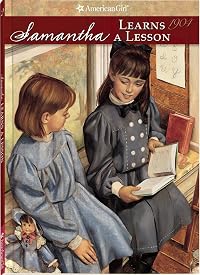
Samantha Learns a Lesson (American Girl: Samantha, 1904)
by Susan S. Adler
On This Page
Description
Samantha is determined to help nine-year-old Nellie, attending school for the first time, with her school work and learns a great deal herself about what it is like to be a poor child and work in a factory.Tags
Recommendations





Member Reviews
Rating is for Book Two, review is for the original six-book Samantha series published in the 1980s
Historical fiction is my all-time favorite genre, and it isn't hard for me to pinpoint when/where my love for the genre started.
At my elementary school library, I discovered chapter books in The American Girls Collection, published by what was once the Pleasant Company. My favorite series in the collection were (in the order of their eras) the ones about:
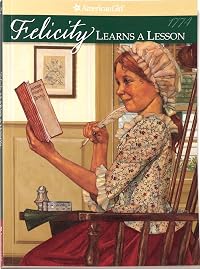
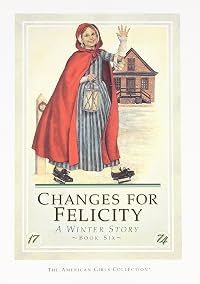
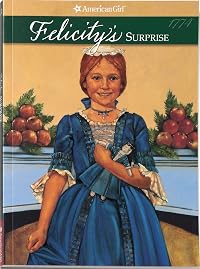
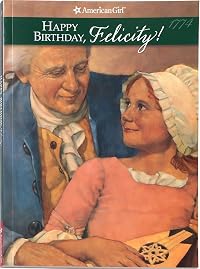
• Felicity (1774)
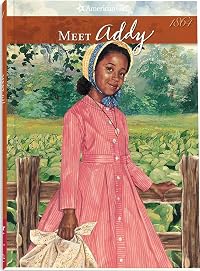
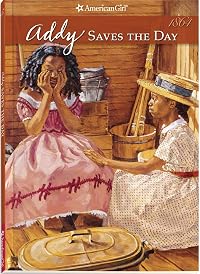
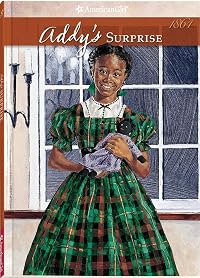
• Addy (1864)
• Samantha (1904)
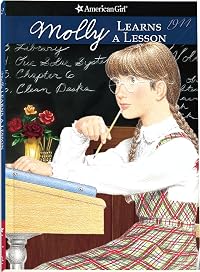
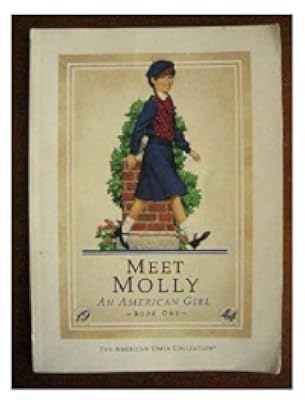
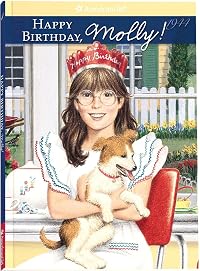
• Molly (1944)
Well, I recently found out there's an upcoming novel about one of these heroines as an adult. Samantha: The Next Chapter by Fiona Davis. So, I decided to revisit the adventures of nine- then ten-year-old Samantha.
For me as show more a child, it was the turn-of-the-century settings of the stories, combined with the pages of rich and colorful illustrations, that most drew me into the books about Samantha's great times as well as her lessons to learn. History wise, the issue that stood out to me the most in the series was women's suffrage.
Now for me as an adult, I better recognize how much important history the series touches on, and while these relatively short tales don't go deep into character development, I can appreciate Samantha's character a little more.
She's very compassionate, and she's at her most courageous when she's helping others in need. In addition to women's rights, Samantha's stories take a young reader-appropriate but still serious look at issues like race and class. There are also instances of alcohol abuse and thievery, and Samantha begins to learn about the hardships that different families and children face, including cramped and run-down living conditions, child labor, harsh and bleak orphanages, and childhood homelessness.
And even as well-off as Samantha is, she as an orphan herself does have her somber moments when she thinks about the two parents she lost before she would be able to remember them better.
On a different note, features I didn't remember but am glad I've rediscovered about the series are the history sections following the stories, with facts and photographs adding more historical context to the world Samantha lives in—and will live in when she grows up.
Here's hoping my grown-up self will enjoy reading about grown-up Samantha as much as I enjoyed this series, whether the first time I read the books or during my revisit. show less
Historical fiction is my all-time favorite genre, and it isn't hard for me to pinpoint when/where my love for the genre started.
At my elementary school library, I discovered chapter books in The American Girls Collection, published by what was once the Pleasant Company. My favorite series in the collection were (in the order of their eras) the ones about:
• Felicity (1774)
• Addy (1864)
• Samantha (1904)
• Molly (1944)
Well, I recently found out there's an upcoming novel about one of these heroines as an adult. Samantha: The Next Chapter by Fiona Davis. So, I decided to revisit the adventures of nine- then ten-year-old Samantha.
For me as show more a child, it was the turn-of-the-century settings of the stories, combined with the pages of rich and colorful illustrations, that most drew me into the books about Samantha's great times as well as her lessons to learn. History wise, the issue that stood out to me the most in the series was women's suffrage.
Now for me as an adult, I better recognize how much important history the series touches on, and while these relatively short tales don't go deep into character development, I can appreciate Samantha's character a little more.
She's very compassionate, and she's at her most courageous when she's helping others in need. In addition to women's rights, Samantha's stories take a young reader-appropriate but still serious look at issues like race and class. There are also instances of alcohol abuse and thievery, and Samantha begins to learn about the hardships that different families and children face, including cramped and run-down living conditions, child labor, harsh and bleak orphanages, and childhood homelessness.
And even as well-off as Samantha is, she as an orphan herself does have her somber moments when she thinks about the two parents she lost before she would be able to remember them better.
On a different note, features I didn't remember but am glad I've rediscovered about the series are the history sections following the stories, with facts and photographs adding more historical context to the world Samantha lives in—and will live in when she grows up.
Here's hoping my grown-up self will enjoy reading about grown-up Samantha as much as I enjoyed this series, whether the first time I read the books or during my revisit. show less
Samantha attends Miss Crampton's Academy, a private school for proper young ladies. Samantha wants to win the gold medal in the speaking contest, but she's worried about Nellie, the poor servant girl who has become her friend. If she can teach Nellie to read, maybe the boys and girls at school will stop calling Nellie "dummy" and "ragbag." Samantha sets up a school in Grandmary's tower room and becomes Nellie's teacher. But Nellie teaches Samantha some very important lessons, too.
Another cute story in the American Girl: Samantha series. In this one, Samantha learns a little something about her privilege through the eyes of her friend Nellie, a girl from a poor family who used to work in a factory before Samantha's grandmother found the family servant work in a house two doors down.
We also see Nellie's very first opportunity to attend school and the problems that entails.
We also see Nellie's very first opportunity to attend school and the problems that entails.
Samantha Parkington is more fortunate than most orphans; she lives with her wealthy Grandmary and attends the prestigious Miss Crampton's Academy. Samantha's friend Nellie has returned with better circumstances and is now enrolled in public school. Although Samantha's friendship with Nellie, a servant, is ridiculed and questioned, Samantha continues to tutor and help Nellie adjust to school. Eventually, it is Nellie who teaches Samantha the true lesson of American progress!
The "Looking Back" section of this historical novel addresses education in private and public schools in 1904.
The "Looking Back" section of this historical novel addresses education in private and public schools in 1904.
Summary:
In book number two of the American Girls Collection, Samantha is sad because she misses her friend Nellie. Nellie and her family had to move away to find work in a factory because they were poor. One day after Samantha comes home from school she is told she has a visitor and it is Nellie. Overjoyed, to see her friend, Samantha learns that Nellie and her family are going to be hired as help for the Van Slicklen household. Nellie was going to be able to attend school, so the next day Samantha walked her to school, but after school Nellie was found crying because the other students picked on her. Right then Samantha decided that she was going to help Nellie with her school work. The two girls worked so hard that Nellie was able to show more move up a grade. Samantha also gets great news when she wins a local speaking competition because she gave an excellent speech about children who are forced to work in factories. The story ends with the girls enjoying cookies and lemonade while they plan how they are going to get Nellie moved up another grade so they can be in the same class.
Personal Reflection:
This book had a great message behind it. I liked the fact that it showed that people, despite different social statuses, were able to form friendships and help each other during hard times.
Classroom Extension:
-This book could be used to grab the attention of young girls and get them interested in reading.
-This book could be used as a tool to help with public speaking. show less
In book number two of the American Girls Collection, Samantha is sad because she misses her friend Nellie. Nellie and her family had to move away to find work in a factory because they were poor. One day after Samantha comes home from school she is told she has a visitor and it is Nellie. Overjoyed, to see her friend, Samantha learns that Nellie and her family are going to be hired as help for the Van Slicklen household. Nellie was going to be able to attend school, so the next day Samantha walked her to school, but after school Nellie was found crying because the other students picked on her. Right then Samantha decided that she was going to help Nellie with her school work. The two girls worked so hard that Nellie was able to show more move up a grade. Samantha also gets great news when she wins a local speaking competition because she gave an excellent speech about children who are forced to work in factories. The story ends with the girls enjoying cookies and lemonade while they plan how they are going to get Nellie moved up another grade so they can be in the same class.
Personal Reflection:
This book had a great message behind it. I liked the fact that it showed that people, despite different social statuses, were able to form friendships and help each other during hard times.
Classroom Extension:
-This book could be used to grab the attention of young girls and get them interested in reading.
-This book could be used as a tool to help with public speaking. show less
This book is a good historical fiction book since it describes what it was like to be a young lady during the Industrial Revolution, and the Women's rights movement. As well as what it was like to go to school during that time and to live in the city and work in a factory instead of going to school during this time period.
This story Samantha begins to help someone of a lower class in society learn how to read and do her schooling. At the same time, Samantha writes a speech about progress in America. She later discovers that there is more than she knows, and changes her speech at the last moment to the horrors of children working in factories.
This story reminded me about Laura Ingalls Wilder. I loved reading her stories as a child.
This can be used to talk about the inventions that have made a difference in our history, and how they changed over time.
This story can also be used to talk about how early schools worked. (Curriculum, recess, public schools,and private schools.)
This story reminded me about Laura Ingalls Wilder. I loved reading her stories as a child.
This can be used to talk about the inventions that have made a difference in our history, and how they changed over time.
This story can also be used to talk about how early schools worked. (Curriculum, recess, public schools,and private schools.)
Members
- Recently Added By
Lists

Children and YA books involving school
58 works; 2 members

Books for An American Girl Readers
58 works; 1 member
Author Information
12 Works 8,448 Members
Some Editions
Series
Belongs to Publisher Series
American Girl (Samantha 2)
Work Relationships
Is contained in
Common Knowledge
- Original publication date
- 1986
- People/Characters
- Samantha Parkington; Nellie O'Malley
- Important places
- Mount Bedford, New York, USA
- First words
- Somthing poked Samantha in the back.
- Last words
- (Click to show. Warning: May contain spoilers.)But a college education was still an unusual privilege even for a wealthy girl like Samantha.
- Canonical DDC/MDS
- 813.54
Classifications
- Genres
- Children's Books, Fiction and Literature
- DDC/MDS
- 813.54 — Literature & rhetoric American literature in English American fiction in English 1900-1999 1945-1999
- LCC
- PZ7 .A26155 .S — Language and Literature Fiction and juvenile belles lettres Fiction and juvenile belles lettres Juvenile belles lettres
- BISAC
Statistics
- Members
- 2,641
- Popularity
- 7,110
- Reviews
- 14
- Rating
- (3.96)
- Languages
- English
- Media
- Paper, Audiobook, Ebook
- ISBNs
- 14
- ASINs
- 5
