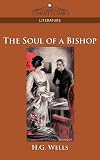
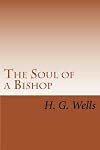
The Soul of a Bishop
by H. G. Wells
On This Page
Description
Science fiction master H. G. Wells was never one to shy away from complex or controversial topics, and in this classic novel, he takes on Christianity. Though The Soul of a Bishop takes place on Earth and is wholly free of invading alien hordes or other fantastical creatures, it does deal with supernatural and mystical topics, delving into the how and why of religious belief..
Tags
Recommendations























Member Reviews
https://fromtheheartofeurope.eu/the-soul-of-a-bishop-by-h-g-wells/
This 1917 novel concerns the Reverend Edward Scrope, Bishop of Princhester, whose faith is challenged by its irrelevance to the people of his industrialised diocese and by the horrors of war. Scrope deals with this difficulty by falling under the influence of an attractive and rich parishioner, and taking mind-altering drugs. He resigns from the Church completely, goes through further spiritual wrestling and finds his own accommodation at the end, though one feels that his wife is unenthused by the new state of affairs, never mind their five daughters.
One of the few unexpected things I learned about the English way of life when I went to study at Cambridge aged 19 is that show more there are a lot of people, if a minority, who take the Church of England seriously, something that was not apparent from the popular culture that I had absorbed growing up in Belfast. Wells isn’t quite sure how funny he should be here. He finds the Church itself ridiculous, but wants to make us sympathise with the bishop’s spiritual torment (which is expressed at length). The story ends up falling between two stools, and has been justifiably forgotten over the last 108 years. show less
This 1917 novel concerns the Reverend Edward Scrope, Bishop of Princhester, whose faith is challenged by its irrelevance to the people of his industrialised diocese and by the horrors of war. Scrope deals with this difficulty by falling under the influence of an attractive and rich parishioner, and taking mind-altering drugs. He resigns from the Church completely, goes through further spiritual wrestling and finds his own accommodation at the end, though one feels that his wife is unenthused by the new state of affairs, never mind their five daughters.
One of the few unexpected things I learned about the English way of life when I went to study at Cambridge aged 19 is that show more there are a lot of people, if a minority, who take the Church of England seriously, something that was not apparent from the popular culture that I had absorbed growing up in Belfast. Wells isn’t quite sure how funny he should be here. He finds the Church itself ridiculous, but wants to make us sympathise with the bishop’s spiritual torment (which is expressed at length). The story ends up falling between two stools, and has been justifiably forgotten over the last 108 years. show less
This may be my favorite Wells. Why do we believe what we believe? what is the difference between doga, creed and belief and how do they intersect - or interfere with the search for the divine? When does religion support us and when does it fail us?
Ratings
Members
- Recently Added By
Lists

First published in 1917
132 works; 3 members
Author Information

1,553+ Works 108,991 Members
H. G. Wells was born in Bromley, England on September 21, 1866. After a limited education, he was apprenticed to a draper, but soon found he wanted something more out of life. He read widely and got a position as a student assistant in a secondary school, eventually winning a scholarship to the Royal College of Science in South Kensington, where show more he studied biology. He graduated from London University in 1888 and became a science teacher. He also wrote for magazines. When his stories began to sell, he left teaching to write full time. He became an author best known for science fiction novels and comic novels. His science fiction novels include The Time Machine, The War of the Worlds, The Wonderful Visit, The Island of Doctor Moreau, The Invisible Man, The First Men in the Moon, and The Food of the Gods. His comic novels include Love and Mr. Lewisham, Kipps: The Story of a Simple Soul, The History of Mr. Polly, and Tono-Bungay. He also wrote several short story collections including The Stolen Bacillus, The Plattner Story, and Tales of Space and Time. He died on August 13, 1946 at the age of 79. (Bowker Author Biography) show less
Work Relationships
Common Knowledge
- Original publication date
- 1917
- First words
- It was a scene of bitter disputation.
- Last words
- (Click to show. Warning: May contain spoilers.)"Naturally--naturally.... One perceives it clearly only in rare moments.... That alters nothing...."
Classifications
Statistics
- Members
- 73
- Popularity
- 431,523
- Reviews
- 2
- Rating
- (3.17)
- Languages
- English, Hungarian, Italian, Swedish
- Media
- Paper, Ebook
- ISBNs
- 25
- ASINs
- 8