On This Page
Description
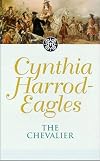
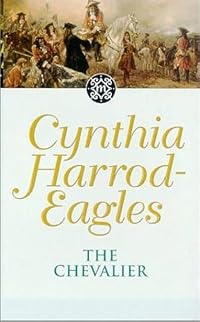
1689: the Resoration enabled the Morland family to restore their own fortune, but now the Jacobite rebellion brings another threat to their security. Annuciata Morland, fiercely loyal to the Stuart cause, follows her beloved king, James II, into exile. She leaves her gentle grandson, Matt, to oversee Morland Place in her absence. Without her wise presence, Matt finds himself in an arranged marriage to India Neville and at the mercy of a woman as heartless as she is beautiful. After a lonely show more and sheltered life he lurches between the exquisite pain of love and the torment of deep despair. When James III - the Chevalier - returns to claim the Stuart throne, the Morlands are reunited in one country. Death and defeat threaten them, but their loves and loyalty prove stronger than kingly ambitions... show lessTags
Recommendations












Member Reviews
So I fell out with Annunciata in 2012 and it's taken me this long to carry on with the series! Annunciata has mellowed into the Great Matriarch and India, her granddaughter-in-law, is the cartoon villain in The Chevalier - but her comeuppance is very satisfying, so I promise to plough on with the rest of the books in good time. History-wise, in a very 'Today I Learned' fashion, we get James III, the 'Pretender'/'Chevalier', supported by the Morlands, and George the 'Usurper' - leading into the eighteenth century, which is my favourite historical era. Onwards!
The Chevalier, the seventh book in the Morland Dynasty series by Cynthia Harrod-Eagles, is another exciting, fun read. Once again, Annunciata Morland is the central character, and I found her more likable in this book than I did in past books. She’s still rather self-absorbed, but India Neville, who becomes the mistress of Morland Place, is an out-and-out villainess, and Annunciata looks like an angel in contrast.
Even though difficult family relationships dominate the first half of the book, complications that arise from the current political situation in England are always in the background. Several Morlands leave England out of loyalty to James II, whom they consider the true king. I liked that Harrod-Eagles chose to tell the story show more from the perspective of the losing side. And she tells it in such a way that those who don’t know the history can actually feel some suspense about the outcome.
In the last half of the book, the historical account takes over, as the Morlands get caught up in the First Jacobite Rebellion. When we read of historical battles, we often hear more about the movements of troops than about the civilians, including women and children, who were brought into the conflict. In this book, we see how various branches of the Morland family cope with the conflict, both as soldiers and civilians, and see them grapple with some difficult choices. Harrod-Eagles does not make the answers to their quandaries obvious; she just allows us to share the struggle.
See my complete review at my blog. show less
Even though difficult family relationships dominate the first half of the book, complications that arise from the current political situation in England are always in the background. Several Morlands leave England out of loyalty to James II, whom they consider the true king. I liked that Harrod-Eagles chose to tell the story show more from the perspective of the losing side. And she tells it in such a way that those who don’t know the history can actually feel some suspense about the outcome.
In the last half of the book, the historical account takes over, as the Morlands get caught up in the First Jacobite Rebellion. When we read of historical battles, we often hear more about the movements of troops than about the civilians, including women and children, who were brought into the conflict. In this book, we see how various branches of the Morland family cope with the conflict, both as soldiers and civilians, and see them grapple with some difficult choices. Harrod-Eagles does not make the answers to their quandaries obvious; she just allows us to share the struggle.
See my complete review at my blog. show less
1
#7: 1689-1718: Covers the Glorious Revolution; the Act of Union; the 1715 Rebellion
In 1689, Annunciata Morland goes into exile with James II. Her sons Karellie and Maurice go to Italy, while back at home at Morland Place, her grandson, Matt, is the family patriarch, marrying the cruel and heartless India Neville. It’s a marriage from which nothing good can come. The story covers nearly 30 years, up through the Scottish rebellion in 1715, with James Stuart the “Pretender,” or “Chevalier”—depending on which side you’re on.
Finally, the Morland Dynasty series makes it through the 17th century and into the 18th. The 17th century isn’t a particular favorite, and the character of Annunciata Morland isn’t a particularly show more appealing one, so I’m sort of glad that her story is mostly over. And even when she was in her fifties and sixties, she was still running around like a much younger woman. Matt’s also not really a favorite character, since he allows India to push him around most of the time and displays none of the strength that previous Morlands have. So this, the seventh book in the series, isn’t a particular favorite, but I still like how Cynthia Harrod-Eagles brings historical events to life. I’m interested to move on to The Maiden, book 8, which opens on the eve of the South Sea Bubble. show less
In 1689, Annunciata Morland goes into exile with James II. Her sons Karellie and Maurice go to Italy, while back at home at Morland Place, her grandson, Matt, is the family patriarch, marrying the cruel and heartless India Neville. It’s a marriage from which nothing good can come. The story covers nearly 30 years, up through the Scottish rebellion in 1715, with James Stuart the “Pretender,” or “Chevalier”—depending on which side you’re on.
Finally, the Morland Dynasty series makes it through the 17th century and into the 18th. The 17th century isn’t a particular favorite, and the character of Annunciata Morland isn’t a particularly show more appealing one, so I’m sort of glad that her story is mostly over. And even when she was in her fifties and sixties, she was still running around like a much younger woman. Matt’s also not really a favorite character, since he allows India to push him around most of the time and displays none of the strength that previous Morlands have. So this, the seventh book in the series, isn’t a particular favorite, but I still like how Cynthia Harrod-Eagles brings historical events to life. I’m interested to move on to The Maiden, book 8, which opens on the eve of the South Sea Bubble. show less
I am definitely starting to get back into the Dynasty series which is lucky if I ever want to make it past book 22 and into the new books to find out what finally happens. I love the way the characters are all so fully drawn and so varied, even if there are "types" such as the strong Morland woman.
I never know quite what to say about each individual title which is interesting - perhaps I am too busy seeing it as a series to be recaptured so that I can move on. But I do know that I have a learned a lot more about English history through reading these than I would ever otherwise have known. The Plantaganet era is still my favourite, but I love the fact that Harrod-Eagles can be so sympathetic to the Plantaganets without being show more unsympathetic towards the Tudors.
In this title I was reminded of the Jacobite era - I had completely forgotten the exile of King James and the fact that King George was "the Usurper." I suddenly remembered with a shock that in primary school our sports teams were divided by British royal houses (back when Australians were definitely still true royalists!). I was in Hanover and it is amusing to read in this book that the Hanoverians are treated about the most unsympathetically of any rulers so far. show less
I never know quite what to say about each individual title which is interesting - perhaps I am too busy seeing it as a series to be recaptured so that I can move on. But I do know that I have a learned a lot more about English history through reading these than I would ever otherwise have known. The Plantaganet era is still my favourite, but I love the fact that Harrod-Eagles can be so sympathetic to the Plantaganets without being show more unsympathetic towards the Tudors.
In this title I was reminded of the Jacobite era - I had completely forgotten the exile of King James and the fact that King George was "the Usurper." I suddenly remembered with a shock that in primary school our sports teams were divided by British royal houses (back when Australians were definitely still true royalists!). I was in Hanover and it is amusing to read in this book that the Hanoverians are treated about the most unsympathetically of any rulers so far. show less
In the Morland Dynasty series, the majestic sweep of English history is richly and movingly portrayed through the fictional lives of the Morland family. It is 1689, and Annunciata, fiercely loyal to the Stuart cause, follows King James II into exile, leaving her gentle grandson Matt to care for Morland Place. In her absence he contracts an unwise marriage with India Neville, a woman as heartless as she is beautiful, who drives him between the extremes of passionate love and deep despair. When James III—the Chevalier—returns to claim the Stuart throne, the Morlands are reunited in one country. The rebellion fails, and Annuniciata’s sons are on trial for their lives, but defeat and even death itself cannot conquer the Morland sprit.
Ratings
Members
- Recently Added By
Lists

Best family sagas
244 works; 33 members
Author Information

121+ Works 5,789 Members
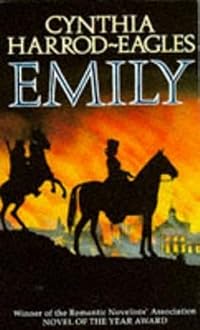
Cynthia Harrod-Eagles was born in London in 1948. She attended the University of Edinburgh and University College London, where she studied English, history and philosophy. She wrote her first novel while in college and won the Young Writers' Award for The Waiting Game in 1972, but did not become a full-time writer until 1979 with the start of the show more Morland Dynasty series. In 1993, she won the RNA Novel of the Year Award for Emily, the third volume of the Kirov Trilogy. She also writes the Bill Slider Mystery series and under the pen names Elizabeth Bennett and Emma Woodhouse. (Bowker Author Biography) show less
Series

Common Knowledge
- Canonical title
- The Chevalier
- Original publication date
- 1984
- People/Characters
- Annunciata Morland
- First words
- That February day of 1689 had been frozen from its sluggish beginnings.
Classifications
Statistics
- Members
- 104
- Popularity
- 309,684
- Reviews
- 5
- Rating
- (4.17)
- Languages
- English
- Media
- Paper, Audiobook, Ebook
- ISBNs
- 7
- ASINs
- 3