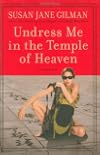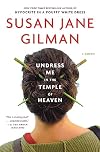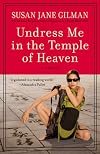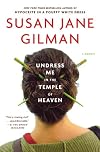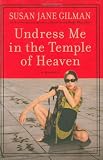
Undress Me in the Temple of Heaven
by Susan Jane Gilman
On This Page
Description
"In her hardcover debut, bestselling author Susan Jane Gilman describes a very different kind of back-packing trip to China in which she and her college friend set out to conquer the world only to be conquered by it"--Provided by publisher.Tags
Recommendations













Member Recommendations
majorbabs She's sarcastic, she's witty, she's got a lot to say on the subject of, well, everything, and I always enjoy whatever it is. Gilman is an author where I don't have to know what she wrote; I just buy it.
11
Member Reviews
For most of the first 50 pages I was thinking, "two spoiled, western, bitches decide to inflict their ignorance on fellow travelers and hapless Chinese as they plunge clumsily through China and then decide to write an exploitive book", but by page 69 the author began to win me over with her self-deprecating statement: "I suddenly felt despicably naïve." The final chapter brought me to tears, and now I happily eat my words above—this is a fantastic book.
OK, I admit I'm a "hard sell" when it comes to books on China. I'm painfully aware of my own scholarly shortcomings, but I have a few credentials upon which to base opinions—I have an undergraduate major in Chinese, studied in Beijing in the summer of 1979 and in Taiwan for a year, show more and have been reading about China for more than 30 years. When I saw this memoir with "Nonfiction" emblazoned on the back cover and "A godsend to a reading world" (praise by Alexandra Fuller) on the front cover, I fell for the titillating title, Undress Me in the Temple of Heaven: A Memoir, shelled out my 1568 yen, and felt a little warning voice whisper "sucker, you'll regret this"….but the little voice was WRONG!
Rarely have I found a book that lives up to its dust jacket promises, but this one does, so it's fair to quote part of the synopsis here:
"In 1986, fresh out of college, Susan Jane Gilman and a friend yearned to do something daring and original. Inspired by a place mat at the International House of Pancakes, they embarked on an ambitious trip around the globe, starting in the People's Republic of China. At the point, China had been open to independent travelers for roughly ten minutes. Armed only with the collected works of Nietzsche, and astrological love guide and an arsenal of bravado, the two friends plunged into the dusty streets of Shanghai. But as they ventured off the map deep into Chinese territory, they found that what began as a journey full of humor, eroticism, and enlightenment soon grew increasingly sinister—becoming a real-life international thriller that transformed them forever.
A modern heart of darkness filled with Communist operatives, backpacker, and pancakes, Susan Jane Gilman's new memoir is an astonishing true story of hubris and redemption told with her trademark compassion, lyricism, and wit."
Unfortunately, I can't reveal the ways this author endeared her story to me, for fear of ruining the suspense and the deeply-felt emotions of this book. It became a genuine page-turner with a bittersweet ending. All the while, I kept wondering why Ms. Gilman waited so many years to tell this story, but I finally got a satisfying answer to that question as well (and I can't write it here without jeopardizing your enjoyment of this fabulous book). show less
OK, I admit I'm a "hard sell" when it comes to books on China. I'm painfully aware of my own scholarly shortcomings, but I have a few credentials upon which to base opinions—I have an undergraduate major in Chinese, studied in Beijing in the summer of 1979 and in Taiwan for a year, show more and have been reading about China for more than 30 years. When I saw this memoir with "Nonfiction" emblazoned on the back cover and "A godsend to a reading world" (praise by Alexandra Fuller) on the front cover, I fell for the titillating title, Undress Me in the Temple of Heaven: A Memoir, shelled out my 1568 yen, and felt a little warning voice whisper "sucker, you'll regret this"….but the little voice was WRONG!
Rarely have I found a book that lives up to its dust jacket promises, but this one does, so it's fair to quote part of the synopsis here:
"In 1986, fresh out of college, Susan Jane Gilman and a friend yearned to do something daring and original. Inspired by a place mat at the International House of Pancakes, they embarked on an ambitious trip around the globe, starting in the People's Republic of China. At the point, China had been open to independent travelers for roughly ten minutes. Armed only with the collected works of Nietzsche, and astrological love guide and an arsenal of bravado, the two friends plunged into the dusty streets of Shanghai. But as they ventured off the map deep into Chinese territory, they found that what began as a journey full of humor, eroticism, and enlightenment soon grew increasingly sinister—becoming a real-life international thriller that transformed them forever.
A modern heart of darkness filled with Communist operatives, backpacker, and pancakes, Susan Jane Gilman's new memoir is an astonishing true story of hubris and redemption told with her trademark compassion, lyricism, and wit."
Unfortunately, I can't reveal the ways this author endeared her story to me, for fear of ruining the suspense and the deeply-felt emotions of this book. It became a genuine page-turner with a bittersweet ending. All the while, I kept wondering why Ms. Gilman waited so many years to tell this story, but I finally got a satisfying answer to that question as well (and I can't write it here without jeopardizing your enjoyment of this fabulous book). show less
Just before Susan Jane Gilman graduated from college in 1986, she and a friend sat in an IHOP in the early morning hours and giddily decided to travel the world together, to the most exotic and untraveled places they could find. This was back before the internet or cell phones, the Berlin Wall still stood, Eastern Europe was still behind its iron curtain and China had been open to Western tourists "for about ten minutes". So, of course they went to China.
I picked up this book with the strong impression it would be a breezy, humorous chronicle of disaster, with a strong ironic, mocking voice. What I found instead was a stark, nuanced tale of a girl in a situation so completely over her head, who somehow managed to get through it and now show more writes with honesty about it. Gilman doesn't spare herself criticism, but she writes about the people she encountered along the way with compassion and understanding. show less
I picked up this book with the strong impression it would be a breezy, humorous chronicle of disaster, with a strong ironic, mocking voice. What I found instead was a stark, nuanced tale of a girl in a situation so completely over her head, who somehow managed to get through it and now show more writes with honesty about it. Gilman doesn't spare herself criticism, but she writes about the people she encountered along the way with compassion and understanding. show less
I put this title on my to-read list shortly after it was published in 2009, but I didn't actually read it until 2017. With my nascent, anxiety-steeped interest in world travel, it turns out to be a great time for me to have picked this book up.
Unlike some recent, very famous travel memoirs, this one didn't annoy the heck out of me (aside from Gilman's use of the word "tattoo" to mean "a rapid, rhythmic tapping." I don't know why that word irritates me so much, but it always does. And this is the second book I've read this week that used the word in that way. Maybe I should read fewer books). In it, Gilman captures well the hubristic uncertainty (or uncertainty-fueled hubris?) of one's early twenties, but because she presents the story show more through the lens of two decades of experience, it's more insightful and nuanced than I think it might have been had she written it in her twenties. Or it's more insightful and nuanced than I think I would have written in my twenties if I had been born ten years earlier than I was and with guts enough to travel farther outside of the United States than the Canadian Maritimes.
Possibly my favorite insight from this memoir:
That kind of self-reflection is what I've found missing from the handful of other travel memoirs I've read (or tried to read). It makes sense to tell one's own story of traveling through a country, including the self-discovery that resulted from that travel, but often the travel memoirs I've read seem to take it a step too far and make the author herself the star of the story, with the countries she visits and the people she meets playing just bit parts in the big story starring The Author, who then goes on to be interviewed ad nauseam and revered as some kind of guru because they had the privilege to take off work for six, ten, or twelve months or more and travel around the world or hike the Appalachian Trail. I'm not knocking doing those things. If you have the means to do so, go for it. It's a heck of a lot more likely to expand your horizons than sitting at home binge-watching Stranger Things, just don't make the mistake of thinking that you are the center of the world you're experiencing.
And no, I don't know who I'm talking to when I say "you." Maybe I'm actually talking to myself because I've recently binge-watched Stranger Things and I've frequently considered both traveling around the world and through-hiking the Appalachian Trail, and if I do either of those things, I'd rather not find that at the end of the journey I've become some self-centered, self-righteous prat.
Based on this memoir, Gilman has managed to travel around the world and have some pretty incredible adventures while retaining---and perhaps even heightening---her sense of wonder and humility at being just one small piece of a huge planet. Luckily, this makes for an interesting memoir, too.
And the fact that she remains an anxious traveler is a relief to me; it gives me more confidence in my own ability to travel despite my trepidations. show less
Unlike some recent, very famous travel memoirs, this one didn't annoy the heck out of me (aside from Gilman's use of the word "tattoo" to mean "a rapid, rhythmic tapping." I don't know why that word irritates me so much, but it always does. And this is the second book I've read this week that used the word in that way. Maybe I should read fewer books). In it, Gilman captures well the hubristic uncertainty (or uncertainty-fueled hubris?) of one's early twenties, but because she presents the story show more through the lens of two decades of experience, it's more insightful and nuanced than I think it might have been had she written it in her twenties. Or it's more insightful and nuanced than I think I would have written in my twenties if I had been born ten years earlier than I was and with guts enough to travel farther outside of the United States than the Canadian Maritimes.
Possibly my favorite insight from this memoir:
"We were too young and myopic to recognize the perversity of a logic that equates voluntary deprivation with authentic experience...It never seemed to occur to us that only privileged Westerners travel to developing countries in the first place, then use them as laboratories for their own enrichment...Only privileged Westerners sit around drinking beer at prices the natives can't afford while sentimentalizing the nation's lower standard of living and adopting it as a lifestyle." (p. 148)
That kind of self-reflection is what I've found missing from the handful of other travel memoirs I've read (or tried to read). It makes sense to tell one's own story of traveling through a country, including the self-discovery that resulted from that travel, but often the travel memoirs I've read seem to take it a step too far and make the author herself the star of the story, with the countries she visits and the people she meets playing just bit parts in the big story starring The Author, who then goes on to be interviewed ad nauseam and revered as some kind of guru because they had the privilege to take off work for six, ten, or twelve months or more and travel around the world or hike the Appalachian Trail. I'm not knocking doing those things. If you have the means to do so, go for it. It's a heck of a lot more likely to expand your horizons than sitting at home binge-watching Stranger Things, just don't make the mistake of thinking that you are the center of the world you're experiencing.
And no, I don't know who I'm talking to when I say "you." Maybe I'm actually talking to myself because I've recently binge-watched Stranger Things and I've frequently considered both traveling around the world and through-hiking the Appalachian Trail, and if I do either of those things, I'd rather not find that at the end of the journey I've become some self-centered, self-righteous prat.
Based on this memoir, Gilman has managed to travel around the world and have some pretty incredible adventures while retaining---and perhaps even heightening---her sense of wonder and humility at being just one small piece of a huge planet. Luckily, this makes for an interesting memoir, too.
And the fact that she remains an anxious traveler is a relief to me; it gives me more confidence in my own ability to travel despite my trepidations. show less
It's 1986 and Gilman has just graduated from college. Instead of getting a job right away, she and a casual friend from college decide to embark on an around the world backpacking trip starting in China, which had been newly opened to Western travelers. In addition to having a rosy, glorified idea of what a year spent backpacking in foreign cultures would be like, the girls didn't even know each other nearly as well as one might have expected, nor did they consider how traveling together would be in actuality. The eureka moment that led them to their trip went from being inspired and spontaneous to be being scary and unplanned.
Gilman faces homesickness almost as soon as she and Claire touch ground in Hong Kong, wanting nothing more than show more to cash in her return ticket and head home immediately. But Claire talks her out of it and they fall in with a fellow backpacker, Gunter, as they apply for visas and tickets into China. Once on board ship, they meet an assortment of other Westerners and a Chinese man, Jonnie, who makes it his priority to introduce them to Shanghai and his own hometown in hopes that they will help him with the American Embassy in Beijing. Even with the kindness of strangers, Susan and Claire soon find out that they have romanticized China and that they are in fact, uncomfortable both physically and emotionally. The crowds and being stared at highly distresses Claire, a child of the suburbs while Susan is a bit more blase about the experience, even while she still wants to go home.
The experiences these two young women experience as they move around China are surreal, being interrogated by the military police, wandering without a map through a city not officially open to Westerners, escaping from a hospital and a doctor waving a rusty syringe, and so on. Their experiences are clearly not usual, not even for backpackers who like to hold "one-upmanship" conversations. But they also met some wonderful people as they moved around. The fellow backpacking community came off as generally charming and freewheeling. But ultimately the culture shock was too much for the girls and while one deteriorated physically, the other deteriorated mentally so that it became imperative that they get out of China.
As the saying goes, Truth is stranger than fiction, and that is certainly proved by this book. In the beginning, this seems like a simple travel narrative about two girls post college who intend to sightsee and meet boys around the world. But then the surreal starts to creep into the narrative and tension starts to build as the journey descends into waking nightmare. Gilman deftly handles both her own and Claire's experiences, never whitewashing the interactions of either of them. She has to imagine many of Claire's feelings towards her but recognizes that her antagonism and annoyance with Claire is probably equally felt towards her by Claire. The personal, friendship and relationship, is clearly a large portion of the book but there are also interesting insights into how we react to other cultures and to being "the other" in them. There are hints of the political, especially knowing that Tiananmen Square was still to come and September 11 was far in the distance but as befits a memoir of backpackers in 1986, Gilman doesn't delve too deeply in the political situation of which both she and Claire can't have been overly cognizant. This is, though, more than just a travel narrative. Yes, there is humor and new experiences. But it is also a look into the challenge of travel and surviving another culture and of a descent into instability that colored everything. I do enjoy this type of book and think fans of travel narratives that haven't been prettied up to be guide books will enjoy this was well. show less
Gilman faces homesickness almost as soon as she and Claire touch ground in Hong Kong, wanting nothing more than show more to cash in her return ticket and head home immediately. But Claire talks her out of it and they fall in with a fellow backpacker, Gunter, as they apply for visas and tickets into China. Once on board ship, they meet an assortment of other Westerners and a Chinese man, Jonnie, who makes it his priority to introduce them to Shanghai and his own hometown in hopes that they will help him with the American Embassy in Beijing. Even with the kindness of strangers, Susan and Claire soon find out that they have romanticized China and that they are in fact, uncomfortable both physically and emotionally. The crowds and being stared at highly distresses Claire, a child of the suburbs while Susan is a bit more blase about the experience, even while she still wants to go home.
The experiences these two young women experience as they move around China are surreal, being interrogated by the military police, wandering without a map through a city not officially open to Westerners, escaping from a hospital and a doctor waving a rusty syringe, and so on. Their experiences are clearly not usual, not even for backpackers who like to hold "one-upmanship" conversations. But they also met some wonderful people as they moved around. The fellow backpacking community came off as generally charming and freewheeling. But ultimately the culture shock was too much for the girls and while one deteriorated physically, the other deteriorated mentally so that it became imperative that they get out of China.
As the saying goes, Truth is stranger than fiction, and that is certainly proved by this book. In the beginning, this seems like a simple travel narrative about two girls post college who intend to sightsee and meet boys around the world. But then the surreal starts to creep into the narrative and tension starts to build as the journey descends into waking nightmare. Gilman deftly handles both her own and Claire's experiences, never whitewashing the interactions of either of them. She has to imagine many of Claire's feelings towards her but recognizes that her antagonism and annoyance with Claire is probably equally felt towards her by Claire. The personal, friendship and relationship, is clearly a large portion of the book but there are also interesting insights into how we react to other cultures and to being "the other" in them. There are hints of the political, especially knowing that Tiananmen Square was still to come and September 11 was far in the distance but as befits a memoir of backpackers in 1986, Gilman doesn't delve too deeply in the political situation of which both she and Claire can't have been overly cognizant. This is, though, more than just a travel narrative. Yes, there is humor and new experiences. But it is also a look into the challenge of travel and surviving another culture and of a descent into instability that colored everything. I do enjoy this type of book and think fans of travel narratives that haven't been prettied up to be guide books will enjoy this was well. show less
Now this is what a travel memoir should be- funny, poignant, and ultimately redemptive. Gilman's account of her travels through China are beautifully drawn. From her initial crisis of homesickness through her desperation to find something familiar in an alien environment, Gilman is painfully truthful and so her story resonates. Though today's mature reader will immediately see the warning signs in Claire's behavior, Gilman's narative voice is strong enough to carry the reader along, to make you view the story through her younger, infinitely more naive eyes.
This book captures a snapshot of a China that no longer exists, and gently mocks a mindset that equates "true adventure" with sometimes life-threatening hardship. This trip had an show more enormous effect on Gilman, on her life and world view, and she shares those revelations with an admirable honesty and modesty. Truly a wonderful travel memoir- a must read 5 star adventure! show less
This book captures a snapshot of a China that no longer exists, and gently mocks a mindset that equates "true adventure" with sometimes life-threatening hardship. This trip had an show more enormous effect on Gilman, on her life and world view, and she shares those revelations with an admirable honesty and modesty. Truly a wonderful travel memoir- a must read 5 star adventure! show less
I cannot even tell you how absorbed I got in this book … how difficult it was to tear myself away to prepare dinner or get my son from the bus stop. This is simply the most fascinating, compelling, intense travel memoir I’ve ever read. It has everything you look for in a travel memoir: exotic locales, excellent writing, insight and a compelling narrative. Let’s take a look at these elements one by one.
EXOTIC LOCALES
In 1986, Gilman and her college friend Claire embarked on an “around the world” backpacking trip that starts in China, which (as Gilman puts it) “had been open to independent backpackers for roughly ten minutes.” This is a very Communist China that, at the time, was not yet very modernized. It is also, as Gilman show more finds out on a return visit 20 years later, a China that no longer exists. Gilman’s account of the difficulty of travel, the incredible bureaucracy, the food, the sights, and the people (often generous to a fault) brings to life a country and a culture that may be a mystery to many Westerners.
EXCELLENT WRITING
Gilman has a sharp wit and a way with words that make this book—which is, at times, as harrowing as any thriller—a pleasure to read. Her self-depreciating and wicked sense of humor grounds the book, and her creative use of metaphors delighted me time and time again. Consider this self-description:
"Most of my time at Brown, I’d felt like geometry: a collection of unlovely, isolated parts that needed to be proven over and over."
Seriously, how awesome is that metaphor? The book is full of this type of wonderful writing—making the book flow like a stream of crystal clear water. (As you can tell by my seriously lame metaphor just now, it isn’t the easiest thing in the world to come up with apt and creative metaphors.) In addition, Gilman’s personality comes shining through on every page, and I found her to be winning, hilarious, down-to-earth and just plain awesome. (I’d love to hang out with her some time. I bet she is a hoot.)
INSIGHT
I’m thankful that Gilman waited before attempting to write this memoir. The events in the book require a certain type of maturity and hindsight to fully understand and view properly. Had she written this book shortly after the events described, I don’t think it would have been nearly as effective. With the benefit of 20 years to ponder the events of the trip, Gilman is able to analyze her younger self and the decisions she made with a wisdom that would have been lacking had she written the book in “real-time.” Thus, we have two Gilmans writing this memoir: the 22-year-old Gilman who experienced the events and brings them to life and the grown-up Gilman who has the wisdom and maturity to understand and comment on her younger self and her experiences. I’ve read memoirs that lack the introspection and commentary that time can bring, and I think this book benefited tremendously from Gilman’s choice to write the memoir as an adult versus a young adult.
COMPELLING NARRATIVE
Although this could have been a “two naive American girls traveling in China” travel narrative (and you almost wish it could have been), Gilman and Claire’s journey takes a bizarre and riveting turn when Claire begins to unravel psychologically. As little oddities begin to crop up (such as Claire’s insistence that she is writing a “world curriculum” and must go by herself to do research and make contacts), both the reader and the grown-up Gilman can see that the warning signs were there from the start. But Gilman’s analysis and reasoning on why these warning signs don’t register until it is too late are compelling and reasonable. I could totally see my 20-year-old self making the same decisions and getting into the same harrowing situations in which Gilman finds herself at the end of the book. The last third of the book was as suspenseful, harrowing and riveting as any thriller I’ve ever read. My pulse and anxiety level were rising with each new development, and I couldn’t imagine experiencing this kind of nightmare myself. Yet, as Gilman writes in the epilogue, it was this experience that helped shape her into the woman she is today.
The bottom line is that this book is simply the best memoir and travel narrative I’ve ever read. I simply can’t recommend it enough. I’m usually pretty stingy with my stars, but I’m giving this one 5 stars without hesitation. Make time for it … you’ll be glad you did. It is an excellent piece of writing that tells a riveting and compelling story that has something important to say about life, love, and being a citizen of the world. Despite Gilman’s often nightmarish experiences, it will make you wish you’d taken that backpacking trip you always said you would but never quite got around to doing. show less
EXOTIC LOCALES
In 1986, Gilman and her college friend Claire embarked on an “around the world” backpacking trip that starts in China, which (as Gilman puts it) “had been open to independent backpackers for roughly ten minutes.” This is a very Communist China that, at the time, was not yet very modernized. It is also, as Gilman show more finds out on a return visit 20 years later, a China that no longer exists. Gilman’s account of the difficulty of travel, the incredible bureaucracy, the food, the sights, and the people (often generous to a fault) brings to life a country and a culture that may be a mystery to many Westerners.
EXCELLENT WRITING
Gilman has a sharp wit and a way with words that make this book—which is, at times, as harrowing as any thriller—a pleasure to read. Her self-depreciating and wicked sense of humor grounds the book, and her creative use of metaphors delighted me time and time again. Consider this self-description:
"Most of my time at Brown, I’d felt like geometry: a collection of unlovely, isolated parts that needed to be proven over and over."
Seriously, how awesome is that metaphor? The book is full of this type of wonderful writing—making the book flow like a stream of crystal clear water. (As you can tell by my seriously lame metaphor just now, it isn’t the easiest thing in the world to come up with apt and creative metaphors.) In addition, Gilman’s personality comes shining through on every page, and I found her to be winning, hilarious, down-to-earth and just plain awesome. (I’d love to hang out with her some time. I bet she is a hoot.)
INSIGHT
I’m thankful that Gilman waited before attempting to write this memoir. The events in the book require a certain type of maturity and hindsight to fully understand and view properly. Had she written this book shortly after the events described, I don’t think it would have been nearly as effective. With the benefit of 20 years to ponder the events of the trip, Gilman is able to analyze her younger self and the decisions she made with a wisdom that would have been lacking had she written the book in “real-time.” Thus, we have two Gilmans writing this memoir: the 22-year-old Gilman who experienced the events and brings them to life and the grown-up Gilman who has the wisdom and maturity to understand and comment on her younger self and her experiences. I’ve read memoirs that lack the introspection and commentary that time can bring, and I think this book benefited tremendously from Gilman’s choice to write the memoir as an adult versus a young adult.
COMPELLING NARRATIVE
Although this could have been a “two naive American girls traveling in China” travel narrative (and you almost wish it could have been), Gilman and Claire’s journey takes a bizarre and riveting turn when Claire begins to unravel psychologically. As little oddities begin to crop up (such as Claire’s insistence that she is writing a “world curriculum” and must go by herself to do research and make contacts), both the reader and the grown-up Gilman can see that the warning signs were there from the start. But Gilman’s analysis and reasoning on why these warning signs don’t register until it is too late are compelling and reasonable. I could totally see my 20-year-old self making the same decisions and getting into the same harrowing situations in which Gilman finds herself at the end of the book. The last third of the book was as suspenseful, harrowing and riveting as any thriller I’ve ever read. My pulse and anxiety level were rising with each new development, and I couldn’t imagine experiencing this kind of nightmare myself. Yet, as Gilman writes in the epilogue, it was this experience that helped shape her into the woman she is today.
The bottom line is that this book is simply the best memoir and travel narrative I’ve ever read. I simply can’t recommend it enough. I’m usually pretty stingy with my stars, but I’m giving this one 5 stars without hesitation. Make time for it … you’ll be glad you did. It is an excellent piece of writing that tells a riveting and compelling story that has something important to say about life, love, and being a citizen of the world. Despite Gilman’s often nightmarish experiences, it will make you wish you’d taken that backpacking trip you always said you would but never quite got around to doing. show less
This is a great, dark, satirical memoir of a woman's travel to the People's Republic of China shortly after it opened to slightly unfriendly-yet-awestruck public tourism. Her story is one of danger, fear, uncertainty but also of love, mental breakdowns, bonds forged beyond languages and where sheer determination can take you.
This copy I have is an uncorrected advanced copy I picked up at a thrift store, I'm curious to find the officially published copy and see what was added/removed.
Overall, I would recommend this to any other memoir-phile. I've been an avid Susan Jane Gilman fan sine reading [b:Hypocrite in a Pouffy White Dress: Tales of Growing up Groovy and Clueless|332961|Hypocrite in a Pouffy White Dress Tales of Growing up Groovy show more and Clueless|Susan Jane Gilman|http://photo.goodreads.com/books/1173828240s/332961.jpg|33836] & [b:Kiss My Tiara: How to Rule the World as a SmartMouth Goddess|1890077|Kiss My Tiara How to Rule the World as a SmartMouth Goddess|Susan Jane Gilman|http://www.goodreads.com/assets/nocover/60x80.png|1891385]. She tends to have lyrical ability to describe her surroundings with a touch of dark humor and realism that makes you laugh out loud.
Favorite Quotes:
1) "[...] Every ethnic group had its own distinct culture - that needed to be celebrated and respected - but that in no way should ever be used to stereotype them". -- a sassy minx, she is! show less
Members
- Recently Added By
Lists

Books Read in 2017
4,249 works; 129 members
Author Information

8+ Works 2,803 Members
Susan Jane Gilman has written commentary for the New York Times, Ms., US, and the Los Angeles Times, among others. Winner of several literary awards for her fiction and essays, she is a native New Yorker who currently lives in "rent exile" in Washington, D.C.
Awards and Honors
Distinctions
Common Knowledge
- Original title
- Undress Me in the Temple of Heaven
- Original publication date
- 2009-03-24
- People/Characters
- Susan Jane Gilman; Claire van Houten; Eckehardt Grimm
- Important places
- Beijing, China
- Epigraph
- To become wise, one must wish to have certain experiences and run, as it were, into their gaping jaws. This is, of course, very dangerous; many a "wise man" has been swallowed.
— Friedrich Nietzsche
Two Air Signs are fun to watch, like trapeze artists at the circus ... Since Librans can never make up their minds, and Geminis are continually changing theirs, it's hard to know what to predict will happen in an association ... (show all)between them. — Linda Goodman's Love Signs - Dedication
- for
Bob Stefanski
my Beloved, my fellow traveler, my North Star - First words
- No one else seemed concerned when our plane took a nosedive.
- Last words
- (Click to show. Warning: May contain spoilers.)I am listening as a young Chinese man sings "Country roads, take me home," his voice wistful, the notes rising plaintively over the thrash of the waves, and I stand there with him, forever hopeful and young, yearning for a place far away that we can never go to, where we can never, ever, return.
- Publisher's editor
- Pockell, Les; Johnson, Celia
- Blurbers
- Fuller, Alexandra; Kimmel, Haven; Acito, Marc; Weiner, Eric
- Original language*
- Englisch
*Some information comes from Common Knowledge in other languages. Click "Edit" for more information.
Classifications
Statistics
- Members
- 611
- Popularity
- 47,573
- Reviews
- 45
- Rating
- (3.82)
- Languages
- English
- Media
- Paper, Audiobook, Ebook
- ISBNs
- 10
- ASINs
- 10