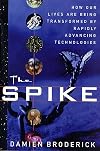
The Spike: How Our Lives Are Being Transformed By Rapidly Advancing Technologies
by Damien Broderick
On This Page
Description
The rate at which technology is changing our world-not just on a global level like space travel and instant worldwide communications but on the level of what we choose to wear, where we live, and what we eat-is staggeringly fast and getting faster all the time. The rate of change has become so fast that a concept that started off sounding like science fiction has become a widely expected outcome in the near future-a singularity referred to as the Spike. At that point of singularity, the show more cumulative changes on all fronts will affect the existence of humanity as a species and cause a leap of evolution into a new state of being.On the other side of that divide, intelligence will be freed from the constraints of the flesh; machines will achieve a level of intelligence in excess of our own and boundless in its ultimate potential; engineering will take place at the level of molecular reconstruction, which will allow everything from food to building materials to be assembled as needed from microscopic components rather than grown or manufactured; we'll all become effectively immortal by either digitizing and uploading our minds into organic machines or by transforming our bodies into illness-free, undecaying exemplars of permanent health and vitality.The results of all these changes will be unimaginable social dislocation, a complete restructuring of human society, and a great leap forward into a dazzlingly transcendent future that even science fiction writers have been too timid to imagine. show lessTags
Recommendations
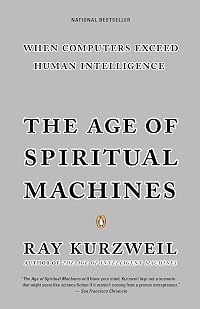
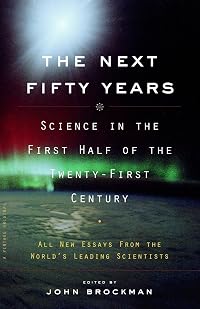

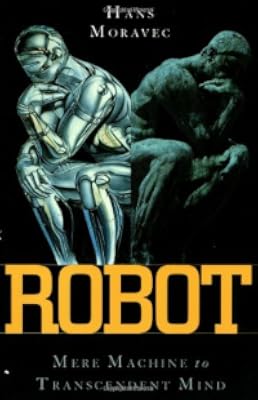
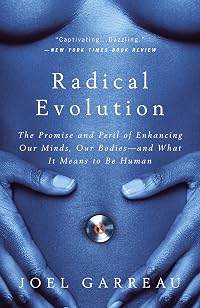











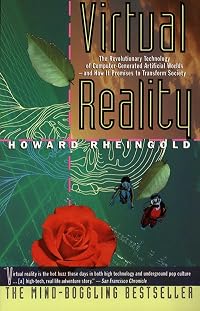

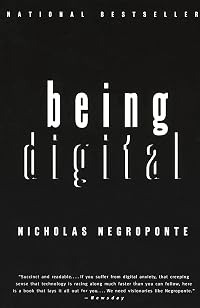
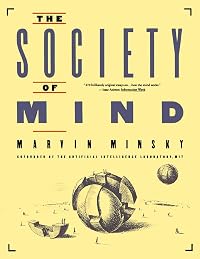

Member Recommendations

Member Reviews
If you are wondering why people around you are babbling strange words like “transhumanism” and “extropianism” and using a capital S to speak of a Singularity and then opening a university for it, this book is a good introduction to the field. Broderick looks at the currents of thought centered on the idea that the rate of technological advance is, itself, accelerating, for everything from transport speeds to gene sequencing to Moore’s Law, and speculating on what the world will be like if this acceleration continues.
I’ve been following the discussion for some time, so the book was largely review for me; it was quite nice to see a well-balanced look at the differing viewpoints on what Broderick calls the Spike. He covers the show more ramifications of molecular nanotechnology and artificial intelligence and human uploading, which may be a wild ride for someone who hasn’t been reading Vinge and Stross and Drexler already. Broderick pays careful attention to the skeptics as well as the gung-ho enthusiasts, and has an opinion similar to mine: we should be devoting a lot of careful thought to these matters now so we’re better able to avoid or solve problems when they come up. He’s a bit more optimistic about the matter than I am; I agree with Broderick that these technologies are well worth pursuing, but I’m with Jamais Cascio: “The Singularity is not a sustainability strategy.”
Any book about the future can go out of date very quickly; this is a 2001 vintage and still holding up fairly well, though there are more recent results in biology that stand out— he has the old estimate of humans having 100,000 genes, and makes no mention of synthetic biology. show less
I’ve been following the discussion for some time, so the book was largely review for me; it was quite nice to see a well-balanced look at the differing viewpoints on what Broderick calls the Spike. He covers the show more ramifications of molecular nanotechnology and artificial intelligence and human uploading, which may be a wild ride for someone who hasn’t been reading Vinge and Stross and Drexler already. Broderick pays careful attention to the skeptics as well as the gung-ho enthusiasts, and has an opinion similar to mine: we should be devoting a lot of careful thought to these matters now so we’re better able to avoid or solve problems when they come up. He’s a bit more optimistic about the matter than I am; I agree with Broderick that these technologies are well worth pursuing, but I’m with Jamais Cascio: “The Singularity is not a sustainability strategy.”
Any book about the future can go out of date very quickly; this is a 2001 vintage and still holding up fairly well, though there are more recent results in biology that stand out— he has the old estimate of humans having 100,000 genes, and makes no mention of synthetic biology. show less
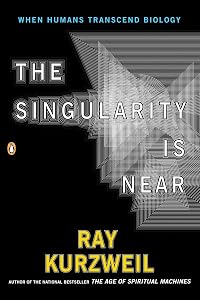
Years before Ray Kurzweil's book on the projected (2048? Maybe earlier.) technological singularity, there was this one by Aussie author Broderick. The extensive stuff on nanotech seemed dubious to me. Great chapter on the conundrums and implications of mind uploading. Another good volume for us transhumanists.
Ratings
Members
- Recently Added By
Author Information

111+ Works 1,557 Members
Damien Broderick is an Australian writer, editor and critical theorist who lives in San Antonio, Texas.
Series
Belongs to Publisher Series
Common Knowledge
- Alternate titles
- The Spike: Accelerating into the Unimaginable Future
- Original publication date
- 1997
Classifications
Statistics
- Members
- 145
- Popularity
- 226,729
- Reviews
- 2
- Rating
- (3.35)
- Languages
- English, German
- Media
- Paper, Ebook
- ISBNs
- 8
- ASINs
- 1