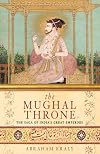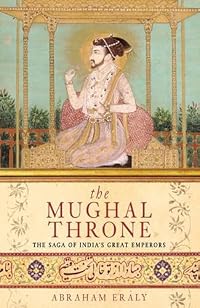
The Mughal Throne
by Abraham Eraly
On This Page
Description
A history of the great Mughal rulers of India, one of the world's greatest empires. In December 1525 Babur, the great grandson of the Mongol conqueror Tamberlaine, crossed the Indus river into the Punjab with a modest army and some cannon. At the battle of Panipat five months later he routed the mammoth army of the Afghan ruler of Hindustan. Mughal rule in India had begun. It was to continue for over three centuries, shaping India for all time. Full of dramatic episodes and colourful detail, show more THE MUGHAL EMPIRE tells the story of one of the world's great empires. show lessTags
Recommendations




Member Recommendations

Member Reviews
An outstanding account of the Great Mughals, from Babur down to the end of Aurangzeb. Of course this is a tale that has been told often, and is based on the chronicles and writings of the age and some time thereafter. Most of these accounts themselves are now available to all readers through the translations of British scholars, and conveniently placed on the worldwide web. The professional historian can go further by accessing the actual letters and notings of the people concerned, in various archives; it is not clear whether the author has gone so far. Perhaps the most interesting, and enlightening, portion of the book is in the last few pages, where he sums up the futility of the last Great Mughal's life, and suggests that the only show more thing that saved India for the future was the taking over by the British of the decrepit local power. show less
This is a marvellous book. I like the way in which he has written the book, as he brings the old, dead Emperors back to life. This was truly the last, in a sense, golden age of India.
What he does, is to present the emperors as people. People who lived, grew and developed in India. He does present a more nuanced few of Aurangzeb than is presented in school text books, and also analyses the demise of the Mughal Empire extremely well.
It is indeed a saga, where nothing could be taken for granted, and where accession to the throne was fraught with danger. Yet, despite Hindu fundamentalists, they left something lasting for India. This is their gift, and this is what he talks about.
What he does, is to present the emperors as people. People who lived, grew and developed in India. He does present a more nuanced few of Aurangzeb than is presented in school text books, and also analyses the demise of the Mughal Empire extremely well.
It is indeed a saga, where nothing could be taken for granted, and where accession to the throne was fraught with danger. Yet, despite Hindu fundamentalists, they left something lasting for India. This is their gift, and this is what he talks about.
This book tells the stories of the emperors, their friends and their foes. It is vividly descriptive, and a thoroughly good read. This is not a book to go to for a historical understanding of the period - that is not its main purpose, and in any case the author's position is firmly pre-postcolonial and therefore very restricted.
Our very own Game of Thrones.
Ratings
Members
- Recently Added By
Author Information

16 Works 574 Members
Common Knowledge
- People/Characters
- Babur, Emperor of Hindustan; Shah Jahan; Umar Shaikh Mirza II; Shah Ismail I; Muhammad Shaybani Khan; Ibrahim Lodi, Sultan of Delhi (show all 106); Maharana Sangram Singh, Rana of Mewar (aka Rana Sanga); Daulat Khan Lodi; Humayun, Emperor of the Mughal Dynasty (born Nasir-ud-Din Muḥ | ammad); Jerónimo de Ezpeleta y Goñi (aka Jerome Xavier); Ahmad Yadgar; Shahzada Sulaiman Shikoh; Dara Shikoh; Maharana Udai Singh II, Rana of Mewar; Soyarabai Bhonsle; Shah Tahmasp I; Jean-Baptiste Tavernier; Edward Terry (author); Raja Todar Mal; Shahaji Raje Bhonsle; Shahryar (Mughal prince); Sambhaji Bhosale; Shah Shuja (Mughal Prince); Shah Jahan, Emperor of the Mughal Dynasty (Mirza Shahabuddin Baig Muhammad Khan Shah Jahan); Ali Adil Shah II; Aurangzeb (Emperor of the Mughal Dynasty aka Alamgir, born Abu'l Muzaffar Muhi-ud-Din Muhammad); Shah Abbas I; Shah Abbas II; Abdul Rahim Khan-I-Khana; Rodolfo Acquaviva; Khwaja Nizam-ud-Din Ahmad; Ajit Singh, Maharaja of the Marwar; Akbar, Emperor of the Mughal Dynasty (born Abu'l-Fath Jalal-ud-din Muhammad); Sultan Muhammad Akbar; Malik Ambar; Muhammad Azam Shah; Abd al-Qadir Bada'uni; Tardi Beg Khan; Muhibb Ali Beg; François Bernier (physician); Raja Bihari Mal of Amer; Birbal (Raja); Vir Singh Deo (aka Bir Singh Bundela); Bhimsen Burhanpuri Saxena; Salim Chishti; Raja Bhagawant Das; Shivaji Bhonsle (aka Chhatrapati Shivaji Maharaj); Kamran Mirza; Hindal Mirza (born Abu'l-Nasir Muhammad); Hamida Banu Begum; Sher Shah Suri; Gulbadan Begum; Muhammad Askari Mirza; Daniyal Mirza; Sir Mountstuart Elphinstone Grant Duff (aka M. E. Grant Duff); Ekoji I Bhonsle; Shaikh Abu al-Fazal ibn Mubarak; Muhammad Qasim Hindu Shah (aka Ferishta); Mirza Muhammad Haidar Dughlat Beg; Shahzada Mirza Muhammad Hakim; Sir William Hawkins (East India Company representative); Hemu Vikramaditya (aka Hemchandra Vikramaditya); Muhammad Adil Shah; Ghiyas Beg, I'timad ud-Daula (also Mirza Ghiyas Beg); Jahanara Begum Sahib; Jahangir, Emperor of the Mughal Dynasty (born Mirza Nur-ud-din Beg Mohammad Khan Salim); Maharaja Sawai Jai Singh (Jai Singh II); Pierre du Jarric; Maharaja Jaswant Singh of Marwar; Jijabai Shahaji Bhosale; Mir Jumla II; Muhammad Saleh Kamboh; Afzal Khan; Muhammad Kazim Ibn-i Muhammad Amin Munshi; Abdullah Khan Ozbeg; Adham Khan; Jalal Khan Suri; Adil Khan Suri; Firuz Shah Suri; Muhammad Mubariz Khan (aka Muhammad Adil Shah); Ibrahim Shah Suri; Muhammad Khan Suri (aka Shamsuddin Muhammad Shah); Sikandar Shah Suri; Mirza Abul-Hasan Jaafar Beg, Asaf Khan; Mirza Abu Talib (aka Shaista Khan); Sikandar Adil Shah; Muhammad Quli Qutb Shah; Qutb-ud-Din Bahadur Shah; Salima Sultan Begum; Ruqaiya Sultan Begum; Sir Thomas Roe; Roshanara Begum; Arjumand Banu Begum (aka Mumtaz Mahal); Durgadas Rathore; Maharana Pratap Singh; Rajaram Raje Bhosale; Nur Jahan (born Mehrunissa); Ishwardas Nagar; Muhammad Murad Bakhsh; Antonio Monserrate; Niccolao Manucci; Raja Man Singh I; Shamsuddin Muhammad Atgah Khan; Maham Anga Begum; Adham Khan; Bairam Khan
- Important places
- Lahore, Punjab, Pakistan; Agra, Uttar Pradesh, India; Panipat, Haryana, India; New Delhi, National Capital Territory of Delhi, India; Gauda, West-Bengal, India - Bangladesh border (city, aka Gaur, Gour or Lakhnauti); Jaunpur, Uttar Pradesh, India (show all 34); Kabul, Afghanistan; Fergana, Uzbekistan; Samarkand, Uzbekistan; Ahmadabad, Gujarat, India; Surat, Gujarat, India; Ajmer, Rajasthan, India; Udaipur, Rajasthan, India; Kandahar, Afghanistan; Chittorgarh, Rajasthan, India; Aurangabad, Maharashtra, India; Daulatabad, Maharashtra, India; Sasaram, Bihar, India; Vijayapura, Karnataka, India (previously Bijapur); Ujjain, Madhya Pradesh, India; Gwalior, Madhya Pradesh, India; Burhanpur, Madhya Pradesh, India; Jodhpur, Rajasthan, India; Pune, Maharashtra, India; Cooch Behar, West Bengal, India; Thanjavur, Tamil Nadu, India; Raigarh, Chhattisgarh, India; Hyderabad, Telangana, India; Golkonda Fort, Telangana, India; Gingee, Tamil Nadu, India; Khandesh, Maharashtra, India; Amer, Rajasthan, India (aka Amber); Multan, Punjab, Pakistan; Fatehpur Sikri, Uttar Pradesh, India
- Important events
- First Battle of Panipat (1526); Battle of Khanwa (1527); Battle of Chausa (1539); Battle of Kannauj (1540); Battle of Samugarh (1658); Sur Empire (1540–1555)
Classifications
Statistics
- Members
- 185
- Popularity
- 176,294
- Reviews
- 4
- Rating
- (4.24)
- Languages
- English, Italian
- Media
- Paper
- ISBNs
- 4
- ASINs
- 3