On This Page
Description
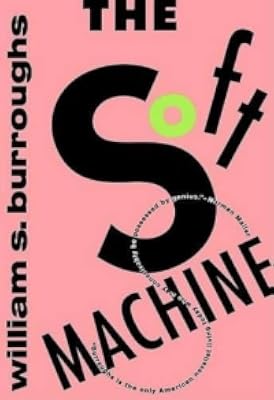
In Naked Lunch, William S. Burroughs revealed his genius. In The Soft Machine he begins an adventure that will take us even further into the dark recesses of his imagination, a region where nothing is sacred, nothing taboo. Continuing his ferocious verbal assault on hatred, hype, poverty, war, bureaucracy, and addiction in all its forms, Burroughs gives us a surreal space odyssey through the wounded galaxies in a book only he could create.Tags
Recommendations
















Member Recommendations
Member Reviews
By the time William S. Burroughs wrote The Soft Machine, the first novel in the Nova Trilogy (sometimes called the Cut Up Trilogy), he had developed a coherent world view and theoretical framework for his literature. It is a world view that incorporates linguistic theory, sexuality, gender relations, drugs, altered states of consciousness, secret agents, space aliens, a dark view of science, and the conflict between control and chaos that will eventually lead to planetary demise. Yet while his world view takes on a semblance of consistency, its realization in his fiction is anything but orderly. That’s all a part of his artistic vision. In contrast, the conventional linear narrative of his first novel Junky is pure autobiography while show more his most famous novel Naked Lunch is a montage of vignettes depicting the misanthropic hellscape of life for modern humans. It introduces Burroughs as the inventor of a new style without providing any definite hypothesis for how he views the world. The Soft Machine initiated the next phase of his literary career and set the tone for everything that would come after.
Like Naked Munch, this novel is in part a series of vignettes that are grotesque and arresting in their impact. None of them are complete stories in the ordinary sense of the word, but more like situations that only on occasion contain a narrative arc. The plot is as basic as it can be. Alien forces have invaded the Earth, operate through authoritarian systems of control, and manipulate people through the use of words and images. Another alien force, the Nova Mob, is engaged in constant warfare to create chaos and destruction in an attempt to drive the world to self-annihilation, probably with nuclear weapons. In the middle, there are the Nova Police who try to balance the control and the chaos to prevent global catastrophe. On first encounter, this plot is evasive and takes some effort to see. Some background information on Burroughs’ life and theories does a lot to make it easier to understand how the different pieces of the novel fit together. Or does it fit together? Part of Burroughs’ intention is to disrupt the lines of communication being utilized by the controlling machine to enslave us. Therefore, disrupting the linear patterns and structures of language are meant to be liberating. Despite this intention, patterns do emerge even if they are rough and incomplete.
The vignettes are easy enough to follow in the beginning. Some junkies meet in a Manhattan restaurant to buy and sell heroin. A secret agent beats up a gay drug user in a subway bathroom claiming this violence to have been ordered by his superiors while admitting he doesn’t know where the instructions came from or what the larger purpose of his mission is. In a vision of near-paradise, a multi-racial group of youths have an orgy in a river.
Then things take a turn towards the bizarre as two separate passages depict a man who travels back in time to Yucatan to live among the Mayas. In the first passage, he joins up with some agricultural workers, finding out that they are being controlled by priests who own codices full of hieroglyphs and calendars that are utilized like knobs to manipulate the population’s behavior. In the second passage, a man takes hallucinogenic drugs that allow him to return to the Yucatan so that he can liberate the workers from their slavery. Crab men, priests dressed in lobster costumes, and a foul smelling giant centipede are part of the action.
The meaning of the Soft Machine as a metaphor for the human body is revealed in a night club where a man changes into a woman while being covered in gelatinous ooze. An audience of men in a movie theater masturbate while watching movies of men ejaculating while being hung from a gallows; a technician makes the audience speed up and slow down by operating a control panel as if they are on a film strip. A junky, suspecting that the two detectives who have come to arrest him, are undercover agents from the Nova Police, kills them just as he is about to shoot up. At the heart of the novel is the classic sequence where the battle between the Nova Mob and the Nova Police becomes so fierce that the Nova Police recall all agents and the notorious Doctor Benway is called in to restore order and exert control over the crowd. Memorable passages towards the end of the book involve the destruction of a control machine located in the office of a news agency and the invasion of a virus from outer space that attacks the larynxes of primates, causing them to make sounds in agony that will later evolve into language. Burroughs portrays a world that is strange, disturbing, and permeated with paranoia. But every once in a while he gives us a glimpse of a better world and if you really look closely enough, you might conclude that he is motivated by a hidden morality. After all, Burroughs isn’t celebrating all the filth, violence, and absurdity he portrays; instead he is showing us how humanity has failed miserably to live up to its potential for freedom and dignity.
These vignettes are separated by, and sometimes overlapping with, passages of cut ups, surrealistic imagery, and nonsense. My favorite image was of a man ejaculating Montgomery Ward catalogs while sitting in an outhouse. These parts may be frustrating at first, but the effect of orderly or semi-orderly narratives alternating and emerging out of an back into the non-linear language has an interesting effect. If anything, the cut ups, which are made by splicing together texts that have been cut into four pieces and reassembled forming random word patterns, provide some interesting imagery. If you are already familiar with the texts being used in the cut ups, it feels like reading scrambled messages or codes that emerge and fade away before you can fully grasp their meanings. I’ve often compared the cut ups to French Symbolist poetry which is meant to convey pure emotion through imagery without any interference from rationality, but French Symbolism is composed deliberately while cut ups are experimental and any meaning that emerges out of them is random, accidental, and purely by chance. Thus Burroughs has no control over the outcome of the cut ups. There can be no semantic connection between the sender and the receiver of the language. The signals carry minimal content, if any. Burroughs believes that by cutting the lines between the sign and the signified object, we become less vulnerable to control by outside forces. I can’t say this is scientifically valid, but it does illustrates an artistic vision, supplementing the easier to follow prose of other passages. And keep in mind that Burroughs is an author of fiction, meaning he has less restrictions on his portrayal of reality.
This novel is a satire of human society. My interpretation is that institutions like government, media, corporations, and law enforcement seek to control and dominate society. Meanwhile, people pursue freedom from this domination in drug use, sex, dreams, altered states of consciousness, crime, insanity, imagination, art, literature, and nature. But the pursuit of these means of liberation carry their own risks and can enslave or destroy us in other ways if we aren’t careful. Thus, true liberation from the forces of domination is an impossibility. We are stuck in the mechanized slime pits of the world whether we like it or not so we might as well have a dark sense of human and write a book or two. In the middle of it all is the single human being, the Soft Machine, the body and mind that are malleable enough to be shaped by the Control Machine, but also malleable enough to shape itself in ways that don’t fit with the Cotrol Machine and can possibly even disrupt or destroy it. The idea that the Nova Mob, the Nova Police, and the language virus all originated in outer space and invaded the Earth, thereby creating all the problems of human existence, conveys the sense that we aren’t living as nature intended us to be. We got hijacked by alien forces beyond our control and those forces are preventing us from living out our true potential. Finally, I think the theme of secret agents says something about who the author is. A secret agent is a shadowy figure, operating clandestinely in a foreign land to transmit and receive coded messages that possibly have grave significance for the course of the world. He operates between worlds, taking on different disguises and personae to accomplish his tasks. It is a lonely, solitary life too and full of risk. Could you possibly think of a better metaphor for an author or a better symbol for the gay, heroin addicted author that Burroughs was?
The Soft Machine is one of William S. Burroughs’ best novels. It takes a re-reading or two in order to see that though. It’s one of those books that demands multiple attempts in order to really make sense of it even though you probably will never understand it in entirety. That’s by design. And I highly recommend hunting down a British impression of this book since it contains chapters that were never included in the American editions; those extra chapters really do a lot to tie the whole chaotic literary mess together. By the way, did I happen to mention that William S. Burroughs was completely nuts? Knowing that will help you to unlock the enigmas of his writing. show less
Like Naked Munch, this novel is in part a series of vignettes that are grotesque and arresting in their impact. None of them are complete stories in the ordinary sense of the word, but more like situations that only on occasion contain a narrative arc. The plot is as basic as it can be. Alien forces have invaded the Earth, operate through authoritarian systems of control, and manipulate people through the use of words and images. Another alien force, the Nova Mob, is engaged in constant warfare to create chaos and destruction in an attempt to drive the world to self-annihilation, probably with nuclear weapons. In the middle, there are the Nova Police who try to balance the control and the chaos to prevent global catastrophe. On first encounter, this plot is evasive and takes some effort to see. Some background information on Burroughs’ life and theories does a lot to make it easier to understand how the different pieces of the novel fit together. Or does it fit together? Part of Burroughs’ intention is to disrupt the lines of communication being utilized by the controlling machine to enslave us. Therefore, disrupting the linear patterns and structures of language are meant to be liberating. Despite this intention, patterns do emerge even if they are rough and incomplete.
The vignettes are easy enough to follow in the beginning. Some junkies meet in a Manhattan restaurant to buy and sell heroin. A secret agent beats up a gay drug user in a subway bathroom claiming this violence to have been ordered by his superiors while admitting he doesn’t know where the instructions came from or what the larger purpose of his mission is. In a vision of near-paradise, a multi-racial group of youths have an orgy in a river.
Then things take a turn towards the bizarre as two separate passages depict a man who travels back in time to Yucatan to live among the Mayas. In the first passage, he joins up with some agricultural workers, finding out that they are being controlled by priests who own codices full of hieroglyphs and calendars that are utilized like knobs to manipulate the population’s behavior. In the second passage, a man takes hallucinogenic drugs that allow him to return to the Yucatan so that he can liberate the workers from their slavery. Crab men, priests dressed in lobster costumes, and a foul smelling giant centipede are part of the action.
The meaning of the Soft Machine as a metaphor for the human body is revealed in a night club where a man changes into a woman while being covered in gelatinous ooze. An audience of men in a movie theater masturbate while watching movies of men ejaculating while being hung from a gallows; a technician makes the audience speed up and slow down by operating a control panel as if they are on a film strip. A junky, suspecting that the two detectives who have come to arrest him, are undercover agents from the Nova Police, kills them just as he is about to shoot up. At the heart of the novel is the classic sequence where the battle between the Nova Mob and the Nova Police becomes so fierce that the Nova Police recall all agents and the notorious Doctor Benway is called in to restore order and exert control over the crowd. Memorable passages towards the end of the book involve the destruction of a control machine located in the office of a news agency and the invasion of a virus from outer space that attacks the larynxes of primates, causing them to make sounds in agony that will later evolve into language. Burroughs portrays a world that is strange, disturbing, and permeated with paranoia. But every once in a while he gives us a glimpse of a better world and if you really look closely enough, you might conclude that he is motivated by a hidden morality. After all, Burroughs isn’t celebrating all the filth, violence, and absurdity he portrays; instead he is showing us how humanity has failed miserably to live up to its potential for freedom and dignity.
These vignettes are separated by, and sometimes overlapping with, passages of cut ups, surrealistic imagery, and nonsense. My favorite image was of a man ejaculating Montgomery Ward catalogs while sitting in an outhouse. These parts may be frustrating at first, but the effect of orderly or semi-orderly narratives alternating and emerging out of an back into the non-linear language has an interesting effect. If anything, the cut ups, which are made by splicing together texts that have been cut into four pieces and reassembled forming random word patterns, provide some interesting imagery. If you are already familiar with the texts being used in the cut ups, it feels like reading scrambled messages or codes that emerge and fade away before you can fully grasp their meanings. I’ve often compared the cut ups to French Symbolist poetry which is meant to convey pure emotion through imagery without any interference from rationality, but French Symbolism is composed deliberately while cut ups are experimental and any meaning that emerges out of them is random, accidental, and purely by chance. Thus Burroughs has no control over the outcome of the cut ups. There can be no semantic connection between the sender and the receiver of the language. The signals carry minimal content, if any. Burroughs believes that by cutting the lines between the sign and the signified object, we become less vulnerable to control by outside forces. I can’t say this is scientifically valid, but it does illustrates an artistic vision, supplementing the easier to follow prose of other passages. And keep in mind that Burroughs is an author of fiction, meaning he has less restrictions on his portrayal of reality.
This novel is a satire of human society. My interpretation is that institutions like government, media, corporations, and law enforcement seek to control and dominate society. Meanwhile, people pursue freedom from this domination in drug use, sex, dreams, altered states of consciousness, crime, insanity, imagination, art, literature, and nature. But the pursuit of these means of liberation carry their own risks and can enslave or destroy us in other ways if we aren’t careful. Thus, true liberation from the forces of domination is an impossibility. We are stuck in the mechanized slime pits of the world whether we like it or not so we might as well have a dark sense of human and write a book or two. In the middle of it all is the single human being, the Soft Machine, the body and mind that are malleable enough to be shaped by the Control Machine, but also malleable enough to shape itself in ways that don’t fit with the Cotrol Machine and can possibly even disrupt or destroy it. The idea that the Nova Mob, the Nova Police, and the language virus all originated in outer space and invaded the Earth, thereby creating all the problems of human existence, conveys the sense that we aren’t living as nature intended us to be. We got hijacked by alien forces beyond our control and those forces are preventing us from living out our true potential. Finally, I think the theme of secret agents says something about who the author is. A secret agent is a shadowy figure, operating clandestinely in a foreign land to transmit and receive coded messages that possibly have grave significance for the course of the world. He operates between worlds, taking on different disguises and personae to accomplish his tasks. It is a lonely, solitary life too and full of risk. Could you possibly think of a better metaphor for an author or a better symbol for the gay, heroin addicted author that Burroughs was?
The Soft Machine is one of William S. Burroughs’ best novels. It takes a re-reading or two in order to see that though. It’s one of those books that demands multiple attempts in order to really make sense of it even though you probably will never understand it in entirety. That’s by design. And I highly recommend hunting down a British impression of this book since it contains chapters that were never included in the American editions; those extra chapters really do a lot to tie the whole chaotic literary mess together. By the way, did I happen to mention that William S. Burroughs was completely nuts? Knowing that will help you to unlock the enigmas of his writing. show less
I read the recently-published “restored text” – and the history of the novel and its manuscripts is as barking mad as its story. Burroughs submitted the original novel to Olympia Press in Paris, which promptly published it. But he decided to rewrite chunks for the US edition a couple of years later, but not all of the changes were delivered in time. But they were in time for the UK publication a couple of years after that. So there are three major, and different, editions of The Soft Machine – and this version is based on the second, with variations from both the first and third versions. All of which are documented in several appendices.
Story-wise… The Soft Machine is the first book of the Cut-Up Trilogy… because Burroughs show more took the text of many chapters, cut it into pieces and re-arranged it. You would think this would make it almost impossible to read, but it’s surprisingly easier than you’d expect. The plot is part science fiction, part autobiography, part thriller. There’s a secret agent, and time travel, and Mayans, and bits and pieces from the earlier Naked Lunch. It reads mostly like episodes from Burroughs’s life, with science fiction interludes. While the cut-up narrative is not as difficult to parse as I’d expected, the plot of the novel is less easy to follow. To be fair, it doesn’t really matter – the narrative jumps all over the place, and seems to end up somewhere that follows more or less from where it began.
The Soft Machine is surprisingly funny in places. It’s also very graphic. Burroughs was gay and promiscuous, and so too are his characters. Most of the encounters are fleeting and rough. There’s also lots of science-fictional ideas – some of which are mentioned in passing, but with pay-offs that appear later in the narrative. The cut-up chapters make them a little harder to track, however.
I’ve been a fan of William S Burroughs as, well, as a concept for several years, and I’ve dipped a couple of times into his fiction. I’d read bits of The Soft Machine before, but not the full novel – and I have to admit the “restored text” improved the reading experience, since the footnotes and appendices add a fascinating dimension to the novel.
Restored text editions of The Ticket That Exploded and Nova Express are also available. show less
Story-wise… The Soft Machine is the first book of the Cut-Up Trilogy… because Burroughs show more took the text of many chapters, cut it into pieces and re-arranged it. You would think this would make it almost impossible to read, but it’s surprisingly easier than you’d expect. The plot is part science fiction, part autobiography, part thriller. There’s a secret agent, and time travel, and Mayans, and bits and pieces from the earlier Naked Lunch. It reads mostly like episodes from Burroughs’s life, with science fiction interludes. While the cut-up narrative is not as difficult to parse as I’d expected, the plot of the novel is less easy to follow. To be fair, it doesn’t really matter – the narrative jumps all over the place, and seems to end up somewhere that follows more or less from where it began.
The Soft Machine is surprisingly funny in places. It’s also very graphic. Burroughs was gay and promiscuous, and so too are his characters. Most of the encounters are fleeting and rough. There’s also lots of science-fictional ideas – some of which are mentioned in passing, but with pay-offs that appear later in the narrative. The cut-up chapters make them a little harder to track, however.
I’ve been a fan of William S Burroughs as, well, as a concept for several years, and I’ve dipped a couple of times into his fiction. I’d read bits of The Soft Machine before, but not the full novel – and I have to admit the “restored text” improved the reading experience, since the footnotes and appendices add a fascinating dimension to the novel.
Restored text editions of The Ticket That Exploded and Nova Express are also available. show less
This edition begins with an incomprehensible introduction warning you how difficult the book itself is going to be to read. And it's not wrong. The book is chaotic, challenging and incoherent at times. Full of sex and erections and orgasms and the using of "junk" in various locations. Mexico may be one.
There is a briefly coherent section that involves body switching or sharing and time manipulation. Time itself seems to have no meaning in this text, perhaps a result of the physical cutting and pasting that went into its formation.
With appendices and extensive notes attempting to explain what happened.
There is a briefly coherent section that involves body switching or sharing and time manipulation. Time itself seems to have no meaning in this text, perhaps a result of the physical cutting and pasting that went into its formation.
With appendices and extensive notes attempting to explain what happened.
Absolutely vile and completely insane, The Soft Machine is filled to the brim with sex, drugs, half-cetacean people, meaningless stream-of-consciousness vulgarity, and countless scenes that are generally beyond absurd. A loose narrative throughout, the general premise is about a man who can change bodies who infiltrates various scenarios and dismantles them from within, but even then there's so much more happening throughout and the novel can't stick to any one particular plot point. The entire thing is a maddening journey into a surrealist dystopia where absolutely nothing is taboo.
The biggest drawback is that some of the longer graphic scenes stop being shocking most of the way through and sadly get repetitive and boring, but it show more always picks back up tremendously and it ends just as weird and abruptly as it begins. Outside of its weaker sections I absolutely loved this.
8.25/10 show less
The biggest drawback is that some of the longer graphic scenes stop being shocking most of the way through and sadly get repetitive and boring, but it show more always picks back up tremendously and it ends just as weird and abruptly as it begins. Outside of its weaker sections I absolutely loved this.
8.25/10 show less
Burroughs' first complete utilization of the cut up technique is seen here, and thus it is no surprise that form dictates content. Language folds in on itself perpetually, corroding narrative threads and creating a ritual repetition that implies two phenomena. First, this is what it is like to be on junk, immersed in the doldrums of perennial wanting where existence is cyclical in wait for the next fix. Second, the text is eating itself as junk eats the junkie, and is a symbol of human relationships as essentially parasitic. The text devours and is devoured as the body devours and is devoured. Burroughs' "characters" here (which themselves dissolve into something short of insignificance, into cipher) are vehicles of want who deplete show more their others through mindless and hurried fucking. If not that, that they are literal insects or corrupt agents or authorities. Everyone is out for fruitless gain. The motif of the hanged man cumming and references to Mandrake recall the homunculus, but if these final spasms breed anything it is only another marginalized body, a queer, a junkie, displaced in a malevolent universe that collapses in on itself. show less
At first glance, this book appears to just be about drug addicts having all sorts of crazy sex. There's some death, more sex, drugs, sex with boys, and more death. After digging a bit deeper, however, one starts to notice the parallels between Burroughs' novel and H.G. Wells's The Time Machine, such as the "villains" (Morlocks), all of the allusions to a Green Palace-like place and atmosphere, etc... There are also strong indications of Gnostic ideology within this book's pages. The characters who are not presented as oppressive beings appear to be in constant "minraud," which can be viewed as representation of the pneuma. Everyone's actions begin at irrational and deteriorate into utter madness, which in Gnosticism, is how one must act show more in order to fool oppressors so that one may transcend misery and life to reach the creative energy or being. I thought this novel was quite a trip. It was funny, had some nice references to cultural beliefs and opinions which are relevant still to this day (sexual repression, sexism), and the cut up technique afforded a dizzying descent into the mind of a junky. show less
I won't lie--I don't always understand Burroughs. However, I don't think understanding is always the point with his work. In fact, in this novel I think the entire point is to break and rebreak the reader's expectation of narrative again and again as an extension of the battle cry of the characters. Narratives lead to control lead to systems of control lead to systematic narrative systems of control. If we have any hope of solving and beating the Mayan Caper, giving up our need for narrative is the only hope. For that thought, and the twisting of the term "heavy metal" to mean something outside of metallurgy alone, this novel is a must read...encounter...experience...
Members
- Recently Added By
Lists

recalling favorites...
105 works; 2 members

Read
293 works; 4 members

Beat
64 works; 1 member

science fiction
17 works; 1 member

current
52 works; 1 member

the nova trilogy & others
5 works; 1 member
Author Information

363+ Works 39,140 Members
William S. Burroughs was a primary figure of the Beat Generation who wrote in the postmodern paranoid fiction genre. Jack Kerouac called Burroughs the "greatest satirical writer since Jonathan Swift," while Norman Mailer declared him "the only American writer who may be conceivably possessed by genius." While he is best known for the novels Naked show more Lunch, Queer, and Junkie, he also collaborated with artists such as Laurie Anderson, Tom Waits, Nick Cave, Gus Van Sant, David Cronen-berg, and Sonic Youth to produce films, music, and performance pieces. show less
2 Works 1,716 Members
Some Editions
Awards and Honors
Notable Lists
Series

Belongs to Publisher Series
Work Relationships
Common Knowledge
- Canonical title
- The Soft Machine
- Original title
- The Soft Machine
- Original publication date
- 1961
- People/Characters
- Dr. Benway
- First words
- I was working the hole with the Sailor and we did not bad fifteen cents on average night boosting the afternoons and short timing the dawn we made out from the land of the free but I was running out of veins . . .
- Last words
- (Click to show. Warning: May contain spoilers.)Since all monopolistic and hierarchical systems are basically rooted in anxiety it is not surprising that the use of the apo-morphine treatment or the synthesis of the apo-morphine formula have been consistently opposed in certain drearily predictable quarters of the soft machine.
- Blurbers
- Self, Will; Didion, Joan
Classifications
Statistics
- Members
- 1,715
- Popularity
- 12,992
- Reviews
- 20
- Rating
- (3.36)
- Languages
- 11 — Czech, Dutch, English, French, German, Italian, Japanese, Polish, Spanish, Swedish, Turkish
- Media
- Paper, Audiobook, Ebook
- ISBNs
- 38
- ASINs
- 25
