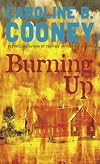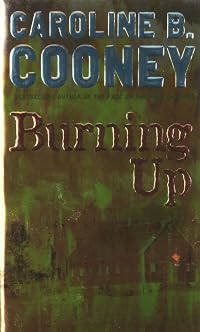
Burning Up
by Caroline B. Cooney
On This Page
Description
When a girl she had met at an innercity church is murdered, fifteen-year-old Macey channels her grief into a school project that leads her to uncover prejudice she had not imagined in her grandparents and their wealthy Connecticut community.Tags
Recommendations











Member Reviews
This is an older children's/YA novel, and I wish there'd been more of this kind of stuff around when I was a kid. Young Macey lives in the swanky Connecticut burb that's been home to her family for generations. As a school project, she decides to delve into the history of a local burnt-out barn . . . and is surprised to run into a wall of adult hostility to the notion. It could have ended there -- why rock the boat? -- but Macey's attitudes mature quite a lot when she and a few classmates visit an inner-city church to do charitable work, see the deprivation of the kids there, and make friends; they mature even more when, soon after, one of those kids is murdered. With her new boyfriend, Macey pushes ahead and discovers why the barn was show more torched, and the levels of guilt and bigotry buried beneath the genial facades of some of her family members and their friends. The writing's good, the relationships are well handled, and difficult topics are handled more substantively than in many an adult "issues" novel. What's not to like? show less
We did this book for 7th grade book club. It brought up some interesting issues about race and class in the history of our country and also more recently. Macey doggedly pursues truth regardless of the resistance she gets from her community as events in her life intertwine with the burning of an apartment in 1959.
This is a great book that mixed teen life with a serious issue. It kept me interested the whole time.
Macey Clare feels comfortable in her home town, although it isn't always fun being shunted back and forth between her two sets of hovering grandparents, who live near her. But between hanging out with her two good friends, attending annual barbacues on the beach, and getting to know cute classmate Austin better, her life seems fine.
Then, for a school project, Macey starts investigating the story of a barn in town that burned down years back. When she meets with resistance from friends and family, she is surprised and curious. It only makes her more determined to discover the truth, even if it means digging deep. But Macey could never show more imagine that her small, friendly town hides a shameful secret.
An old science teacher, who was black in a time when it was dangerous to be so. Prejudices long buried become revived. True colors are shown. And Macey will never be able to see her town, her family, or herself the same way ever again.
A mystery, a character study, and a historical fiction rolled into one teen novel, this is a very well-done book. show less
Macey Clare feels comfortable in her home town, although it isn't always fun being shunted back and forth between her two sets of hovering grandparents, who live near her. But between hanging out with her two good friends, attending annual barbacues on the beach, and getting to know cute classmate Austin better, her life seems fine.
Then, for a school project, Macey starts investigating the story of a barn in town that burned down years back. When she meets with resistance from friends and family, she is surprised and curious. It only makes her more determined to discover the truth, even if it means digging deep. But Macey could never show more imagine that her small, friendly town hides a shameful secret.
An old science teacher, who was black in a time when it was dangerous to be so. Prejudices long buried become revived. True colors are shown. And Macey will never be able to see her town, her family, or herself the same way ever again.
A mystery, a character study, and a historical fiction rolled into one teen novel, this is a very well-done book. show less
I loved this. It made great use of symbolism and multiple themes that teens can either relate to already or learn to relate to as they read this poignant story that deals with the closet racism of many whites, even in the North, breakup of families, and secrets within those families. It does have two words that are considered strong language, though they are not used frivolously.
This book is about a girl who has to do a history report. Macy decides to do the report on a huge fire that happened about 30 years ago. Two days later, she goes to this church with her friend Austin to paint the rooms for community service. Macy is paired up with a girl named Venita. They become very good friends. A week later, Venita is murdered. Macy is upset and wonders if there is people in her town against black people. Macy then sees that her grandparents are a part of this. Macy is very upset. She tries to find out about the fire that happened 30 years ago, but no one seems to remember. Macy finally learns to let the fire and Venita go.
This book was very good. I liked how Macy didn't give up even if people told her to. I was a show more little mad that Macy's parents didn't let her go to Venita's funeral. But I like the way the book was written and I like how Caroline Cooney mentioned Shakespeare. I think this book holds a life lesson. I think that the lesson is never forget the dead and never forget the past because you never know when it could mean something to somebody else later on. show less
This book was very good. I liked how Macy didn't give up even if people told her to. I was a show more little mad that Macy's parents didn't let her go to Venita's funeral. But I like the way the book was written and I like how Caroline Cooney mentioned Shakespeare. I think this book holds a life lesson. I think that the lesson is never forget the dead and never forget the past because you never know when it could mean something to somebody else later on. show less
Beautifully crafted story about the continuing issues of race in America. Loved it!
White teenage protaganist researches the mystery of town fire. Discovers history of racist violence. Current violence. Where does she stand?
Members
- Recently Added By
Author Information

124+ Works 24,998 Members
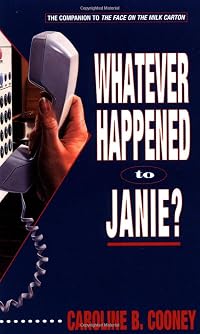
Caroline Cooney was born in 1947 in Geneva, New York. She studied music, art, and English at various colleges, but never graduated. She began writing while in college. Her young adult books include The Face on the Milk Carton, Whatever Happened to Janie?, The Voice on the Radio, What Janie Found, No Such Person, and the Cheerleaders Series. She show more received an ALA Best Book for Young Adults and an ALA Quick Pick for Young Adults for Driver's Ed and an ALA Quick Pick for Reluctant Young Adult Readers for Twenty Pageants Later. Two of her titles, The Rear View Mirror and The Face on the Milk Cartoon, were made into television movies. (Bowker Author Biography) show less
Awards and Honors
Awards
Common Knowledge
- Original publication date
- 1999
Classifications
- Genres
- Fiction and Literature, Teen, Young Adult
- DDC/MDS
- 813.54 — Literature & rhetoric American literature in English American fiction in English 1900-1999 1945-1999
- LCC
- PZ7 .C7834 .B — Language and Literature Fiction and juvenile belles lettres Fiction and juvenile belles lettres Juvenile belles lettres
- BISAC
Statistics
- Members
- 538
- Popularity
- 55,682
- Reviews
- 11
- Rating
- (3.61)
- Languages
- English
- Media
- Paper, Audiobook, Ebook
- ISBNs
- 12
- ASINs
- 4