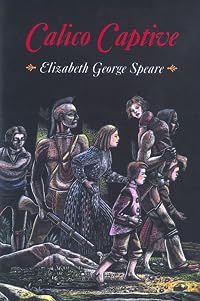
Calico Captive
by Elizabeth George Speare
On This Page
Description
In the year 1754, the stillness of Charlestown, New Hampshire, is shattered by the terrifying cries of an Indian raid. Young Miriam Willard, on a day that had promised new happiness, finds herself instead a captive on a forest trail, caught up in the ebb and flow of the French and Indian War. It is a harrowing march north. Miriam can only force herself to the next stopping place, the next small portion of food, the next icy stream to be crossed. At the end of the trail waits a life of hard show more work and, perhaps, even a life of slavery. Mingled with her thoughts of Phineas Whitney, her sweetheart on his way to Harvard, is the crying of her sister's baby, Captive, born on the trail. Miriam and her companions finally reach Montreal, a city of shifting loyalties filled with the intrigue of war, and here, by a sudden twist of fortune, Miriam meets the prominent Du Quesne family, who introduce her to a life she has never imagined. Based on an actual narrative diary published in 1807, Calico Captive skillfully reenacts an absorbing facet of history. show lessTags
Recommendations
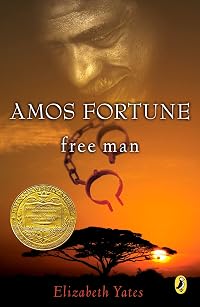

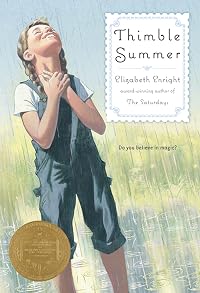
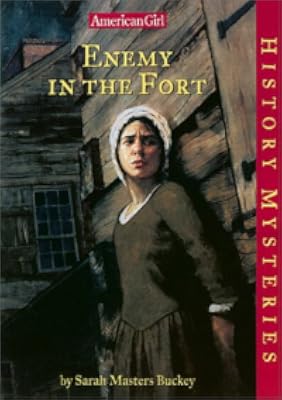

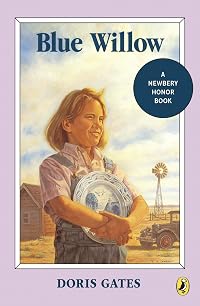

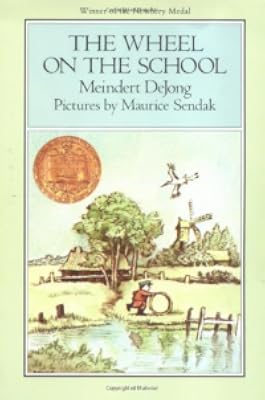
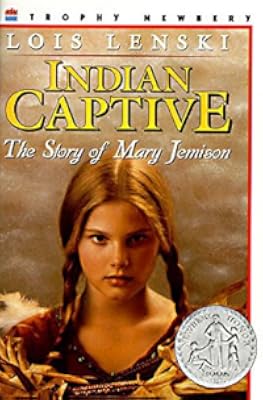

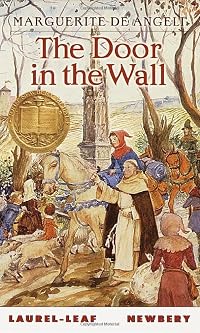


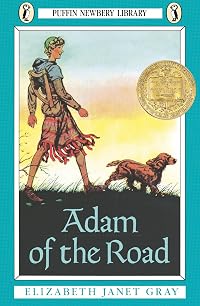
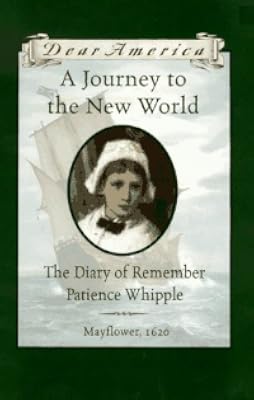
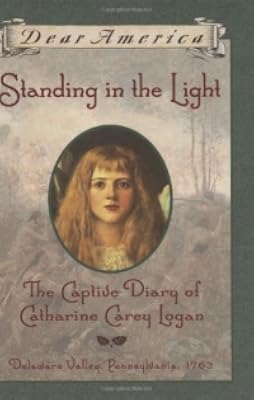
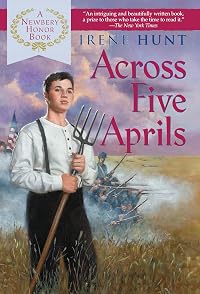




Member Recommendations
meggyweg Both novels describe the same historical event.
Member Reviews
It's hard to describe what about this book so beautifully captures the feel of the places and interactions it describes. It took me back to my days of tramping through forests and gave me the opportunity to vicariously experience frontier life in such a memorable way.
The main character starts out somewhat shallow and self-focused, but her character arc is what holds the story together and what kept me glued to the pages as I read the book cover to cover in a morning. It's that transformation, how the main character dealt with loss and loneliness, how her attitude toward people changed, how she put her skills to use for those she cared about that made the book what it is. She starts out drawn to shiny things, but the author makes sure show more the redeemable aspects of her character perk through the immaturity.
As with nearly every book, however, there are things to sift through. I wouldn't give this to a younger reader unless they are old enough to discern what should not be emulated and if the content issues mentioned later aren't an issue.
There's a shift away from materialism here, but to me it seems the mc goes from one extreme to another, from finding happiness in things to finding happiness in people. For one, it's a lot of pressure on the other person to be someone else's happiness, and it's just not lasting. Also, there were some things with relationships and religion that might not be suitable for younger readers as well. But since this book is geared towards younger readers, the author glossed over the scenes with childbirth, innuendo, and such. And the theme of valuing people above "shiny things" is laudable.
I can't say, however, that this is an accurate representation of the people the author used for inspiration. It seemed she took parts and changed people to fit her story, so it should be read as fiction, not as the story of the people whose names she borrowed.
And finally, here's a quote that portrays Miriam's character quite well:
"There is something you can do," she said soberly. "If you really want to help me. No one will listen. Can you get me into the jail to visit my sister?"
Pierre stared at her. Then suddenly he threw back his head and laughed so loudly that a passing Frenchman paused in the street and peered in through the doorway.
"What a girl!" He exclaimed. "Offer her a dress, invite her to a party, and what does she want instead - to go to jail." show less
The main character starts out somewhat shallow and self-focused, but her character arc is what holds the story together and what kept me glued to the pages as I read the book cover to cover in a morning. It's that transformation, how the main character dealt with loss and loneliness, how her attitude toward people changed, how she put her skills to use for those she cared about that made the book what it is. She starts out drawn to shiny things, but the author makes sure show more the redeemable aspects of her character perk through the immaturity.
As with nearly every book, however, there are things to sift through. I wouldn't give this to a younger reader unless they are old enough to discern what should not be emulated and if the content issues mentioned later aren't an issue.
There's a shift away from materialism here, but to me it seems the mc goes from one extreme to another, from finding happiness in things to finding happiness in people. For one, it's a lot of pressure on the other person to be someone else's happiness, and it's just not lasting. Also, there were some things with relationships and religion that might not be suitable for younger readers as well. But since this book is geared towards younger readers, the author glossed over the scenes with childbirth, innuendo, and such. And the theme of valuing people above "shiny things" is laudable.
I can't say, however, that this is an accurate representation of the people the author used for inspiration. It seemed she took parts and changed people to fit her story, so it should be read as fiction, not as the story of the people whose names she borrowed.
And finally, here's a quote that portrays Miriam's character quite well:
"There is something you can do," she said soberly. "If you really want to help me. No one will listen. Can you get me into the jail to visit my sister?"
Pierre stared at her. Then suddenly he threw back his head and laughed so loudly that a passing Frenchman paused in the street and peered in through the doorway.
"What a girl!" He exclaimed. "Offer her a dress, invite her to a party, and what does she want instead - to go to jail." show less
This is not my usual fare, not by a long shot. It somehow ended up on my To-Be-Read shelves, probably a leftover from one of the book exchanges. I was pleasantly surprised to find it a well-written and deeply engaging story. The romance was... well, romancey enough, but easy to ignore. The portrayal of the Natives who captured the English family of the protagonist was fairly one-sided and prejudicial- but rang quite true from their point of view. I wish they'd been captured longer because that was the most interesting part of the story for me. On the other hand, the portrait of Montreal was also very interesting, if less fraught with peril. The quiet fortitude of the older sister was admirable, and the bootstrap-yanking younger sister show more struck me as having that quintessentially American 'pioneer spirit' we US citizens learn about in school. show less
Excellent. Speare really knows how to write people of all sorts. The young Puritan(? Protestant, anyway) woman, the Indians who capture her (and make assumptions), her patient and stubborn sister (also captured), the noble and common folk of Montreal they end up with... There are fools, and cruel people, and decent people, and kind people in every group, and Speare manages to show all of them as...just people, doing what they think is right. The story is good, though I thought Marian was rather frivolous-minded every chance she got. Well, she's a teenager, she's more or less entitled to that particular form of idiocy - and she did manage a solution that kept them going as long as they needed to. Good story, worth reading, probably worth show more rereading. show less
Welcome to another episode of Deborah's Library Book Is Overdue! Today's special guest is a YA novel by Elizabeth George Speare, author of the modern classic The Witch of Blackbird Pond. Although Deborah read this book in a couple of hours and her library now allows her to renew books twice provided no one has placed a hold on the title, she still managed to put off reviewing it long enough to rack up some minor but humiliating fees.
Deborah also deserves some public mocking for the fact that, when she noticed the book was due on December 26, she immediately concocted and believed a charming fantasy of lolling around with a cup of eggnog while she typed up a review on the day after Christmas, because of course she'd have nothing better show more to do that day. Please laugh hard enough at her that she can hear you without even opening her window!
Thanks, folks! And now: the book!
Calico Captive is a YA novel based on the story told in the 1754 memoir Narrative of the Captivity of Mrs. Johnson. I was lucky enough to find a copy of that narrative, and so was able to see how much truth had slipped into the novel.
Quite a bit, as it happens. This review will focus on pointing out the nonfiction that can be found in the fiction. I hope this will be fun for people who've already read the book and, like me, always wondered how much of it was factually accurate.
For readers unfamiliar with the novel: it's a well written historical YA novel that contains a minimum of mushy romance, though there's just enough love-interest to keep things interesting. If you liked Witch of Blackbird Pond, you'll enjoy this, though the main character's loathing of Native Americans is cringe-inducing at times. (It's historically accurate but pretty sad that this character doesn't change her mind any even when a white guy tries to explain some basic "they were here first" morality.)
Speare wisely chooses to make Mrs. Johnson's younger sister Miriam Willard her protagonist. Miriam isn't described in too much detail in the memoir, so Speare has some room to play. Also, Susanna Johnson is an intelligent, deeply pious, extremely narrow-minded New England matron whose abhorrence and distrust of Native Americans is second only to her loathing of the French. (It's a close race, by the way. She makes it clear in her memoir that she doesn't consider either group to be fully human.) Young readers wouldn't find much to relate to in this upright Puritan lady.
But Miriam, while sharing most of her sister's sentiments, is young – only fourteen years old when the story begins – and therefore more sympathetic and interesting to teenage readers. She's in the middle of her very first crush when Abenakis raid her home in Charlestown, New Hampshire. She and Susanna are taken prisoner, along with Susanna's husband and children. They are brought to an Abenaki village the whites called St. Francis, and eventually sent to Canada to wait to be ransomed or exchanged for French prisoners.
All of this really happened. And in both novel and memoir, Susanna is heavily pregnant when their captivity begins. However, there was no debate among their captors as to whether the prisoners would be murdered or taken back with the Abenakis as valuable hostages. Speare invented this for dramatic tension, although it's a fairly accurate representation of the idea whites held that Indians were unpredictably violent "savages."
Susanna does indeed lose her shoe as the family is hurried along, and the captives worry that her inability to travel very quickly will endanger all their lives. Speare sticks close to her source material all through Miriam's journey with her family to St. Francis. One detail I found interesting was that in the novel, Susanna gives birth to a baby during this forced march and names her Captive. In real life, the baby was named Elizabeth Captive.
Both the memoir and the novel mention that the baby nearly drowns while the captives ford a stream. In the novel, Miriam is a crucial participant in a dramatic rescue; in the memoir, it's a male neighbor who'd been taken captive in the same raid who saves the baby's life.
Rather to my surprise, the young Native American man who teases Miriam on their journey is also straight from the memoir. He feels like a character invented solely for a potential love-triangle, and in fact Speare offers a bit of romantic drama from him that's crucial to the plot but entirely fictional. But there really was such a teenaged Abenaki, described by Susanna as "a youth of sixteen, who in our journey discovered [revealed] a very mischievous and troublesome disposition." She adds that "he often delighted himself by tormenting my sister [Miriam], by pulling her hair, treading on her gown, and numerous other boyish pranks." Times change; people don't.
Certainly teenagers don't. In the novel, Miriam doesn't see her sister Susanna's patience and strength; she only feels a bitter frustration that Susanna keeps slowing them down, first when she's heavily pregnant and then as she struggles to recover from giving birth. Apparently, this is an accurate representation of Miriam's feelings, as this line from Susanna's memoir makes clear: "My sister observed, that, if I could have been left behind, our trouble would have been seemingly nothing."
Once the captives reach St. Francis and then white Canada, Speare drifts from her source material in order to introduce the obligatory love triangle and a rags-to-riches-to-rags-to-freedom story based entirely on a single sentence from the captivity narrative: "[Miriam] had supported herself by her needle in the family of the lieutenant governor, where she was treated extremely well."
Susanna Johnson's captivity narrative is available online fer free; so if you read Calico Captive, you can then read the real story for yourself right here:
http://books.google.com/books/about/A_narrative_of_the_captivity_of_Mrs_John.htm... show less
Deborah also deserves some public mocking for the fact that, when she noticed the book was due on December 26, she immediately concocted and believed a charming fantasy of lolling around with a cup of eggnog while she typed up a review on the day after Christmas, because of course she'd have nothing better show more to do that day. Please laugh hard enough at her that she can hear you without even opening her window!
Thanks, folks! And now: the book!
Calico Captive is a YA novel based on the story told in the 1754 memoir Narrative of the Captivity of Mrs. Johnson. I was lucky enough to find a copy of that narrative, and so was able to see how much truth had slipped into the novel.
Quite a bit, as it happens. This review will focus on pointing out the nonfiction that can be found in the fiction. I hope this will be fun for people who've already read the book and, like me, always wondered how much of it was factually accurate.
For readers unfamiliar with the novel: it's a well written historical YA novel that contains a minimum of mushy romance, though there's just enough love-interest to keep things interesting. If you liked Witch of Blackbird Pond, you'll enjoy this, though the main character's loathing of Native Americans is cringe-inducing at times. (It's historically accurate but pretty sad that this character doesn't change her mind any even when a white guy tries to explain some basic "they were here first" morality.)
Speare wisely chooses to make Mrs. Johnson's younger sister Miriam Willard her protagonist. Miriam isn't described in too much detail in the memoir, so Speare has some room to play. Also, Susanna Johnson is an intelligent, deeply pious, extremely narrow-minded New England matron whose abhorrence and distrust of Native Americans is second only to her loathing of the French. (It's a close race, by the way. She makes it clear in her memoir that she doesn't consider either group to be fully human.) Young readers wouldn't find much to relate to in this upright Puritan lady.
But Miriam, while sharing most of her sister's sentiments, is young – only fourteen years old when the story begins – and therefore more sympathetic and interesting to teenage readers. She's in the middle of her very first crush when Abenakis raid her home in Charlestown, New Hampshire. She and Susanna are taken prisoner, along with Susanna's husband and children. They are brought to an Abenaki village the whites called St. Francis, and eventually sent to Canada to wait to be ransomed or exchanged for French prisoners.
All of this really happened. And in both novel and memoir, Susanna is heavily pregnant when their captivity begins. However, there was no debate among their captors as to whether the prisoners would be murdered or taken back with the Abenakis as valuable hostages. Speare invented this for dramatic tension, although it's a fairly accurate representation of the idea whites held that Indians were unpredictably violent "savages."
Susanna does indeed lose her shoe as the family is hurried along, and the captives worry that her inability to travel very quickly will endanger all their lives. Speare sticks close to her source material all through Miriam's journey with her family to St. Francis. One detail I found interesting was that in the novel, Susanna gives birth to a baby during this forced march and names her Captive. In real life, the baby was named Elizabeth Captive.
Both the memoir and the novel mention that the baby nearly drowns while the captives ford a stream. In the novel, Miriam is a crucial participant in a dramatic rescue; in the memoir, it's a male neighbor who'd been taken captive in the same raid who saves the baby's life.
Rather to my surprise, the young Native American man who teases Miriam on their journey is also straight from the memoir. He feels like a character invented solely for a potential love-triangle, and in fact Speare offers a bit of romantic drama from him that's crucial to the plot but entirely fictional. But there really was such a teenaged Abenaki, described by Susanna as "a youth of sixteen, who in our journey discovered [revealed] a very mischievous and troublesome disposition." She adds that "he often delighted himself by tormenting my sister [Miriam], by pulling her hair, treading on her gown, and numerous other boyish pranks." Times change; people don't.
Certainly teenagers don't. In the novel, Miriam doesn't see her sister Susanna's patience and strength; she only feels a bitter frustration that Susanna keeps slowing them down, first when she's heavily pregnant and then as she struggles to recover from giving birth. Apparently, this is an accurate representation of Miriam's feelings, as this line from Susanna's memoir makes clear: "My sister observed, that, if I could have been left behind, our trouble would have been seemingly nothing."
Once the captives reach St. Francis and then white Canada, Speare drifts from her source material in order to introduce the obligatory love triangle and a rags-to-riches-to-rags-to-freedom story based entirely on a single sentence from the captivity narrative: "[Miriam] had supported herself by her needle in the family of the lieutenant governor, where she was treated extremely well."
Susanna Johnson's captivity narrative is available online fer free; so if you read Calico Captive, you can then read the real story for yourself right here:
http://books.google.com/books/about/A_narrative_of_the_captivity_of_Mrs_John.htm... show less
Read 2025:
This was a wonderful book, probably suited to grade 4+. A girl and her family are captured by Indians and marched north into Canada where they are sold. Miriam has a very poor view of Indians and is afraid of them. She’s a very selfish 14year old who does learn self-sacrifice and to think of others in the end.
This was a wonderful book, probably suited to grade 4+. A girl and her family are captured by Indians and marched north into Canada where they are sold. Miriam has a very poor view of Indians and is afraid of them. She’s a very selfish 14year old who does learn self-sacrifice and to think of others in the end.
This is one of those books (like Johnny Tremain) that I read as a kid, and while I never did own a copy, I checked it out from the library so often it was at my house more often than at the library.
It follows the story of Miriam, a young English colonial, who is captured by Indians during the French and Indian war. She's sold as a slave to some French Quebecoise, where she begins to make a name for herself as a seamstress.
However, Miriam was not the only one captured -- her sister, nieces and nephew were also captured and enslaved. Miriam and her sister are faced with many hard choices as they try to pay their slave debts (if I recall, it's been a while since I read it) in Quebec, bring their family back together and eventually make show more their way home.
As Miriam's seamstress business becomes more successful, she's courted by a handsome French soldier -- a moral dilemma, as he's allied with the same Indians who attacked her colony, and he fights and kills the British colonials she loves. At the same time, he helps her track down her scattered nieces and nephew, and assists Miriam in widening her clientele base.
I've always loved this book, though I have to admit I rooted for the French solider. I always wanted Miriam to marry him and leave her stodgy English roots. Apparently the book is based on the diary of a real-life Miriam who actually experienced these events (I guess they left out all the rape-iness), so extra points for bringing history alive. show less
It follows the story of Miriam, a young English colonial, who is captured by Indians during the French and Indian war. She's sold as a slave to some French Quebecoise, where she begins to make a name for herself as a seamstress.
However, Miriam was not the only one captured -- her sister, nieces and nephew were also captured and enslaved. Miriam and her sister are faced with many hard choices as they try to pay their slave debts (if I recall, it's been a while since I read it) in Quebec, bring their family back together and eventually make show more their way home.
As Miriam's seamstress business becomes more successful, she's courted by a handsome French soldier -- a moral dilemma, as he's allied with the same Indians who attacked her colony, and he fights and kills the British colonials she loves. At the same time, he helps her track down her scattered nieces and nephew, and assists Miriam in widening her clientele base.
I've always loved this book, though I have to admit I rooted for the French solider. I always wanted Miriam to marry him and leave her stodgy English roots. Apparently the book is based on the diary of a real-life Miriam who actually experienced these events (I guess they left out all the rape-iness), so extra points for bringing history alive. show less
Calico Captive by Elizabeth George Speare recounts the true story of the James Johnson family who, in August of 1754, were taken by Indians from their home in New Hampshire. Captain Johnson, along with his wife, Susanna, and their children were forced marched north to Montreal and held for ransom. Along with them was a younger sister of Susanna’s, Miriam Willard. When Susanna was seventy years old, she wrote an account of this event, and this account was used by the author to create this story of Miriam’s adventures.
Although terrified by their ordeal, this family were lucky that they were kept alive. In later days of the French and Indian War, often prisoners were killed and scalped. These scalps were then purchased by the French. show more Before arriving at Montreal the family were separated, with Susanna, her new born baby and her young son being kept by the Indians. The father, Miriam and two younger girls went on to Montreal. The little girls were farmed out and taken into families, Miriam put to work as a maid for a wealthy family and Captain Johnson put in prison. How this family tried to reunite and return to America made for a very interesting story.
As this book is meant for the younger YA audience, I found it a bit simplified, but nevertheless, it’s a vivid account of how this war affected one family. A convincing historical fiction story that kept the pages turning. Elizabeth George Speare, is best known as the author of Newberry Medal winners, The Witch of Blackbird Pond and The Bronze Bow. show less
Although terrified by their ordeal, this family were lucky that they were kept alive. In later days of the French and Indian War, often prisoners were killed and scalped. These scalps were then purchased by the French. show more Before arriving at Montreal the family were separated, with Susanna, her new born baby and her young son being kept by the Indians. The father, Miriam and two younger girls went on to Montreal. The little girls were farmed out and taken into families, Miriam put to work as a maid for a wealthy family and Captain Johnson put in prison. How this family tried to reunite and return to America made for a very interesting story.
As this book is meant for the younger YA audience, I found it a bit simplified, but nevertheless, it’s a vivid account of how this war affected one family. A convincing historical fiction story that kept the pages turning. Elizabeth George Speare, is best known as the author of Newberry Medal winners, The Witch of Blackbird Pond and The Bronze Bow. show less
Members
- Recently Added By
Published Reviews
ThingScore 88
Convincing historical romance set during the French and Indian War.
added by ArrowStead
Superior historical fiction.
added by ArrowStead
The story moves swiftly from the first chapter to the last....An exciting novel.
added by ArrowStead
Lists

Favorite Childhood Books
1,651 works; 519 members

Elevenses
316 works; 88 members
Honey For a Child's Heart
1,152 works; 25 members

Kidnapping, survival -- children's/young adult fiction
14 works; 2 members

Kidnapping, Indians of North America -- children's/YA fiction/non-fiction
45 works; 2 members

Modern Books for Young Adults
87 works; 11 members

Canadian Historical Fiction 🇨🇦
157 works; 8 members

Newbery Adjacent
747 works; 3 members

Ambleside Online Year 4
46 works; 1 member

HMS: Make Your Child a Lover of Books, Ages 9 & up
111 works; 2 members

The Playful Pioneers
166 works; 1 member

CCE 1000 Good Books List
1,033 works; 12 members
Author Information

21+ Works 30,747 Members
Some Editions
Awards and Honors
Common Knowledge
- Canonical title
- Calico Captive
- Original publication date
- 1957
- People/Characters
- Miriam Willard; Phineas Whitney; Captive
- Important places
- Charlestown, New Hampshire, USA; Montréal, Québec, Canada
- Important events
- French and Indian War (1754 | 1763)
- Dedication
- To Mary
- First words
- Phineas Whitney was the last guest to leave the party.
Foreword: In August, 1754, onthe brink of the French and Indian War, James Johnson, his wife Susanna, and their cchildren were captured in an Indian raid on Charlestown, New Hampshire. - Last words
- (Click to show. Warning: May contain spoilers.)Wait for me--just a little longer.
Classifications
Statistics
- Members
- 1,764
- Popularity
- 12,474
- Reviews
- 16
- Rating
- (3.92)
- Languages
- English
- Media
- Paper, Audiobook, Ebook
- ISBNs
- 28
- UPCs
- 3
- ASINs
- 20