Abigail
by Magda Szabó
On This Page
Description
From the author of The Door, a beloved coming-of-age tale set in WWII-era Hungary. Abigail, the story of a headstrong teenager growing up during World War II, is the most beloved of Magda Szabo's books in her native Hungary. Gina is the only child of a general, a widower who has long been happy to spoil his bright and willful daughter. Gina is devastated when the general tells her that he must go away on a mission and that he will be sending her to boarding school in the country. She is even show more more aghast at the grim religious institution to which she soon finds herself consigned. She fights with her fellow students, she rebels against her teachers, finds herself completely ostracized, and runs away. Caught and brought back, there is nothing for Gina to do except entrust her fate to the legendary Abigail, as the classical statue of a woman with an urn that stands on the school's grounds has come to be called. If you're in trouble, it's said, leave a message with Abigail and help will be on the way. And for Gina, who is in much deeper trouble than she could possibly suspect, a life-changing adventure is only beginning. show lessTags
Recommendations
































Member Recommendations

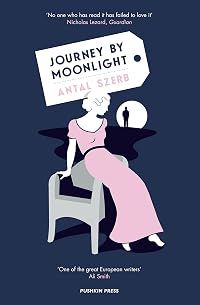
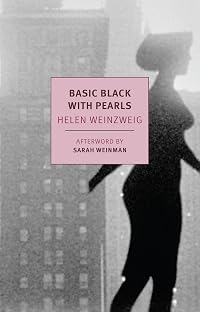
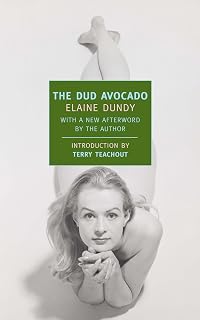
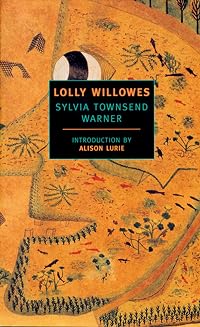
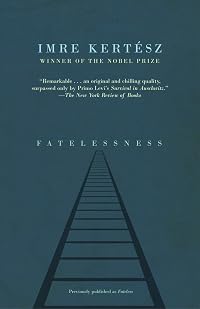
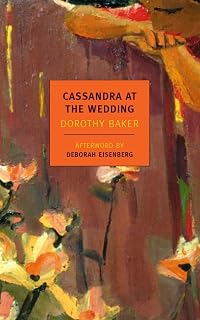
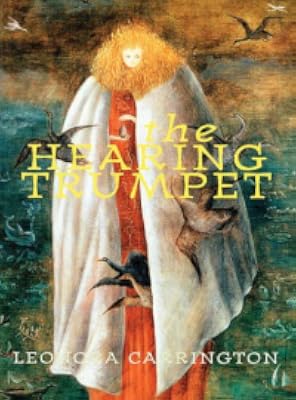
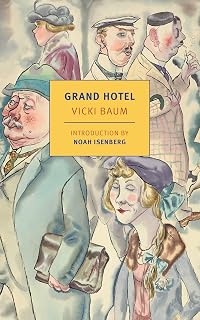
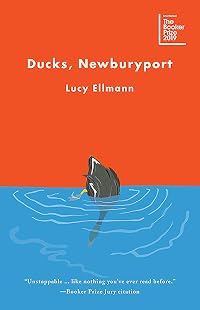
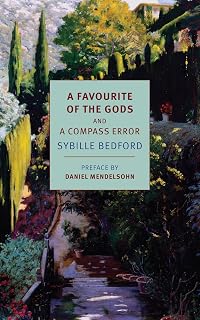
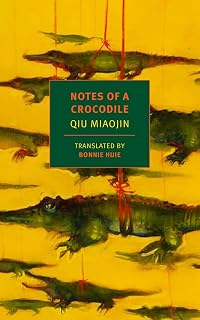
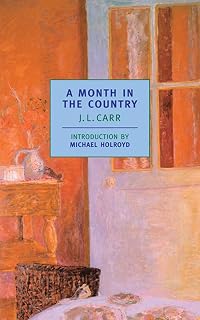
Dilara86 One is speculative fiction, the other isn't, but they both take place in a girls-only school at a time of war/unrest and describe female microcosms, friendships between teenage girls, ambiguous authority figures, and young girls who take risks.
Member Reviews
Gina is the spoiled, 14-year-old only child of a wealthy widower—but since it's 1943 and her father is a general in the Hungarian army, she has to be sent away from home to be hidden in a strict Calvinist boarding school for her own safety.
Much of the tension of this coming-of-age story comes from what the reader knows that Gina hasn't figured out or can't yet foresee: how the war is going to end; what some of her teachers' statements and actions mean. The eastern Hungarian town in which the boarding school is located is far from the front, but daily life there is shaped both by the war and the presence of the Horthy regime. Magda Szabó is skilful at showing the reader more than Gina herself sees without making her main character show more seem implausible.
In fact, Gina is a very believable teenager, part sympathetic and part wildly annoying, growing up in fits and spurts. Where Szabó sometimes wobbles is in how she draws her other characters. Sometimes she sketches out a whole facet of someone's personality in a perceptive and humane line or two; yet sometimes her characters fail to convince as people. (Gina's classmates were the most glaring example of this for me. Sometimes their naivete/insularity/cliqueishness rang true for a group of sheltered mid-century teenagers at a remote boarding school; sometimes the swings of mood and action just seemed like cheap melodrama.)
Those reservations aside, this is an absorbing read. show less
Much of the tension of this coming-of-age story comes from what the reader knows that Gina hasn't figured out or can't yet foresee: how the war is going to end; what some of her teachers' statements and actions mean. The eastern Hungarian town in which the boarding school is located is far from the front, but daily life there is shaped both by the war and the presence of the Horthy regime. Magda Szabó is skilful at showing the reader more than Gina herself sees without making her main character show more seem implausible.
In fact, Gina is a very believable teenager, part sympathetic and part wildly annoying, growing up in fits and spurts. Where Szabó sometimes wobbles is in how she draws her other characters. Sometimes she sketches out a whole facet of someone's personality in a perceptive and humane line or two; yet sometimes her characters fail to convince as people. (Gina's classmates were the most glaring example of this for me. Sometimes their naivete/insularity/cliqueishness rang true for a group of sheltered mid-century teenagers at a remote boarding school; sometimes the swings of mood and action just seemed like cheap melodrama.)
Those reservations aside, this is an absorbing read. show less
I was very impressed by Szabo’s The Door so perhaps it was inevitable that this book failed to match my feelings for that one. (According to Goodreads, Abigail is Szabo’s “most beloved” book in her native Hungary.) Part of the distinction is that Abigail is a very different kind of book. That said, I thought that Abigail—which seemed lightweight for the first third or so of the story—was very well done; the more I read, the more I realized that there was more to it than had first appeared. It begins as a deceptively straightforward story about a girl sent away to a boarding school during World War II by her widowed father, a general in the Hungarian army. The only reason given for his decision to seclude her is that he has show more an important mission that may take a great deal of time. The choice of school, its location, her inability to leave, and his infrequent visits, all have the effect of cutting her off from everything and everyone she has known. Most of the first part of the book revolves around life at the school and, while excellently done (and expertly translated by Len Rix, Szabo’s regular translator into English), it seems to be lacking much depth. There is something Austen-esque, it should be said, about the obstinate girl, her love for her father, and her education, in the largest sense of the word. One of Szabo’s great strengths is her ability to draw complete, psychologically interesting and fully realized characters. But as mysteries begin to accumulate, the last portion of the book turns into a bit of a thriller. The book teaches us about the deceptiveness of appearances, about trusting, and about intentions. Though it may not have impressed me as much as The Door, Abigail makes clear that Szabo is a writer of great power, thoughtfulness, and nuance. show less
Apologies for any incoherence. It’s hard to write about books I love, especially when I would love to say more than I want to say in a review.
School story fan friends, you need to read this, as long as you don’t mind a darker than usual school story.
I read this as a buddy read with Hilary. She had read it before but it was my first time reading it. I would have enjoyed this book anyway but reading it with someone made it much more fun to read. This is a book that calls for conversation so it is perfect for book clubs or buddy read discussions.
The translator’s introduction at the beginning of the book included mild spoilers but it probably helped me enjoy the book from the start and I don’t regret reading it first.
This isn’t show more a mystery book but there were two main mysteries in it and I found myself guessing as I read along. It’s primarily a coming of age story. It’s a school story, a historical fiction book, and for me was a page-turner and hard to put down. It got extremely suspenseful. Even though the reader knows Gina survives and also learns her father and some others she knew did not I felt tense on Gina’s behalf at many points in the story, all the way through.
I actually guessed the two “good” people but I had their roles reversed. I’m still proud of myself even though I assume many readers figure out what is going on.
I love how the people here are complicated. I love the heroes, especially the two main ones and the very unexpected one who steps up at the end. They are not larger than life heroes; they’re simply brave (and frightened) people trying to do what’s right, and doing an incredible job of it.
I appreciate that there was a fair amount of humorous content. It was needed. Without it this story would be dreary indeed and only suspenseful and sad, heartbreakingly sad at times. There were amusing things all the way through and many were subtly funny and they all made sense. Nothing about them or anything else felt forced.
This is a superb coming of age story and a top notch school story. It’s a must read book for anyone who enjoys school stories even though this is an atypical one. There is little frivolity and virtually no lightweight froth or bubbly fun to be had here. Many times it was painful to read. Reading about the bullying/ostracism was particularly difficult. It was intense. Ditto the draconian school rules and how they impacted the girls.
Despite or because of the frequent references to the future and “Gina looking back” on the current events this is a well written and well told story.
The book’s title is perfect.
Ultimately, this is a heartwarming story!
4-1/2 stars I vacillated between 4 and 5 stars but decided to round up because: this might be the best school story I’ve read and because the characters are so complex and they changed and when they changed it was in ways that made perfect sense. I cared deeply about many of the characters. I will be thinking of several of them for a long time. Also, it was one of the hardest books ever to take breaks and stop reading. If I hadn’t been reading it with a friend I think I would have read through it much more quickly and neglected doing other things until I finished it.
I’ve had this author’s Katalin Street on my to read list for a long time and now I am extra eager to read it.
Major spoilers. Do not read if you haven’t read the book and might someday read the book: Some notes I wrote from the last discussion only: I'm so glad that I was able to borrow the e-copy. The paperback is horrible. Almost unreadable. I also listened to part of the audiobook as I read and that was great for knowing the pronunciation of names.
I really loved the book. Thank you SO MUCH for suggesting it and reading it with me. Yes, I can understand why you would want to own it. Me too. Not the paperback copy I borrowed from the library though!
I was right about Konig and Mitzi being the "good guys" but I thought Konig was the person her father picked but it was Mitzi. I thought Mitzi was Abigail but she was the person Gina's father picked. AND Konig was behind the resistance signs. Not surprising. I knew he was sharp, and good and on the right side. I liked that he was also often kind.
I loved how there were other helpers along the way including for Gina on her way to Mitzi's house.
I got a kick out of how the girls were obsessed with the love lives of the adults/their teachers. I remember that very thing from when I was that age or maybe just a bit younger than they were.
Thank goodness Feri didn't see Gina in the hall or the office when he came to demand that he take her from the school. Thank goodness she got away. Mitzi was brilliant at the party. Her father provided for her though her school years there and with the instructions that will keep her safe(ish) - thank goodness the school abided by the promise they made to her father and provided some time for Gina to escape. What horrible choices he felt he had to make. He seemed to know it likely he would be captured and likely killed but he did what he did in spite of having a daughter who needed him and loved him and he loved her and tried to keep her safe. I hate war!
I love a female hero - especially a 48 year old - especially one who'd been a pupil at that school. Mitzi is a hoot!
It was wonderful that Susanna(!) of all people lied about Konig and about Gina to protect each of them. Yay! she had that in her.
Interesting how when her life (and her father's) were under true threat Gina could see the school as a peaceful refuge. It was still horrible but less horrible and insane that Nazi occupied Hungary.
Hilary said she wished there was a sequel and I would have read one. We know a lot about what eventually happens with Gina but know nothing really between when she escaped/went into hiding and when she was married with children. It would be interesting to know how on earth she managed. Maybe with helpers of which there seemed to be many, thank goodness. show less
School story fan friends, you need to read this, as long as you don’t mind a darker than usual school story.
I read this as a buddy read with Hilary. She had read it before but it was my first time reading it. I would have enjoyed this book anyway but reading it with someone made it much more fun to read. This is a book that calls for conversation so it is perfect for book clubs or buddy read discussions.
The translator’s introduction at the beginning of the book included mild spoilers but it probably helped me enjoy the book from the start and I don’t regret reading it first.
This isn’t show more a mystery book but there were two main mysteries in it and I found myself guessing as I read along. It’s primarily a coming of age story. It’s a school story, a historical fiction book, and for me was a page-turner and hard to put down. It got extremely suspenseful. Even though the reader knows Gina survives
I actually guessed the two “good” people but I had their roles reversed. I’m still proud of myself even though I assume many readers figure out what is going on.
I love how the people here are complicated. I love the heroes, especially the two main ones and the very unexpected one who steps up at the end. They are not larger than life heroes; they’re simply brave (and frightened) people trying to do what’s right, and doing an incredible job of it.
I appreciate that there was a fair amount of humorous content. It was needed. Without it this story would be dreary indeed and only suspenseful and sad, heartbreakingly sad at times. There were amusing things all the way through and many were subtly funny and they all made sense. Nothing about them or anything else felt forced.
This is a superb coming of age story and a top notch school story. It’s a must read book for anyone who enjoys school stories even though this is an atypical one. There is little frivolity and virtually no lightweight froth or bubbly fun to be had here. Many times it was painful to read. Reading about the bullying/ostracism was particularly difficult. It was intense. Ditto the draconian school rules and how they impacted the girls.
Despite or because of the frequent references to the future and “Gina looking back” on the current events this is a well written and well told story.
The book’s title is perfect.
Ultimately, this is a heartwarming story!
4-1/2 stars I vacillated between 4 and 5 stars but decided to round up because: this might be the best school story I’ve read and because the characters are so complex and they changed and when they changed it was in ways that made perfect sense. I cared deeply about many of the characters. I will be thinking of several of them for a long time. Also, it was one of the hardest books ever to take breaks and stop reading. If I hadn’t been reading it with a friend I think I would have read through it much more quickly and neglected doing other things until I finished it.
I’ve had this author’s Katalin Street on my to read list for a long time and now I am extra eager to read it.
Major spoilers. Do not read if you haven’t read the book and might someday read the book:
I really loved the book. Thank you SO MUCH for suggesting it and reading it with me. Yes, I can understand why you would want to own it. Me too. Not the paperback copy I borrowed from the library though!
I was right about Konig and Mitzi being the "good guys" but I thought Konig was the person her father picked but it was Mitzi. I thought Mitzi was Abigail but she was the person Gina's father picked. AND Konig was behind the resistance signs. Not surprising. I knew he was sharp, and good and on the right side. I liked that he was also often kind.
I loved how there were other helpers along the way including for Gina on her way to Mitzi's house.
I got a kick out of how the girls were obsessed with the love lives of the adults/their teachers. I remember that very thing from when I was that age or maybe just a bit younger than they were.
Thank goodness Feri didn't see Gina in the hall or the office when he came to demand that he take her from the school. Thank goodness she got away. Mitzi was brilliant at the party. Her father provided for her though her school years there and with the instructions that will keep her safe(ish) - thank goodness the school abided by the promise they made to her father and provided some time for Gina to escape. What horrible choices he felt he had to make. He seemed to know it likely he would be captured and likely killed but he did what he did in spite of having a daughter who needed him and loved him and he loved her and tried to keep her safe. I hate war!
I love a female hero - especially a 48 year old - especially one who'd been a pupil at that school. Mitzi is a hoot!
It was wonderful that Susanna(!) of all people lied about Konig and about Gina to protect each of them. Yay! she had that in her.
Interesting how when her life (and her father's) were under true threat Gina could see the school as a peaceful refuge. It was still horrible but less horrible and insane that Nazi occupied Hungary.
Hilary said she wished there was a sequel and I would have read one. We know a lot about what eventually happens with Gina but know nothing really between when she escaped/went into hiding and when she was married with children. It would be interesting to know how on earth she managed. Maybe with helpers of which there seemed to be many, thank goodness.
Ten years ago Oliver was a student at the Dellecher Classical Conservatory, a Shakespearean institute where its thespians completely embody their characters and spew off soliloquies and sonnets like casual slang. He was close with a group of six other actors who all live in a building called "the Castle" which is exactly what you would expect: an old, Gothic dwelling full of rich wood, a beautiful library, and a completely stereotypical fireplace (I'm not saying that in a negative way, I LIVE for this atmosphere). When tensions rise between the group and a mysterious death takes place, the students create a story of their own in order to prove their innocence.
If you know me personally, it's common knowledge that I adore anything dark, show more creepy, and extremely atmospheric. That being said, I absolutely devoured this book. As flawed as each one of the characters were, I loved learning about the way they coped with pressure, grief, and guilt and what exactly transpired following that suspicious death. A perfect read for a cold, dreary night. show less
If you know me personally, it's common knowledge that I adore anything dark, show more creepy, and extremely atmospheric. That being said, I absolutely devoured this book. As flawed as each one of the characters were, I loved learning about the way they coped with pressure, grief, and guilt and what exactly transpired following that suspicious death. A perfect read for a cold, dreary night. show less
This is no St. Trinian's
Translated from Hungarian by Len Richard
Read by Samantha Desz
I actually attended an all-girls’ school. We were an academic and diverse bunch, with many of the girls being first-generation immigrants (we used the awful term “New Australians” back then). Most of the girls were Jewish or Chinese, the Jewish girls coming from Central Europe. Looking back I wonder was our kindness to each other due to the fact that our school friends’ families had all fled persecution. Many of the families were Holocaust survivors.
It was a strict secular school with many of the girls going on to political office, and careers in medicine, and the law.
There was no bullying. We were all too busy learning. Our school anthem was in show more Latin, “Potens Sui”, a motto diligently followed by most. The worst thing a girl ever did was to sneak a crappy romance novel into school assembly. I can remember the now well-respected Renata Singer defiantly walking up to the platform where the teacher, thinking to shame her, only succeeded in making her into our hero. A true rebel.
I digress, but my telling of this is important, as my experience of an all-girls school probably led to my inability to identify with any of the characters in Abigail.
The book is set in a Catholic school in provincial Hungary during the Second World War. Most of the story resolves around Gina, who has come to the school as a fifth grader. Her family is bourgeois, comfortable, and Gina is used to trips to museums, galleries, and attending baller and classical music productions. She’s no snob, but considers the other girls’ adolescent games infantile, and is loathe to join in. Unfortunately for Gina, she gives away the nature of one of the games to a teacher. Unknowingly she has committed the ultimate sin of betrayal.
Gina becomes an outcast and is bullied daily. Her life is pure misery. She pleads with her father to take her home to civilization in Budapest. But he can’t. He’s a top general and cannot betray his conscience or politics. He needs to keep her safe from possible enemies.
Gina understands and copes with daily humiliations. The other girls are plain nasty. It all seemed (to me) unbelievable that girls in a supervised setting, could be so relentlessly cruel. Not one offers her any kindness.
There is help available - here the story gets a Harry Potter vibe, in a stone statue in the school grounds. It’s a statue of a saintly-looking woman who the girls have for generations, called Abigail. It is believed that she will grant secret wishes if a girl can get them to her in writing.
The interest that keeps the reader reading, is in trying to work out how Gina manages to survive. Surely someone is secretly helping her. Is it the handsome Teuton, the bumbling physics teacher, the school porte? None of the candidates make sense, but someone in power manages to cover up her jams and divert attention from her to mitigate the bullying.
I didn’t enjoy the book. I had chosen it as I really liked Magda Szabó’s The Door. I couldn’t stand the bullying - it made me physically ill and took up much of the book. None of the characters were believable. I also had a problem in understanding the different administrative roles that had names such as “prefect” that meant something entirely different in the Australian school system.
I know bullying goes on. But I just didn’t get it in the book’s context, in a school which was in fact chosen by Gina’s father because of its strict adult supervision.
For those who enjoy school girl stories with a bit of a mystery, it’s probably an enjoyable read. But it wasn’t for me and I intend to try to forget it. No potens sui needed, show less
Translated from Hungarian by Len Richard
Read by Samantha Desz
I actually attended an all-girls’ school. We were an academic and diverse bunch, with many of the girls being first-generation immigrants (we used the awful term “New Australians” back then). Most of the girls were Jewish or Chinese, the Jewish girls coming from Central Europe. Looking back I wonder was our kindness to each other due to the fact that our school friends’ families had all fled persecution. Many of the families were Holocaust survivors.
It was a strict secular school with many of the girls going on to political office, and careers in medicine, and the law.
There was no bullying. We were all too busy learning. Our school anthem was in show more Latin, “Potens Sui”, a motto diligently followed by most. The worst thing a girl ever did was to sneak a crappy romance novel into school assembly. I can remember the now well-respected Renata Singer defiantly walking up to the platform where the teacher, thinking to shame her, only succeeded in making her into our hero. A true rebel.
I digress, but my telling of this is important, as my experience of an all-girls school probably led to my inability to identify with any of the characters in Abigail.
The book is set in a Catholic school in provincial Hungary during the Second World War. Most of the story resolves around Gina, who has come to the school as a fifth grader. Her family is bourgeois, comfortable, and Gina is used to trips to museums, galleries, and attending baller and classical music productions. She’s no snob, but considers the other girls’ adolescent games infantile, and is loathe to join in. Unfortunately for Gina, she gives away the nature of one of the games to a teacher. Unknowingly she has committed the ultimate sin of betrayal.
Gina becomes an outcast and is bullied daily. Her life is pure misery. She pleads with her father to take her home to civilization in Budapest. But he can’t. He’s a top general and cannot betray his conscience or politics. He needs to keep her safe from possible enemies.
Gina understands and copes with daily humiliations. The other girls are plain nasty. It all seemed (to me) unbelievable that girls in a supervised setting, could be so relentlessly cruel. Not one offers her any kindness.
There is help available - here the story gets a Harry Potter vibe, in a stone statue in the school grounds. It’s a statue of a saintly-looking woman who the girls have for generations, called Abigail. It is believed that she will grant secret wishes if a girl can get them to her in writing.
The interest that keeps the reader reading, is in trying to work out how Gina manages to survive. Surely someone is secretly helping her. Is it the handsome Teuton, the bumbling physics teacher, the school porte? None of the candidates make sense, but someone in power manages to cover up her jams and divert attention from her to mitigate the bullying.
I didn’t enjoy the book. I had chosen it as I really liked Magda Szabó’s The Door. I couldn’t stand the bullying - it made me physically ill and took up much of the book. None of the characters were believable. I also had a problem in understanding the different administrative roles that had names such as “prefect” that meant something entirely different in the Australian school system.
I know bullying goes on. But I just didn’t get it in the book’s context, in a school which was in fact chosen by Gina’s father because of its strict adult supervision.
For those who enjoy school girl stories with a bit of a mystery, it’s probably an enjoyable read. But it wasn’t for me and I intend to try to forget it. No potens sui needed, show less
Gina Vitay is the 14 yr old daughter of a Hungarian General during WWII. The General hides her in a religious boarding school as far as possible from where he is planning a Hungarian resistance. The story though is about Gina's coming of age far too soon because of her father's work. She struggles with the authoritarian school, social relationships and eventually being chased by her father's military foes. Through her struggles she receives advice and assistance from other resistance fighters through a message portal run through a garden statue called Abigail. Book is well written, though I wish there could have been an epilog ending that had a future Gina looking back at the school to tell us what happened to some of the important show more characters in the story. show less
This is a lovely coming of age novel set in World War II Hungary. Gina, the beloved and slightly spoiled daughter of a General is upset when her father abruptly sends her to an authoritarian and religious boarding school far across the country from Budapest. She finds it difficult to make friends and fit in after her sophisticated life in the city. All the while, the war rumbles on in the background, rarely intruding on the constricted lives of the girls, at least at first. And only over time do we come to understand the General's reasons for sending Gina so far from home.
I usually don't read YA, and although this book has sometimes been described as YA, I think it far transcends the genre. It is an engaging and moving story of a young show more woman coming to womanhood and maturity in very difficult times.
Recommended.
3 stars show less
I usually don't read YA, and although this book has sometimes been described as YA, I think it far transcends the genre. It is an engaging and moving story of a young show more woman coming to womanhood and maturity in very difficult times.
Recommended.
3 stars show less
Members
- Recently Added By
Lists

Top Five Books of 2019
387 works; 111 members

Best Books Set in Boarding Schools
160 works; 57 members

Dark Academia Novels
59 works; 11 members

Books about World War II
241 works; 22 members

Books Read in 2020
4,379 works; 124 members

Books Read in 2019
4,052 works; 110 members

1970 Club
85 works; 2 members
Author Information

93+ Works 4,494 Members
Some Editions
Awards and Honors
Series
Belongs to Publisher Series
Common Knowledge
- Canonical title
- Abigail
- Original title
- Abigél
- Original publication date
- 1970
- People/Characters
- Georgina Vitay
- Important places
- Budapest, Hungary
- Important events
- World War II
- Related movies
- Abigél (1978 | IMDb)
- First words
- A változás, ami életében bekövetkezett, annyi mindentől megfosztotta, mintha bomba pusztított volna az otthonában.
- Last words
- (Click to show. Warning: May contain spoilers.)Apám, igazi apám, te ott a távolban, annyiszor sértettem meg, ahányszor csak alkalmam volt - mivel tudom valaha jóvátenni, hogy csak most ismertem fel Kőnig tanár úrban Abigélt?
- Original language
- Hungarian
Classifications
- Genres
- Fiction and Literature, General Fiction
- DDC/MDS
- 894.51133 — Literature & rhetoric Literatures of other languages Literatures of Altaic, Uralic, Hyperborean, Dravidian languages; literatures of miscellaneous languages of south Asia Finno-Ugric languages Ugric languages Hungarian Hungarian fiction 1900–2000
- LCC
- PZ7 .S98564 .A — Language and Literature Fiction and juvenile belles lettres Fiction and juvenile belles lettres Juvenile belles lettres
- BISAC
Statistics
- Members
- 547
- Popularity
- 54,319
- Reviews
- 33
- Rating
- (4.23)
- Languages
- 9 — Catalan, English, French, German, Hungarian, Italian, Spanish, Swedish, Turkish
- Media
- Paper, Audiobook, Ebook
- ISBNs
- 36
- ASINs
- 6