On This Page
Description
Two mice meet their new neighbor and discover that she is not as scary as they feared.Tags
Recommendations



Member Reviews
I'm disappointed to see the abrupt behavior (all too often appearing rude) common to graphic novels appear in the text of this book for early elementary. The story has great potential, and if you can ignore the unpleasant behaviors it would be great.
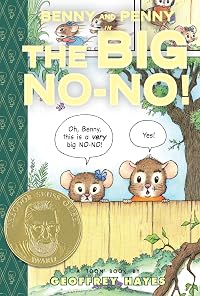
In Benny and Penny in The Big No-No, the children believe that the new neighbors have stolen Benny’s missing pail. After sneaking into their yard along with many other misunderstandings, the children learn about misunderstandings, the importance of apologies, and making new friends. With the book’s graphic novel format, basic vocabulary, and lots of repetition, it is a perfect picture book for emerging and beginning readers (preschool-2nd grade). It would be a great book for young children to read, or have read to them when discussing misunderstandings between people, and what you need to do in those situations. It is also a nice read aloud to discuss friendships and apologies.
We are now scooping up the Toon Books, as we come across them. They usually prick my son's interest and we've found some good ones. We've read quite a few of [a:Geoffrey Hayes'|10658|Geoffrey Hayes|http://d202m5krfqbpi5.cloudfront.net/authors/1351869420p2/10658.jpg] books, and now seem to have covered all of the Benny and Penny books. I have very mixed feelings about them: On one hand I tend to think they're rather cute and I think the comic book format is working well on the "easy reader" level, in any case my beginning reader enjoys them quite a bit and they're often his first pick. On the other hand, there's still something that irks me about them, and now that I've seen all of them I find that it's mostly their antagonistic nature show more and the gratuitous aggressiveness displayed by the main characters. This may be because this type of dynamics, and in particular the sibling rivalry is still just too foreign to us. But, at the same time the illustrations in the books seem to be tailored for younger kids (not that seven year olds might not be reading these, depending on reading level, but I would much less expect them to pick up Benny and Penny than I would the precocious readers). In [b:The Big No-No!|4831356|Benny and Penny in The Big No-No!|Geoffrey Hayes|http://d202m5krfqbpi5.cloudfront.net/books/1320532742s/4831356.jpg|4896536] it comes down to name calling, such as "cry-baby", "dumb girls", and other terms to depict how absurd it should be for a boy to play with a girl, with which I beg to differ, and even if the story eventually leads to a conflict resolution, I would much rather those ideas simply not be shoved into my little boys head before he even starts school! So, three stars for the format, and one more for readability, but two stars off for the negative attitudes and the stereotyping ... show less
Great illustrations and good easy vocab for beginning readers, but I don't understand why girls and boys are always portrayed the way they are in these books. The boy mouse is mean to his sister because she is a girl. The girl mouse is thoughtful and loves flowers. The boy wants to explore, the girl is afraid, etc. etc. It is really disappointing as an advocate of social change.
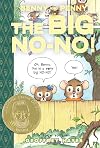
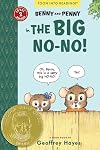
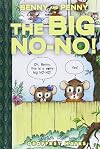
“We can’t go into yard, that’s a big no-no.” So conclude the little mice, Benny and Penny, when deciding whether or not to climb their fence to fetch Benny’s pail. In Benny and Penny in the Big No No by Geoffrey Hayes, the brother and sister are convinced the new neighbor stole Benny’s pail when they can’t find it in their backyard. After sighting the pail in the neighbor’s yard, they decide it’s worth the risk. Once they’re in the yard they see what the new neighbor kid has been working on…mud pies. But they’re soon interrupted by strange sounds, and conclude that it must be a monster, especially when they see its monstrous feet while they’re hiding in a bush! They soon learn that their new neighbor is not show more what they expected, and are pleased when they’re invited to stay and play, because—after all—when you’re invited, being in someone’s yard is not a big no-no.
Geoffrey Hayes does a wonderful job portraying childhood angst over what is considered right and wrong, and how circumstances can affect the answer in this graphic novel. The pictures are vibrant, with fully developed backgrounds and details that add to the charm of this book. The main characters are appealing to the eye, as well as to the heart. If read online, users should take advantage of the read-aloud function, as the lines of Benny and Penny are executed with great emotion. Best suited for grades 1- 4. show less
Geoffrey Hayes does a wonderful job portraying childhood angst over what is considered right and wrong, and how circumstances can affect the answer in this graphic novel. The pictures are vibrant, with fully developed backgrounds and details that add to the charm of this book. The main characters are appealing to the eye, as well as to the heart. If read online, users should take advantage of the read-aloud function, as the lines of Benny and Penny are executed with great emotion. Best suited for grades 1- 4. show less
Benny and Penny are in their backyard when they realize that Benny's bucket is missing. They think that their new neighbor has taken it, so they go over the fence to get it back, even though they know that's a no-no. Benny and Penny's adventure continues despite the siblings' fear of monsters, with misunderstandings and a new friendship. The story is told in graphic novel format, with sedately colored cartoon illustrations. Young readers will enjoy the repetition and simple, relatable story. Theodore Seuss Geissel Award Winner. Ages 3-6. Recommended purchase.
This book is in graphic novel format and is designed for beginning readers. It is part of a series featuring the brother and sister Benny and Penny. This book tells the story of when a new child moves next door and a misunderstanding about a bucket. The book, which won the Geisel Award in 2010, features high picture support and is an engaging story with characters relatable to young children.
In some ways, this book reminded me of the Berenstein Bear books I loved so much growing up. The characters are siblings and they get into a bit of a mess, although in this book the parents don’t appear. I liked that the book was easy to follow, despite being in graphic novel form (not a problem for all, but certainly for me). I also liked that show more several words were bolded or written in italics to set them apart. This was NOT done as some form of vocabulary ploy. It added to the meaning of the story, or rather helped guided students to important things happening. I appreciated that scaffold.
I think this would be a great addition to a first or second grade classroom library. I don’t think books in this format work well as read alouds, but lots of beginning readers would love it. The story and the format both are highly motivating.
With preservice teachers, I would introduce this into a discussion about what text features can help scaffold young readers (bolding words, high picture support, connection to the reader’s experiences, etc.). I also think this book would work well in a discussion about what may hinder meaning making for readers, such as unfamiliarity with the format and thus no schema for the structure and how it works. To some readers, this may look like a lot of text in no systematic order and be confusing. This then leads back to conservations about what we expect books to look like and how to guide children in terms of text structure and building that knowledge through experience with many different kinds of books. show less
In some ways, this book reminded me of the Berenstein Bear books I loved so much growing up. The characters are siblings and they get into a bit of a mess, although in this book the parents don’t appear. I liked that the book was easy to follow, despite being in graphic novel form (not a problem for all, but certainly for me). I also liked that show more several words were bolded or written in italics to set them apart. This was NOT done as some form of vocabulary ploy. It added to the meaning of the story, or rather helped guided students to important things happening. I appreciated that scaffold.
I think this would be a great addition to a first or second grade classroom library. I don’t think books in this format work well as read alouds, but lots of beginning readers would love it. The story and the format both are highly motivating.
With preservice teachers, I would introduce this into a discussion about what text features can help scaffold young readers (bolding words, high picture support, connection to the reader’s experiences, etc.). I also think this book would work well in a discussion about what may hinder meaning making for readers, such as unfamiliarity with the format and thus no schema for the structure and how it works. To some readers, this may look like a lot of text in no systematic order and be confusing. This then leads back to conservations about what we expect books to look like and how to guide children in terms of text structure and building that knowledge through experience with many different kinds of books. show less
Members
- Recently Added By
Published Reviews
ThingScore 75
The drawings are simply lovely, beautiful to get lost in, and softly colored. They have a good sense of both action, capturing just the right moment, and character.
added by lampbane
Author Information

41+ Works 2,819 Members
Geoffrey Hayes was born in Pasadena, California on December 3, 1947. He studied at Hunter College, the Art Students League, and the School of Visual Arts. Before becoming a children's author and illustrator, he worked in the art department at an advertising firm and in the interior design department at an architectural firm. In 1974, he brought a show more portfolio of his artwork to Harper and Row. His first picture book, Bear by Himself, was published in 1976. He created more than 50 books for children including the Otto and Uncle Tooth early reader series, Benny and Penny in Just Pretend, and Benny and Penny in the Big No-No!, which won the 2010 Theodor Seuss Geisel Award. He also illustrated several works by other authors including When the Wind Blew by Margaret Wise Brown, which was selected as a New York Times Best Illustrated Book of the Year. He died on June 2, 2017 at the age of 69. (Bowker Author Biography) show less
Awards and Honors
Awards
Distinctions
Series

Belongs to Publisher Series
Toon Books (Level 2)
Common Knowledge
- Canonical title
- Benny and Penny in the Big No-No!
Classifications
- Genre
- Graphic Novels & Comics
- DDC/MDS
- 741.5 — Arts & recreation Drawing & decorative arts Drawing Comic books, graphic novels, fotonovelas, cartoons, caricatures, comic strips
- LCC
- PZ7.7 .H39 .B — Language and Literature Fiction and juvenile belles lettres Fiction and juvenile belles lettres Juvenile belles lettres
- BISAC
Statistics
- Members
- 344
- Popularity
- 92,126
- Reviews
- 52
- Rating
- (3.53)
- Languages
- English, French, Portuguese, Spanish
- Media
- Paper, Ebook
- ISBNs
- 15
- ASINs
- 2