On This Page
Description
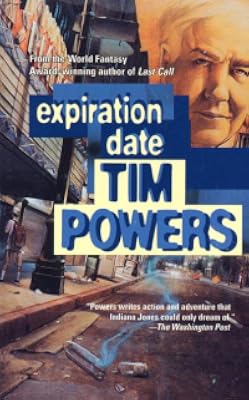
Ghosts can be caught, and bottled, and sold by covert dealers to addicts who inhale the things--and when a young boy named Kootie accidentally inhales the ghost of Thomas Edison, he finds that all the factions of Los Angeles' occult underground are after him, determined to kill him and get Edison's powerful ghost for themselves. Aided by Edison's confused and irascible ghost, Kootie flees--and finds himself dodging perils natural and supernatural in the gritty alleys and train yards of a Los show more Angeles that tourists never see. From the slums around the L.A. River, to the abandoned Houdini mansion in the Hollywood Hills, to a final dramatic confrontation on the haunted ocean liner Queen Mary docked in Long Beach, show lessTags
Recommendations
















Member Recommendations

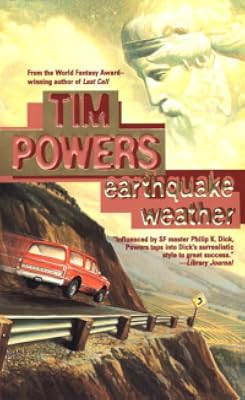
viking2917 The definitive treatment of ghosts in a contemporary fantasy novel. Alive in Necropolis is very good but Expiration Date sets the standard.
Member Reviews
I remember being quite disappointed in this when it first came out because it was supposed to be some sort of sequel to Last Call, but seemed to have absolutely nothing to do with it. On rereading (relistening, actually) I find it is top-notch Powers. Haunted LA, full of ghosts and ghost-eaters, a young boy on the run with the ghost of Thomas Edison, a tramp electrician whose sister just killed herself drawn back to the place where they grew up and later worked together for a very strange woman, a psychiatrist whose group therapy 'seance' ended in fire and death two years before looking for expiation, and a giant fish washes up on a beach with a secret passenger on board. The plot unfolds, twists and turns, the strange milieu and show more quasi-science of the ghosts drives the story and the characters and it all ends up in a specatcular climax aboard the Queen Mary. Delighted younger me was proved wrong. show less
Ride Metro: I have to say this is the first Tim Powers book I have ever read. I bought it because the plot outline made so little sense that I figured the author must have done a hell of a job to get his story straight. He did. I especially enjoyed the mixture of the fantastic and surreal ghost-ridden society smoothly blended with present day Los Angeles. I have to say, I rode the LA public buses for a year, so that may explain part of my fascination for the novel. Using an accurate description of LA as a sober backdrop of this fantasy story works wonders in my opinion. It made me believe and go along with all of the novel's twists and turns. Young boy swallows the ghost of Edison which used to be kept on the mantlepiece? Sure!
Expiration Date is a "companion novel" to Last Call. It isn't a sequel, but it shares the same world. A few characters with minor roles in Last Call end up being central in Expiration Date. Expiration Date also has a theme in much the same way Last Call did. While Last Call is about the Fisher King, the book also explores the world of professional poker players, and the weirdness that is Las Vegas. In a similar way, Expiration Date is about ghosts, but it also indulges a nostalgia for the Hollywood of silent films and the glamorous world of show business. This gives each book a distinct character, despite a common fictional universe. Eventually, it all gets wrapped up in the third book, Earthquake Weather. But that is a review for show more another day.
I always really enjoyed the premise of this book. That premise is that ghosts are real, and ghosts flit about mindlessly repeating the things they did when they were alive. Sometimes, the result is comic, as when old ghosts accrete enough substance to panhandle for spare change to buy liquor. Other times, it is tragic, when a lonely and bewildered ghost tries to make a human connection, and accidentally causes its new friend to drop dead.
And, if you are sorcerously hip, then you know that ghosts are the greatest high ever known when inhaled, with the side effect of providing the user with unnaturally long life. A whole underground is devoted to hunting, preserving, and then ingesting hapless ghosts. Which turns out to be pretty easy, since they are also witless. In a Thomistic turn, the electromagnetic remnants that are ghosts don't possess the capacity to be rational because they have no souls, but they do have memories and desires, which are enough to cause them to try to imitate their former lives.
Ghosts are also attracted to certain people. Specific ghosts can become linked to you through strong emotions, particularly guilt. But some people, like Edison, attract ghosts like moths to a flame. The key tool for protecting yourself from ghosts is a mask. Ghosts kill you by overlapping your timeline [in a relativistic space-time sense, an idea that Powers has used in a number of novels and short stories] and abruptly ending it by mixing their lack of life with your vitality. To avoid that, you need to make sure the ghost can't find your timeline, your identity. The methods are varied, but the ability to obfuscate your birthdate, your marriage, and your children is key.
By taking this idea and running with it, Powers is able to invent a secret history that explains a number of unusual incidents in the life of Thomas Edison. Lots of weird things happen all the time, and sober histories usually don't make much of them, although comprehensive ones do document them. But, Edison had a greater share than most. For starters, Henry Ford really did convince Thomas' son Charles to catch his father's dying breath in a vial. But the rest of it happened too. In 1878 Edison traveled to the American West, stopping to view a solar eclipse, and then completing the rest of his journey by riding the cow-catcher of the locomotive. Edison also forced his children to jump in the air while he threw firecrackers at their feet. Those are pretty strange things to do, but if you were attempting to shake the unwanted psychic attention of ghosts and other ne-er-do-wells, it might be just the thing.
Crafting this secret history involving Edison [and Harry Houdini] is classic Powers. However, I've found that what I really enjoy about this book, and much of Powers' writing, is the compelling way in which he writes about human brokenness. The ensemble of characters that fall into orbit around Edison's ghost are all haunted [literally] by their past mistakes. Their journey to deliver Edison's ghost from LA's occult underground is also a pilgrimage of repentance and healing.
Ghosts themselves are not capable of forgiveness or redemption, but in the right circumstances they can help provide those things to the living. Thomas Edison's ghost's ability to light up every dormant wisp provides an opportunity to face the past squarely, and stop running away from it.
For a long time, I greatly preferred Last Call to the other books in this loose trilogy. I still like Last Call best, but I no longer find it to be head-and-shoulders above the others. The characters in Expiration Date make mistakes, suffer from poor judgment, and experience temptation. Ultimately, some of them do find redemption. Others come to judgment for their sins. This moral realism grounded in Powers' Catholic faith takes a fun premise with a sprawling cast of characters and turns it from a book I used to consider second-rate into something quite remarkable. show less
I always really enjoyed the premise of this book. That premise is that ghosts are real, and ghosts flit about mindlessly repeating the things they did when they were alive. Sometimes, the result is comic, as when old ghosts accrete enough substance to panhandle for spare change to buy liquor. Other times, it is tragic, when a lonely and bewildered ghost tries to make a human connection, and accidentally causes its new friend to drop dead.
And, if you are sorcerously hip, then you know that ghosts are the greatest high ever known when inhaled, with the side effect of providing the user with unnaturally long life. A whole underground is devoted to hunting, preserving, and then ingesting hapless ghosts. Which turns out to be pretty easy, since they are also witless. In a Thomistic turn, the electromagnetic remnants that are ghosts don't possess the capacity to be rational because they have no souls, but they do have memories and desires, which are enough to cause them to try to imitate their former lives.
Ghosts are also attracted to certain people. Specific ghosts can become linked to you through strong emotions, particularly guilt. But some people, like Edison, attract ghosts like moths to a flame. The key tool for protecting yourself from ghosts is a mask. Ghosts kill you by overlapping your timeline [in a relativistic space-time sense, an idea that Powers has used in a number of novels and short stories] and abruptly ending it by mixing their lack of life with your vitality. To avoid that, you need to make sure the ghost can't find your timeline, your identity. The methods are varied, but the ability to obfuscate your birthdate, your marriage, and your children is key.
By taking this idea and running with it, Powers is able to invent a secret history that explains a number of unusual incidents in the life of Thomas Edison. Lots of weird things happen all the time, and sober histories usually don't make much of them, although comprehensive ones do document them. But, Edison had a greater share than most. For starters, Henry Ford really did convince Thomas' son Charles to catch his father's dying breath in a vial. But the rest of it happened too. In 1878 Edison traveled to the American West, stopping to view a solar eclipse, and then completing the rest of his journey by riding the cow-catcher of the locomotive. Edison also forced his children to jump in the air while he threw firecrackers at their feet. Those are pretty strange things to do, but if you were attempting to shake the unwanted psychic attention of ghosts and other ne-er-do-wells, it might be just the thing.
Crafting this secret history involving Edison [and Harry Houdini] is classic Powers. However, I've found that what I really enjoy about this book, and much of Powers' writing, is the compelling way in which he writes about human brokenness. The ensemble of characters that fall into orbit around Edison's ghost are all haunted [literally] by their past mistakes. Their journey to deliver Edison's ghost from LA's occult underground is also a pilgrimage of repentance and healing.
Ghosts themselves are not capable of forgiveness or redemption, but in the right circumstances they can help provide those things to the living. Thomas Edison's ghost's ability to light up every dormant wisp provides an opportunity to face the past squarely, and stop running away from it.
For a long time, I greatly preferred Last Call to the other books in this loose trilogy. I still like Last Call best, but I no longer find it to be head-and-shoulders above the others. The characters in Expiration Date make mistakes, suffer from poor judgment, and experience temptation. Ultimately, some of them do find redemption. Others come to judgment for their sins. This moral realism grounded in Powers' Catholic faith takes a fun premise with a sprawling cast of characters and turns it from a book I used to consider second-rate into something quite remarkable. show less
I'd read this before, but it got misshelved among some new acquisitions, so I picked it up again, and was 50 or so pages in before I remembered it. I decided to finish it again anyway, because at that point I was hooked.
This is a great urban fantasy, set mostly in a Los Angeles only slightly different from our own - that might be our own if only we noticed a few secret truths. Ghosts roam the streets, some powerful and aware, others mindless and just barely held together, while people hunt, capture, and use them. A young boy's path crosses with those of a murderous old soul, a man tormented by his past, and a grasping woman straining for immortality.
I don't know what I was thinking when I gave this 3 stars the last time. I think the show more first time it might have been only the second Powers I'd read, after [b:Declare|190554|Declare|Tim Powers|http://photo.goodreads.com/books/1298463396s/190554.jpg|937379], which I loved, and this is really nothing like that. But it's a great read! show less
This is a great urban fantasy, set mostly in a Los Angeles only slightly different from our own - that might be our own if only we noticed a few secret truths. Ghosts roam the streets, some powerful and aware, others mindless and just barely held together, while people hunt, capture, and use them. A young boy's path crosses with those of a murderous old soul, a man tormented by his past, and a grasping woman straining for immortality.
I don't know what I was thinking when I gave this 3 stars the last time. I think the show more first time it might have been only the second Powers I'd read, after [b:Declare|190554|Declare|Tim Powers|http://photo.goodreads.com/books/1298463396s/190554.jpg|937379], which I loved, and this is really nothing like that. But it's a great read! show less
My reaction to reading this novel in 2002. Spoilers follow.
Powers' specialty is creating a secret, fantastical, occult history from disparate elements, a process so cunningly done that, as one review blurb remarks, you conclude, at story's end, "Of course. Everything fits. I can see that now."
Here Powers plots his story in the interstices of (as near as I can tell without further research) historical facts about Harry Houdini and Thomas Alva Edison's lives, the permanently docked Queen Mary, early motion picture history, Lewis Carroll's Alice books (ghosts love to quote the books, at least the older ones, and the quotes from the books that head each chapter line up with the plot) and the electrical "medical" devices of Wilshire (of show more Wilshire Boulevard fame). Powers also puts in some convincing details about electrical work, particularly that associated with movies, and his gun stuff was brief but accurate. And, of course, Powers, being a native of Los Angeles, convincingly presents the city. We also have a bit of Theosophy and early spiritualism.
I liked the idea of sucking up, for reasons of immortality and connoisseurship, the ghosts of dead people and a whole network of ghost junkies inhabiting Los Angeles, a city where many of the street people are ghosts who have sucked up garbage to give them a corporeal, if obsessive and simple-minded existence. I also liked Nicholas Bradshaw, the dead man, who, unlike almost all ghosts, has retained his mental faculties and is still attached to his old body and lives a rather pathetic existence in which he is denied sleep and dreams.
I found Powers narrative strategy surprising. He doesn't wait to reveal most of the secrets of his characters' lives and their motives. The two longest secrets he keeps are the nature of Sherman Oaks "gagging" on a ghost and the exact reason for the falling out of Sukie and Pete Sullivan (Sukie tries to sexually seduce brother Pete.). He keeps the story rolling through description, atmosphere, and action though he does dole out some secrets, like Sherman Oaks' past, gradually. I found it interesting that the last part of the book, the part of the novel with the showdown on the Queen Mary where Neal Obstadt, Sherman Oaks, Bradshaw, Edison, Loretta deLarava meet their respective ends, is long and called "Epilogue". That subtitling gives a hint as to one of the centers of the novel: the gradual assembly of a family in Pete Sullivan, Elizalde, and Kootie Parganas.
Normally, I don't like the plot cliché of a man and a woman, strangers to each other, who become lovers after the plot throws them together. Here I can think of rational reasons to fault Powers use of that cliché: Elizalde is sexually uninterested in men or women yet implicitly consents to, with Sullivan, become Kootie's parent and Kootie seems to accept the idea of surrogate parents a little quickly after his own are murdered. However, all three members of this family are damaged in some way. Sullivan realizes that he needs to become attached to something permanent (as opposed to the ghosts which are often bound to certain people and places by ties of guilt and shame). On the other hand, his transient life is a little like the corporeal ghosts -- an information wave manifesting itself through different materials. He is sexually attracted to Elizalde. She feels the need to care for something, and Kootie, while resourceful and brave, misses having parents and, while he loved them, he found their Theosophical philosophies and teachings and rearing methods oppressive and limiting. Also all three are bound together by danger and fate of a sort. It is when Sullivan announces that he considers the three a family that the "Epilogue" starts.
I liked ghosts being bound to the living by shame and guilt, and I liked the various rationales and systems used for ghosts. Edison's ghost and Sullivan approach the issue by emphasizing ghosts relationship with electromagnetic forces. Elizalde emphasizes Catholic and traditional Hispanic mythological beliefs in regard to them. Powers' technique serves as a lesson for effective fantasy. He covers a lot of detail, shows cause and effect relationship, but he doesn't try to rationalize his ghosts using a scientific framework. He uses the language and metaphors and technology of electricity to talk about the ghosts but, for instance, he doesn't explain why they are can talk on a cobbled together "spirit telephone". Indeed, (though I may not have paid close enough attention) Powers doesn't explain a lot: the exact nature of "birth ghosts"; why do ghosts occasionally come to Kootie's home even before the vial of Edison's breath is taken out of the statue of Dante?; what, exactly, does Edison want -- death or existence in the sea?; why do ghosts blow up when they realize they're dead?; why does deLarava have six birth ghosts? But Powers skill at atmosphere, the details of his secret history, and characterization helped me forgive in lapses in why. show less
Powers' specialty is creating a secret, fantastical, occult history from disparate elements, a process so cunningly done that, as one review blurb remarks, you conclude, at story's end, "Of course. Everything fits. I can see that now."
Here Powers plots his story in the interstices of (as near as I can tell without further research) historical facts about Harry Houdini and Thomas Alva Edison's lives, the permanently docked Queen Mary, early motion picture history, Lewis Carroll's Alice books (ghosts love to quote the books, at least the older ones, and the quotes from the books that head each chapter line up with the plot) and the electrical "medical" devices of Wilshire (of show more Wilshire Boulevard fame). Powers also puts in some convincing details about electrical work, particularly that associated with movies, and his gun stuff was brief but accurate. And, of course, Powers, being a native of Los Angeles, convincingly presents the city. We also have a bit of Theosophy and early spiritualism.
I liked the idea of sucking up, for reasons of immortality and connoisseurship, the ghosts of dead people and a whole network of ghost junkies inhabiting Los Angeles, a city where many of the street people are ghosts who have sucked up garbage to give them a corporeal, if obsessive and simple-minded existence. I also liked Nicholas Bradshaw, the dead man, who, unlike almost all ghosts, has retained his mental faculties and is still attached to his old body and lives a rather pathetic existence in which he is denied sleep and dreams.
I found Powers narrative strategy surprising. He doesn't wait to reveal most of the secrets of his characters' lives and their motives. The two longest secrets he keeps are the nature of Sherman Oaks "gagging" on a ghost and the exact reason for the falling out of Sukie and Pete Sullivan (Sukie tries to sexually seduce brother Pete.). He keeps the story rolling through description, atmosphere, and action though he does dole out some secrets, like Sherman Oaks' past, gradually. I found it interesting that the last part of the book, the part of the novel with the showdown on the Queen Mary where Neal Obstadt, Sherman Oaks, Bradshaw, Edison, Loretta deLarava meet their respective ends, is long and called "Epilogue". That subtitling gives a hint as to one of the centers of the novel: the gradual assembly of a family in Pete Sullivan, Elizalde, and Kootie Parganas.
Normally, I don't like the plot cliché of a man and a woman, strangers to each other, who become lovers after the plot throws them together. Here I can think of rational reasons to fault Powers use of that cliché: Elizalde is sexually uninterested in men or women yet implicitly consents to, with Sullivan, become Kootie's parent and Kootie seems to accept the idea of surrogate parents a little quickly after his own are murdered. However, all three members of this family are damaged in some way. Sullivan realizes that he needs to become attached to something permanent (as opposed to the ghosts which are often bound to certain people and places by ties of guilt and shame). On the other hand, his transient life is a little like the corporeal ghosts -- an information wave manifesting itself through different materials. He is sexually attracted to Elizalde. She feels the need to care for something, and Kootie, while resourceful and brave, misses having parents and, while he loved them, he found their Theosophical philosophies and teachings and rearing methods oppressive and limiting. Also all three are bound together by danger and fate of a sort. It is when Sullivan announces that he considers the three a family that the "Epilogue" starts.
I liked ghosts being bound to the living by shame and guilt, and I liked the various rationales and systems used for ghosts. Edison's ghost and Sullivan approach the issue by emphasizing ghosts relationship with electromagnetic forces. Elizalde emphasizes Catholic and traditional Hispanic mythological beliefs in regard to them. Powers' technique serves as a lesson for effective fantasy. He covers a lot of detail, shows cause and effect relationship, but he doesn't try to rationalize his ghosts using a scientific framework. He uses the language and metaphors and technology of electricity to talk about the ghosts but, for instance, he doesn't explain why they are can talk on a cobbled together "spirit telephone". Indeed, (though I may not have paid close enough attention) Powers doesn't explain a lot: the exact nature of "birth ghosts"; why do ghosts occasionally come to Kootie's home even before the vial of Edison's breath is taken out of the statue of Dante?; what, exactly, does Edison want -- death or existence in the sea?; why do ghosts blow up when they realize they're dead?; why does deLarava have six birth ghosts? But Powers skill at atmosphere, the details of his secret history, and characterization helped me forgive in lapses in why. show less
Tim Powers is one of my favorite writers, but EXPIRATION DATE isn't among my favorite of his books.
I've started and stopped it several times in the past, but this time I have the next in the loose series, EARTHQUAKE WEATHER to read and I was determined to push through and get to the end. But to be honest, I found it a bit of a slog.
It's as well written as any of Powers' books, but I don't think the central idea of ghosts being able to be caught and sniffed as a kind of psychic cocaine is strong enough to hold this rather rambling plot together. That, and the fact that the main protagonist is an eleven year old kid who gets a ton of shit thrown at him in the story rather turned me against the whole thing from an early stage.
There are show more some of the great visual touches and dexterity with a sentence that we expect from Powers but too much of the story consists of people going somewhere to get something, then going somewhere else to get something else, then meeting someone who will tell them where to go to get the next thing. It's like a modern L.A. version of a rather dull Dungeons and Dragons adventure and as such I found myself flicking pages to get to the good bits.
I think the main problem is one of too many point of view characters. We could have lost the lawyer completely from the story and it wouldn't change it a bit, and likewise the female psychiatrist was often just hanging around to be someone for one of the protagonists to talk to.
Still, even second rate Powers is better than most other things, and there was enough to entertain me to make sure I made it to the end this time.
Onward to EARTHQUAKE WEATHER... show less
I've started and stopped it several times in the past, but this time I have the next in the loose series, EARTHQUAKE WEATHER to read and I was determined to push through and get to the end. But to be honest, I found it a bit of a slog.
It's as well written as any of Powers' books, but I don't think the central idea of ghosts being able to be caught and sniffed as a kind of psychic cocaine is strong enough to hold this rather rambling plot together. That, and the fact that the main protagonist is an eleven year old kid who gets a ton of shit thrown at him in the story rather turned me against the whole thing from an early stage.
There are show more some of the great visual touches and dexterity with a sentence that we expect from Powers but too much of the story consists of people going somewhere to get something, then going somewhere else to get something else, then meeting someone who will tell them where to go to get the next thing. It's like a modern L.A. version of a rather dull Dungeons and Dragons adventure and as such I found myself flicking pages to get to the good bits.
I think the main problem is one of too many point of view characters. We could have lost the lawyer completely from the story and it wouldn't change it a bit, and likewise the female psychiatrist was often just hanging around to be someone for one of the protagonists to talk to.
Still, even second rate Powers is better than most other things, and there was enough to entertain me to make sure I made it to the end this time.
Onward to EARTHQUAKE WEATHER... show less
Of the three books in the Fault Lines trilogy, I think this is the strongest. It's hard hitting and not for those with weak stomachs, but his primary viewpoint characters are sympathetic and believable.One of the things I've noticed about his works is the way they draw on real-world facts (generally about various famous people, but also scientific news items and other things we see as true) to strengthen the sense of reality about everything we read in his books. For example, much of what he says about Thomas Edison can be found in any biography, but in Powers' hands, these verifiable facts, such as Edison's work selling newspapers and candy on trains when he was twelve, lend credence to the fantastic things he says about Edison. show more Reading Powers' books, I often find myself contemplating looking some little tidbit of information up, but I'm unwilling to take the time away from the story and wind up trusting him, just because so much of what he's told me fits into what I believe to be true. show less
Members
- Recently Added By
Lists

Magic Realism
371 works; 52 members

Fantasy Masterworks
66 works; 5 members
Author Information

80+ Works 21,039 Members
Some Editions
Awards and Honors
Awards
Series

Belongs to Publisher Series
Fantasy Masterworks (New design)
Work Relationships
Is contained in
Common Knowledge
- Canonical title
- Expiration Date
- Original title
- Expiration Date
- Original publication date
- 1995; 2019-08-27 (audio) (audio)
- People/Characters
- Kootie Parganas
- Important places
- Los Angeles, California, USA; California, USA; Hollywood, Los Angeles, California, USA; Long Beach, California, USA
- First words
- When he was little, say four or five, the living room had been as dim as a church all the time, with curtains pulled across the broad windows, and everywhere there had been the kind of big dark wooden furniture that's got sty... (show all)lized leaves and grapes and claws carved into it.
- Quotations
- A man walking down the road saw another man in a field, holding a live pig upside-down over his head under the branches of an apple tree. 'What are you doing?' asked the first man. 'Feeding apples to my pig,' said the second ... (show all)man. 'Doesn't it take a long time, doing it that way?' asked the first man. And the man in the field said, 'What's time to a pig?'
- Original language
- English
Classifications
Statistics
- Members
- 1,141
- Popularity
- 22,215
- Reviews
- 22
- Rating
- (3.70)
- Languages
- Dutch, English, French, Polish
- Media
- Paper, Audiobook, Ebook
- ISBNs
- 19
- ASINs
- 12