
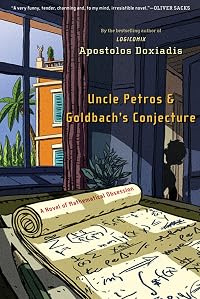
Uncle Petros and Goldbach's Conjecture
by Apostolos Doxiadis
On This Page
Description
In this critically acclaimed international bestseller, Petros Papachristos, a mathematical prodigy, has devoted much of his life trying to prove one of the greatest mathematical challenges of all time: Goldbach's Conjecture, the deceptively simple claim that every even number greater than two is the sum of two primes. His feverish and singular pursuit of this goal has come to define his life. Now an old man, he is looked on with suspicion and shame by his family-until his ambitious young show more nephew intervenes.Seeking to understand his uncle's mysterious mind, the narrator of this novel unravels his story, a dramatic tale set against a tableau of brilliant historical figures-among them G. H. Hardy, the self-taught Indian genius Srinivasa Ramanujan, and a young Kurt Gödel. Meanwhile, as Petros recounts his own life's work, a bond is formed between uncle and nephew, pulling each one deeper into mathematical obsession, and risking both of their sanity.
. show less
Tags
Recommendations


















Member Recommendations
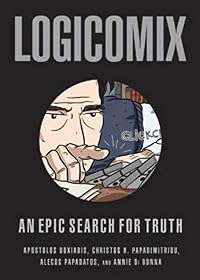
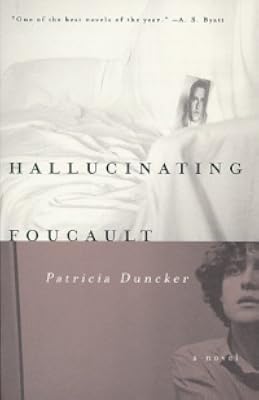
whitrichardson If you liked "Uncle Petros and Goldbach's Conjecture" by Apostolos Doxiadis, you will certainly enjoy "Logicomix", also by Doxiadis. "Logicomix" is a graphic novel that tells the story of British mathematician and logician Bertrand Russel and his search for a logical foundation of mathematics.
by anonymous user
Member Reviews
Incidentally, I read it while I was trying to built a non-fiction narrative in Urdu on limits of rationality and mysteries surrounding interplay of reason and intuition in the process of mathematical discovery. I absolutely loved how Doxiadis transformed this well-known thread of history of mathematics into an unputdownable novel. It is amazing how simple his characters look and yet how intricately complex their inner struggles are. The bits about Hardy, Littlewood, Godel and Turing are well blended and adds to the overall value of the reader's experience.
To call a novel about mathematics "formulaic" may be a kind of praise, but I mean that the story feels something like a setup to me. To say more would be a spoiler and though mathematics loves a spoiler, novel readers do not. For me, the two most interesting parts, the non-formulaic parts, were the use of beans to prove a number theory hypothesis (was this an original idea?) and the claim that Ramanujan thought Goldbach's conjecture was ultimately false and would fail for a large enough even number. I tried to confirm the latter with Google and failed but I like the idea and hope it's true.
I seem to recall that the continuum hypothesis was in fact proved undecidable; please correct me if I'm wrong. My own favorite unsolved famous show more problem is proving P unequal to NP and I actually try to do it occasionally. Attempting such problems teaches one a lot about the nature of mathematics and the psychology of how it feels to try and do what no one has ever done. In my opinion, this is more than I got from this novel which touches on those subjects. show less
I seem to recall that the continuum hypothesis was in fact proved undecidable; please correct me if I'm wrong. My own favorite unsolved famous show more problem is proving P unequal to NP and I actually try to do it occasionally. Attempting such problems teaches one a lot about the nature of mathematics and the psychology of how it feels to try and do what no one has ever done. In my opinion, this is more than I got from this novel which touches on those subjects. show less
I stopped enjoying anything to do with mathematics after my 10th grade geometry teacher responded to a request for extra help with a concept by more or less saying I was an idiot to do so "on one of the simplest things we covered all year." I never opened that geometry book again (and only passed by the skin of my teeth and the fact I had gotten good marks in earlier terms that balanced out the final ones.) So, when I figured out that Apostolos Doxiadis' "Uncle Petros and Goldbach's Conjecture" was about math, I viewed it with a little trepidation.
However, I found the story completely engrossing, even when the mathematics got in a bit over my head. The novel is the story of Petros Papachristos, a number theorist who failed to achieve show more his life's work of proving the impossibly hard Goldbach Conjecture, which says that every even number greater than 2 is the sum of two primes.
While the book does get into math, it's much more the story of a man who was obsessed with his life's work and what happened once that work was over. The story was pretty interesting, as were the characters so I'm glad I read this one. show less
However, I found the story completely engrossing, even when the mathematics got in a bit over my head. The novel is the story of Petros Papachristos, a number theorist who failed to achieve show more his life's work of proving the impossibly hard Goldbach Conjecture, which says that every even number greater than 2 is the sum of two primes.
While the book does get into math, it's much more the story of a man who was obsessed with his life's work and what happened once that work was over. The story was pretty interesting, as were the characters so I'm glad I read this one. show less
Has been "Owned but unread" on my bookshelf for a very long time. I picked it up when reshelving and polished it off in some short but fairly intense reading shifts between "other stuff". I found it simultaneously a both playful and serious read, and welcomed the focus on human frailties and eccentricities.
Remarkably readable tale hiding behind a daunting title that promises advanced mathematics. The narrative is entirely engaging as an enquiring narrator reveals the life and egocentricity of a brilliant self-defeating uncle.
Reason read: April TBR takedown. This was a quick read. It is the story of a young man and his uncle and their relationship around mathematics. His uncle is obsessed with Goldbach's Conjectures. (every even integer greater than two is the sum of two primes). This was my wine pairing book for April. It was a unsolvable problem just like the book. I was unable to find a Greek wine in my town nor could I find a Goldbach vineyard wine so I settled for a German Riesling. A dry German wine, high acidity, mineral precision, perfect for the German mathematical scenes in Munich and rigorous logic of number theory. I served this with roasted salmon with lemon and herbs. I did like the idea of serving it with a bean dish as a nod to Petros using show more beans as a visualization tool for numbers. Over all a satisfying read and wine. show less
Uncle Petros and Golbach’s Conjecture
Uncle Petros and Golbach’s Conjecture was originally a best selling Greek novel and has now been published over 20 languages so don’t get switched off by the title and subject matter. Forget about it being about maths and in fact think of Moby Dick to place this book. It’s about obsession and pride in chasing the impossible dream. You understand the thrill and terror of chasing impossible dreams.
Right now let’s get the maths out of the way. Golbach’s Conjecture first stated in the 18th century suggests that:
Every even integer greater than 2 can be written as the sum of two primes.
But mathematicians lack proof that in all circumstance it would hold. For example think about Physics where show more if dealing with the very big or the very small ordinary scientific understanding ceases to work. So could this be the case in Mathematics? Yes over my head as well! But the author is a childhood mathematical genius who submitted original research at 15 before even starting his degree and also an acclaimed film maker and writer. So he both understands the mathematical issues and can write so that we understand and care.
We first meet Uncle Petros in the 1970’s through the eyes of the beloved favourite nephew as a teenager. Petros is dismissed as the family failure that supports him through the family business while he does nothing but read books and plays chess. He leaves his home only once a month to do the books of a charity founded by his father. The beloved favourite nephew is met by a wall of adult silence when he tried to find out what the anger of the family is about. A chance phone call and a subsequent letter lead him to discover that far from a failure Uncle Petros had been a professor of mathematics in the 20’s and 30’s at a prestigious German University. This makes him as obsessive as his Uncle as he struggles to discover the Truth of the family scandal.
He tries to become a mathematician to help him challenge and understand what had obsessed his Uncle. This causes huge family problems- this is a Greek family remember where honouring your family and Father is a top rule in life. He finally manages to get the story of his Uncles obsessive hunt out in the open but at a high personal cost to his own ambitions. It is clear that Uncle Petros is a genius who will never be known as his hopes are dashed in the 30’s by the publication of Kurt Godel’s Theorem. Yes more maths but not much so don’t leave. This solves the problem of completeness by showing that any theory of numbers will contain unprovable propositions. Alan During (him of how do we know a computer has human intelligence- asked before computers were developed- now that’s what being clever is about) then demonstrates that theorists have no idea which proposition is merely hard to prove and which are impossible to prove.
Hence, Uncle Petros has no way of knowing if spending all his life in trying solve the Golbach’s Conjecture is a possible but hard task or impossible task. He gives up, his dreams and hopes ended. The beloved nephew is finding the truth is released from his obsession and so escapes the fate of his Uncle but then realises that a psychological lie has taken place which he needs to lance but this has tragic consequences.
Uncle Petros and Golbach’s Conjecture is highly recommended Greek tragedy in less then 200 pages about theoretical maths and why love and life is about how you answer the Bette Davis Theorem:
Oh, don't let's ask for the moon. We've already got the stars.
show less
Uncle Petros and Golbach’s Conjecture was originally a best selling Greek novel and has now been published over 20 languages so don’t get switched off by the title and subject matter. Forget about it being about maths and in fact think of Moby Dick to place this book. It’s about obsession and pride in chasing the impossible dream. You understand the thrill and terror of chasing impossible dreams.
Right now let’s get the maths out of the way. Golbach’s Conjecture first stated in the 18th century suggests that:
Every even integer greater than 2 can be written as the sum of two primes.
But mathematicians lack proof that in all circumstance it would hold. For example think about Physics where show more if dealing with the very big or the very small ordinary scientific understanding ceases to work. So could this be the case in Mathematics? Yes over my head as well! But the author is a childhood mathematical genius who submitted original research at 15 before even starting his degree and also an acclaimed film maker and writer. So he both understands the mathematical issues and can write so that we understand and care.
We first meet Uncle Petros in the 1970’s through the eyes of the beloved favourite nephew as a teenager. Petros is dismissed as the family failure that supports him through the family business while he does nothing but read books and plays chess. He leaves his home only once a month to do the books of a charity founded by his father. The beloved favourite nephew is met by a wall of adult silence when he tried to find out what the anger of the family is about. A chance phone call and a subsequent letter lead him to discover that far from a failure Uncle Petros had been a professor of mathematics in the 20’s and 30’s at a prestigious German University. This makes him as obsessive as his Uncle as he struggles to discover the Truth of the family scandal.
He tries to become a mathematician to help him challenge and understand what had obsessed his Uncle. This causes huge family problems- this is a Greek family remember where honouring your family and Father is a top rule in life. He finally manages to get the story of his Uncles obsessive hunt out in the open but at a high personal cost to his own ambitions. It is clear that Uncle Petros is a genius who will never be known as his hopes are dashed in the 30’s by the publication of Kurt Godel’s Theorem. Yes more maths but not much so don’t leave. This solves the problem of completeness by showing that any theory of numbers will contain unprovable propositions. Alan During (him of how do we know a computer has human intelligence- asked before computers were developed- now that’s what being clever is about) then demonstrates that theorists have no idea which proposition is merely hard to prove and which are impossible to prove.
Hence, Uncle Petros has no way of knowing if spending all his life in trying solve the Golbach’s Conjecture is a possible but hard task or impossible task. He gives up, his dreams and hopes ended. The beloved nephew is finding the truth is released from his obsession and so escapes the fate of his Uncle but then realises that a psychological lie has taken place which he needs to lance but this has tragic consequences.
Uncle Petros and Golbach’s Conjecture is highly recommended Greek tragedy in less then 200 pages about theoretical maths and why love and life is about how you answer the Bette Davis Theorem:
Oh, don't let's ask for the moon. We've already got the stars.
show less
Members
- Recently Added By
Lists

Books Read in 2004
200 works; 7 members

Fiction for Readers Who Love Science and Math
57 works; 15 members

My TBR
371 works; 3 members

Greece - a reading list
82 works; 4 members
Author Information

14+ Works 3,733 Members
Some Editions
Awards and Honors
Series
Belongs to Publisher Series
Common Knowledge
- Canonical title
- Uncle Petros and Goldbach's Conjecture
- Original title
- Ο θείος Πέτρος και η Εικασία του Γκόλντμπαχ
- Alternate titles*
- O thios Petros kai i ikasia tou Goldbach
- Original publication date
- 1992 (original Greek) (original Greek)
- People/Characters
- Petros Papachristos; Kurt Gödel; G. H. Hardy; J. E. Littlewood; Srinivasa Ramanujan
- Important places
- Athens, Greece
- Important events
- Christian Goldbach writes a letter to Leonard Euler, which includes a mathematical question that becomes known as Goldbach's Conjecture (1742 | 1931)
- Epigraph
- Archimedes will be remembered when Aeschylus is forgotten, because languages die and mathematical ideas do not. 'Immortality' may be a silly word, but probably a mathematican has the best chance of whatever it may mean.
G... (show all).H. HARDY, A Mathematician's Apology - First words
- Every family has its black sheep -- in ours it was Uncle Petros.
- Last words
- (Click to show. Warning: May contain spoilers.)They form one further addition to the collection of posthumous messages that make the First Cemetery of Athens one of the world's most poetic:
EVERY EVEN NUMBER GREATER THAN 2
IS THE SUM OF TWO PRIMES - Blurbers
- Sacks, Oliver; Nash, John; Atiyah, Michael; Ribet, Ken; Christodoulou, Demetrios
- Original language
- Greek
- Canonical LCC
- PA5615.O87 T4813 2000
*Some information comes from Common Knowledge in other languages. Click "Edit" for more information.
Classifications
- Genres
- General Fiction, Fiction and Literature
- DDC/MDS
- 813 — Literature & rhetoric American literature in English American fiction in English
- LCC
- PA5615 .O87 .T4813 — Language and Literature Greek language and literature. Latin language and literature Byzantine and modern Greek literature Individual authors
- BISAC
Statistics
- Members
- 1,083
- Popularity
- 23,535
- Reviews
- 40
- Rating
- (3.67)
- Languages
- 21 — Basque, Catalan, Danish, Dutch, English, Finnish, French, German, Greek, Hebrew, Hungarian, Italian, Japanese, Korean, Norwegian (Bokmål), Norwegian, Portuguese, Russian, Croatian, Spanish, Turkish
- Media
- Paper, Audiobook, Ebook
- ISBNs
- 39
- ASINs
- 4