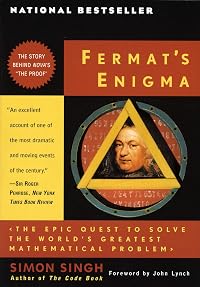
Fermat's Enigma: The Epic Quest to Solve the World's Greatest Mathematical Problem
by Simon Singh
On This Page
Description
Xn + yn = zn, where n represents 3, 4, 5 ... no solution "I have discovered a truly marvelous demonstration of this proposition which this margin is too narrow to contain." With these words, the seventeenth-century French mathematician Pierre de Fermat threw down the gauntlet to future generations. What came to be known as Fermat's Last Theorem looked simple; proving it, however, became the Holy Grail of mathematics, baffling its finest minds for more than 350 years. In Fermat's show more Enigma--based on the author's award-winning documentary film, which aired on PBS's "Nova"--Simon Singh tells the astonishingly entertaining story of the pursuit of that grail, and the lives that were devoted to, sacrificed for, and saved by it. Here is a mesmerizing tale of heartbreak and mastery that will forever change your feelings about mathematics. show lessTags
Recommendations
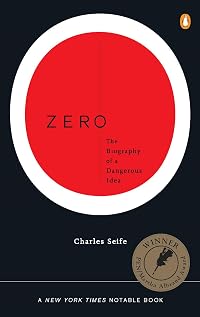
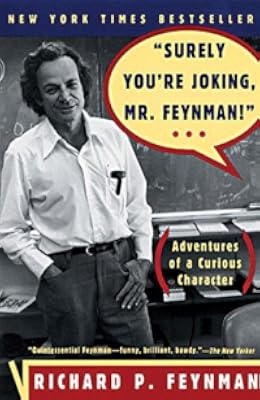
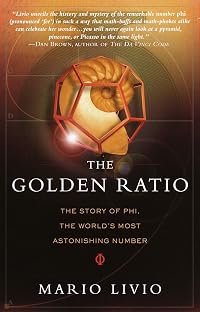
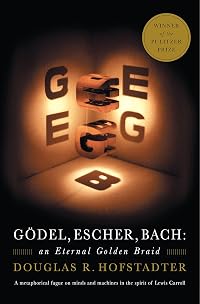
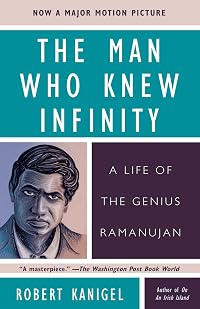
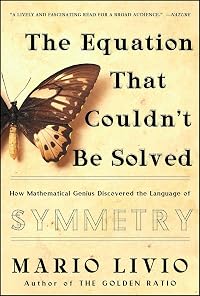
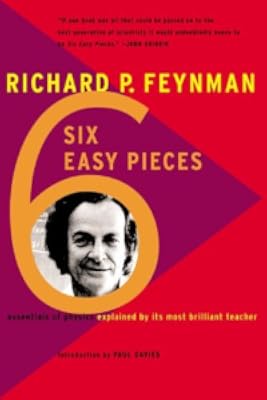
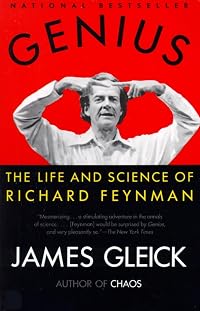


Member Recommendations
by anonymous user, anonymous user
Member Reviews
Cuando estaba en la secundaria cometí la avivada de escribir en el pizarrón "Maths are useless" en el recreo que venía justo antes de la clase de matemática. Cuando la profesora entró, se calvó frente al pizarrón, lo miró, y procedió a explicar para qué servían. Habló de ordenar la lógica, pero sobre todo de la exploración por la exploración misma. Del desafío que hay en la búsqueda de entender, incluso estrucutras que no sabemos cuánto nos inventamos. En definitiva, me cerró el orto y evitó que en adelante hiciera esos chistes del tipo "otro año yendo a la carnicería sin usar el trinomio cuadrado perfecto".
Este libro es una novela matemática. La crónica de un descubrimiento que desarrolla sus muchísimos show more personajes. Una historia que se arrastra desde la antigua grecia hasta el final del siglo XX con desafíos humanos, políticos y, sobre todo, del razonamiento. Hace que reflotes lo que aprendiste en la escuela para seguir una línea de acontecimientos que jamás hubieras pensado que podrían ser así de fascinantes.
Mi profesora de no me acuerdo qué año dio la clase con el cartelito en el pizarrón, y se fue del aula sin borrarlo, como dejando en el responsable la tarea de decidir si por fin estaba lo suficientemente convencido como para acercarse con el borrador a enmendar el exabrupto. Este libro está repleto de episodios así, y te deja con la misma sensación. show less
Este libro es una novela matemática. La crónica de un descubrimiento que desarrolla sus muchísimos show more personajes. Una historia que se arrastra desde la antigua grecia hasta el final del siglo XX con desafíos humanos, políticos y, sobre todo, del razonamiento. Hace que reflotes lo que aprendiste en la escuela para seguir una línea de acontecimientos que jamás hubieras pensado que podrían ser así de fascinantes.
Mi profesora de no me acuerdo qué año dio la clase con el cartelito en el pizarrón, y se fue del aula sin borrarlo, como dejando en el responsable la tarea de decidir si por fin estaba lo suficientemente convencido como para acercarse con el borrador a enmendar el exabrupto. Este libro está repleto de episodios así, y te deja con la misma sensación. show less
“The definition of a good mathematical problem is the mathematics it generates rather than the problem itself.”
Fermat's Last Theorem states that: xⁿ yⁿ = zⁿ has no whole number solutions for any integer n greater than 2. Simon Singh fashions the quest to solve this 350-year-old mathematical enigma into a compelling story. In the 1630s, when Pierre de Fermat scribbled a note on a page of his copy of Diophantus’s Arithmetica, stating (in Latin) his theorem and indicating “I have a truly marvelous demonstration of this proposition, which this margin is too narrow to contain.” Singh takes the reader through a series of minibiographies of past mathematicians, ultimately arriving at Andrew Wiles, who spent over eight years show more developing the 130-page proof.
Along the way, the reader will learn a great deal about number theory, logic, and the rigorous standards required to achieve an absolute proof. This book covers a wide variety of people and their contributions over the years, such as Pythagoras, Leonhard Euler, Sophie Germain, Gabriel Lame’, Augustin Cauchy, Ernst Kummer, David Hilbert, Kurt Godel, Alan Turing, Goro Shimura, and Yutaka Taniyama.
The highlight of the book is, of course, Andrew Wiles who discovered Fermat’s Last Theorem at the age of ten, and dedicated himself to figuring out a proof, no matter how long it took. Wiles decided to keep his work secret and work alone in his attic. “You might ask how could I devote an unlimited amount of time to a problem that might simply not be soluble. The answer is that I just loved working on this problem and I was obsessed. I enjoyed pitting my wits against it.”
We learn about the Shimura-Taniyama conjecture, and the relationship between elliptic curves and modular forms. Singh never gets bogged down with calculations – they are instead included in the Appendices. I have a background in mathematics, so this type of subject matter appeals to me, but I daresay it is not required to enjoy this story of challenge, perseverance, and discovery.
4.5 show less
Fermat's Last Theorem states that: xⁿ yⁿ = zⁿ has no whole number solutions for any integer n greater than 2. Simon Singh fashions the quest to solve this 350-year-old mathematical enigma into a compelling story. In the 1630s, when Pierre de Fermat scribbled a note on a page of his copy of Diophantus’s Arithmetica, stating (in Latin) his theorem and indicating “I have a truly marvelous demonstration of this proposition, which this margin is too narrow to contain.” Singh takes the reader through a series of minibiographies of past mathematicians, ultimately arriving at Andrew Wiles, who spent over eight years show more developing the 130-page proof.
Along the way, the reader will learn a great deal about number theory, logic, and the rigorous standards required to achieve an absolute proof. This book covers a wide variety of people and their contributions over the years, such as Pythagoras, Leonhard Euler, Sophie Germain, Gabriel Lame’, Augustin Cauchy, Ernst Kummer, David Hilbert, Kurt Godel, Alan Turing, Goro Shimura, and Yutaka Taniyama.
The highlight of the book is, of course, Andrew Wiles who discovered Fermat’s Last Theorem at the age of ten, and dedicated himself to figuring out a proof, no matter how long it took. Wiles decided to keep his work secret and work alone in his attic. “You might ask how could I devote an unlimited amount of time to a problem that might simply not be soluble. The answer is that I just loved working on this problem and I was obsessed. I enjoyed pitting my wits against it.”
We learn about the Shimura-Taniyama conjecture, and the relationship between elliptic curves and modular forms. Singh never gets bogged down with calculations – they are instead included in the Appendices. I have a background in mathematics, so this type of subject matter appeals to me, but I daresay it is not required to enjoy this story of challenge, perseverance, and discovery.
4.5 show less
I love this book - it reads like a mystery full of obsessive people trying to solve a problem. I liked the math, and while the author, while not a mathematician, manages to simplify it to the point where a non-math person might understand the underlying logic.
The story is full of odd characters, many of them obsessive. Most of them not likeable (which adds to the story). The story of Andrew Wiles, the man who finally cracked Fermat's Last Theorem, is quite good, and is the reason this book was written, but is really only a small part of this tale. It is written as part of the overall history, not just a major part of it.
While the book is about the path to Fermat's Last Theorem, but because so many new ideas came about from the path of show more solving it, this book can be seen as a brief history of math. Highly recommended if you like pop-science type books and mathmatics, but without all the hard stuff. show less
The story is full of odd characters, many of them obsessive. Most of them not likeable (which adds to the story). The story of Andrew Wiles, the man who finally cracked Fermat's Last Theorem, is quite good, and is the reason this book was written, but is really only a small part of this tale. It is written as part of the overall history, not just a major part of it.
While the book is about the path to Fermat's Last Theorem, but because so many new ideas came about from the path of show more solving it, this book can be seen as a brief history of math. Highly recommended if you like pop-science type books and mathmatics, but without all the hard stuff. show less
Everything that a popular science book should be. It’s actually fast paced. I’m not even particularly interested in maths and it had me hooked. It tells the story of the theorem through a history of the mathematics that relate to it and there’s the inside story of the final proof and Wiles’ year of hell.
What particularly impressed me was how Singh explained the maths. He keeps the notation to a minimum and has a particular way of introducing news ideas (you’ll see what I mean if you read it) so that even someone like me whose brain just doesn’t work that way can follow it. Quick to read, but must have taken ages to get right on the page.
What particularly impressed me was how Singh explained the maths. He keeps the notation to a minimum and has a particular way of introducing news ideas (you’ll see what I mean if you read it) so that even someone like me whose brain just doesn’t work that way can follow it. Quick to read, but must have taken ages to get right on the page.
Fascinating and compelling tour through some of the history of mathematics and some of the significant developments from the eighteenth century to the publication at the last gasp of the twentieth of something very remarkable indeed: an advanced mathematical proof that captured the public imagination and made a hero of a shy and rather gawky man with a predilection for bad sweaters.
What Andrew Wiles set out in his 1997 paper was not, it turns out, a direct proof of Fermat's Last Theorem but a proof of the Modularity Theorem, a much more abstruse idea with little obvious connection to Fermat's algebraic conundrum, which somebody else had earlier shown to imply Fermat's theorem if true. Such is the interconnectedness of modern show more mathematics. Such, too, is the interdependency of developments on the work of many individuals. It's long been a contention of mine that great breakthroughs are never the work of individual geniuses working on their own, but the culmination of a process where many minds gradually build up the conditions that make the breakthrough possible. As Isaac Newton (whose role in this story is only a minor cameo) once remarked, "If I have seen further it was only by standing on the shoulders of giants". All credit to Wiles though for his single-minded persistence over many years, during which his work produced spinoffs that were significant developments in themselves and helped to fire the work of others in the mathematical community. Perhaps slightly less creditworthy (because it involved holding back work that would have helped others) but entirely understandable is the way Wiles kept information to himself because he didn't want anybody else building on his work and stealing that ultimate triumph.
It's brave of Simon Singh to put forward a book about maths that is neither out of the reach of a general readership nor too simple to satisfy the more mathematically-minded, but he's done a reasonably good job. He's framed it in such a way as to build suspense, not an easy thing to do with this material and I suspect that the reality was much more mundane. I can live with that. It's in the nature of the subject matter, though, that it's going to be a frustrating experience for the curious. Singh mentions Modular Forms, not unreasonably as they turn out to hold the key to the mystery, and they sounded fascinating involving complex numbers as they do, but he doesn't go into much detail. So I turned to Wikipedia. BIG mistake! My head all but exploded. Hey ho, I was always much too impatient to make much of a mathematician. show less
What Andrew Wiles set out in his 1997 paper was not, it turns out, a direct proof of Fermat's Last Theorem but a proof of the Modularity Theorem, a much more abstruse idea with little obvious connection to Fermat's algebraic conundrum, which somebody else had earlier shown to imply Fermat's theorem if true. Such is the interconnectedness of modern show more mathematics. Such, too, is the interdependency of developments on the work of many individuals. It's long been a contention of mine that great breakthroughs are never the work of individual geniuses working on their own, but the culmination of a process where many minds gradually build up the conditions that make the breakthrough possible. As Isaac Newton (whose role in this story is only a minor cameo) once remarked, "If I have seen further it was only by standing on the shoulders of giants". All credit to Wiles though for his single-minded persistence over many years, during which his work produced spinoffs that were significant developments in themselves and helped to fire the work of others in the mathematical community. Perhaps slightly less creditworthy (because it involved holding back work that would have helped others) but entirely understandable is the way Wiles kept information to himself because he didn't want anybody else building on his work and stealing that ultimate triumph.
It's brave of Simon Singh to put forward a book about maths that is neither out of the reach of a general readership nor too simple to satisfy the more mathematically-minded, but he's done a reasonably good job. He's framed it in such a way as to build suspense, not an easy thing to do with this material and I suspect that the reality was much more mundane. I can live with that. It's in the nature of the subject matter, though, that it's going to be a frustrating experience for the curious. Singh mentions Modular Forms, not unreasonably as they turn out to hold the key to the mystery, and they sounded fascinating involving complex numbers as they do, but he doesn't go into much detail. So I turned to Wikipedia. BIG mistake! My head all but exploded. Hey ho, I was always much too impatient to make much of a mathematician. show less
Fascinating and compelling tour through some of the history of mathematics and some of the significant developments from the eighteenth century to the publication at the last gasp of the twentieth of something very remarkable indeed: an advanced mathematical proof that captured the public imagination and made a hero of a shy and rather gawky man with a predilection for bad sweaters.
What Andrew Wiles set out in his 1997 paper was not, it turns out, a direct proof of Fermat's Last Theorem but a proof of the Modularity Theorem, a much more abstruse idea with little obvious connection to Fermat's algebraic conundrum, which somebody else had earlier shown to imply Fermat's theorem if true. Such is the interconnectedness of modern show more mathematics. Such, too, is the interdependency of developments on the work of many individuals. It's long been a contention of mine that great breakthroughs are never the work of individual geniuses working on their own, but the culmination of a process where many minds gradually build up the conditions that make the breakthrough possible. As Isaac Newton (whose role in this story is only a minor cameo) once remarked, "If I have seen further it was only by standing on the shoulders of giants". All credit to Wiles though for his single-minded persistence over many years, during which his work produced spinoffs that were significant developments in themselves and helped to fire the work of others in the mathematical community. Perhaps slightly less creditworthy (because it involved holding back work that would have helped others) but entirely understandable is the way Wiles kept information to himself because he didn't want anybody else building on his work and stealing that ultimate triumph.
It's brave of Simon Singh to put forward a book about maths that is neither out of the reach of a general readership nor too simple to satisfy the more mathematically-minded, but he's done a reasonably good job. He's framed it in such a way as to build suspense, not an easy thing to do with this material and I suspect that the reality was much more mundane. I can live with that. It's in the nature of the subject matter, though, that it's going to be a frustrating experience for the curious. Singh mentions Modular Forms, not unreasonably as they turn out to hold the key to the mystery, and they sounded fascinating involving complex numbers as they do, but he doesn't go into much detail. So I turned to Wikipedia. BIG mistake! My head all but exploded. Hey ho, I was always much too impatient to make much of a mathematician. show less
What Andrew Wiles set out in his 1997 paper was not, it turns out, a direct proof of Fermat's Last Theorem but a proof of the Modularity Theorem, a much more abstruse idea with little obvious connection to Fermat's algebraic conundrum, which somebody else had earlier shown to imply Fermat's theorem if true. Such is the interconnectedness of modern show more mathematics. Such, too, is the interdependency of developments on the work of many individuals. It's long been a contention of mine that great breakthroughs are never the work of individual geniuses working on their own, but the culmination of a process where many minds gradually build up the conditions that make the breakthrough possible. As Isaac Newton (whose role in this story is only a minor cameo) once remarked, "If I have seen further it was only by standing on the shoulders of giants". All credit to Wiles though for his single-minded persistence over many years, during which his work produced spinoffs that were significant developments in themselves and helped to fire the work of others in the mathematical community. Perhaps slightly less creditworthy (because it involved holding back work that would have helped others) but entirely understandable is the way Wiles kept information to himself because he didn't want anybody else building on his work and stealing that ultimate triumph.
It's brave of Simon Singh to put forward a book about maths that is neither out of the reach of a general readership nor too simple to satisfy the more mathematically-minded, but he's done a reasonably good job. He's framed it in such a way as to build suspense, not an easy thing to do with this material and I suspect that the reality was much more mundane. I can live with that. It's in the nature of the subject matter, though, that it's going to be a frustrating experience for the curious. Singh mentions Modular Forms, not unreasonably as they turn out to hold the key to the mystery, and they sounded fascinating involving complex numbers as they do, but he doesn't go into much detail. So I turned to Wikipedia. BIG mistake! My head all but exploded. Hey ho, I was always much too impatient to make much of a mathematician. show less
I am blown away by this book. I've read so many nonfiction math and physics books that they were starting to repeat themselves. So, when I picked this one up I thought, "Well, it's probably more of the same, but it's popular enough I should really add it to my repertoire." Way wrong thought. Not only does this book contain even more charming mathematical anecdotes than I'd ever read before, but it also contains better written versions of the stories I'd heard of. For example, I knew about Sophie Germain, but I didn't know she'd saved Gauss' life. I knew all about the burning of Alexandria, but I didn't know it was Mark Antony who attempted to rebuild the great library. I knew Galois died young in a duel, but I never knew the full show more story.
I read [b:The Code Book|17994|The Code Book The Science of Secrecy from Ancient Egypt to Quantum Cryptography|Simon Singh|https://d.gr-assets.com/books/1403181687s/17994.jpg|1031975] in high school, and I remember it being good, but in a recreational way. It piqued my interest but I didn't really shelf it with "high literature" like I did with [b:Gödel, Escher, Bach: An Eternal Golden Braid|24113|Gödel, Escher, Bach An Eternal Golden Braid|Douglas R. Hofstadter|https://d.gr-assets.com/books/1428732588s/24113.jpg|850076] or [b:Music of the Spheres: The Material Universe From Atom to Quaser, Simply Explained|393653|Music of the Spheres The Material Universe From Atom to Quaser, Simply Explained (Volume II The Microcosm Matter, Atoms, Waves, Radiation, Relativity)|Guy Murchie|https://d.gr-assets.com/books/1387716643s/393653.jpg|383216]. It was enough for me, a young geeky teenager, to have a little fun playing with codes, then move on to another book. I am very happy that I returned to Singh, and I can confidently say this is the better of the two I've read. Mathematicians sure are a romantic lot. show less
I read [b:The Code Book|17994|The Code Book The Science of Secrecy from Ancient Egypt to Quantum Cryptography|Simon Singh|https://d.gr-assets.com/books/1403181687s/17994.jpg|1031975] in high school, and I remember it being good, but in a recreational way. It piqued my interest but I didn't really shelf it with "high literature" like I did with [b:Gödel, Escher, Bach: An Eternal Golden Braid|24113|Gödel, Escher, Bach An Eternal Golden Braid|Douglas R. Hofstadter|https://d.gr-assets.com/books/1428732588s/24113.jpg|850076] or [b:Music of the Spheres: The Material Universe From Atom to Quaser, Simply Explained|393653|Music of the Spheres The Material Universe From Atom to Quaser, Simply Explained (Volume II The Microcosm Matter, Atoms, Waves, Radiation, Relativity)|Guy Murchie|https://d.gr-assets.com/books/1387716643s/393653.jpg|383216]. It was enough for me, a young geeky teenager, to have a little fun playing with codes, then move on to another book. I am very happy that I returned to Singh, and I can confidently say this is the better of the two I've read. Mathematicians sure are a romantic lot. show less
Members
- Recently Added By
Lists

Best Science Books for Non-Scientists
113 works; 57 members

HS Mathematics class library
79 works; 6 members

Favourite Books
1,820 works; 316 members

Books Read in 2020
4,379 works; 124 members

Books Read in 2017
4,249 works; 130 members

el
1,139 works; 1 member
Author Information

17+ Works 15,541 Members
Simon Singh was born in Great Britain in 1964 and educated at Imperial College and the University of Cambridge (where he received a Ph. D. in particle physics). He worked at the European Centre for Particle Physics and the BBC's science department. At the BBC, he worked on Tomorrow's World. Singh and John Lynch produced and directed an show more award-winning documentary on Fermat's Last Theory. He later published a book on the same topic. (Bowker Author Biography) show less
Some Editions
Awards and Honors
Awards
Notable Lists
Series
Belongs to Publisher Series
Common Knowledge
- Canonical title*
- Le dernier théorème de Fermat
- Original title
- Fermat's Last Theorem
- Alternate titles
- Fermat's Enigma: The Epic Quest to Solve the World's Greatest Mathematical Problem
- Original publication date
- 1997
- People/Characters
- Andrew Wiles; Pierre de Fermat
- Important events
- Wiles' proof of Fermat's Last Theorem (1993)
- Dedication
- In memory of Pakhar Singh
- First words
- It was the most important mathematics lecture of the century.
- Last words
- (Click to show. Warning: May contain spoilers.)My mind is at rest.
- Original language*
- Anglais
- Disambiguation notice
- "Fermat's Last Theorem" and "Fermet's Enigma", by Simon Singh, are the same work.
Earlier notice and response:
'Fermat's Last Theorem' is the correct canonical title as listed on the official site of the author. 'Fe... (show all)rmat's Enigma' is the altered title of the American edition.
response: I don't think you can call the title "canonical" if there the work is commonly available for sale under two different titles in English, and the history of changes to the field "Canonical title" supports this contention. For the purpose of disambiguation, perhaps we should just leave it at "Fermat's Last Theorem" and "Fermet's Enigma", by Simon Singh, are the same work.
response: In these cases the first edition in the country of the author's origin takes precedent.
*Some information comes from Common Knowledge in other languages. Click "Edit" for more information.
Classifications
Statistics
- Members
- 5,262
- Popularity
- 2,605
- Reviews
- 66
- Rating
- (4.09)
- Languages
- 22 — Catalan, Chinese, Czech, Danish, Dutch, English, Finnish, French, German, Greek, Hebrew, Hungarian, Italian, Japanese, Norwegian (Bokmål), Polish, Portuguese, Romanian, Russian, Spanish, Swedish, Turkish
- Media
- Paper, Audiobook, Ebook
- ISBNs
- 81
- ASINs
- 29