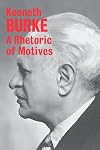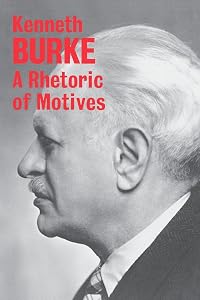
A Rhetoric of Motives
by Kenneth Burke
On This Page
Description
As critic, Kenneth Burke's preoccupations were at the beginning purely esthetic and literary; but after Counter-Statement (1931), he began to discriminate a "rhetorical" or persuasive component in literature, and thereupon became a philosopher of language and human conduct.In A Grammar of Motives (1945) and A Rhetoric of Motives (1950), Burke's conception of "symbolic action" comes into its own: all human activities-linguisitc or extra-linguistic-are modes of symbolizing; man is defined as show more the symbol-using (and -misusing) animal. The critic's job becomes one of the interpreting human symbolizing wherever he finds it, with the aim of illuminating human motivation. Thus the reach of the literary critic now extends to the social and ethical.A Grammar of Motives is a "methodical meditation" on such complex linguistic forms as plays, stories, poems, theologies, metaphysical systems, political philosophies, constitutions. A Rhetoric of Motives expands the field to human ways of persuasion and identification. Persuasion, as Burke sees it, "ranges from the bluntest quest of advantage, as in sales promotion or propaganda, through courtship, social etiquette, education, and the sermon, to a 'pure' form that delights in the process of appeal for itself alone, without ulterior purpose. And identification ranges from the politician who, addressing an audience of farmers, says, 'I was a farm boy myself,' through the mysteries of social status, to the mystic's devout identification with the sources of all being." show lessTags
Recommendations




Member Reviews
Kenneth Burke is verbose, but he is still the authority on rhetoric and language. A Rhetoric of Motives is one of his books on those subjects and are useful for students in higher education.
Ratings
Members
- Recently Added By
Lists

Harold Bloom - The Western Canon: D. The Chaotic Age
833 works; 24 members
Author Information

35+ Works 1,882 Members
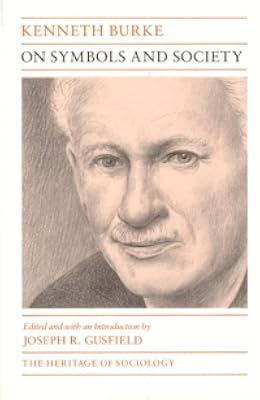
Born in Pittsburgh, Burke was educated at Ohio State and Columbia universities. During his early career, he became involved with a number of little magazines, including Broom and Secession. He also wrote for The Dial and The Nation as a music critic. His greatest fame, however, has been as a literary critic. Omnivorously eclectic, Burke has found show more in the analysis of human symbolic activities a key to the largest cultural issues. For Burke, literature is the most prominent and sophisticated form of "symbolic action," one that provides "equipment for living" by allowing us to try out hypothetical strategies for dealing with the endless variety of human situations and experiences. Human society demands some principle of order, but the language and reason that create order can fall into rigid abstractions that can be destructive and violently imposed. Literature shows us an image of sacrifice, forgiveness, and flexibility that plays an important role in keeping society functioning flexibly. Burke's writing is extensive, complex and wide ranging, but also unique and uniquely important among current critical approaches. (Bowker Author Biography) show less
Common Knowledge
- Original publication date
- 1950
Classifications
- Genres
- Nonfiction, Literature Studies and Criticism, Philosophy, General Nonfiction
- DDC/MDS
- 149.94 — Philosophy & psychology Philosophical schools of thought Other philosophical systems and doctrines Other systems Linguistic Philosophy
- LCC
- B840 .B8 — Philosophy, Psychology and Religion Philosophy (General) By period Modern Special topics and schools of philosophy
- BISAC
Statistics
- Members
- 326
- Popularity
- 97,782
- Reviews
- 1
- Rating
- (3.80)
- Languages
- English
- Media
- Paper
- ISBNs
- 3
- ASINs
- 4