On This Page
Description
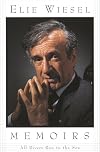
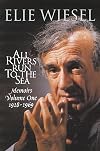
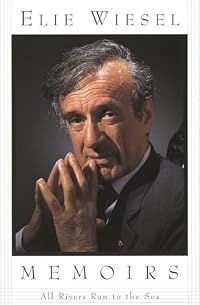
Wiesel recounts his life's story, from his childhood in the Carpathian mountains, to his imprisonment in Auschwitz and Buchenwald, to his career as a journalist, and winning the Nobel Peace prize.Tags
Recommendations














Member Reviews
Elie Wiesel's writing in "All Rivers Run to the Sea" is a masterpiece of memoir literature. The author's profound storytelling captures the essence of his life, interweaving complex narratives that, while challenging to navigate at times, ultimately converge into a cohesive and compelling story. Though the abundance of names and events can make it difficult to follow initially, Wiesel’s narrative skill ensures that each element serves a purpose, building toward a greater understanding of the human experience.
I found Wiesel’s stories deeply reflective, resonating with personal connections to my own life, country, and relatives. His ability to evoke these emotions and reflections shows the universal appeal and impact of his work. This show more memoir not only offers a glimpse into the significant historical and personal events of Wiesel’s life but also invites readers to reflect on their own journeys, making it a truly enlightening read. show less
I found Wiesel’s stories deeply reflective, resonating with personal connections to my own life, country, and relatives. His ability to evoke these emotions and reflections shows the universal appeal and impact of his work. This show more memoir not only offers a glimpse into the significant historical and personal events of Wiesel’s life but also invites readers to reflect on their own journeys, making it a truly enlightening read. show less
The title is taken from Ecclesiastes 1:7 which reads: "All the rivers run into the sea, yet the sea is not full; to the place from which the rivers come, there they return again." The verse is speaking to the cycle of life, which Wiesel addresses in this memoir. I was surprised (but should not have been) of Wiesel's condemnation of Great Britain and the U.S's lack of effort to halt the holocaust. I have always been taught that they did not bomb the camps because they felt it would cause even more hardship on the prisoners. Wiesel contends that they could have easily bombed the train tracks and halted the transports, but that they just didn't care. Sounds like a good idea, not sure why that wasn't done. Much of the information contained show more in this book is also contained in his Night. I liked Wiesel's introspection and humility. 432 pages show less
What I really loved about the two volumes of Wiesel's memoirs is that they humanized a person that I'd looked up to for a long time. He readily admitted the mistakes he made in his life, and this brought him down to the same level as the rest of us.
I found this memoir less compelling than Night, but still a chilling picture of the buildup to transport and the difficulties facing the survivors beyond the immediate aftermath of liberation.
Audiobook, performed by the author, who reads with such emotion that I was at times moved to tears.
“Wherever my life took me, a part of me would remain in that street in front of my empty house, awaiting the order to depart. I see my little sister. I see her with her rucksack, so cumbersome, so heavy. I see her and an immense tenderness sweeps over me. Never will her innocent smile fade from my soul, never will her glance cease to sear me. I tried to help her. She protested. Never will the sound of her voice leave my heart. She was thirsty, My show more little sister was thirsty. Her lips were parched, pearls of sweat formed on her clear forehead. “I can wait,” she said, smiling. My little sister wanted to be brave, and I wanted to die in her place. I seldom speak of her in my writing, for I dare not. My little sister with her sunbathed golden head is my secret.”
For the Twelve Tasks of the Festive Season book challenge, Task the Sixth: The Hanukkah (Let the dreidel choose a book for you: create a list of four books, and assign a dreidel symbol to each one (Nun = miracle; Gimel = great; He = happened; Shin = there, i.e. Israel). Google "spin the dreidel," and a dreidel comes up for you to spin. Give it a spin and read the book that the dreidel chooses!) show less
Audiobook, performed by the author, who reads with such emotion that I was at times moved to tears.
“Wherever my life took me, a part of me would remain in that street in front of my empty house, awaiting the order to depart. I see my little sister. I see her with her rucksack, so cumbersome, so heavy. I see her and an immense tenderness sweeps over me. Never will her innocent smile fade from my soul, never will her glance cease to sear me. I tried to help her. She protested. Never will the sound of her voice leave my heart. She was thirsty, My show more little sister was thirsty. Her lips were parched, pearls of sweat formed on her clear forehead. “I can wait,” she said, smiling. My little sister wanted to be brave, and I wanted to die in her place. I seldom speak of her in my writing, for I dare not. My little sister with her sunbathed golden head is my secret.”
For the Twelve Tasks of the Festive Season book challenge, Task the Sixth: The Hanukkah (Let the dreidel choose a book for you: create a list of four books, and assign a dreidel symbol to each one (Nun = miracle; Gimel = great; He = happened; Shin = there, i.e. Israel). Google "spin the dreidel," and a dreidel comes up for you to spin. Give it a spin and read the book that the dreidel chooses!) show less
Wiesel’s writing is a delight to read and his life is a fascinating subject.
This was our final memoir for book group, and I have noticed that memoirs tend to fall into one of two categories. Either the writer selects only those events from his life that pertain to a single theme (often but not always a conversion of some sort), or he includes every detail he can recall. This book falls into the second category.
This was our final memoir for book group, and I have noticed that memoirs tend to fall into one of two categories. Either the writer selects only those events from his life that pertain to a single theme (often but not always a conversion of some sort), or he includes every detail he can recall. This book falls into the second category.
This is the prequel -- "All Rivers run to the sea"-- to the "And the Sea is never filled" volume of his Memoirs. The author is a gifted Teller who experienced first-hand events that should not have been witnessed even from afar. Fortunately, he is able to survive injustice with what remains in the complete absence of Shekina, to give us a kavannah: More than mere Memoir, makes another chapter in the rich and storied tradition of the Aggadah.
I love Wiesel's work. All Rivers Run to the Sea fills in a lot of personal information on his life and especially his mental world, of modern thought, mere survival, Zionism and Hasidim.
Members
- Recently Added By
Lists

Holocaust Narratives
159 works; 3 members

Well-Educated Mind
150 works; 3 members

The Well-Educated Mind, Susan Wise Bauer, 2016
179 works; 3 members

Top Five Books of 2025
950 works; 302 members
Author Information

129+ Works 49,933 Members
Eliezer "Elie" Wiesel was born in Sighet, Romania on September 30, 1928. In 1944, he and his family were deported along with other Jews to the Nazi death camp Auschwitz. His mother and his younger sister died there. He loaded stones onto railway cars in a labor camp called Buna before being sent to Buchenwald, where his father died. He was show more liberated by the United States Third Army on April 11, 1945. After the war ended, he learned that his two older sisters had also survived. He was placed on a train of 400 orphans that was headed to France, where he was assigned to a home in Normandy under the care of a Jewish organization. He was educated at the Sorbonne and supported himself as a tutor, a Hebrew teacher and a translator. He started writing for the French newspaper L'Arche. In 1948, L'Arche sent him to Israel to report on that newly founded state. He also became the Paris correspondent for the daily Yediot Ahronot. In this capacity, he interviewed the novelist Francois Mauriac, who urged him to write about his war experiences. The result was La Nuit (Night). After the publication of Night, Wiesel became a writer, literary critic, and journalist. His other books include Dawn, The Accident, The Gates of the Forest, The Jews of Silence: A Personal Report on Soviet Jewry, and Twilight. He received a numerous awards and honors for his literary work including the William and Janice Epstein Fiction Award in 1965, the Jewish Heritage Award in 1966, the Prix Medicis in 1969, and the Prix Livre-International in 1980. He received the Nobel Peace Prize in 1986 for his work in combating human cruelty and in advocating justice. He had a leading role in the creation of the United States Holocaust Memorial Museum in Washington, D. C. He died on July 2, 2016 at the age of 87. (Bowker Author Biography) show less
Awards and Honors
Awards
Series

Work Relationships
Reference guide/companion to
Night by Elie Wiesel
Has as a reference guide/companion
Common Knowledge
- Original publication date
- 1995
- People/Characters
- Elie Wiesel; André Schwarz-Bart
- Important events
- Holocaust; World War II
- Dedication
- For almost thirty years, Marion Wiesel has been the first to read and edit the English versions of my books (when not translating them herself), including this volume of memoirs.
I owe her more than gratitude.
... (show all)
E.W. - First words
- LAST NIGHT I saw my father in a dream.
- Quotations
- Friendship is even more important in a man's life than love. Love may drive one to kill, friendship never.
- Last words
- (Click to show. Warning: May contain spoilers.)His thoughts scale mountains and hurtle down steep pathways, wander through invisible cemeteries, both seeking and fleeing solitude and receiving stories already told and those he has yet to tell.
- Blurbers
- Wouk, Herman; Dershowitz, Alan M.; Goldstein, Rebecca; Merkin, Daphne; Miron, Susan
Classifications
Statistics
- Members
- 984
- Popularity
- 26,568
- Reviews
- 15
- Rating
- (4.22)
- Languages
- 10 — Czech, Dutch, English, French, German, Hebrew, Hungarian, Italian, Spanish, Swedish
- Media
- Paper, Audiobook, Ebook
- ISBNs
- 24
- ASINs
- 8