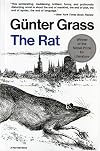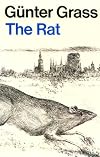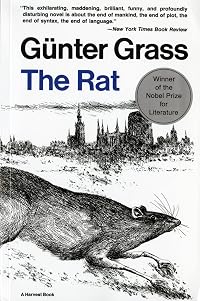
The Rat
by Günter Grass
On This Page
Description
A female rat engages the narrator in a series of dialogues-convincingly demonstrating to him that the rats will inherit a devastated earth. Dreams alternate with reality in this story within a story within a story.Tags
Recommendations



















Member Reviews
I've read this book as a part of my 'postapocalyptic' series, and yes it does fit in the genre. Human race has almost vanished, there was a nuclear war, famine, wasted world, spaceship and gene editing - stuff you can find in any book of this type. However, here is also something more: dreams, a world coming from fairy tales and crosses ours, Chancellor of German tangled with them by weird relation, proecological movement which rises at ... (ah that no, no spoilers). And there are Brothers Grimm who are back to life, and a ship with women who resemble Parcae.
I gave it 3 stars only because for me, it was a bit too long, I had a feeling in second third of the book as some events were not necessary to make a story. Also, as I haven't read show more 'The Tin Drum' references to the main character from this book seemed to be for me a bit hard to understand and a little redundant. Lucky, they were not needed to follow the main plot. It was a pleasure to read it anyway, following apocalypse in of civilization and culture is not something you get in the first book from the shelf. show less
I gave it 3 stars only because for me, it was a bit too long, I had a feeling in second third of the book as some events were not necessary to make a story. Also, as I haven't read show more 'The Tin Drum' references to the main character from this book seemed to be for me a bit hard to understand and a little redundant. Lucky, they were not needed to follow the main plot. It was a pleasure to read it anyway, following apocalypse in of civilization and culture is not something you get in the first book from the shelf. show less
La ratesa
Günter Grass
Publicado: 1986 | 377 páginas
Novela Didáctico Fantástico Sátira
Günter Grass nos presenta una conmovedora fábula en la que nos plantea la posibilidad de un desastre nuclear. En un mundo que se va destruyendo a sí mismo, la supervivencia queda en manos de una sociedad que se difumina entre lo ratesco y lo humano. Una narración maravillosa, entre Orwell y Swift, sobre la pesadilla posible de la barbarie humana. Grass consigue sumergir al lector en las contradicciones de nuestro tiempo con una ficción muy realista.
Günter Grass
Publicado: 1986 | 377 páginas
Novela Didáctico Fantástico Sátira
Günter Grass nos presenta una conmovedora fábula en la que nos plantea la posibilidad de un desastre nuclear. En un mundo que se va destruyendo a sí mismo, la supervivencia queda en manos de una sociedad que se difumina entre lo ratesco y lo humano. Una narración maravillosa, entre Orwell y Swift, sobre la pesadilla posible de la barbarie humana. Grass consigue sumergir al lector en las contradicciones de nuestro tiempo con una ficción muy realista.
Flying across the Atlantic in 1997 Two Frenchmen noticed me reading The Rat, both were already quite drunk and fuelling their mirth with minibottle cocktails which they pored into Coke cans. One held his nose and said something the other began laughing and mumbled something in a thickened voice, the word nazi may have been in there. I can't really say. I put on my headphones and attempted to ignore them, hoping the airport security would stomp them upon arrival. No, I didn't think that. I was hoping they'd leave me alone. They did. I finished the novel in Rome and was astonished. The return of Oskar and the idea of image as document was remarkable. Such were a few of The Rat's favorite things, including Hansel and Gretel being besieged show more by acid rain and mutually assured destruction as a lullaby. show less
International
«Chiuso. Voi uomini c'eravate una volta. Siete dei fu, il ricordo di una follia... In futuro nient'altro che ratti». È l'apocalisse prossima ventura così come la vede Günter Grass, o meglio così come gliela rivela in sogno la Ratta sapiente, simbolo e presagio dell'èra post-umana. Un day after a cui concorrono scorie radioattive, piogge acide, fusti che colano veleni, discariche immense e naturalmente l'incombere della catastrofe termonucleare. A salvarsi dalla distruzione sarà solo il grande popolo dei ratti che prospera sui rifiuti dell'uomo e resiste al disastro ecologico nelle fogne diventate rifugi antiatomici. Una degenerazione universale in cui è coinvolto anche il romanzo come struttura narrativa, una matassa di storie show more che si rincorrono, si perdono, si ritrovano. show less
Apr 25, 2020Italian
Confesso di aver mollato. Ormai vicino al traguardo in termini di pagine, mi sono reso conto che mi ero perso nella lettura di un romanzo definire ostico è poco. Sei storie che si intersecano, quella del narratore, di cinque donne, di Oskar Mazterath, il nano de “Il tamburo di latta”, la sceneggiatura di un film, il restauro di una chiesa che avrebbe decretato la rinascita della Germania dopo il disastro nazista e le interpretazioni della favola del pifferaio magico dei fratelli Grimm. In primo piano un mondo dilaniato dalla povertà e dal consumismo vede l’uomo estinguersi per un disastro nucleare causato dai ratti che hanno rosicchiato i fili degli impianti e rimarranno proprio loro come unici superstiti i ratti, la specie show more animale maggiormente contrastata nella storia dell’uomo. All’inizio si comprende la potenza della storia, ecologista, rivoluzionaria, un duro atto di condanna dei valori della società contemporanea ma tenere il filo è opera ai limiti dell’impossibile, Joyce nell’Ulisse a confronto racconta favolette, la forma è talmente densa da diventare pietra, dura, pesante al di là di ogni limite. Ad un certo punto mi sono sentito disorientato, ho perso la bussola ma a differenza di altri libri complessi in cui ogni tanto trovavo la forza di prendere fiato mi sono reso conto che non c’era speranza. Mi sono fatto coraggio, a volte ci vuole l’onestà di riconoscere di non essere in grado di concludere una lettura così ostica. show less
Sep 30, 2025Italian
De nadrukkelijk in het boek aanwezige schrijver droomt over wat er gebeurt na de Grote Knal waarmee de mens zichzelf vernietigt. De ratten lijken dan bijna als enige dieren te zijn overgebleven. Totdat er uit laboratoriumproeven ontstane creaturen te voorschijn komen en uiteindelijk lijkt de maatschappij die dan ontstaat veel op die van de mensen.
Een roman waarin zure regen, de dreiging van de atoombom en de kritiek op de Duitse deling en de onoprechtheid van de beide Duitse leiders (net als de schilder Malskat maken zij vervalsingen) samen een nachtmerrie worden voor de schrijver. De bot en Oskar Mazerath (De Blikken Trommel) treden in dit boek ook op.
Een roman waarin zure regen, de dreiging van de atoombom en de kritiek op de Duitse deling en de onoprechtheid van de beide Duitse leiders (net als de schilder Malskat maken zij vervalsingen) samen een nachtmerrie worden voor de schrijver. De bot en Oskar Mazerath (De Blikken Trommel) treden in dit boek ook op.
Sep 17, 2010Dutch
Members
- Recently Added By
Lists

German Literature
518 works; 56 members

Animals in the Title
498 works; 11 members
Author Information

214+ Works 22,884 Members
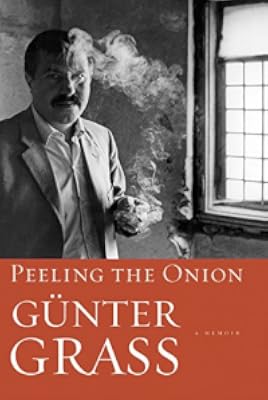
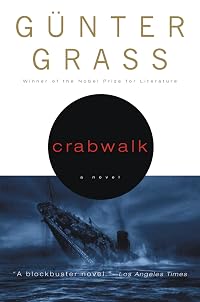
Günter Wilhelm Grass was born on October 16, 1927 in the Free City of Danzig, which is now Gdansk, Poland. He was a member of the Hitler Youth and at the age of 17, he was drafted into the German army. Near the end of the war, he served as a tank gunner in the 10th SS Panzer Division. He was captured by the Americans and forced to visit the newly show more liberated Dachau concentration camp. After his release from a POW camp in 1946, he worked in a potash mine and as a stonemason's apprentice and studied painting and sculpture in Düsseldorf. His first novel, The Tin Drum, was published in 1959. It was adapted into a film and won the Academy Award for Best Foreign Film in 1979. His other works included Cat and Mouse, Dog Years, From the Diary of a Snail, The Flounder, The Rat, and Crabwalk. He also wrote a memoir entitled Peeling the Onion. He received the Nobel Prize for Literature in 1999. He was also a political activist and liberal provocateur. He advocated for environmental conservation, debt relief for poor countries, and generous policies regarding political asylum. He died on April 13, 2015 at the age of 87. (Bowker Author Biography) show less
Some Editions
Awards and Honors
Awards
Notable Lists
Series
Belongs to Publisher Series
ET Tascabili [Einaudi] (475)
Keltainen kirjasto (209)
Common Knowledge
- Canonical title
- The Rat
- Original title
- Die Rättin
- Original publication date
- 1986; Prima edizione italiana, 1987
- People/Characters*
- Oskar Matzerath
- Dedication
- For Ute
- First words
- Per Natale ho desiderato un ratto, visto che ero in cerca di spunti per una poesia sull'educazione del genere umano.
- Last words
- (Click to show. Warning: May contain spoilers.)Supponendo per un attimo che noi uomini si esista ancora...
Bene, supponiamo.
... ma stavolta vogliamo in solidarietà e inoltre con intenzioni pacifiche, mi senti, con amore e dolci come la natura ci ha creati...
Un bel sogno, ha detto la Ratta, prima di svanire. - Blurbers*
- Raddatz, Fritz
- Original language
- German
*Some information comes from Common Knowledge in other languages. Click "Edit" for more information.
Classifications
- Genres
- Fiction and Literature, General Fiction, Fantasy
- DDC/MDS
- 833.914 — Literature & rhetoric German & related literatures German fiction 1900- 1900-1990 1945-1990
- LCC
- PT2613 .R338 .R313 — Language and Literature German, Dutch and Scandinavian literatures German literature Individual authors or works 1860/70-1960
- BISAC
Statistics
- Members
- 747
- Popularity
- 37,891
- Reviews
- 8
- Rating
- (3.46)
- Languages
- 13 — Danish, Dutch, English, Finnish, French, German, Hungarian, Italian, Norwegian (Bokmål), Polish, Portuguese, Spanish, Swedish
- Media
- Paper, Ebook
- ISBNs
- 47
- ASINs
- 18