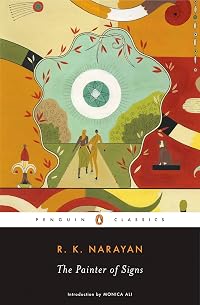
The Painter of Signs
by R. K. Narayan
On This Page
Description
For Raman the sign painter, life is a familiar and satisfying routine. A man of simple, rational ways, he lives with his pious aunt and prides himself on his creative work. But all that changes when he meets Daisy, a thrillingly independent young woman who wishes to bring birth control to the area. Hired to create signs for her clinics, Raman finds himself smitten by a love he cannot understand, much less avoidaand soon realizes that life isnat so routine anymore. Set in R. K. Narayanas show more fictional city of Malgudi, "The Painter of Signs" is a wry, bittersweet treasure. show lessTags
Recommendations


































Member Reviews
When Raman Met Daisy
Read by Lester Rawlings
Reading time: ~5 hours
Raman is an unmarried man in his thirties living with his elderly aunt in a small town in India in the 1970s. He paints signs for local businesses and groups. Outwardly a simple man, Raman has a rich inner life.
He goes along with Hindu traditions but questions the meaning of life as he goes about his craft (as he sees it), working hard, with once a week breaks at The Boardless. The Boardless is a coffee shop where men meet to talk to discuss their woes and the state of the world. As you can tell by its name it has no signage.
One day Ramon meets a young woman called Daisy and falls in love with her instantly. When he discovers she’s working for a group promoting birth show more control, he offers to make a sign for the group’s local head quarters.
Ramon will do anything for Daisy. He travels the local countryside with her, putting up signs promoting birth control meetings. Together they visit remote villages, traveling by horse-drawn carts or by foot when necessary, so that Daisy can educate the villagers on birth control. Ramon finds the concept somewhat ridiculous. Although a non-practicing Hindu he goes along with many of its traditional beliefs. But he dare not speak his mind to Daisy who is obsessed and humorless. His wry jokes and ironic comments annoy her. So he tries to suppress them, and obeys all her wishes in order to stay with her.
Though his love for Daisy is absolute, she’s only interested in promoting birth control and barely tolerates him, berating him when he slips up and unthinkingly speaks his mind. He treads softly avoiding the mention of the word “love”. At times when he decides to say what he’s thinking, he immediately regrets it, but as is his way accepts the anticipated consequences with humor. "’Love is the same in any society," he said, after all venturing to utter the term 'love.' If she was going to push him into the river for it, well, he'd face it ...’”
Most of the story is seen through Raman’s thoughts. His humor, his impeccable logic and his kindness surely will endear him to anyone who read this story. We are in there batting for Ramon - will Daisy soften and marry him? Will she forsake her independence for marriage. Narayan makes us wait til the very end to find out.
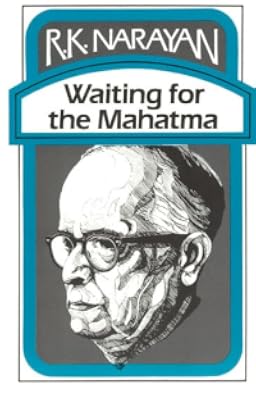
Similar couples appear in other Naryan stories. Waiting for the Mahatma is one of them. The strict young woman set on a path she sees as righteous and the adoring young lover. One has to wonder, was R.K. himself once hopelessly in love with such a woman?
Narayan’s stories are gems. They transport the reader to simpler times, places if not times of peace. Stories to be savored and to take our minds from this troubled world. show less
Read by Lester Rawlings
Reading time: ~5 hours
Raman is an unmarried man in his thirties living with his elderly aunt in a small town in India in the 1970s. He paints signs for local businesses and groups. Outwardly a simple man, Raman has a rich inner life.
He goes along with Hindu traditions but questions the meaning of life as he goes about his craft (as he sees it), working hard, with once a week breaks at The Boardless. The Boardless is a coffee shop where men meet to talk to discuss their woes and the state of the world. As you can tell by its name it has no signage.
One day Ramon meets a young woman called Daisy and falls in love with her instantly. When he discovers she’s working for a group promoting birth show more control, he offers to make a sign for the group’s local head quarters.
Ramon will do anything for Daisy. He travels the local countryside with her, putting up signs promoting birth control meetings. Together they visit remote villages, traveling by horse-drawn carts or by foot when necessary, so that Daisy can educate the villagers on birth control. Ramon finds the concept somewhat ridiculous. Although a non-practicing Hindu he goes along with many of its traditional beliefs. But he dare not speak his mind to Daisy who is obsessed and humorless. His wry jokes and ironic comments annoy her. So he tries to suppress them, and obeys all her wishes in order to stay with her.
Though his love for Daisy is absolute, she’s only interested in promoting birth control and barely tolerates him, berating him when he slips up and unthinkingly speaks his mind. He treads softly avoiding the mention of the word “love”. At times when he decides to say what he’s thinking, he immediately regrets it, but as is his way accepts the anticipated consequences with humor. "’Love is the same in any society," he said, after all venturing to utter the term 'love.' If she was going to push him into the river for it, well, he'd face it ...’”
Most of the story is seen through Raman’s thoughts. His humor, his impeccable logic and his kindness surely will endear him to anyone who read this story. We are in there batting for Ramon - will Daisy soften and marry him? Will she forsake her independence for marriage. Narayan makes us wait til the very end to find out.
Similar couples appear in other Naryan stories. Waiting for the Mahatma is one of them. The strict young woman set on a path she sees as righteous and the adoring young lover. One has to wonder, was R.K. himself once hopelessly in love with such a woman?
Narayan’s stories are gems. They transport the reader to simpler times, places if not times of peace. Stories to be savored and to take our minds from this troubled world. show less
A belated contribution to #NovNov (Novellas in November), The Painter of Signs is R K Narayan's eleventh of fifteen novels by this prolific Indian author. Like his early novels (including Swami and Friends (1935), which I reviewed here), it is set in the fictional South Indian town of Malgudi, at an indeterminate time but recognisably in an era when women's roles were starting to change.
Thirty-something Raman is a painter of signs for businesses in his local area, and he takes great pride in his work. He lives beside the river where occasionally a gust of wind will blow a bit of sand onto a board which is not quite dry. In the early part of the book we see him forego payment if his sign has flaws because his integrity matters more to show more him than money.
Raman lives with his elderly aunt, who has looked after his needs for his entire life. She is a quiet presence in the novel, spending her days sourcing and storing the best ingredients for the meals he likes best. Her sole amusement comes from visiting the temple at the end of the day and retelling her personal history. Raman takes her for granted and apart from occasional moments of guilt and resentment about her interest in his doings, does not appreciate that her life has been devoted to his. So it's not surprising that he thinks marriage is unnecessary.
Scornful about superstitions, religion and caste, Raman although conservative in his lifestyle, thinks well of himself and his modern attitude to rationality. He reads science and history books, which contribute to his sense of superiority. Although he works hard at his sign-painting, he does not recognise that he has the leisure to educate himself only because a woman is taking care of his needs.
Into this calm and settled life comes Daisy, a modern young woman whose very name signifies that she is an outsider of no caste or family. She hires Raman to make signs for her government-sponsored program to limit population growth through family planning, and her fervent attitude makes her fearless in tackling what is an intimate subject in her society, especially in remote villages. Raman is fascinated by her manner and appearance which signify her rejection of woman's traditional role. She is cagey about her past, but eventually Raman learns that she left home because she would not submit to being inspected for marriage and the inevitability of subservience to a man.
To read the rest of my review please visit https://anzlitlovers.com/2023/12/08/the-painter-of-signs-1976-by-r-k-narayan/ show less
Thirty-something Raman is a painter of signs for businesses in his local area, and he takes great pride in his work. He lives beside the river where occasionally a gust of wind will blow a bit of sand onto a board which is not quite dry. In the early part of the book we see him forego payment if his sign has flaws because his integrity matters more to show more him than money.
Raman lives with his elderly aunt, who has looked after his needs for his entire life. She is a quiet presence in the novel, spending her days sourcing and storing the best ingredients for the meals he likes best. Her sole amusement comes from visiting the temple at the end of the day and retelling her personal history. Raman takes her for granted and apart from occasional moments of guilt and resentment about her interest in his doings, does not appreciate that her life has been devoted to his. So it's not surprising that he thinks marriage is unnecessary.
Scornful about superstitions, religion and caste, Raman although conservative in his lifestyle, thinks well of himself and his modern attitude to rationality. He reads science and history books, which contribute to his sense of superiority. Although he works hard at his sign-painting, he does not recognise that he has the leisure to educate himself only because a woman is taking care of his needs.
Into this calm and settled life comes Daisy, a modern young woman whose very name signifies that she is an outsider of no caste or family. She hires Raman to make signs for her government-sponsored program to limit population growth through family planning, and her fervent attitude makes her fearless in tackling what is an intimate subject in her society, especially in remote villages. Raman is fascinated by her manner and appearance which signify her rejection of woman's traditional role. She is cagey about her past, but eventually Raman learns that she left home because she would not submit to being inspected for marriage and the inevitability of subservience to a man.
To read the rest of my review please visit https://anzlitlovers.com/2023/12/08/the-painter-of-signs-1976-by-r-k-narayan/ show less
Raman, the painter of signs, makes less than he ought to because his aesthetic sense leads him to argue with clients over colors and letter styles, and he’s pretty ineffectual in any situation where there is the least conflict. He lives alone with his aunt, who cooks for him. He fancies himself an intellectual because he reads a few pages of a different book each afternoon before falling asleep. He socializes at a hotel and restaurant ironically called the Boardless—that is, it has no sign.
Then he meets Daisy, the Family Planning Centre missionary, strangely affectless, independent, and determined that no emotion will impede her work. Though so different in temperament, Raman is attracted, follows her into the hills on an austere show more tour of villages to spread the birth control word, and on the way back he makes a disastrous pass at Daisy. But she shows up at his house some days later, and their romance progresses to the point of a proposal. The aunt goes off on a pilgrimage to the Ganges and holy places, determined not to return.
Then Daisy balks, taking off on missionary work in a region where the birth numbers have risen shockingly the previous year. Raman gets on his bicycle and heads for the Boardless.
Narayan is wonderful with dialogue, capturing the quaint charm of the many speakers of Indian English: “Long time since I saw you, what have you been doing with yourself all along?” The book is set in Narayan’s fictional town of Malgudi, below the Mempi Hills, in 1972 show less
Then he meets Daisy, the Family Planning Centre missionary, strangely affectless, independent, and determined that no emotion will impede her work. Though so different in temperament, Raman is attracted, follows her into the hills on an austere show more tour of villages to spread the birth control word, and on the way back he makes a disastrous pass at Daisy. But she shows up at his house some days later, and their romance progresses to the point of a proposal. The aunt goes off on a pilgrimage to the Ganges and holy places, determined not to return.
Then Daisy balks, taking off on missionary work in a region where the birth numbers have risen shockingly the previous year. Raman gets on his bicycle and heads for the Boardless.
Narayan is wonderful with dialogue, capturing the quaint charm of the many speakers of Indian English: “Long time since I saw you, what have you been doing with yourself all along?” The book is set in Narayan’s fictional town of Malgudi, below the Mempi Hills, in 1972 show less
It's the story of a signpainter called Raman who falls in love with an emanicipated and high-minded woman called Daisy who approaches her job as family-planner with missionary zeal. Daisy enlists Raman's help on her visits to the countryside to talk to rural communities about the benefits of smaller families. Raman is to paint the signs and murals which will carry the family-planning slogans. But during the journey he becomes infatuated with Daisy and determines to make her his wife.
I hadn't been back to Narayan's fictional town of Malgudi (the setting of all his gentle, charming tales of Indian life) for a very long time, and was glad of the excuse to revisit. For the most of the group this was the first time they'd made the trip to show more Malgudi and they all thoroughly enjoyed Narayan's gentle humour and apparent simplicity. Someone drew an intersting parallel with Alexander McCall-Smith's First Ladies Detective Agency series which work the same kind of magic. show less
I hadn't been back to Narayan's fictional town of Malgudi (the setting of all his gentle, charming tales of Indian life) for a very long time, and was glad of the excuse to revisit. For the most of the group this was the first time they'd made the trip to show more Malgudi and they all thoroughly enjoyed Narayan's gentle humour and apparent simplicity. Someone drew an intersting parallel with Alexander McCall-Smith's First Ladies Detective Agency series which work the same kind of magic. show less
R.K.Narayan surprised me with this novel. Set during the period when the Family Control propagation came into focus, this novel can shock a person as well as realize the depth of the Indian soul. Narayan in this novel tries to go with the times & is very bold in his writing. Infact, the novel involves many themes of the 1970's Indian scenario like birth control, Bollywood, dare devil women etc. Narayan also breaks his initial way of presenting his characters & uses a new technique which is refreshing. The tongue in cheek way in which Narayan analyses the 'birth control' issue is hilarious.
The author has broken down a way of thinking for us, which we have to comprehend as citizens of a nation with a lot of population related issues, as show more well as a nation which is steeped in what one would call skepticism against modern science. Also, through the eyes of the author, one realises how serious the problem of population explosion was (& is). the drastic & almost weird attempts to rid the masses of the 'evil' of producing more children is taken up very well by the author. He may have gone into more uncomfortable details if it were not for the fact that he was writing a novel in an India which was not yet all that fine with bold literature, though, foreign readers accepted him well. The zeal of the government workers to sterilize the whole of India may seems funny in the novel.....but the dangerous side of the way things turned out is also underlined subtly here in the story via the character of Daisy, the love of Raman who is the actual 'painter of signs'....especially the painter of the popular Family Planning Sign, the red triangle.....we two, our two !
Raman is shown as a person rooted in sexuality & intense passion, quite opposite to his lady love whose only aim in life seems to be, the sterilization of the Indian population. the author even ventures to state the various methods involved in this process, especially forced vasectomy which became very popular during that period of time. The author seems rather preoccupied with this part of Indian history as I've read about a similar story related to forced sterilization in the book 'Malgudi Days'. The author even discloses certain delicate topics in this novel which is quite commendable.
Sexuality is a main ingredient in this modern Narayan book which is presented in a very humorous way, without any hint of hesitation. The comic sexual drive of Raman for Daisy in part 2 of the novel is very comic....a novelty of the 'Grand Old Man Of Malgudi'.
In all, the book is a great read & enjoyable to the core. show less
The author has broken down a way of thinking for us, which we have to comprehend as citizens of a nation with a lot of population related issues, as show more well as a nation which is steeped in what one would call skepticism against modern science. Also, through the eyes of the author, one realises how serious the problem of population explosion was (& is). the drastic & almost weird attempts to rid the masses of the 'evil' of producing more children is taken up very well by the author. He may have gone into more uncomfortable details if it were not for the fact that he was writing a novel in an India which was not yet all that fine with bold literature, though, foreign readers accepted him well. The zeal of the government workers to sterilize the whole of India may seems funny in the novel.....but the dangerous side of the way things turned out is also underlined subtly here in the story via the character of Daisy, the love of Raman who is the actual 'painter of signs'....especially the painter of the popular Family Planning Sign, the red triangle.....we two, our two !
Raman is shown as a person rooted in sexuality & intense passion, quite opposite to his lady love whose only aim in life seems to be, the sterilization of the Indian population. the author even ventures to state the various methods involved in this process, especially forced vasectomy which became very popular during that period of time. The author seems rather preoccupied with this part of Indian history as I've read about a similar story related to forced sterilization in the book 'Malgudi Days'. The author even discloses certain delicate topics in this novel which is quite commendable.
Sexuality is a main ingredient in this modern Narayan book which is presented in a very humorous way, without any hint of hesitation. The comic sexual drive of Raman for Daisy in part 2 of the novel is very comic....a novelty of the 'Grand Old Man Of Malgudi'.
In all, the book is a great read & enjoyable to the core. show less
Although not as good as the man-eater of malgudi this is still a great book. Beautifully told with a good protagonist who I felt sorry for because of his blindness. Narayan is one of my favourite writers. He writes in a beautiful simple way and his books time-machine me to India.
It's been a long time since I've read any R K Narayan--one of the superb authors I was introduced to by my favourite uni unit, Post-Colonial Lit. I'd forgotten how good he is. Moving and funny, a really enjoyable read.
Members
- Recently Added By
Lists

The Guardian's 1000 Novels Everyone Must Read
1,005 works; 550 members
Author Information

100+ Works 10,380 Members
R. K. Narayan was born Rasipuram Krishnaswami Narayanaswami in Madras, India on October 10, 1906. He graduated from Maharaja College of Mysore with a B.A. degree in 1930. He attempted to teach for a bit but then switched to writing full time. His first book, Swami and Friends, was published in Britain in 1935. During his lifetime, he wrote more show more than 30 novels and hundreds of short stories. His other novels included The Bachelor of Arts, The Dark Room, The English Teacher, The Guide, The Financial Expert, The Man Eater of Malgudi, The Vendor of Sweets, and The World of Nagaraj. He was one of the first Indians to write in English and gain international recognition. He received numerous awards including the Padma Bhushan, India's highest prize. He died on May 13, 2001 at the age of 94. (Bowker Author Biography) show less
Some Editions
Awards and Honors
Notable Lists
Series
Belongs to Publisher Series
Work Relationships
Common Knowledge
- Canonical title
- The Painter of Signs
- Original title
- The Painter of Signs
- Original publication date
- 1977
- Important places
- Malgudi, India (fictional)
- First words
- Raman's was the last house in Ellaman Street; a little door on the back wall opened, beyond a stretch of sand, to the river.
- Last words
- (Click to show. Warning: May contain spoilers.)He mounted his cycle and turned towards The Boardless—that solid, real world of sublime souls who minded their own business.
- Blurbers
- Greene, Graham; Updike, John; West, Anthony; Rama Rau, Santha; Gold, Herbert; Miller, Henry
Classifications
Statistics
- Members
- 481
- Popularity
- 62,935
- Reviews
- 12
- Rating
- (3.49)
- Languages
- 8 — Danish, English, Finnish, French, Italian, Polish, Portuguese (Portugal), Spanish
- Media
- Paper, Ebook
- ISBNs
- 18
- ASINs
- 5