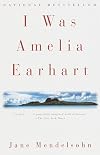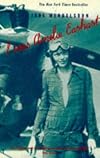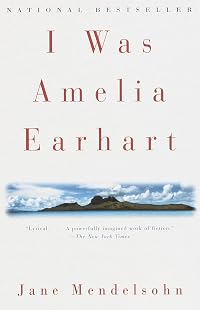
I Was Amelia Earhart
by Jane Mendelsohn
On This Page
Description
Fiction. Literature. Historical Fiction. HTML:In this brilliantly imagined novel, Amelia Earhart tells us what happened after she and her navigator, Fred Noonan, disappeared off the coast of New Guinea one glorious, windy day in 1937. And she tells us about herself.There is her love affair with flying ("The sky is flesh") . . . .
There are her memories of the past: her childhood desire to become a heroine ("Heroines did what they wanted") . . . her marriage to G.P. Putnam, who promoted show more her to fame, but was willing to gamble her life so that the book she was writing about her round-the-world flight would sell out before Christmas.
There is the flight itself — day after magnificent or perilous or exhilarating or terrifying day ("Noonan once said any fool could have seen I was risking my life but not living it").
And there is, miraculously, an island ("We named it Heaven, as a kind of joke").
And, most important, there is Noonan . . . show less
Tags
Recommendations

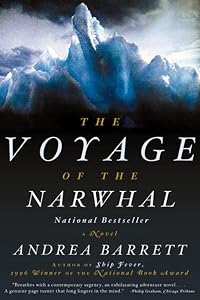
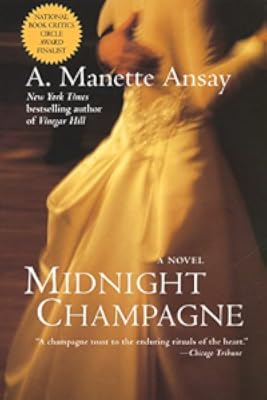
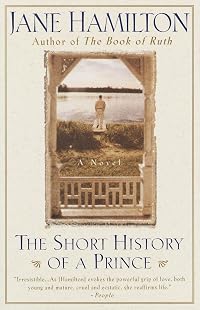
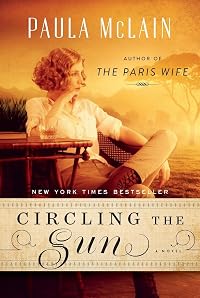







Member Recommendations
bluepiano A character in one and most characters in the other are in the same transitional state. Brpckmeier's cracker is imaginative though told in a conventional way; Mendelsohn's more literary work leaves an impression that lingers
Member Reviews
I Was Amelia Earhart by Jane Mendelsohn was a strange reading experience. Instead of a outward look at the life of Amelia Earhart, this was more akin to being inside Amelia Earhart looking out. The book details her last flight, but with intense yet random thoughts on her marriage that was more like a business partnership, her complicated relationship with her navigator, her feelings about flight and flying, and her uncanny awareness that this would be a doomed flight. Then upon an emergency landing on a small Pacific island that they call “Heaven” the two embark upon a journey of self-awareness and acceptance of each other and their fate.
This book was on the 1997 Orange Prize Short List, and I can understand why this was so just show more from the beautifully descriptive writing but as it takes place all in the main character’s head, very much as thoughts come and go in our own heads, it was also disjointed, choppy and fragmented. I found this so personal that at times I forgot this was only fictional speculation, it felt much more like I was spying on her diary.
Both compelling and poetic, I Was Amelia Earhart has left me wanting to know more about the real life of this aviatrix that was for a short time America’s Darling. I will now be on the hunt for a non-fiction account of her life that will help to fill in the blanks. show less
This book was on the 1997 Orange Prize Short List, and I can understand why this was so just show more from the beautifully descriptive writing but as it takes place all in the main character’s head, very much as thoughts come and go in our own heads, it was also disjointed, choppy and fragmented. I found this so personal that at times I forgot this was only fictional speculation, it felt much more like I was spying on her diary.
Both compelling and poetic, I Was Amelia Earhart has left me wanting to know more about the real life of this aviatrix that was for a short time America’s Darling. I will now be on the hunt for a non-fiction account of her life that will help to fill in the blanks. show less
I enjoyed this book, but I'm not sure why. The story skips, bounces, and meanders forwards and back. The point of view shifts and doubles back on itself - sometimes in a single paragraph. The words sing and plummet, soothe and rasp. I ended this short little book bemused and confused.
It is ostensibly the story of what happened to Amelia Earhart and Fred Noonan after they were lost in the Pacific. It is also a commentary on loneliness, suicide, acceptance, death, survival, dreams, and celebrity. I'll be thinking about this book for awhile. Reason enough to recommend it - even without the wonderful imagery. And recommend it I do.
It is ostensibly the story of what happened to Amelia Earhart and Fred Noonan after they were lost in the Pacific. It is also a commentary on loneliness, suicide, acceptance, death, survival, dreams, and celebrity. I'll be thinking about this book for awhile. Reason enough to recommend it - even without the wonderful imagery. And recommend it I do.
This is a dreamy book about what could have happened to Amelia Earhart on her round-the-world airplane flight in 1937. She was accompanied by her liquor-loving navigator when they were lost at sea. It's told mostly in the first person with some odd detours into third person that added to the sense of disconnection. I'm usually not a fan of alternate history accounts, but the hypnotic prose of this debut book made it a worthwhile read for me.
Apparently the Orange Prize jury thought it was worthy enough to shortlist it in 1997. I picked a quote almost at random because there were so many good ones to choose from. With writing this good and the small commitment of time, this makes a wonderful little venture into the land of "I show more Wonder"...
"Out on the water you can see the shadows of the clouds going by under the slanting sunlight. Great masses of clouds sometimes. They look like the undersides of vast ships. Their shadows look like ships on the water. The wind can be as deafening as the water, and the sound of trees in the wind is frightening. Palm leaves can make a noise more portentous than anything I've ever heard. It's a sound of rage, full of heat." (Pg. 68) show less
Apparently the Orange Prize jury thought it was worthy enough to shortlist it in 1997. I picked a quote almost at random because there were so many good ones to choose from. With writing this good and the small commitment of time, this makes a wonderful little venture into the land of "I show more Wonder"...
"Out on the water you can see the shadows of the clouds going by under the slanting sunlight. Great masses of clouds sometimes. They look like the undersides of vast ships. Their shadows look like ships on the water. The wind can be as deafening as the water, and the sound of trees in the wind is frightening. Palm leaves can make a noise more portentous than anything I've ever heard. It's a sound of rage, full of heat." (Pg. 68) show less
The Book Report: The speculation about what really happened to Amelia Earhart and Fred Noonan in 1937 has always been pretty durned feverish. This récit, can't really call it a novel because nothing happens and it's all a narrative inside the character's head, purports to be the internal monologue and reported dialogue with Noonan of Earhart herself as she takes off on her fateful round-the-world trip, gets lost, and then...well, it's the "and then" that's this story. It's a lovely thing, like most of the récits I've read over the years. Book itself is really pretty, too: A beautiful design, a jacket moody and evocative, type beautifully chosen...the whole enchilada.
My Review: This morning, I got a lovely note from a member new to LT show more regarding my review of another book. It being quite an agreeable sensation to receive praise for one's efforts, I popped over to that member's profile to say thank you, as a well-brought-up boy does. He lists in his current readings a few books about Amelia Earhart, whose name never comes up but I immediately gush to everyone around me about how I enjoyed "I Was Amelia Earhart" when I read it, and so they should trot right out and get copies theirownselves. True to form, I suggested this to my new best friend who told me I wrote a nice review that nobody else noticed, not that I'm bitter or anything but two lousy thumbs?, and then on a nagging suspicion went to look at my reviews.
I've never reviewed this book.
I was quite stunned. I have loved the atmospherics and the insights of this delight to the senses for fifteen years, and never written a review of it?!? So, after an afternoon of pleasure spent reacquainting myself with its brief, intense delights, I sat down to write this review. And sat. And sat.
This is a tough book to review because it's not a novel, so I can't point to action, and it's not a story because it's got too little urgency, and it's nothing like the popular books by popular writers that I read like everyone else to pass the time since I don't adore TV. What to say that doesn't sound pretentious and uppish? I just do not know.
I've settled on this: I'll show you the passage that made me stop reading, go get another glass of Montepulciano d'Abruzzo, scratch the dog in her favorite places, and open the book back up to read it again. If you like this passage, you will like the book:
"Now, when she tries to remember her first excursion in an airplane, she can't distinguish it from the heavenly beauty of California in 1921...The spring came suddenly; the rains stopped, the days grew noticeably longer, and the afternoon light felt powdery, as if it might blow away. She doesn't remember that maiden voyage, but she remembers walking across the airfield when she stepped out of the plane. Strong, fresh skirts of breeze brushed against her face and body as she walked across the landing strip. Strands of her honey-blonde hair swept into her line of sight. She looked out past the hangars, over a field of tall, dry grass, and in the buttery light, with the wind grazing past her, she thought she could see forever. She had the sensation of seeing a length of time stretch out in front of her, endlessly, effortlessly, on an invisible wing. She felt as though an experience she had always anticipated were about to take place, as if a tender, unearthly feeling were finally going to reveal itself to her." (pp113-114, Knopf hardcover edition)
So? show less
My Review: This morning, I got a lovely note from a member new to LT show more regarding my review of another book. It being quite an agreeable sensation to receive praise for one's efforts, I popped over to that member's profile to say thank you, as a well-brought-up boy does. He lists in his current readings a few books about Amelia Earhart, whose name never comes up but I immediately gush to everyone around me about how I enjoyed "I Was Amelia Earhart" when I read it, and so they should trot right out and get copies theirownselves. True to form, I suggested this to my new best friend who told me I wrote a nice review that nobody else noticed, not that I'm bitter or anything but two lousy thumbs?, and then on a nagging suspicion went to look at my reviews.
I've never reviewed this book.
I was quite stunned. I have loved the atmospherics and the insights of this delight to the senses for fifteen years, and never written a review of it?!? So, after an afternoon of pleasure spent reacquainting myself with its brief, intense delights, I sat down to write this review. And sat. And sat.
This is a tough book to review because it's not a novel, so I can't point to action, and it's not a story because it's got too little urgency, and it's nothing like the popular books by popular writers that I read like everyone else to pass the time since I don't adore TV. What to say that doesn't sound pretentious and uppish? I just do not know.
I've settled on this: I'll show you the passage that made me stop reading, go get another glass of Montepulciano d'Abruzzo, scratch the dog in her favorite places, and open the book back up to read it again. If you like this passage, you will like the book:
"Now, when she tries to remember her first excursion in an airplane, she can't distinguish it from the heavenly beauty of California in 1921...The spring came suddenly; the rains stopped, the days grew noticeably longer, and the afternoon light felt powdery, as if it might blow away. She doesn't remember that maiden voyage, but she remembers walking across the airfield when she stepped out of the plane. Strong, fresh skirts of breeze brushed against her face and body as she walked across the landing strip. Strands of her honey-blonde hair swept into her line of sight. She looked out past the hangars, over a field of tall, dry grass, and in the buttery light, with the wind grazing past her, she thought she could see forever. She had the sensation of seeing a length of time stretch out in front of her, endlessly, effortlessly, on an invisible wing. She felt as though an experience she had always anticipated were about to take place, as if a tender, unearthly feeling were finally going to reveal itself to her." (pp113-114, Knopf hardcover edition)
So? show less
Amelia Earhart did not die. Her twin-engine Lockheed Electra did not mysteriously vanish over the South Pacific in 1937 during the last leg of her attempt to circle the globe at the equator.
That’s the premise behind the wafer-thin novel "I Was Amelia Earhart" by Jane Mendelsohn. The book, in alternate first- and third-person voices, imagines that Earhart and her navigator, Fred Noonan, veered off course over the ocean, ran out of fuel and landed on the proverbial uncharted desert island. Over the course of the novel, they fight, they romance, they drink, they try to survive. That’s it. That’s the whole plot.
But you don’t read "I Was Amelia Earhart" for plot. No surprises here: history is not re-written; Earhart is not rescued; show more there’s no ticker-tape parade down Wall Street. Rather, you read it for the lyrical prose. Mendelsohn has taken great care to construct her sentences word by word. You’ve got to admire a book that begins with a sentence like "The sky is flesh." It’s a smooth, quick ride from that point on. I turned off the TV, fed the cats and finished this novel in one night.
But for all its compelling images and the light, easy touch Mendelsohn applies to the pace, this is not a very deep read. I did not have very much insight into the life of Amelia Earhart after I’d turned the last page. (Happily, this book led me to Earhart’s own autobiography, "Last Flight," which was compiled by her husband after her death/disappearance) This novel is like cotton candy. It tastes great while it’s on your tongue, but it soon melts away. show less
That’s the premise behind the wafer-thin novel "I Was Amelia Earhart" by Jane Mendelsohn. The book, in alternate first- and third-person voices, imagines that Earhart and her navigator, Fred Noonan, veered off course over the ocean, ran out of fuel and landed on the proverbial uncharted desert island. Over the course of the novel, they fight, they romance, they drink, they try to survive. That’s it. That’s the whole plot.
But you don’t read "I Was Amelia Earhart" for plot. No surprises here: history is not re-written; Earhart is not rescued; show more there’s no ticker-tape parade down Wall Street. Rather, you read it for the lyrical prose. Mendelsohn has taken great care to construct her sentences word by word. You’ve got to admire a book that begins with a sentence like "The sky is flesh." It’s a smooth, quick ride from that point on. I turned off the TV, fed the cats and finished this novel in one night.
But for all its compelling images and the light, easy touch Mendelsohn applies to the pace, this is not a very deep read. I did not have very much insight into the life of Amelia Earhart after I’d turned the last page. (Happily, this book led me to Earhart’s own autobiography, "Last Flight," which was compiled by her husband after her death/disappearance) This novel is like cotton candy. It tastes great while it’s on your tongue, but it soon melts away. show less
Planes used to be vehicles for dreaming. They were strong and curvaceous, manly and womanly at the same time, simple, almost old-fashioned mechanical toys and vessels carrying the future. As soon as you saw a plane, you started dreaming. It was a thrill just to catch a glimpse of one.
A short book whose story is an imaginative recreation of Amelia Earhart's last flight, and its aftermath. The blurb on the back cover mentions its similarity to a J.G. Ballard story and it did remind me quite a lot of "The Unlimited Dream Company". The tale of a lost pilot, the dreamlike atmosphere of events after the crash, the uncertainty about whether events are really happening or just the fantasy of a dying pilot, are all reminiscent of Ballard's writings.
A short book whose story is an imaginative recreation of Amelia Earhart's last flight, and its aftermath. The blurb on the back cover mentions its similarity to a J.G. Ballard story and it did remind me quite a lot of "The Unlimited Dream Company". The tale of a lost pilot, the dreamlike atmosphere of events after the crash, the uncertainty about whether events are really happening or just the fantasy of a dying pilot, are all reminiscent of Ballard's writings.
Today I read an article in The New Yorker about Earhart, which cited several books about the aviatrix, including this fictional one by Mendelsohn. The magazine piece was enough to make me go find my copy of I WAS AMELIA EARHART, which has been languishing unread in my bookcase for several years. The book is a short, slight thing - a novella really, which I was able to read in its entirety in just a few hours. It began well, with clean crisp prose and a minimalist approach to dialogue that made me think of Hemingway. To wit, this exchange between Earhart and her navigator, Fred Noonan, a known drunk -
"I climb down from the plane and hold out my hand. She's looking fine. We're working on the radio. I have grease on my face and a show more screwdriver in my hand. He knows that I don't like him. He plants a kiss on my cheek and I smile wanly ..."
And so on - you know, terse tough guy kinda stuff. The trouble is it doesn't last. After Earhart's plane disappears and the fantasy part begins, the prose becomes purple and unwieldy and the point of view keeps shifting from first person to third to omniscient, etc. And these two people who so disliked each other become passionate lovers - real bodice-ripping romance kinda crap. I mean I know we have no idea what happened to Earhart and Noonan on that fateful day in 1937, but this jungle love stuff just becomes a bit much. The last fifty pages or so were like a bad dream. I won't say I hated the book, because I didn't. It's an interesting premise, and I kept thinking that this is kind of like Waller's Bridges of Madison County, which I thought was purely awful as a book, but the film version with Eastwood and Streep was great. A film from I WAS AMELIA EARHART might be just as good, handled correctly. So I'm not gonna "dis" this book completely. Naw, it's not great, but it's not awful either. You did okay with this idea, Jane. Now find a filmmaker, okay? show less
"I climb down from the plane and hold out my hand. She's looking fine. We're working on the radio. I have grease on my face and a show more screwdriver in my hand. He knows that I don't like him. He plants a kiss on my cheek and I smile wanly ..."
And so on - you know, terse tough guy kinda stuff. The trouble is it doesn't last. After Earhart's plane disappears and the fantasy part begins, the prose becomes purple and unwieldy and the point of view keeps shifting from first person to third to omniscient, etc. And these two people who so disliked each other become passionate lovers - real bodice-ripping romance kinda crap. I mean I know we have no idea what happened to Earhart and Noonan on that fateful day in 1937, but this jungle love stuff just becomes a bit much. The last fifty pages or so were like a bad dream. I won't say I hated the book, because I didn't. It's an interesting premise, and I kept thinking that this is kind of like Waller's Bridges of Madison County, which I thought was purely awful as a book, but the film version with Eastwood and Streep was great. A film from I WAS AMELIA EARHART might be just as good, handled correctly. So I'm not gonna "dis" this book completely. Naw, it's not great, but it's not awful either. You did okay with this idea, Jane. Now find a filmmaker, okay? show less
Members
- Recently Added By
Published Reviews
Ms. Mendelsohn has chosen to use the bare-boned outlines of the aviator's life as an apmature for a poetic meditation on freedom and love and flight.... Ms. Mendelsohn invests her story with the force of fable. She has invented in these pages a heroine who may bear little resemblance to the real-life Amelia Earhart, but who remains, nonetheless, every bit the heroine she dreamed of becoming.
added by Lemeritus
Past and present, fact and fiction, first-person and third blend into a life of the celebrated aviatrix-both before and after her famed disappearance in 1937, at age 39-that unfolds with the surreal precision of a dream and that marks first novelist Mendelsohn as a writer to watch....The Earhart limned here is materialistic, glory-seeking, sexually hungry, outrageously self-absorbed and show more utterly charismatic. show less
added by Lemeritus
First-novelist Mendelsohn gives us Amelia Earhart's fictive autobiography, written as a message in a bottle from the desert island on which she spent her last days....The melancholy tone of the opening is completed splendidly in the flat stoicism of the end. Strange, slight, but wonderful: a modest portrait that manages to create some moments of exceptional intensity and power of feeling.
added by Lemeritus
Lists

Favourite Women's Prize for Fiction, Orange & Bailey's Prize contenders
132 works; 52 members

A Novel Cure
742 works; 23 members
Author Information

5 Works 1,215 Members
Awards and Honors
Common Knowledge
- Original title
- I Was Amelia Earhart: A Novel
- Original publication date
- 1996
- People/Characters
- Amelia Earhart
- Epigraph
- But in the roar of the wind she heard the roar of an aeroplane coming nearer and nearer. - Virginia Woolf, Orlando
- Dedication
- For Nick
- First words
- The sky is flesh.
- Last words
- (Click to show. Warning: May contain spoilers.)I believe that it continues.
- Original language
- English
- Canonical DDC/MDS
- 813.54
- Canonical LCC
- PS3563.E482
Classifications
Statistics
- Members
- 847
- Popularity
- 32,322
- Reviews
- 18
- Rating
- (3.43)
- Languages
- 5 — Danish, English, Finnish, French, Italian
- Media
- Paper, Audiobook, Ebook
- ISBNs
- 21
- ASINs
- 8