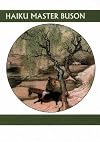
Haiku Master Buson
by Yosa Buson
On This Page
Description
Haiku Master Buson is the only translation of the work of this important haiku poet in English. Buson (1716-1783), along with Basho and Issa, is recognized as one of the three Japanese masters of the haiku. In addition to a large selection of haiku, the book also includes a selection of Buson's prose and a critical introduction. Edith Shiffert is a poet who has lived in Kyoto, Japan, since the 1960s. Her most recent volume is titledPathways. The lateYuki Sawa was a professor at Kyoto Seika show more University. show lessTags
Recommendations













Member Reviews
Buson is considered one of the 4 great haiku masters. He was an artist by trade, and his haiku has a strong sense of imagery and reflects a keen sense of observation. He seems to have viewed Basho as his primary influence, and he is probably best contrasted with the other great haiku masters by having lived a fairly ordinary and relatively happy life.
This is a good overall compilation of Buson's works. It includes several introductory essays on his poetry and a brief biography -- the introductory essays are a bit disorganized, but they do the job. It also includes a hefty collection of haiku, organized by season, and a few longer poems, essays, stories, and letters by Buson. The haiku include romaji and kanji versions, so this is a nice show more book for continued study. The book is very practical: I found the translations quite accurate, if a little less exciting than I'd hoped, but with no problems I could really point my finger at. I particularly enjoyed Buson's little "ghost stories" about foxes and badgers. I found that his poems inspired me to write quite a bit in imitation, so Buson definitely had his artistic effect on me. show less
This is a good overall compilation of Buson's works. It includes several introductory essays on his poetry and a brief biography -- the introductory essays are a bit disorganized, but they do the job. It also includes a hefty collection of haiku, organized by season, and a few longer poems, essays, stories, and letters by Buson. The haiku include romaji and kanji versions, so this is a nice show more book for continued study. The book is very practical: I found the translations quite accurate, if a little less exciting than I'd hoped, but with no problems I could really point my finger at. I particularly enjoyed Buson's little "ghost stories" about foxes and badgers. I found that his poems inspired me to write quite a bit in imitation, so Buson definitely had his artistic effect on me. show less
Ratings
Members
- Recently Added By
Author Information

37+ Works 982 Members
Along with Basho and Issa, Buson was one of the three great haiku poets of the Edo Period. He is equally famous as a painter. His poetry was in the style of Basho but was distinguished by a particular lyricism and romantic subjectivity. Although more prolific than Basho, Buson is still underrepresented in English translation. (Bowker Author show more Biography) show less
Some Editions
Classifications
- Genres
- Poetry, Fiction and Literature
- DDC/MDS
- 895.6 — Literature & rhetoric Literatures of other languages Literatures of East and Southeast Asia Japanese
- LCC
- PL794.7 .B8 .H2 — Language and Literature Languages and literatures of Eastern Asia, Africa, Oceania Languages of Eastern Asia, Africa, Oceania Japanese language and literature Japanese literature Individual authors and works
- BISAC
Statistics
- Members
- 43
- Popularity
- 689,289
- Reviews
- 1
- Rating
- (4.14)
- Languages
- English
- Media
- Paper
- ISBNs
- 2