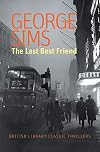
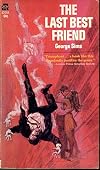
The Last Best Friend
by George Sims
On This Page
Description
"At 2pm on a Monday in 1966, Ned Balfour wakes in Corsica beside a beautiful woman. In the same instant, back in London, fellow art dealer and Dachau survivor Sam Weiss falls ten stories to his death. Ned refuses to believe that Sam's death was intentional, and his investigation thrusts him into the deceit and fraudulence of the art world, where he unmasks more than one respectable face."--Amazon.com.Tags
Recommendations

























Member Reviews
In some ways, The Last Best Friend hasn’t aged very well. Ned Balfour’s a womanizing dealer in manuscripts, separated from his wife and prey to the easy sex of 1960s London. When the novel was first published in 1967, groping was obviously more acceptable with fictional sleuths (think James Bond, Charles Mordecai, Sam Spade) than in the era of Harvey Weinstein. The novel’s beginning is a middle-aged man’s fantasy come to life: The novel opens with Ned on vacation in Capri with a pretty, receptive blonde young enough to be his daughter — visions of Roy Moore.
However, Sims eventually gets past the sleazy sex and spins a yarn so suspenseful that I couldn’t put it down. (Forgive the cliché, but it’s true!) Balfour’s best show more friend, Sammy Weiss, a Jewish Holocaust survivor beset with a terror of heights, steps out on a high ledge and then plunges to his death. Balfour is puzzled why Weiss would pick such an unlikely route to suicide, or even why Weiss would kill himself at all. Balfour proves as relentless in seeking out the truth as he is in seeking out manuscripts. Despite the niggling rape culture disquiet, I still have to highly recommend this page-turner.
In the interest of full disclosure, I received this book from NetGalley, British Library and Poisoned Pen Press in exchange for an honest review. show less
However, Sims eventually gets past the sleazy sex and spins a yarn so suspenseful that I couldn’t put it down. (Forgive the cliché, but it’s true!) Balfour’s best show more friend, Sammy Weiss, a Jewish Holocaust survivor beset with a terror of heights, steps out on a high ledge and then plunges to his death. Balfour is puzzled why Weiss would pick such an unlikely route to suicide, or even why Weiss would kill himself at all. Balfour proves as relentless in seeking out the truth as he is in seeking out manuscripts. Despite the niggling rape culture disquiet, I still have to highly recommend this page-turner.
In the interest of full disclosure, I received this book from NetGalley, British Library and Poisoned Pen Press in exchange for an honest review. show less
Decently intricate and suspenseful tale of mid-sixties London, not that it particularly feels like that's when the mystery is set. Good wordplay and interesting plot.
Slightly better read than my last outing with Sims - The End of the Web. There is a little more of a mystery to solve - why his friend committed suicide and why is he being warned off - could the two be related (of course they are). Ned Balfour is your typical noir character and perfectly at home on the pages of Sims' novel. Readers should allow for the obviously different social mores as this was written over 50 years ago.
Slightly better read than my last outing with Sims - The End of the Web. There is a little more of a mystery to solve - why his friend committed suicide and why is he being warned off - could the two be related (of course they are). Ned Balfour is your typical noir character and perfectly at home on the pages of Sims' novel. Readers should allow for the obviously different social mores as this was written over 50 years ago.
The Last Best Friend opens with recently separated Ned Balfour enjoying a lighthearted Mediterranean vacation with a young woman. He receives a cable from his best friend Sammy Weiss telling him he has a “terrible decision” to make and needs Ned’s advice. Before Ned can call him, he gets another telegram telling him his friend is dead and he must come home.
He can’t quite understand why his friend would kill himself, particularly since jumping out a window is probably that last choice of an acrophobe with vertigo. He asks around among their mutual friends to see if he can understand what the terrible decision might be and if there is some explanation.
He is soon warned off by a menacing enforcer accompanied by a few hired show more strongmen. I really don’t understand why bad guys “warn off” folks like Balfour who without their intervention might soon have decided there was really nothing to investigate. Once you are warned off, you know there is something to investigate. It’s a big flashing neon sign that there is some crime.
George Sims wrote The Last Best Friend in the Sixties and that is when it takes place. Seeing the date 1966 in the story, though, always left me disconcerted because it felt so much more like a post-World War II novel. It felt out of its time. Did England in the late Sixties still orient itself fully around World War II or what that a generational orientation? I just felt the time and the mood of the novel were incongruent.
I like the way Sims writes. I was interested in Ned Balfour and his friend’s death. I wanted to know the answers. I figured it out, but I think that’s because this plot has been used several more times since it was published in 1967. It would have been so much fresher then. It is unfortunate his work has gone out of fashion because he was a clever writer.
I received an e-galley of The Last Best Friend from the publisher through NetGalley.
The Last Best Friend at Poisoned Pen Press
George Sims at GoodReads
https://tonstantweaderreviews.wordpress.com/2017/11/06/9780881844047/ show less
He can’t quite understand why his friend would kill himself, particularly since jumping out a window is probably that last choice of an acrophobe with vertigo. He asks around among their mutual friends to see if he can understand what the terrible decision might be and if there is some explanation.
He is soon warned off by a menacing enforcer accompanied by a few hired show more strongmen. I really don’t understand why bad guys “warn off” folks like Balfour who without their intervention might soon have decided there was really nothing to investigate. Once you are warned off, you know there is something to investigate. It’s a big flashing neon sign that there is some crime.
George Sims wrote The Last Best Friend in the Sixties and that is when it takes place. Seeing the date 1966 in the story, though, always left me disconcerted because it felt so much more like a post-World War II novel. It felt out of its time. Did England in the late Sixties still orient itself fully around World War II or what that a generational orientation? I just felt the time and the mood of the novel were incongruent.
I like the way Sims writes. I was interested in Ned Balfour and his friend’s death. I wanted to know the answers. I figured it out, but I think that’s because this plot has been used several more times since it was published in 1967. It would have been so much fresher then. It is unfortunate his work has gone out of fashion because he was a clever writer.
I received an e-galley of The Last Best Friend from the publisher through NetGalley.
The Last Best Friend at Poisoned Pen Press
George Sims at GoodReads
https://tonstantweaderreviews.wordpress.com/2017/11/06/9780881844047/ show less
Ratings
Members
- Recently Added By
Lists

H.R.F. Keating's 100 Best Crime & Mystery Books
100 works; 8 members

Books Read in 2017
4,249 works; 129 members
Author Information
22+ Works 267 Members
Awards and Honors
Awards
Notable Lists
Common Knowledge
- Original publication date
- 1967
- People/Characters
- T. Edward Balfour
- Important places
- London, England, UK; Calvi, Corsica, France
- Epigraph
- 'My name is Death; the last best Friend am I'
Robert Southey
'Somehow in the case of Jews I always suspect suicide'
James Joyce - Dedication
- To
René & Doris Quero - First words
- Vertigo? 'Giddiness, dizziness (in which the patient feels as if he, as if surrounding objects, were turning round).'
- Last words
- (Click to show. Warning: May contain spoilers.)'And now--I'm going to make Sammy's 'phone-call for him.'
Classifications
Statistics
- Members
- 62
- Popularity
- 492,298
- Reviews
- 5
- Rating
- (3.45)
- Languages
- English
- Media
- Paper, Audiobook, Ebook
- ISBNs
- 12
- ASINs
- 4