On This Page
Description
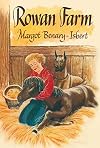
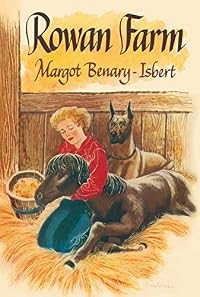
January 1948 began a wonderful year for the Lechows. With Father newly returned to Western Germany from a Russian prison camp, they were together again and could enjoy a measure of security and happiness in The Ark, their railroad car home on Rowan Farm. It was a year that held for sixteen-year-old Margret in particular, both joy and sorrow. She found real satisfaction in entering Mrs. Almut's Great Danes in two important shows and in raising several young animals which were her very own. show more She felt a vague unhappiness, however, when Mrs. Almut's son, Bernd, as well as her own brother Matthias, succumbed to the charms of an attractive, but superficial girl from Frankfurt. But Margret had little time to brood. There was the abused Shetland pony whose life she was determined to save. There was also the problem of Andrea, her younger sister, whose flair for the dramatic landed her in serious difficulties at school. And Joey and Ull, the enterprising eight-year-olds, kept Margret in a constant state of uncertainty with their magnificent ventures. The year brought Margaret new friends as well among them the resourceful young schoolmaster with his plan for rebuilding a bombed out farm, and the American woman, working in Germany with the Friends Service Committee. As in The Ark, her previous book about the Lechow family, Mrs. Benary mirrors the slow changes of the season, come war or peace, the burgeoning of life in the spring and with it a renewal of hope. Once again she creates real people whose joys and disappointments are universally understood, and above all she leaves her readers a sense of courage and faith all too rare in books today. Born in 1889 in Saarbrucken, Germany, Margot Benary-Isbert lost her beloved mother at seven years of age. The stepmother she acquired soon after, insisted that the children should be sent away. At the convent little Margot retreated into a fantasy world, making up stories and telling them as if they were true. She was punished for being a liar, but a sympathetic nun took her aside and said, "If you write these tales down they will be called fiction and nobody will call you a liar any more." That was the birth of Margot Isbert the author. show lessTags
Recommendations














Member Reviews
The second in the series of a refugee family in Germany shortly after WWII (~1948). They've found a home on a farm where the eldest son helps in the orchard & fields, the oldest daughter is kennel assistant (the farm raises Great Danes) plus all other animals, the mother begins a sewing group to show other refugee women how to makeover old clothes, another daughter stays in school & enjoys drama, and the 2 youngest boys have all kinds of adventures at their new school.
I'm reading this aloud to my son, & he keeps wanting to go visit Rowan Farm.
The author writes interestingly, with a few philosophical musings which could actually be said in our current times. The overall life philosophy of the family seems to be "no one can help us if we show more don't help ourselves," and it seems to be working well for them. The book does touch on some social problems such as the fate of veterans after release from prison. This is a mind-benders for an American as I stop to realize these are Nazi soldiers whom we are taught were quite ruthless. Yet for those caught on the Russian side of the wall, the fate for them after prison is to be sent to uranium mines in Russia where they will be worked until they die. Even for those on the American side, there is no work, homes are frequently bombed out, and food is in short supply. Until the currency reform happens(also mentioned in this tale), no one really wants to buy or sell anything.
It was interesting to read some translations of quotes that are different in this book than we know. e.g. Evensong of matthias Claudius (p. 191); God Gave Me a Little Light (Negro spiritual)(p. 267). show less
I'm reading this aloud to my son, & he keeps wanting to go visit Rowan Farm.
The author writes interestingly, with a few philosophical musings which could actually be said in our current times. The overall life philosophy of the family seems to be "no one can help us if we show more don't help ourselves," and it seems to be working well for them. The book does touch on some social problems such as the fate of veterans after release from prison. This is a mind-benders for an American as I stop to realize these are Nazi soldiers whom we are taught were quite ruthless. Yet for those caught on the Russian side of the wall, the fate for them after prison is to be sent to uranium mines in Russia where they will be worked until they die. Even for those on the American side, there is no work, homes are frequently bombed out, and food is in short supply. Until the currency reform happens(also mentioned in this tale), no one really wants to buy or sell anything.
It was interesting to read some translations of quotes that are different in this book than we know. e.g. Evensong of matthias Claudius (p. 191); God Gave Me a Little Light (Negro spiritual)(p. 267). show less
January 1948 began a wonderful year for the Lechows. With Father newly returned to Western Germany from a Russian prison camp, they were together again and could enjoy a measure of security and happiness in The Ark, their railroad car home on Rowan Farm.
It was a year that held for sixteen-year-old Margret in particular, both joy and sorrow. She found real satisfaction in entering Mrs. Almut’s Great Danes in two important shows and in raising several young animals which were her very own. She felt a vague unhappiness, however, when Mrs. Almut’s son, Bernd, as well as her own brother Matthias, succumbed to the charms of an attractive, but superficial girl from Frankfurt. But Margret had little time to brood. There was the abused show more Shetland pony whose life she was determined to save. There was also the problem of Andrea, her younger sister, whose flair for the dramatic landed her in serious difficulties at school. And Joey and Ull, the enterprising eight-year-olds, kept Margret in a constant state of uncertainty with their magnificent ventures. The year brought Margaret new friends as well—among them the resourceful young schoolmaster with his plan for rebuilding a bombed out farm, and the American woman, working in Germany with the Friends’ Service Committee. show less
It was a year that held for sixteen-year-old Margret in particular, both joy and sorrow. She found real satisfaction in entering Mrs. Almut’s Great Danes in two important shows and in raising several young animals which were her very own. She felt a vague unhappiness, however, when Mrs. Almut’s son, Bernd, as well as her own brother Matthias, succumbed to the charms of an attractive, but superficial girl from Frankfurt. But Margret had little time to brood. There was the abused show more Shetland pony whose life she was determined to save. There was also the problem of Andrea, her younger sister, whose flair for the dramatic landed her in serious difficulties at school. And Joey and Ull, the enterprising eight-year-olds, kept Margret in a constant state of uncertainty with their magnificent ventures. The year brought Margaret new friends as well—among them the resourceful young schoolmaster with his plan for rebuilding a bombed out farm, and the American woman, working in Germany with the Friends’ Service Committee. show less
Lovely follow-up to The Ark. One cares passionately about these people and their ruined Germany. The sheer grit of these farmers is humbling. It rings true, especially the "rascally boys". Highly recommended.
Not nearly as powerful or even interesting, imo, as the first book, The Ark. The kids are growing up, there are lots more characters, and politicians have decided that power is more important, already, than immediate survival. However, during this time of the covid 19 pandemic, either book you read will surely make your current worries seem minor. (well, 99 % of you, anyway)
Book darts: I want to consider reading [b:Wilhelm Meister|12292772|Wilhelm Meister|Johann Wolfgang von Goethe|https://i.gr-assets.com/images/S/compressed.photo.goodreads.com/books/1328707355l/12292772._SY75_.jpg|904823].
"But have you also asked yourself what would become of us all if God gave us only justice?" Instead, we, too, should offer mercy as well as show more punishment.
"When something hurts, we have to set our teeth, swallow hard, and forget it." show less
Book darts: I want to consider reading [b:Wilhelm Meister|12292772|Wilhelm Meister|Johann Wolfgang von Goethe|https://i.gr-assets.com/images/S/compressed.photo.goodreads.com/books/1328707355l/12292772._SY75_.jpg|904823].
"But have you also asked yourself what would become of us all if God gave us only justice?" Instead, we, too, should offer mercy as well as show more punishment.
"When something hurts, we have to set our teeth, swallow hard, and forget it." show less
Sequel to The Ark. This one is probably a little more appropriate for older kids, 10+, due to reference to a suicide in the book and more "romance". I definitely enjoyed The Ark more, but this is a good sequel for those who loved The Ark.
Sequel to The Ark showing the future of Margret and Matthias especially. An interesting insight into life in post-WW2 Germany.
Translated from the German.Ex-lib. Huron High School
Members
- Recently Added By
Lists

Women in War
148 works; 28 members
Author Information
27+ Works 1,357 Members
Some Editions
Awards and Honors
Series

Common Knowledge
- People/Characters
- Margret Lechow; Annie Almut
- Important places
- Germany
- Dedication
- For my husband, Ben whose infinite patience and understanding made it possible for me to write this book.
- First words
- On a January morning in the year 1948 a small cart drawn by a pair of slate-grey ponies came down the highway from the woods.
- Last words
- (Click to show. Warning: May contain spoilers.)Today he was not thinking of his data and calculations; he was only standing and looking - a young man in his small segment of time, stirred by the infinity that embraces all, in which the universe is enclosed and in which nothing is meaningless, nothing is lost.
Classifications
Statistics
- Members
- 304
- Popularity
- 104,946
- Reviews
- 8
- Rating
- (4.27)
- Languages
- Dutch, English, Finnish, Swedish
- Media
- Paper, Ebook
- ISBNs
- 4
- ASINs
- 3