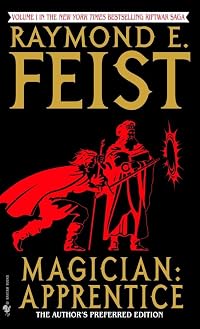
Magician: Apprentice
by Raymond E. Feist
The Riftwar Cycle: Chronological (1.1), The Riftwar Cycle: Publication (Series Name) (Collections and Selections — The Riftwar Saga, 1, Part 1), The Riftwar Cycle, Alternative Reading Order (01.1 (Riftwar Saga 01.1)), The Riftwar Saga (Partial Editions — 1.1)
On This Page
Description
To the forest on the shore of the Kingdom of the Isles, the orphan called Pug came to study with the master magician Kulgan. But though his courage won him a place at court and the heart of a lovely Princess, he was ill at ease with the normal ways of wizardry. Yet Pug's strange sort of magic would one day change forever the fates of two worlds. For dark beings from another world had opened a rift in the fabric of spacetime to begin again the age-old battle between the forces of Order and Chaos.Tags
Recommendations



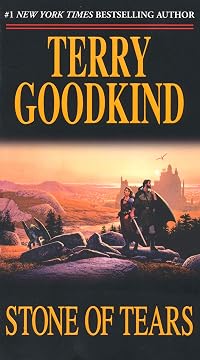
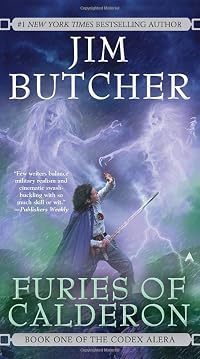
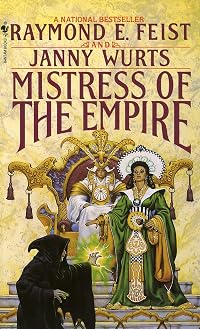
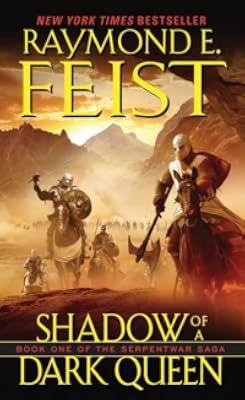
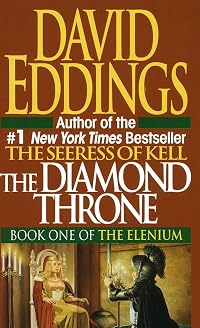
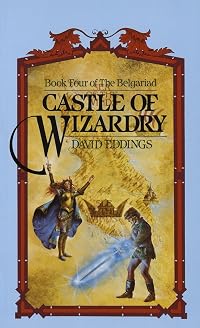
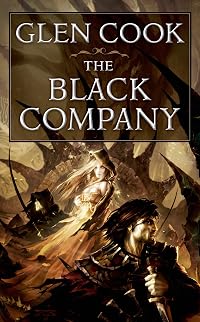
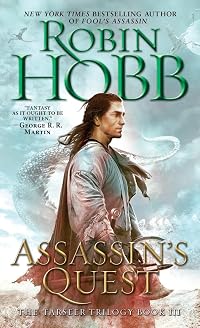
Member Recommendations
Member Reviews
I did not read Feist when these were being published, though I would likely have been the ideal audience in the late 80s. Some folks say these have aged poorly and are just indicative of certain era of fantasy writing. I'm not so sure that's the case, I think they may never have been that great.
First things first, Magician: Apprentice is the first *half* of a book, split due to length. I'm going to combine the reviews for this and Magician: Master and put the review on both. But, going into the book not knowing that can lead to a very disjointed experience at the abrupt ending.
Magician is telling the story of Pug, an orphaned farm boy in a relatively idealic fantasy castle/village who through the beneficence of those around him show more experiences a pretty pleasant life. Up to eventually being taken in as the titular magician's apprentice despite a relative lack of talent. While Pug is clearly intended to be the focus of this bildungsroman, he's missing from vast swaths of both this and the subsequent book. Possibly for the best. His young friend, Tomas, on the path to becoming a warrior is our other main character, followed by an ensemble cast of the usual suspects in this type of fantasy (ranger stand ins, a princess or two, children of nobility having to take on various levels of responsibility) who truth be told get a lot more page time than our supposed main characters. Our main source of conflict is...an invading army from another world with a superior command of magic. Which has some distressingly stereotypical depictions of probably southeast asian cultures form the time.
So why the relatively low rating from someone who is otherwise a huge fan of fantasy? Besides some technical problems (real frequent shifts in pov and tense, seemingly at random and without purpose) and a whole lot of telling rather than showing, its just not great? Its too sterotypical of high fantasy, too simple, even within its own time, not just through the lens of the fantasy we get these days. A lot of characters are clearly thinly veiled caricatures of Tolkein characters, as are some of the plot points. We even have a very duex ex machina, two dimensional, wizard who feels like a bad Gandalf impersonator, an elf queen (and really elvish society) that seems to be a direct lift as well. There are some really unnecessary early teen love triangles involving a princess that feels pulled from any number of YA fantasy of the era. There are massive time skips throughout the book...as in years...that not only rob of us seeing the events that could cause the characters to change and grow, but seem to not result in any actual dynamic character growth or change. A lot of things happen that we're told about after the fact, and the characters (besides growing much more powerful) don't change in any fundamental way. Tomas is the only character who seems even mildly changed by the titanic events he passes through, and even in that case the changes are somewhat cosmetic and certainly not as deep as they should be.
Some of the issues can be explained by the fact that this is essentially a (less than great) novelization of Feist's D&D games from the time. Midkemia was their homebrewed campaign setting. I didn't realize that until after reading, but as soon as I learned that a lot of things from the cardboard characters to the lack of dynamism, to the massive power jumps after ever time skip, all started to make a lot more sense.
What can we find that feels more positive about these two books? I can see some very early shades of the sort of political intrigue we'd later seen so much more masterfully done by George RR Martin. I think that the world building if handled with more depth and focused more on showing rather than telling, *could* have been really interesting. And there may be a lot more of that in the subsequent books in the series that focus on less godlike, overpowered characters. Especially if it was based on a D&D campaign, there should be plenty of ambitious world building that *could* be done. I'll likely only read the next two (since I got the first four from a box at my aunt's house), and hopefully there will be more of that. While I realize that this is intended for adult fantasy readers, or maybe YA at the earliest, I think that if targeted at even younger readers this isn't necessarily a bad introduction to fantasy. Honestly, I can't see reading this past my pre-teen years and being into it, but I think for that late elementary age reader really into fantasy these would be perfect. The violence and sexuality are very tame, as is the language, and I think a lot of the structural issues wouldn't be as much of a problem. I do think if marketed in that way it would benefit from the two books being broken into maybe four smaller books, but hey, let a kid feel accomplished for reading such a big book.
So yeah, give them to a kid as an intro to better stuff, they can have fun later discovering similarities to other works. show less
First things first, Magician: Apprentice is the first *half* of a book, split due to length. I'm going to combine the reviews for this and Magician: Master and put the review on both. But, going into the book not knowing that can lead to a very disjointed experience at the abrupt ending.
Magician is telling the story of Pug, an orphaned farm boy in a relatively idealic fantasy castle/village who through the beneficence of those around him show more experiences a pretty pleasant life. Up to eventually being taken in as the titular magician's apprentice despite a relative lack of talent. While Pug is clearly intended to be the focus of this bildungsroman, he's missing from vast swaths of both this and the subsequent book. Possibly for the best. His young friend, Tomas, on the path to becoming a warrior is our other main character, followed by an ensemble cast of the usual suspects in this type of fantasy (ranger stand ins, a princess or two, children of nobility having to take on various levels of responsibility) who truth be told get a lot more page time than our supposed main characters. Our main source of conflict is...an invading army from another world with a superior command of magic. Which has some distressingly stereotypical depictions of probably southeast asian cultures form the time.
So why the relatively low rating from someone who is otherwise a huge fan of fantasy? Besides some technical problems (real frequent shifts in pov and tense, seemingly at random and without purpose) and a whole lot of telling rather than showing, its just not great? Its too sterotypical of high fantasy, too simple, even within its own time, not just through the lens of the fantasy we get these days. A lot of characters are clearly thinly veiled caricatures of Tolkein characters, as are some of the plot points. We even have a very duex ex machina, two dimensional, wizard who feels like a bad Gandalf impersonator, an elf queen (and really elvish society) that seems to be a direct lift as well. There are some really unnecessary early teen love triangles involving a princess that feels pulled from any number of YA fantasy of the era. There are massive time skips throughout the book...as in years...that not only rob of us seeing the events that could cause the characters to change and grow, but seem to not result in any actual dynamic character growth or change. A lot of things happen that we're told about after the fact, and the characters (besides growing much more powerful) don't change in any fundamental way. Tomas is the only character who seems even mildly changed by the titanic events he passes through, and even in that case the changes are somewhat cosmetic and certainly not as deep as they should be.
Some of the issues can be explained by the fact that this is essentially a (less than great) novelization of Feist's D&D games from the time. Midkemia was their homebrewed campaign setting. I didn't realize that until after reading, but as soon as I learned that a lot of things from the cardboard characters to the lack of dynamism, to the massive power jumps after ever time skip, all started to make a lot more sense.
What can we find that feels more positive about these two books? I can see some very early shades of the sort of political intrigue we'd later seen so much more masterfully done by George RR Martin. I think that the world building if handled with more depth and focused more on showing rather than telling, *could* have been really interesting. And there may be a lot more of that in the subsequent books in the series that focus on less godlike, overpowered characters. Especially if it was based on a D&D campaign, there should be plenty of ambitious world building that *could* be done. I'll likely only read the next two (since I got the first four from a box at my aunt's house), and hopefully there will be more of that. While I realize that this is intended for adult fantasy readers, or maybe YA at the earliest, I think that if targeted at even younger readers this isn't necessarily a bad introduction to fantasy. Honestly, I can't see reading this past my pre-teen years and being into it, but I think for that late elementary age reader really into fantasy these would be perfect. The violence and sexuality are very tame, as is the language, and I think a lot of the structural issues wouldn't be as much of a problem. I do think if marketed in that way it would benefit from the two books being broken into maybe four smaller books, but hey, let a kid feel accomplished for reading such a big book.
So yeah, give them to a kid as an intro to better stuff, they can have fun later discovering similarities to other works. show less
Magician: Apprentice is the first book in the Riftwar Saga by Raymond E. Feist, the first subseries in the very long Riftwar Cycle series. About 20 years ago, when I was a little over 20 years old, this book began my addiction to the fantasy genre. I had of course read some fantasy throughout my childhood, but I wasn’t really conscious of it as a genre, especially not a genre for adult readers, and I had never read anything like this book. I was immediately hooked and devoured the first 16 books or so, which were all that had been published at the time. Then I moved on to other things, including other fantasy works, and never went back to it. Now that another 15 books have been published and it has been proclaimed complete, I’ve show more decided to re-read the earlier books and continue through to the end, assuming of course that I continue to enjoy it.
I wouldn’t call the title misleading exactly, but it might lead one to expect more magic than there really is. If you expect a magic school story, that is definitely not what this is. There are very few magicians in the Kingdom, and we don’t meet many in this book. Pug is the apprentice referred to by the title. We meet him as a teenager, just before he learns that he has magical potential. We do see some spells, but Pug has trouble learning how to cast them and magic isn’t really at the forefront of the story yet. Even Pug himself becomes less of a focus later in the book when we start following other characters. I enjoyed all the point-of-view characters. The book consists of coming-of-age stories, politics, strategy, and battles. The world is kind of Tolkien-like in that we have elves and dwarves and goblins, but the story did not remind me of Lord of the Rings at all and the world has its own fully-fleshed-out political structure and geography.
Since it has been so long since I’ve read this, I remembered very few details. The main thing I had remembered were some of the characters. I remembered a bit of the main story, and some of the plot details did come back to me as I read, but much of it was as if I were reading it for the first time. I was worried that this wouldn’t hold up to my memories of it now that I have a lot more epic fantasy under my belt, but it was as good as I remembered and I think I probably appreciated it for different reasons this time around also.
I was surprised to realize that this is kind of a feel-good, comfort-read type book. I hadn’t noticed that the first time around, maybe because I’ve read a lot more books with darker tones since then. Pug is an orphan, but he’s not a mistreated or abused orphan as is so common in epic fantasy. He has good friends, the adults in the story are not cruel or oblivious, and he is not abused or ridiculed or ignored. Most of the rulers we meet are good people who rule with wisdom and concern for their people. Everybody mostly gets along, with just a few minor rivalries. This is a book full of people you can respect, and I really enjoyed that. I enjoy the dark books too, where it’s the main character and maybe a couple close friends alone against a cruel, dark world, but this was a nice change of pace.
I’m very happy that I’ve finally started this series again; I’ve been wanting to do this for a long time. There were a few places here and there where my interest faded a little, but they didn’t last long. I’m rating it at 4.5 stars and rounding up to 5 on Goodreads. show less
I wouldn’t call the title misleading exactly, but it might lead one to expect more magic than there really is. If you expect a magic school story, that is definitely not what this is. There are very few magicians in the Kingdom, and we don’t meet many in this book. Pug is the apprentice referred to by the title. We meet him as a teenager, just before he learns that he has magical potential. We do see some spells, but Pug has trouble learning how to cast them and magic isn’t really at the forefront of the story yet. Even Pug himself becomes less of a focus later in the book when we start following other characters. I enjoyed all the point-of-view characters. The book consists of coming-of-age stories, politics, strategy, and battles. The world is kind of Tolkien-like in that we have elves and dwarves and goblins, but the story did not remind me of Lord of the Rings at all and the world has its own fully-fleshed-out political structure and geography.
Since it has been so long since I’ve read this, I remembered very few details. The main thing I had remembered were some of the characters. I remembered a bit of the main story, and some of the plot details did come back to me as I read, but much of it was as if I were reading it for the first time. I was worried that this wouldn’t hold up to my memories of it now that I have a lot more epic fantasy under my belt, but it was as good as I remembered and I think I probably appreciated it for different reasons this time around also.
I was surprised to realize that this is kind of a feel-good, comfort-read type book. I hadn’t noticed that the first time around, maybe because I’ve read a lot more books with darker tones since then. Pug is an orphan, but he’s not a mistreated or abused orphan as is so common in epic fantasy. He has good friends, the adults in the story are not cruel or oblivious, and he is not abused or ridiculed or ignored. Most of the rulers we meet are good people who rule with wisdom and concern for their people. Everybody mostly gets along, with just a few minor rivalries. This is a book full of people you can respect, and I really enjoyed that. I enjoy the dark books too, where it’s the main character and maybe a couple close friends alone against a cruel, dark world, but this was a nice change of pace.
I’m very happy that I’ve finally started this series again; I’ve been wanting to do this for a long time. There were a few places here and there where my interest faded a little, but they didn’t last long. I’m rating it at 4.5 stars and rounding up to 5 on Goodreads. show less
Pug and his friend, Tomas, are coming of age in the castle/keep of Duke Borric, and must stand for the choosing of apprentices. Tomas gets picked to be trained as a soldier, but Pug is left unchosen until the resident wizard decides to take him under his wing. And so they begin their lives as apprentices, dealing with noble bullies, a spoiled princess, and the oncoming threat of an invasion from another world.
Pug and his friends are great characters, and their adventures make for a very enjoyable read. The book nicely sets up the series, and I may even keep going with it eventually, but I have to say that Feist has cribbed *heavily* from Tolkien, so much so and so blatantly so that it passes from annoying into amusingly ridiculous. show more After they discover that their world is potentially under an immense threat from a strange evil race, Pug, Tomas, the wizard, and a ranger (ahem) set out on a long journey to bring the question of what should be done about it to Those in Charge. On the way, they try to cross through a mountain pass but have to backtrack because of heavy snowfall (ahem) and instead decide to take the path that leads underground and through the dwarf mines (AHEM), where they run into a giant heap of trouble from a deep and secret Evil Thing (seriously?). Meanwhile our hobbits, er, Pug and Tomas, get separated and start separate journeys, and Tomas stumbles onto a dragon hoard complete with dragon, and comes out the other side of the encounter with Magic Chainmail (oh ffs, REALLY?!). So, yeah. It's like Feist doesn't even try to cover the fact that he's cheating heavily off Tolkien's test paper. But in the end I didn't even mind because Feist's original bits are pretty darn entertaining and he at least weaves the Tolkien bits in nicely to his own story. show less
Pug and his friends are great characters, and their adventures make for a very enjoyable read. The book nicely sets up the series, and I may even keep going with it eventually, but I have to say that Feist has cribbed *heavily* from Tolkien, so much so and so blatantly so that it passes from annoying into amusingly ridiculous. show more After they discover that their world is potentially under an immense threat from a strange evil race, Pug, Tomas, the wizard, and a ranger (ahem) set out on a long journey to bring the question of what should be done about it to Those in Charge. On the way, they try to cross through a mountain pass but have to backtrack because of heavy snowfall (ahem) and instead decide to take the path that leads underground and through the dwarf mines (AHEM), where they run into a giant heap of trouble from a deep and secret Evil Thing (seriously?). Meanwhile our hobbits, er, Pug and Tomas, get separated and start separate journeys, and Tomas stumbles onto a dragon hoard complete with dragon, and comes out the other side of the encounter with Magic Chainmail (oh ffs, REALLY?!). So, yeah. It's like Feist doesn't even try to cover the fact that he's cheating heavily off Tolkien's test paper. But in the end I didn't even mind because Feist's original bits are pretty darn entertaining and he at least weaves the Tolkien bits in nicely to his own story. show less
Re-read.
I devoured this book and the next four back in the late eighties and SERIOUSLY desired more... and yet, I never did get around to picking up all the subsequent books... until now.
Of course, I needed to re-read an old love and see if it stands up to the test of time, and you know what I found?
Fantastical fantasy goodness! I love it! And you know what's better? The author did a bang-up job of re-editing this "author-preferred" text. An extra 50k words, side plots, characters, and more rounding of the world. The old story was not touched, just enhanced. What can I say?
I like this novel better this time. :)
Great elements remain, and now through my YA-jaded eyes, what could have been a cringe-worthy love triangle was nothing of the show more sort. Becoming an apprentice, solidifying life-long friendships, going on an adventure full of pathos and seeming tragedy ends with lots of valor, gorgeous descriptions, and a vast, sweeping war.
Alien invaders in the literal sense, if not in an SF sense. Alternate world, rifts, magics, slavery, and SO MUCH VALOR! :)
I'm SO glad I'm revisiting this. I fully plan to read all the way through this next year. :) Yay! What a treat! show less
I devoured this book and the next four back in the late eighties and SERIOUSLY desired more... and yet, I never did get around to picking up all the subsequent books... until now.
Of course, I needed to re-read an old love and see if it stands up to the test of time, and you know what I found?
Fantastical fantasy goodness! I love it! And you know what's better? The author did a bang-up job of re-editing this "author-preferred" text. An extra 50k words, side plots, characters, and more rounding of the world. The old story was not touched, just enhanced. What can I say?
I like this novel better this time. :)
Great elements remain, and now through my YA-jaded eyes, what could have been a cringe-worthy love triangle was nothing of the show more sort. Becoming an apprentice, solidifying life-long friendships, going on an adventure full of pathos and seeming tragedy ends with lots of valor, gorgeous descriptions, and a vast, sweeping war.
Alien invaders in the literal sense, if not in an SF sense. Alternate world, rifts, magics, slavery, and SO MUCH VALOR! :)
I'm SO glad I'm revisiting this. I fully plan to read all the way through this next year. :) Yay! What a treat! show less
A fairly straightforward adventure story in a Tolkien/D&D-esque setting. This novel is actually the first half of a book, with [b:Magician: Master|13810|Magician Master (The Riftwar Saga, #2)|Raymond E. Feist|https://i.gr-assets.com/images/S/compressed.photo.goodreads.com/books/1556425333l/13810._SY75_.jpg|766896] as the second half. As a stand alone novel it has a cliffhanger ending without any real conclusion to events. It's more like characters reach a resting point, and plot development halts without resolving anything.
As for why I rated it 3 stars: I think Feist does a good job hitting the story beats for a fantasy adventure. It works as a rags to riches story: Pug the kitchen boy rises through the feudal-ish social ladder thanks show more to the generosity of a wealthy benefactor and tutelage of a wise old man. It works as a power fantasy: with Pug going from ordinary adolescent to wielder of arcane powers. It also works as a hero's journey: Pug having his home attacked, setting out on a journey to save it, experiencing loss, and then having the journey suspended because this is half a book. There's a lot to recommend for people who like underdogs rising to greatness.
The other main facet of this book, and its sequels, is the titular "riftwar". Reading Magician: Apprentice as a war story, it's lacking a lot of what makes a good war story compelling. There's no tactics or strategy for readers to pour over, there's no charismatic leaders on either side to transform the conflict into an expression of human will, and in general there's a lack of urgency to a lot of the battles we see. The Siege of Crydee, at the very end of the book, is the most compelling battle we see, and the one where we finally have some charismatic leaders emerge, and more human drama injected into the otherwise shapeless conflict.
As with the adventure plot, the war is largely unresolved due to this being half a book, so you can't knock it for that. While it's not particularly satisfying as a war story it does scratch the culture clash itch a bit, though only a bit. The second book is better for it, with its strong "east meets west" vibes. You get just a taste of it here. show less
As for why I rated it 3 stars: I think Feist does a good job hitting the story beats for a fantasy adventure. It works as a rags to riches story: Pug the kitchen boy rises through the feudal-ish social ladder thanks show more to the generosity of a wealthy benefactor and tutelage of a wise old man. It works as a power fantasy: with Pug going from ordinary adolescent to wielder of arcane powers. It also works as a hero's journey: Pug having his home attacked, setting out on a journey to save it, experiencing loss, and then having the journey suspended because this is half a book. There's a lot to recommend for people who like underdogs rising to greatness.
The other main facet of this book, and its sequels, is the titular "riftwar". Reading Magician: Apprentice as a war story, it's lacking a lot of what makes a good war story compelling. There's no tactics or strategy for readers to pour over, there's no charismatic leaders on either side to transform the conflict into an expression of human will, and in general there's a lack of urgency to a lot of the battles we see. The Siege of Crydee, at the very end of the book, is the most compelling battle we see, and the one where we finally have some charismatic leaders emerge, and more human drama injected into the otherwise shapeless conflict.
As with the adventure plot, the war is largely unresolved due to this being half a book, so you can't knock it for that. While it's not particularly satisfying as a war story it does scratch the culture clash itch a bit, though only a bit. The second book is better for it, with its strong "east meets west" vibes. You get just a taste of it here. show less
A tepid, derivative mess. There are some intriguing concepts at the beginning, and a few passages that were lovely to read, but the bright points lose their luster against paper-thin characters, wooden dialogue, leaden and repetitive prose, ever-shifting point of view (sometimes in the middle of a scene), and shameless aping of Tolkienesque fantasy tropes. I was ready to give this book a pass as an average plot-driven heroic fantasy novel, but about two-thirds of the way through the story, the plot disintegrates as the main character disappears from the action and time starts jumping forward abruptly. Amateurish. I do not see the appeal.
Well, I gobbled that one right up-2nd installment in the Rift War series, and I am ready to move on-loving Feist's writing, loving all these characters.
This installment deals a lot with life on the other side of the rift, how Pug's life changes and who he becomes. There are changes in the world of Midkemia also, and we watch and become terrified at what is becoming of Tomas-One thing I missed though was the map of Midkemia-this one only had the Empire of Kelewan map, and I would have liked both. I know, I could Google it-just not the same when I have to hold a book and a phone and try to figure out where in the world is Carmen San Diego!!!
[a:Raymond E. Feist|8588|Raymond E. show more Feist|https://images.gr-assets.com/authors/1190654917p2/8588.jpg] you have me hooked-I am a new fan and am waiting for the day when I can make that rating 5 stars...almost there! show less
This installment deals a lot with life on the other side of the rift, how Pug's life changes and who he becomes. There are changes in the world of Midkemia also, and we watch and become terrified at what is becoming of Tomas-One thing I missed though was the map of Midkemia-this one only had the Empire of Kelewan map, and I would have liked both. I know, I could Google it-just not the same when I have to hold a book and a phone and try to figure out where in the world is Carmen San Diego!!!
[a:Raymond E. Feist|8588|Raymond E. show more Feist|https://images.gr-assets.com/authors/1190654917p2/8588.jpg] you have me hooked-I am a new fan and am waiting for the day when I can make that rating 5 stars...almost there! show less
Members
- Recently Added By
Lists

Favourite High Fantasy Books
113 works; 22 members

Farm Boy Fantasy
51 works; 21 members

NPRs your picks: top 100 Sci-Fi/Fantasy books
297 works; 80 members

1980s
356 works; 23 members

Other Wizard Fiction
45 works; 1 member

Survey of Fantasy Classics
111 works; 23 members
Author Information

Fantasy writer Raymond E. Feist was born in Southern California. He received a B.A. in Communication Arts with honors from the University of California at San Diego in 1977. His first novel, Magician, published in 1982 is the first book of The Riftwar Saga. His other series include The Serpentwar Saga, The Empire Trilogy, The Riftwar Legacy, show more Krondor's Sons, Legends of the Riftwar, Conclave of Shadows, Darkwar Saga, Chaoswar Saga, Demonwar Saga, and The Firemane Saga. Feist's work appears regularly on the bestseller lists of The New York Times and The Times of London. He has also worked with Sierra Studios and PyroTechnix to produce a role-playing game. (Bowker Author Biography) show less
Series

The Riftwar Cycle: Chronological
32 works (1.1)

The Riftwar Cycle: Publication (Series Name)
31 works (Collections and Selections — The Riftwar Saga, 1, Part 1)

The Riftwar Cycle, Alternative Reading Order
33 works (01.1 (Riftwar Saga 01.1))

The Riftwar Saga
3 works (Partial Editions — 1.1)
Belongs to Publisher Series
Goldmann (24616)
Work Relationships
Is contained in
Common Knowledge
- Canonical title
- Magician: Apprentice
- Original title
- Magician Apprentice
- Alternate titles
- Pug und Tomas
- Original publication date
- 1982-11
- People/Characters
- Pug; Tomas / Ashen-Shugar; Kulgan; Borric conDoin; Carline conDoin; Arutha conDoin (show all 20); Father Tully; Roland; Aglaranna; Lyam conDoin; Fannon; Dolgan; Rhuagh; Macros the Black; Erland conDoin (Prince); Princess Anita; Caldric; Rodric the Fourth; Amos Trask; Kasumi
- Important places
- Midkemia; Crydee; Krondor, Kingdom of the Isles, Midkemia; Sorcerer's Isle; Rillanon
- Epigraph
- A boy's will is the wind's will, And the thoughts of youth are long, long thoughts. – Longfellow, My Lost Youth
- Dedication
- This book is dedicated to the memory of my father, Felix E. Feist, in all ways, a magician.
- First words
- The storm had broken.
- Quotations
- This worrying about the future is a dry sort of work. I think it would be benefited by a mug of strong ale.
- Last words
- (Click to show. Warning: May contain spoilers.)Crumbling the scroll, he tossed it into a nearby brazier, and when it was totally consumed by flame, he put aside thoughts of risk and walked back toward his tent.
- Original language*
- Englisch
- Disambiguation notice
- This is the original novel. Please do not combine with any volume of the graphic novel adaptations.
*Some information comes from Common Knowledge in other languages. Click "Edit" for more information.
Classifications
Statistics
- Members
- 5,965
- Popularity
- 2,170
- Reviews
- 87
- Rating
- (3.93)
- Languages
- 13 — Czech, Dutch, English, French, German, Greek, Hungarian, Norwegian (Bokmål), Norwegian, Portuguese, Spanish, Swedish, Turkish
- Media
- Paper, Audiobook, Ebook
- ISBNs
- 47
- ASINs
- 16