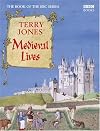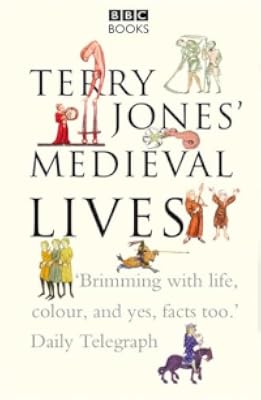
Terry Jones' Medieval Lives
by Terry Jones
On This Page
Description
Was medieval England full of knights on horseback rescuing fainting damsels in distress? Were the Middle Ages mired in superstition and ignorance? Why does nobody ever mention King Louis the First and Last? And, of course, those key questions: which monks were forbidden the delights of donning underpants... and did outlaws never wear trousers? Terry Jones and Alan Ereira are your guides to this most misrepresented and misunderstood period, and they point you to things that will surprise and show more provoke. Did you know, for example, that medieval people didn't think the world was flat? That was a total fabrication by an American journalist in the 19th century. Did you know that they didn't burn witches in the Middle Ages? That was a refinement of the so-called Renaissance. In fact, medieval kings weren't necessarily merciless tyrants, and peasants entertained at home using French pottery and fine wine. Terry Jones' Medieval Lives reveals Medieval Britain as you have never seen it before - a vibrant society teeming with individuality, intrigue and innovation. show lessTags
Recommendations







Member Recommendations
Member Reviews
Terry Jones of Monty Python fame is also a medieval scholar and this book is a companion to his BBC documentary history. Each chapter focuses on a different type of person in medieval times from peasant to damsel to outlaw to king. Jones' challenges popular misconceptions of medieval history and turns them on their head with evidence of the period being one of great change with innovation and more opportunity for the lower sorts than typically imagined. It's a well-written guide to the medieval past with doses of humor and lots of historical evidence.
Favorite Passages:
Favorite Passages:
Perhaps the most surprising example of that distinctiveness is that in England, uniquely in Europe, bold robber outlaws were necessary for the effective functioning of theshow more
kingdom.show less
England now had an extraordinary and unique legal structure, entirely invented by an ingenious and desperate monarchy. Its most remarkable feature was the amount of power, however messily administered, it placed in the hands of the local community. English law was quite unlike that on the Continent. There, law was run from above and was based on Church law (canon law) and Roman law. In England, it was totally dependent on a popular understanding of law, and the job of the courts was to enforce ‘common law’. The juries who laid accusations and tried cases were made up of people who supposedly knew what had happened. This meant they consisted very largely of people who were legally in various degrees of servitude. This would have a very striking effect on the development of the law. It meant that the ordinary Englishman, even though he was a villein or even a serf, was familiar with the law and the courts, not as a victim but as a participant in the legal process.
These were not maps. Mappa simply means ‘cloth’ and a mappa mundi is not a ‘map of the world’ but a ‘cloth of the world’. The fact that we have derived our word ‘map’ from these cloths is not the fault of the people of the Middle Ages. If there’s any blame to be apportioned it’s our fault for forgetting where the word comes from. And a cloth of the world had an entirely different purpose from an atlas (a seventeenth-century idea). A mappa mundi is a depiction of the world as a place of experiences, of human history, of notions and knowledge. It’s more like an encyclopaedia. It’s certainly not – and was never intended to be – a chart to be followed by travellers.
In the United States medical treatment is the third highest cause of death (iatrogenic death) after cancer and heart disease. So, despite our undoubted progress in understanding the chemistry and biological structure of the body, and great advances in the techniques of medical intervention, we are not exceeding the achievements of medieval doctors as much as we might expect. In their terms we are doing worse, because the objective of their care was not necessarily to save the body (which would, of course, be wonderful) but to help save the soul by allowing patients to know the hour of their death, and prepare for it. This was itself a genuine medical skill and, again, one that depended on seeing the patient as a human being.
The fact is, there is little reference to genuinely helpless high-born maidens in medieval literature. Perhaps this is not too surprising as the stories were often commissioned by noblewomen, to be read to their friends and family. We do not have enormous knowledge of their lives, but there is enough to show that the lady’s bedchamber was, in many cases, more like a salon, elegantly decorated, where she amused herself entertaining her women friends (generally her retainers, ‘damsels’ married to men of status in her husband’s service) and male visitors, and where they would ‘drink wine, play chess and listen to the harp’.*2 They would also read and be read to – silent reading was regarded as highly suspect, a sign of being antisocial or melancholy, suitable only for scholars.
I focused on the medieval period when I was getting my Master's degree, reading many of the primary sources (Domesday Book, the Anglo-Saxon Chronicle, etc.), but none of it gave me the high-level view of what the period was like - I was smothered in particularity. Terry Jones' book, however, provides that general view that I was missing. It does cover some details, often of a humorous incident, but it really concentrates on exposing the underlying economic, political and religious motives and events behind the myths of chivalry and knights and daring-do, all while providing a good look at what the lives of the common man and woman were like. Highly recommended.
I've seen the Medieval Lives TV series and this is just as good, though each contains information not found in the other. This is serious history, but Terry Jones, being Terry Jones, is able to insert plenty of humor. Highly recommended for high school and college classrooms, and for anyone interested in medieval history.
I simply couldn’t avoid it. How could I resist such wonderful temptation? I have always been a Python lover, since my first view of The Holy Grail. So naturally, when I saw that Terry Jones of “Monty Python” fame had penned a non-fiction, totally legitimate book on medieval history in England how could I not pick up a copy?
Jones’ Medieval Lives did not, of course, disappoint as a fun little read. It’s definitely one of the lighter books on general medieval history I’ve read lately. Authors with purely academic backgrounds tend to have a heavy tone; Jones was anything but, in his book. He explores the social culture of medieval England in a way one would expect from a bright fellow who is at heart an entertainer. He guides show more us through some of the different archetypes of the era: peasant, monk, minstrel, outlaw, philosopher, knight, damsel, and king. Each chapter includes some interesting little morsels of fact and what I thought was interesting anecdotes. Make no mistake, his tone may be light but he takes his history seriously.
Part of me is suspicious that historians and specialist academics might scoff at some of Jones’ conclusions. I think it’s easy to sidestep this though, just for the sake of absorbing what he has to say. His presentation of the lives of medieval people made me think. I think for anyone looking for a general overview of medieval lives will find this book useful. It’s the kind of book you want to keep handy before bed, or even, for those more adventurous, a quick peek while on the loo (gasp!). If you are looking for a more in-depth history discussion, you may want to look elsewhere. But, as an appetizer Medieval Lives is a treat.
The book itself is actually a companion piece to Jones’ Emmy-nominated BBC documentary series of the same name. I was fortunate enough to pick up a copy while on honeymoon this summer in the UK. The DVDs are as much fun to watch (complete with Gilliam-esque animation) as the book was to read. The set perhaps aren’t funny ha-ha per se, but still chuckle-worthy.
The book was originally published in full colour hardcover. If you can nab a used copy, I highly recommend it. Nice piece; includes some of the illustrations from the film. Otherwise, the current edition is just as useful but perhaps has a bit less pizzazz. It’s currently available at bookstores. The film series, I’m happy to say, is available for FREE (God love the BBC) on YouTube. You could watch the episodes before committing to the book. Either way, you win.
Really, how could I not recommend a book on medieval history that validates the usefulness of minstrels and rogues? Or shows that damsels weren’t particularly damsel-like? He challenges a lot of the stereotypes and myths—it’s what it’s all about, folks. And in the end, who doesn’t enjoy a proper history book that quotes phrases like “...the leap, the whistle and the fart”? Exactly.
(BBC Books/Ebury Publishing/Random House, 2005) show less
Jones’ Medieval Lives did not, of course, disappoint as a fun little read. It’s definitely one of the lighter books on general medieval history I’ve read lately. Authors with purely academic backgrounds tend to have a heavy tone; Jones was anything but, in his book. He explores the social culture of medieval England in a way one would expect from a bright fellow who is at heart an entertainer. He guides show more us through some of the different archetypes of the era: peasant, monk, minstrel, outlaw, philosopher, knight, damsel, and king. Each chapter includes some interesting little morsels of fact and what I thought was interesting anecdotes. Make no mistake, his tone may be light but he takes his history seriously.
Part of me is suspicious that historians and specialist academics might scoff at some of Jones’ conclusions. I think it’s easy to sidestep this though, just for the sake of absorbing what he has to say. His presentation of the lives of medieval people made me think. I think for anyone looking for a general overview of medieval lives will find this book useful. It’s the kind of book you want to keep handy before bed, or even, for those more adventurous, a quick peek while on the loo (gasp!). If you are looking for a more in-depth history discussion, you may want to look elsewhere. But, as an appetizer Medieval Lives is a treat.
The book itself is actually a companion piece to Jones’ Emmy-nominated BBC documentary series of the same name. I was fortunate enough to pick up a copy while on honeymoon this summer in the UK. The DVDs are as much fun to watch (complete with Gilliam-esque animation) as the book was to read. The set perhaps aren’t funny ha-ha per se, but still chuckle-worthy.
The book was originally published in full colour hardcover. If you can nab a used copy, I highly recommend it. Nice piece; includes some of the illustrations from the film. Otherwise, the current edition is just as useful but perhaps has a bit less pizzazz. It’s currently available at bookstores. The film series, I’m happy to say, is available for FREE (God love the BBC) on YouTube. You could watch the episodes before committing to the book. Either way, you win.
Really, how could I not recommend a book on medieval history that validates the usefulness of minstrels and rogues? Or shows that damsels weren’t particularly damsel-like? He challenges a lot of the stereotypes and myths—it’s what it’s all about, folks. And in the end, who doesn’t enjoy a proper history book that quotes phrases like “...the leap, the whistle and the fart”? Exactly.
(BBC Books/Ebury Publishing/Random House, 2005) show less
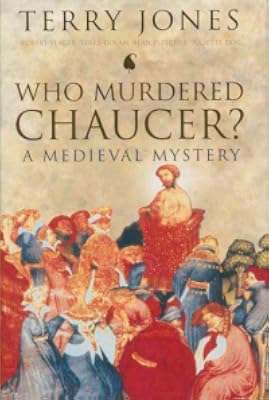
Some people have the most spectacular careers. Terry Jones has had two: star of Monty Python's Flying Circus and medieval scholar. Terry Jones' Medieval Lives is the second book of his I've had the pleasure to read (The other was the physically beautiful Who Murdered Chaucer?). This is what I think they call "popular history," in that it's written to entertain a lay audience and not for academic study. That does not mean it's simplistic, and nor is it written for a beginner of medieval history. This is good stuff, lots of interesting--occasionally funny--information presented in a readable format. I particularly liked his medieval myth-busting of silly and erroneous things we've been led to believe about people in the middle ages show more (things like they believed the world was flat.)
I didn't realize it when I picked it up, but the book is a companion to a BBC series of the same name. There are a few clips on YouTube, and they look even better than the book. I will definitely order the series on DVD. show less
I didn't realize it when I picked it up, but the book is a companion to a BBC series of the same name. There are a few clips on YouTube, and they look even better than the book. I will definitely order the series on DVD. show less
Ok, this book was lots of fun. I enjoyed how the author weaved in the little bits and pieces of quirky history with the overall medieval story, as it could have gotten boring otherwise. He definitely has a way with telling a tale. I also loved how the book was split into different people of the time period (kings, monks, knights, etc). This made separating the facts much easier.
Monty Python's Terry Jones is not just funny--- he's actually smart too! ;)
Terry Jones and Alan Ereira do a great job of presenting "Medieval Lives" in layman’s terms while at the same time being informative and entertaining. Each chapter is broken down by a particular social order, whose viewpoint offers crucial insights into life during the Medieval period.
It is informative and funny, a perfect way to impart information to a 21st century audience! It is perfect for actual historians or even just fans of 'Monty Python and the Holy Grail', myself falling under both categories, I would lean more towards people who have an affinity toward the time period. It is history with a fun twist!
Terry Jones and Alan Ereira do a great job of presenting "Medieval Lives" in layman’s terms while at the same time being informative and entertaining. Each chapter is broken down by a particular social order, whose viewpoint offers crucial insights into life during the Medieval period.
It is informative and funny, a perfect way to impart information to a 21st century audience! It is perfect for actual historians or even just fans of 'Monty Python and the Holy Grail', myself falling under both categories, I would lean more towards people who have an affinity toward the time period. It is history with a fun twist!
Members
- Recently Added By
Lists

Top Five Books of 2015
811 works; 241 members

Books Read in 2015
3,299 works; 129 members
Author Information

84+ Works 20,552 Members
Terry Jones was born in Colwyn Bay, Wales on February 1, 1942. He was a writer for such BBC programs as The Frost Report and Do Not Adjust Your Set, before joining with Graham Chapman, John Cleese, Eric Idle, and Michael Palin to form the Monty Python comedy troupe. Best remembered as the nude organist, Jones co-directed Monty Python and the Holy show more Grail (1975), and directed Life of Brian (1979) and Monty Python's The Meaning of Life (1983). Along with many Python-related books, screenplays, and records, he has written several non-fiction works including Chaucer's Knight: The Portrait of a Medieval Mercenary, Who Murdered Chaucer?: A Medieval Mystery, and Terry Jones's War on the War on Terror. He also wrote numerous children's books including The Saga of Erik the Viking, which won the Children's Book Award in 1984, Fantastic Stories, The Beast with a Thousand Teeth, The Curse of the Vampire Socks, and Bedtime Stories. (Bowker Author Biography) show less
All Editions
Awards and Honors
Notable Lists
Work Relationships
Has as a reference guide/companion
Common Knowledge
- Original publication date
- 2004-02-05
- Related movies
- Medieval Lives (2004 | IMDb)
- First words
- BEING A PEASANT DURING THE MIDDLE AGES must qualify as one of the worst jobs in history – but then we're only guessing because the peasants didn't leave much record of their lives.
- Last words
- (Click to show. Warning: May contain spoilers.)
Propaganda, thy name is History.
Classifications
Statistics
- Members
- 800
- Popularity
- 34,697
- Reviews
- 13
- Rating
- (3.83)
- Languages
- English, Hungarian
- Media
- Paper, Ebook
- ISBNs
- 7
- ASINs
- 3