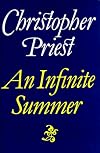
An Infinite Summer
by Christopher Priest
On This Page
Tags
Recommendations










Member Reviews
This is a collection of Christopher Priest short stories from the latter part of the 1970s. There are just five stories; three, "Whores", "The Negation" and "The Watched" are the first appearance of Priest's common setting of the "Dream Archipelago" - a series of islands spread across a world-girdling ocean, sandwiched between two warring states on a northern continent and a southern continent where the combatant states have agreed to actually conduct their war. Priest sets out in his introduction that these stories share a broad setting but otherwise have little or nothing in common: As with most authors who engage in world- or setting-building, as time went by, these self-imposed rules get bent out of shape to a greater or lesser show more degree. But here, the stories indeed have little in common, beyond a shared island name; and the later elements of the fantastic that some of the "Dream Archipelago" stories displayed are not present here.
"Whores" is an account of a personal encounter that becomes weird; "The Negation" depicts a winter landscape in the northern continent, where a young soldier and a novelist meet against a background of a totalitarian state; and "The Watched" uses an anthropological setting to examine questions of who is the watched and who the watchers in a surveillance society.
The other two stories are "An Infinite Summer" and "Palely Loitering". In the first, time-travelling visitors can "freeze" scenes that they find interesting when they visit the past; the "tableaux" thus created may "unfreeze" at random times. The protagonist was frozen with his belovéd in 1903; he unfroze in 1940, but his fiancée remains frozen. Once unfrozen, the protagonist finds he can see the visitors and also see the tableaux they have created, both of which are invisible to everyone else. He goes every day to watch his fiancée and wait for her to unfreeze.
"Palely Loitering" shows us a world where there are time differences on each side of a river through a park, and people can move forward or backwards in 24 hour increments by crossing two bridges over the river, one that takes you forward and the other takes you back. The protagonist visits the park as a child and has an encounter that changes his life.
Although these are stories from early in Priest's career, they display the delicacy of writing and scene setting that was to distinguish his work. I re-read this book for a writing project i am working on connected with the "Dream Archipelago" stories; I had not read the stories since shortly after their original publication, but I was pleasantly surprised to find my recollection of the stories and my visualisation of their settings had not deteriorated in the intervening time. That in itself is sufficiently rare in a book left unread for 45 years and so is definitely something of a recommendation. show less
"Whores" is an account of a personal encounter that becomes weird; "The Negation" depicts a winter landscape in the northern continent, where a young soldier and a novelist meet against a background of a totalitarian state; and "The Watched" uses an anthropological setting to examine questions of who is the watched and who the watchers in a surveillance society.
The other two stories are "An Infinite Summer" and "Palely Loitering". In the first, time-travelling visitors can "freeze" scenes that they find interesting when they visit the past; the "tableaux" thus created may "unfreeze" at random times. The protagonist was frozen with his belovéd in 1903; he unfroze in 1940, but his fiancée remains frozen. Once unfrozen, the protagonist finds he can see the visitors and also see the tableaux they have created, both of which are invisible to everyone else. He goes every day to watch his fiancée and wait for her to unfreeze.
"Palely Loitering" shows us a world where there are time differences on each side of a river through a park, and people can move forward or backwards in 24 hour increments by crossing two bridges over the river, one that takes you forward and the other takes you back. The protagonist visits the park as a child and has an encounter that changes his life.
Although these are stories from early in Priest's career, they display the delicacy of writing and scene setting that was to distinguish his work. I re-read this book for a writing project i am working on connected with the "Dream Archipelago" stories; I had not read the stories since shortly after their original publication, but I was pleasantly surprised to find my recollection of the stories and my visualisation of their settings had not deteriorated in the intervening time. That in itself is sufficiently rare in a book left unread for 45 years and so is definitely something of a recommendation. show less
Relectura de este gran libro relatos de Christopher Priest, al que las editoriales españolas tienen olvidado desde hace bastante tiempo. Se me vienen a la cabeza prosa exquisita y ambientación magnífica. No es una narrativa fantástica al uso, y yo diría que se acerca bastante a lo que hacía J.G Ballard en sus relatos, donde insertaba elementos atípicos, extraños que le dan un vuelco a lo que estás leyendo.
Un verano infinito. Transcurre en varias épocas diferentes, siempre con el mismo protagonista, es decir, que estamos ante un relato de viajes en el tiempo, pero bastante curioso. Este protagonista pasea a principios del siglo XX con una joven de la que está enamorado, hasta que algo sucede que deja ese instante congelado en show more el tiempo. Es una maravilla.
Rameras. Relato ambientado en El Archipiélago de Sueño, unas islas donde se mantiene la neutralidad de una guerra que lleva en marcha desde hace años. El protagonista es un soldado de permiso que decide viajar a una de estas islas para reencontrarse con una prostituta con la que estuvo hace un tiempo. Tal vez el cuento más flojo de la antología, que no malo, ya que la ambientación es excelente, así como un giro un tanto perturbador.
Vagabundeos pálidos. Cómo explicar algo de este relato sin contar demasiado. Hay un parque, con un río mercurial que sirvió para lanzar una nave al espacio, y sobre el que ahora se han construido tres puentes con lo que viajas en el tiempo: al ayer, al hoy y al mañana. Obra maestra. Sin duda uno de los mejores relatos sobre esta temática que se han escrito.
La negación. Otro relato ambientado en El Archipiélago de Sueño. Un joven soldado que vigila la frontera entre dos países en lucha, está obsesionado con La Afirmación, de Moylita Kaine. Resulta que esta escritora va a venir de visita a la isla donde está destinado, y tiene planeado ir a conocerla. Otro gran relato. A todo esto, Priest hace metaliteratura, ya que también tiene una novela titulada La Afirmación, para su mejor trabajo junto a El prestigio.
El observado. De nuevo nos encontramos en El Archipiélago de Sueño. Ordier, que amasó una fortuna fabricando escintilas, especie de insecto nanotecnológico para espiar al enemigo, vive retirado en Tumo, una de las islas. Tiene una relación con una antropóloga que estudia a los qataari, que viven refugiados en la isla, y cuya sociedad permanece casi totalmente hermética para el resto del mundo. Sin embargo, Ordier ha encontrado un modo de espiar a estos qataari, y en concreto a una joven de la que está obsesionado. Hay fragmentos geniales, y otros un tanto confusos. Aun así, deja huella. show less
Un verano infinito. Transcurre en varias épocas diferentes, siempre con el mismo protagonista, es decir, que estamos ante un relato de viajes en el tiempo, pero bastante curioso. Este protagonista pasea a principios del siglo XX con una joven de la que está enamorado, hasta que algo sucede que deja ese instante congelado en show more el tiempo. Es una maravilla.
Rameras. Relato ambientado en El Archipiélago de Sueño, unas islas donde se mantiene la neutralidad de una guerra que lleva en marcha desde hace años. El protagonista es un soldado de permiso que decide viajar a una de estas islas para reencontrarse con una prostituta con la que estuvo hace un tiempo. Tal vez el cuento más flojo de la antología, que no malo, ya que la ambientación es excelente, así como un giro un tanto perturbador.
Vagabundeos pálidos. Cómo explicar algo de este relato sin contar demasiado. Hay un parque, con un río mercurial que sirvió para lanzar una nave al espacio, y sobre el que ahora se han construido tres puentes con lo que viajas en el tiempo: al ayer, al hoy y al mañana. Obra maestra. Sin duda uno de los mejores relatos sobre esta temática que se han escrito.
La negación. Otro relato ambientado en El Archipiélago de Sueño. Un joven soldado que vigila la frontera entre dos países en lucha, está obsesionado con La Afirmación, de Moylita Kaine. Resulta que esta escritora va a venir de visita a la isla donde está destinado, y tiene planeado ir a conocerla. Otro gran relato. A todo esto, Priest hace metaliteratura, ya que también tiene una novela titulada La Afirmación, para su mejor trabajo junto a El prestigio.
El observado. De nuevo nos encontramos en El Archipiélago de Sueño. Ordier, que amasó una fortuna fabricando escintilas, especie de insecto nanotecnológico para espiar al enemigo, vive retirado en Tumo, una de las islas. Tiene una relación con una antropóloga que estudia a los qataari, que viven refugiados en la isla, y cuya sociedad permanece casi totalmente hermética para el resto del mundo. Sin embargo, Ordier ha encontrado un modo de espiar a estos qataari, y en concreto a una joven de la que está obsesionado. Hay fragmentos geniales, y otros un tanto confusos. Aun así, deja huella. show less
(...)
The interpretation of “a purpose” isn’t fully clear to me. If Priest meant that there is one overall purpose to the order of these stories, I haven’t discovered that. But if he meant the ordering was done in a purposeful manner, I do think he succeeded in creating a “new work” indeed, and there is a rhythm and interconnectedness to these stories that works well, so that they reinforce each other, and climax at the end.
Love, time travel, nerve agents and war are superficial similarities to some or even all of these stories, but the connections run much deeper: they deal with observing others and oneself, memories & images of each other, and how people change over time – because of observations & because of context. It show more must also be stressed these stories are human first, all else secondary: the war is just a setting, the sparse science fictional ideas mainly just a backdrop too.
I liked each and every story – not that I’d give every story 4 or 5 stars – but as a whole An Infinite Summer indeed is more than the sum of its parts.
(...)
Full review on Weighing A Pig Doesn't Fatten It show less
The interpretation of “a purpose” isn’t fully clear to me. If Priest meant that there is one overall purpose to the order of these stories, I haven’t discovered that. But if he meant the ordering was done in a purposeful manner, I do think he succeeded in creating a “new work” indeed, and there is a rhythm and interconnectedness to these stories that works well, so that they reinforce each other, and climax at the end.
Love, time travel, nerve agents and war are superficial similarities to some or even all of these stories, but the connections run much deeper: they deal with observing others and oneself, memories & images of each other, and how people change over time – because of observations & because of context. It show more must also be stressed these stories are human first, all else secondary: the war is just a setting, the sparse science fictional ideas mainly just a backdrop too.
I liked each and every story – not that I’d give every story 4 or 5 stars – but as a whole An Infinite Summer indeed is more than the sum of its parts.
(...)
Full review on Weighing A Pig Doesn't Fatten It show less
Very good stories here. "The Watched" and "An Infinite Summer" are very characteristic of Priest's clever narrative games and heavily polished style. But it is "Palely Loitering" that really does it for me, probably the best thing he's ever written, a truly imaginative and delightful exploration of time travel, but above all, romantic.I didn't care for the other two stories, "Whores" and "The Negation", which along with "The Watched" are reissued in the collection _The Dream Archipelago_.
How does this only have 3.7 stars? I do wonder what people expect when reading a book.
Priest at his best, each of these five stories is a work of art. He sets the tone with such ease, creates in the minds eye so completely,without overuse, that the images just stay long after the finish.
Priest at his best, each of these five stories is a work of art. He sets the tone with such ease, creates in the minds eye so completely,without overuse, that the images just stay long after the finish.
Indeholder "Introduction", "An Infinite Summer", "Whores", "Palely Loitering", "The Negation", "The Watched".
"Introduction" handler om ???
"An Infinite Summer" handler om ???
"Whores" handler om ???
"Palely Loitering" handler om ???
"The Negation" handler om ???
"The Watched" handler om ???
???
"Introduction" handler om ???
"An Infinite Summer" handler om ???
"Whores" handler om ???
"Palely Loitering" handler om ???
"The Negation" handler om ???
"The Watched" handler om ???
???
Jun 30, 2012 (Edited)Danish
Members
- Recently Added By
Author Information

63+ Works 11,856 Members
Awards and Honors
Awards
Series
Belongs to Publisher Series
Caminho de Bolso (141)
Work Relationships
Common Knowledge
- Original publication date
- 1979 (Collection) (Collection); 1976 (An Infinite Summer) (An Infinite Summer); 1978 (The Negation) (The Negation); 1978 (Palely Loitering) (Palely Loitering); 1978 (the Watched) (the Watched); 1978 (Whores) (Whores)
- Dedication
- This book is dedicated, with gratitude and affection, to:
Graeme Aaron, Bruce Barnes, Micheline Cyna-Tang,
Malcolm English, Randal Flynn, Sharon Goodman,
Philippa Maddern, Edward Mundie, Sam Sejavka,
Petrin... (show all)a Smith, Paul Voermans, David Walker,
and Kitty Vigo
Classifications
Statistics
- Members
- 141
- Popularity
- 232,608
- Reviews
- 7
- Rating
- (3.66)
- Languages
- 5 — Dutch, English, French, Portuguese, Spanish
- Media
- Paper
- ISBNs
- 8
- ASINs
- 2