On This Page
Description
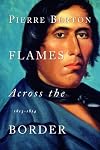
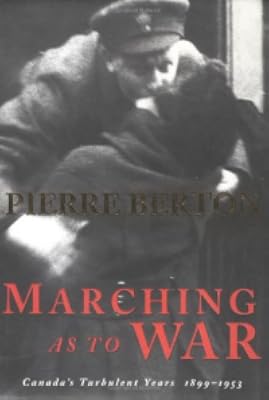
The Canada-U.S. border was in flames as the War of 1812 continued. York's parliament buildings were on fire, Niagara-on-the-Lake burned to the ground and Buffalo lay in ashes. Even the American capital of Washington, far to the south, was put to the torch. The War of 1812 had become one of the nineteenth century's bloodiest struggles. Flames Across the Border is a compelling evocation of war at its most primeval level -- the muddy fields, the frozen forests and the ominous waters where men show more fought and died. Pierre Berton skilfully captures the courage, determination and terror of the universal soldier, giving new dimension and fresh perspective to this early conflict between the two emerging nations of North America. show lessTags
Recommendations









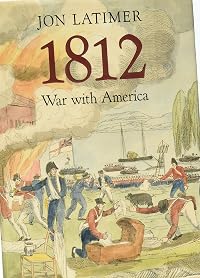

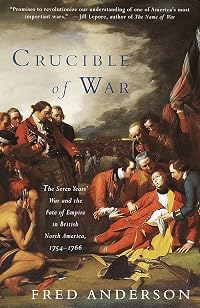


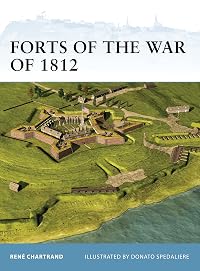
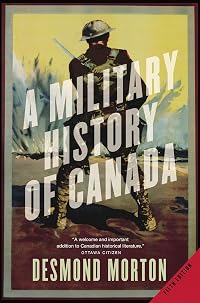










Member Reviews
When I was in middle school, we studied the War of 1812, and the course seemed to last longer than the actual war. So you'd think I would be somewhat familiar with the events in this book, which covers the second half of the conflict. Either I repressed the memories or our class really only stopped after Queenston Heights, because I learned so much by reading this, and enjoyed it to boot. A lot of the battles Berton covers here were really only just names to me -- Lundy's Lane, Crysler's Farm, the Battle of the Thames, the Battle of Stoney Creek -- but with his present-tense, front-and-centre view of the action, the conflicts come to life. He relies on primary sources for the vast majority of his dialogue, which adds an even more show more authentic flavour. Leaders on all sides receive credit or blame where such is due; on the whole I would say it is a balanced portrayal.
I wouldn't have expected this going in, but my favourite part was the Battle of Lake Erie and the other naval campaigns. The maps provided for these parts of the book were extremely helpful and Berton's accounts were especially fascinating. I attribute it to having picked up C.S. Forester earlier this year.
The afterword and the very end of the last chapter were very poignant, talking about the utter waste that a great deal of the war was. Thousands died horrifically, but to read the treaty is to see that a lot of the major issues for which they were actually fighting don't even get a look-in. Impressment, the big issue for the Americans, was quietly dropped from the treaty negotiations (it had ceased to be an issue once the British defeated Napoleon at Waterloo), and of course the First Nations and Native Americans were utterly betrayed. The contrast between the bloody battles and diplomatic dithering is striking.
This is a big book but the pages almost turn themselves once you get into the groove. Recommended for history buffs, particularly those who like naval battles (à la C.S. Forester). And if you live in southwestern Ontario or along the Great Lakes, this is a thrilling look at the history in your backyard. show less
I wouldn't have expected this going in, but my favourite part was the Battle of Lake Erie and the other naval campaigns. The maps provided for these parts of the book were extremely helpful and Berton's accounts were especially fascinating. I attribute it to having picked up C.S. Forester earlier this year.
The afterword and the very end of the last chapter were very poignant, talking about the utter waste that a great deal of the war was. Thousands died horrifically, but to read the treaty is to see that a lot of the major issues for which they were actually fighting don't even get a look-in. Impressment, the big issue for the Americans, was quietly dropped from the treaty negotiations (it had ceased to be an issue once the British defeated Napoleon at Waterloo), and of course the First Nations and Native Americans were utterly betrayed. The contrast between the bloody battles and diplomatic dithering is striking.
This is a big book but the pages almost turn themselves once you get into the groove. Recommended for history buffs, particularly those who like naval battles (à la C.S. Forester). And if you live in southwestern Ontario or along the Great Lakes, this is a thrilling look at the history in your backyard. show less
This picks up where "The Invasion of Canada" ended, at the beginning of 1813. The American forces continue to suffer a string of defeats or hollow victories until the battle at Fort Stephenson, the first significant British blunder. William Henry Harrison, the future president, proved himself the most capable of America's military leaders in this era, but otherwise the United States continued to suffer bad leadership. The leaders of Canada's successful defence went similarly sour whenever they crossed the border.
Reading about battle after battle could have been exhausting, but Berton always finds the telling detail or human interest angle that makes every story unique and engaging, and he uses adequate foreshadowing to tie every event show more to the bigger picture. The peace negotiations were just as interesting to read about. Initially the British demanded a buffer state for the native American population. They knuckled under pretty fast on that point, but just imagine if it had happened?
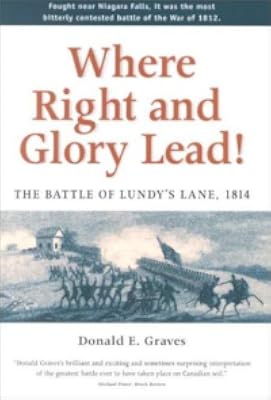
Battles cover a wider range of locations including York (Toronto), the Niagara peninsula (including Lundy's Lane), Ohio, Quebec, Washington and ending with Plattsburgh (some events are not covered in detail, e.g. Baltimore, New Orleans.) There's a couple of navy battles full of honour and blood. Maps in these books have been very helpful and plentiful, placing the locations in their historical context and clearly indicating the troop movements and points of conflict. It was an awkward tale to tell, "bloody and senseless", but Pierre Berton has done it ample justice. show less
Reading about battle after battle could have been exhausting, but Berton always finds the telling detail or human interest angle that makes every story unique and engaging, and he uses adequate foreshadowing to tie every event show more to the bigger picture. The peace negotiations were just as interesting to read about. Initially the British demanded a buffer state for the native American population. They knuckled under pretty fast on that point, but just imagine if it had happened?
Battles cover a wider range of locations including York (Toronto), the Niagara peninsula (including Lundy's Lane), Ohio, Quebec, Washington and ending with Plattsburgh (some events are not covered in detail, e.g. Baltimore, New Orleans.) There's a couple of navy battles full of honour and blood. Maps in these books have been very helpful and plentiful, placing the locations in their historical context and clearly indicating the troop movements and points of conflict. It was an awkward tale to tell, "bloody and senseless", but Pierre Berton has done it ample justice. show less
Not a professional treatise on the war, but a good read with some elements of social history. The later 1812 war without the mythological figures of Tecumseh and Brock, but still, part of the library of those who wish to know Canada.
This was the first book I ever purchased on the War of 1812. I had difficulty with Berton's narrative style at first, which is in the present tense. Nevertheless, Berton's account of the most important battles in Canada--Chippewa, Lundy's Lane, the burning of York are all quite good, and are accompanied by helful maps.
Berton also draws in actions outside the Canadian to contribute to the context they occurred in, and emphasizing their relative importance.
Berton also draws in actions outside the Canadian to contribute to the context they occurred in, and emphasizing their relative importance.
Good descriptions and details.
this was better than the first book. but wouldn't recommend it. it's so long.
Excellent read!!
Members
- Recently Added By
Author Information

103+ Works 7,436 Members
Pierre Berton was born in 1920 and raised in the Yukon. He worked in Klondike mining camps during his university years, spending four years in the army, rising from private to captain/instructor at the Royal Military College in Kingston. After the military, Berton went to Vancouver where he began his career at a newspaper. At 21, he was the show more youngest city editor on any Canadian daily. He moved to Toronto in 1947, and at the age of 31 was named managing editor of Maclean's. In 1957 he became a key member of the CBC's public affairs flagship program, Close-Up, and a permanent panelist on Front Page Challenge. He joined The Toronto Star as an associate editor and columnist in 1958, leaving 4 years later in '62 to commence The Pierre Berton Show, which ran until 1973. Since then he has appeared as host and writer on My Country, The Great Debate, Heritage Theatre, and The Secret of My Success. He has received numerous honourary degrees and served as the Chancellor of Yukon College. Berton is also a Companion of the Order of Canada, and has received a Stephen Leacock Medal for Humor in 1959, a Govenor's General Award for The Mysterious North in 1956, Klondike in 1958 and The Last Spike in 1972. Berton has also won a Nellie Award for best public broadcaster in radio in 1978, the Canadian Authors Association Literary Award for non fiction in, 1981 and the Canadian Booksellers Award in 1982. (Bowker Author Biography) show less
Series

Work Relationships
Common Knowledge
- People/Characters
- Laura Secord; James FitzGibbon; Tecumseh
- Important places
- Niagara Peninsula, Ontario, Canada; Upper Canada; Queenston Heights, Niagara Falls, Ontario, Canada; Chippawa, Ontario, Canada; St Catharines, Ontario, Canada; Decew Falls, Ontario, Canada (show all 8); Thorold, Ontario, Canada; Lundy's Lane, Niagara Falls, Ontario, Canada
- Important events
- War of 1812 (1812 | 1815)
Classifications
- Genres
- History, Nonfiction, General Nonfiction
- DDC/MDS
- 971 — History & geography History of North America Canada
- LCC
- E355 .B46 — History of the United States United States Revolution to the Civil War, 1775/1783-1861 By period Early nineteenth century, 1801/1809-1845 Madison's administrations, 1809-1817 War of 1812
- BISAC
Statistics
- Members
- 343
- Popularity
- 92,697
- Reviews
- 8
- Rating
- (3.95)
- Languages
- English, French
- Media
- Paper, Ebook
- ISBNs
- 8
- ASINs
- 3