On This Page
Description
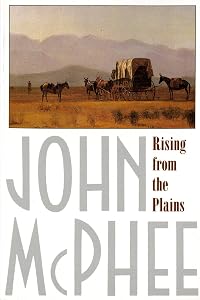
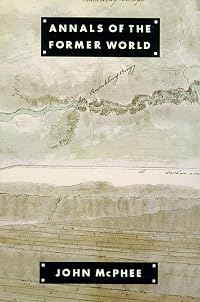
Annals of the Former World is the result of a 20-year journey. During that time, John McPhee, author of 25 books and noted writer for The New Yorker, crisscrossed the United States, roughly following the 40th parallel. The geological insights and wonderful descriptions McPhee packed into his accounts of these trips earned his remarkable book a Pulitzer Prize. The third part, Rising From the Plains, takes McPhee to the high country of Utah along the Continental Divide. His guide is David show more Love, "the grand old man of Rocky Mountain geology." Helping McPhee see the physical changes that have shaped this region over millions of years, Love also traces his own family's history in this oil-rich, windswept land. As McPhee climbs into the granite landscape of the Rockies, Rising From the Plains creates a fascinating picture of the interdependence of geology, commerce and culture. Nelson Runger's clear narration further enhances McPhee's engaging text. show lessTags
Recommendations











Member Reviews
Typical John McPhee. I mean that in a very good way. He covers so much ground (OK, pun intended), traveling all over Wyoming with a noted geologist. McPhee covers not only geology (Wyoming and other areas), but also life in wild Wyoming and the environmental harms of the various mining operations (coal, oil, uranium) in the state. I sit with a Road Atlas & an iPad when I read his Annals of the Former World series. The iPad is for the many words I've never seen before in my life! The Atlas just adds to the pleasure of following along on the road trip. This series is not a quick read, but incredibly informative!
I never became a geologist for the simple reason that my mother embarrassed the hell out of me in 10th grade. On one particular day, she shamed me so thoroughly that the mechanism which produces the blush reaction in my neurological system overheated to such a degree it broke. And it was all because I was failing Geology. To this day, you only have to say the word “rockâÂ? and I turn beet-red. This becomes particularly troublesome when people around me start talking about rock-and-roll.
At any rate, there I was back in 10th grade, blissfully minding my own business in Mr. RuddâÂÂs fifth-period Geology class. He was mid-lecture when there came a sharp rap on the door and, without waiting for an invitation, my mother poked show more her head in the door. She looked at Mr. Rudd and said, âÂÂCan I speak to you for a moment?âÂ? At the time, she worked as a secretary in the Main Office and was always poking her head into my classrooms willy-nilly. [Psychological footnote: the trauma of having your parent work in your school during the Acne Years can cause some serious permanent damage which can only be antidoted with heavy drinking and the occasional Prozac prescription. DonâÂÂt ask me how I know.]
I sat there in Geology class, my blush mechanism already firing on all pistons. Necks craned, heads swiveled in my direction, silence filled the air. You could have heard a pebble drop.
The next head to pop back into the classroom belonged to Mr. Rudd. He had a head which was elfin in natureâÂÂI always thought he looked like Yoda with smaller ears and darker hair, not a pretty sight under any circumstances. He crooked his finger at me and I rose from my seat to walk, jelly-legged, out to the hall. There, I joined the impromptu fifth-period Parent-Teacher conference already in progress. I knew what was going on: my mother had, in the course of her secretarial duties, seen my latest progress reports. The fact that the Main Office had not been blasted to bits by a parental atomic explosion was a miracle in itself.
Out there in the hallway, my motherâÂÂs face was working through all the stages of anger and disappointment. She was rendered speechless, so Mr. Rudd did all of the talking. âÂÂYour mother is concerned,âÂ? he said.
âÂÂYes, sir.âÂ?
âÂÂSheâÂÂs worried about the grade youâÂÂre getting my class this quarter. Right now, itâÂÂs an F.âÂ?
âÂÂYes, sir.âÂ?
âÂÂShe feels you can do better. And so do I. You can do better, canâÂÂt you?âÂ?
I nodded. Words were beyond me, having lodged in the middle of my throat where they refused to budge. At that point, I wished, somewhat appropriately, for our town to be struck by an earthquake or, at the very least, be buried in a mudslide. I looked at my mother, putting as much sorrow and regret in my eyes as I could. How I wished I could lie to her and tell her that I loved rocks.
Mr. Rudd cleared his throat and, in a very discreet, solemn Yoda-like manner, retreated to his classroom and picked up where he left off with his lecture: âÂÂEarthquakes ArenâÂÂt AnyoneâÂÂs Fault.âÂ?
Despite her fury and anguish, my mother finally broke down and gave me a hug there in the middle of the hallway of my high school and, even though my blush-o-meter was completely broken at this point, it did feel good. Right there and then, I resolved to do better in Mr. RuddâÂÂs class, and when the next report card was issued, damned if I didnâÂÂt do better. I got a D.
I tell you this story by way of a long introduction to John McPheeâÂÂs masterful Rising From the Plains to make a point: even the biggest dunderhead with an aversion to all things geologic can sit down to read a book with the words âÂÂfeldspar,âÂ? âÂÂEoceneâÂ? and âÂÂupthrustâÂ? without feeling the urge to throw up.
In the moments after I returned to class, my mother went back to the Main Office, and the surface of my scalp started to cool, I would never ever have imagined IâÂÂd be sitting here, 24 years later, typing these words: Geology is fun. Or, if itâÂÂs not entirely âÂÂfun,âÂ? then itâÂÂs certainly a thing of beauty in the hands of Mr. McPhee.
Rising From the Plains, which renders the formation of the Wyoming landscape into something resembling poetry, was first published in 1986 and forms part of a series of books McPhee wrote about rocks âÂÂn stuff: Basin and Range, In Suspect Terrain and Assembling California. Each of those chapters of geologic historyâÂÂin which McPhee tags along with geologists from Brooklyn to San FranciscoâÂÂhas been assembled into one volume (along with an extra chapter, âÂÂCrossing the CratonâÂ?) called Annals of the Former World. This 700-page book, as heavy and beautiful as a chunk of quartz, justly won the Pulitzer Prize for General Non-Fiction in 1999. Rather than spend a lot of words on Annals of the Former World, causing your scroll-button finger to bruise, IâÂÂll just say this: if you are in the least bit interested in McPheeâÂÂs prose or if the very mention of the word âÂÂsedimentâÂ? provokes an orgasmic spasm in your nether-regions, then by all means buy it. Money spent on McPhee is never wasted.
But now, letâÂÂs examine just one layer of that geologic timetable: Rising From the Plainsâ¦
HereâÂÂs what weâÂÂre greeted with on the very first page:
This is about high-country geology and a Rocky Mountain regional geologist. I raise that semaphore here at the start so no one will feel misled by an opening passage in which a slim young woman who is not in any sense a geologist steps down from a train in Rawlins, Wyoming, in order to go north by stagecoach into country that was still very much the Old West. She arrived in the autumn of 1905, when she was twenty-three. Her hair was so blond it looked white.
Reading those sentences, I was immediately hooked and pulled into the rest of the book. ItâÂÂs like putting one tentative foot into the edge of a swift river and having the force of the current suck you into the middle of the stream before you can even catch your breath.
McPheeâÂÂs style is sinuous, detailed and, yes, as irresistible as a river current. In this and other books (like his Alaska-adventure classic Coming Into the Country), he is always just one inch shy of fiction (at least in terms of style). Sure, heâÂÂs discussing geology, but itâÂÂs never ever dry as dust (Mr. Rudd, are you listening?). And so, we get gorgeous, instructive sentences like these:
It was a shale so black it all but smelled of low tide. In it, like mica, were millions of fish scales. It was interlayered with bentonite, which is a rock so soft it is actually plasticâÂÂpliable and porous, color of cream, sometimes the color of chocolate.
Or these:
In the Bronco, we moved through the snow toward the mountains, crossing the last of the Great Plains, which had been shaped like ocean swells by eastbound streams. Now and again, a pump jack was visible near the road, sucking up oil from deep Cretaceous sand, bobbing solemnly at its taskâÂÂa giant grasshopper absorbed in its devotions.
At the wheel of that Bronco is David Love, of the U.S. Geological Survey and then-supervisor of the SurveyâÂÂs environmental branch in Laramie, Wyoming. Like any journalist worth his weight in ink, McPhee managed to track down the most interesting character to guide him through his geologic journey across Wyoming. Known as the âÂÂgrand old man of Rocky Mountain geologyâÂ? by his colleagues, Love was born âÂÂin the center of Wyoming in 1913âÂ? and knew every inch of the land like the back of his gnarled hand.
McPhee has a keen, observant eye and he has a remarkable ability to make the ordinary extraordinary. Here, for instance, is how he describes Love when we meet him on page 5:
The grand old man had a full thatch of white hair, and crowâÂÂs feet around pale-blue eyes. He wore old gray boots with broken laces, brown canvas trousers, and a jacket made of horsehide. Between his hips was a brass belt buckle of the sort that suggests a conveyor. Ambiguously, it was scrolled with the word âÂÂLOVE.âÂ? On his head was a two-gallon Stetson, with a braided-horsehair band. He wore trifocals. There was stratigraphy even in his glasses.
Notice how subtly McPhee turns man into landscape in that last sentence. Throughout the book, the author has the uncanny knack for sidling up to his subject, appearing to look at it from the corner of his eye. With a casual flick of his wrist, he turns geology into something profound.
Most of the book consists of McPheeâÂÂs days spent with Love as they bounce around WyomingâÂÂs sage-covered bluffs in the Bronco. Every so often, McPhee includes passages from a diary, written by LoveâÂÂs motherâÂÂas it turns out, the white-blond lady stepping off the train in 1905 Rawlins. (It also turns out that LoveâÂÂs great-uncle was John Muir.) McPhee layers the two narrativesâÂÂpersonal history and geologic historyâÂÂlike the overlapping plates of the earthâÂÂs crust. It is masterful, confident writing and it never once loses our rapt attention (unlike certain 10th-grade teachers IâÂÂve knownâ¦ahem).
At this point, I must confess a personal bias toward Rising From the Plains: I am a child of Wyoming, having spent eleven years of my youth in the state. Deep affection for the state runs like granite strata through my body and so my eyes were already a bit tainted before they landed on the pages of McPheeâÂÂs book. I know this land, this sagebrush, these cliffs, these up-thrust mountains. McPhee could very well have been describing the back of my own hand.
And yet, he writes of my cherished landscape in a way that makes it completely new and, incredibly, as thrilling as the latest John Grisham bestseller (âÂÂincredibly,âÂ? since we are, after all, talking about a pile of rocks). For instance, I must have boated across Grand Teton National ParkâÂÂs Jenny Lake at least four dozen times in my life. But then I read this paragraph and a shiver trickles down my spine:
In the Teton landscape are forms of motion that would not be apparent in a motion picture. Features of the valley are cryptic, paradoxical, and bizarre. In 1983, divers went down into Jenny Lake, at the base of the Grand Teton, and reported a pair of Engelmann spruce, rooted in the lake bottom, standing upright, enclosed in eighty feet of water.
You could have told me that my mother was Queen VictoriaâÂÂs great-granddaughter and I would not have been more surprised by the revelation. This is just one small way in which McPheeâÂÂhere and in all of his booksâÂÂopens our eyes to the natural world around us, that fragile-crusted globe we take for granted and daily plow, pave and burden with our footsteps. Or, as Love himself says, âÂÂIf there was one thing we learned, it was that you donâÂÂt fight nature. You live with it. And you make the accommodationsâÂÂbecause nature does not accommodate.âÂ?
I tell you about my personal connection to Rising From the Plains because, wouldnâÂÂt you know, the geology of Wyoming was exactly what I was supposed to be studying in that fifth-period class 24 years ago. Back then, the landscape was nothing but a mind-numbing blur of stone and dust. I can only imagine what I might have become if IâÂÂd had Mr. McPhee as my guide. Perhaps today I would be out there somewhere walking along a riverbed and stopping, every now and then, to chip away at the hard beauty of the earth. show less
At any rate, there I was back in 10th grade, blissfully minding my own business in Mr. RuddâÂÂs fifth-period Geology class. He was mid-lecture when there came a sharp rap on the door and, without waiting for an invitation, my mother poked show more her head in the door. She looked at Mr. Rudd and said, âÂÂCan I speak to you for a moment?âÂ? At the time, she worked as a secretary in the Main Office and was always poking her head into my classrooms willy-nilly. [Psychological footnote: the trauma of having your parent work in your school during the Acne Years can cause some serious permanent damage which can only be antidoted with heavy drinking and the occasional Prozac prescription. DonâÂÂt ask me how I know.]
I sat there in Geology class, my blush mechanism already firing on all pistons. Necks craned, heads swiveled in my direction, silence filled the air. You could have heard a pebble drop.
The next head to pop back into the classroom belonged to Mr. Rudd. He had a head which was elfin in natureâÂÂI always thought he looked like Yoda with smaller ears and darker hair, not a pretty sight under any circumstances. He crooked his finger at me and I rose from my seat to walk, jelly-legged, out to the hall. There, I joined the impromptu fifth-period Parent-Teacher conference already in progress. I knew what was going on: my mother had, in the course of her secretarial duties, seen my latest progress reports. The fact that the Main Office had not been blasted to bits by a parental atomic explosion was a miracle in itself.
Out there in the hallway, my motherâÂÂs face was working through all the stages of anger and disappointment. She was rendered speechless, so Mr. Rudd did all of the talking. âÂÂYour mother is concerned,âÂ? he said.
âÂÂYes, sir.âÂ?
âÂÂSheâÂÂs worried about the grade youâÂÂre getting my class this quarter. Right now, itâÂÂs an F.âÂ?
âÂÂYes, sir.âÂ?
âÂÂShe feels you can do better. And so do I. You can do better, canâÂÂt you?âÂ?
I nodded. Words were beyond me, having lodged in the middle of my throat where they refused to budge. At that point, I wished, somewhat appropriately, for our town to be struck by an earthquake or, at the very least, be buried in a mudslide. I looked at my mother, putting as much sorrow and regret in my eyes as I could. How I wished I could lie to her and tell her that I loved rocks.
Mr. Rudd cleared his throat and, in a very discreet, solemn Yoda-like manner, retreated to his classroom and picked up where he left off with his lecture: âÂÂEarthquakes ArenâÂÂt AnyoneâÂÂs Fault.âÂ?
Despite her fury and anguish, my mother finally broke down and gave me a hug there in the middle of the hallway of my high school and, even though my blush-o-meter was completely broken at this point, it did feel good. Right there and then, I resolved to do better in Mr. RuddâÂÂs class, and when the next report card was issued, damned if I didnâÂÂt do better. I got a D.
I tell you this story by way of a long introduction to John McPheeâÂÂs masterful Rising From the Plains to make a point: even the biggest dunderhead with an aversion to all things geologic can sit down to read a book with the words âÂÂfeldspar,âÂ? âÂÂEoceneâÂ? and âÂÂupthrustâÂ? without feeling the urge to throw up.
In the moments after I returned to class, my mother went back to the Main Office, and the surface of my scalp started to cool, I would never ever have imagined IâÂÂd be sitting here, 24 years later, typing these words: Geology is fun. Or, if itâÂÂs not entirely âÂÂfun,âÂ? then itâÂÂs certainly a thing of beauty in the hands of Mr. McPhee.
Rising From the Plains, which renders the formation of the Wyoming landscape into something resembling poetry, was first published in 1986 and forms part of a series of books McPhee wrote about rocks âÂÂn stuff: Basin and Range, In Suspect Terrain and Assembling California. Each of those chapters of geologic historyâÂÂin which McPhee tags along with geologists from Brooklyn to San FranciscoâÂÂhas been assembled into one volume (along with an extra chapter, âÂÂCrossing the CratonâÂ?) called Annals of the Former World. This 700-page book, as heavy and beautiful as a chunk of quartz, justly won the Pulitzer Prize for General Non-Fiction in 1999. Rather than spend a lot of words on Annals of the Former World, causing your scroll-button finger to bruise, IâÂÂll just say this: if you are in the least bit interested in McPheeâÂÂs prose or if the very mention of the word âÂÂsedimentâÂ? provokes an orgasmic spasm in your nether-regions, then by all means buy it. Money spent on McPhee is never wasted.
But now, letâÂÂs examine just one layer of that geologic timetable: Rising From the Plainsâ¦
HereâÂÂs what weâÂÂre greeted with on the very first page:
This is about high-country geology and a Rocky Mountain regional geologist. I raise that semaphore here at the start so no one will feel misled by an opening passage in which a slim young woman who is not in any sense a geologist steps down from a train in Rawlins, Wyoming, in order to go north by stagecoach into country that was still very much the Old West. She arrived in the autumn of 1905, when she was twenty-three. Her hair was so blond it looked white.
Reading those sentences, I was immediately hooked and pulled into the rest of the book. ItâÂÂs like putting one tentative foot into the edge of a swift river and having the force of the current suck you into the middle of the stream before you can even catch your breath.
McPheeâÂÂs style is sinuous, detailed and, yes, as irresistible as a river current. In this and other books (like his Alaska-adventure classic Coming Into the Country), he is always just one inch shy of fiction (at least in terms of style). Sure, heâÂÂs discussing geology, but itâÂÂs never ever dry as dust (Mr. Rudd, are you listening?). And so, we get gorgeous, instructive sentences like these:
It was a shale so black it all but smelled of low tide. In it, like mica, were millions of fish scales. It was interlayered with bentonite, which is a rock so soft it is actually plasticâÂÂpliable and porous, color of cream, sometimes the color of chocolate.
Or these:
In the Bronco, we moved through the snow toward the mountains, crossing the last of the Great Plains, which had been shaped like ocean swells by eastbound streams. Now and again, a pump jack was visible near the road, sucking up oil from deep Cretaceous sand, bobbing solemnly at its taskâÂÂa giant grasshopper absorbed in its devotions.
At the wheel of that Bronco is David Love, of the U.S. Geological Survey and then-supervisor of the SurveyâÂÂs environmental branch in Laramie, Wyoming. Like any journalist worth his weight in ink, McPhee managed to track down the most interesting character to guide him through his geologic journey across Wyoming. Known as the âÂÂgrand old man of Rocky Mountain geologyâÂ? by his colleagues, Love was born âÂÂin the center of Wyoming in 1913âÂ? and knew every inch of the land like the back of his gnarled hand.
McPhee has a keen, observant eye and he has a remarkable ability to make the ordinary extraordinary. Here, for instance, is how he describes Love when we meet him on page 5:
The grand old man had a full thatch of white hair, and crowâÂÂs feet around pale-blue eyes. He wore old gray boots with broken laces, brown canvas trousers, and a jacket made of horsehide. Between his hips was a brass belt buckle of the sort that suggests a conveyor. Ambiguously, it was scrolled with the word âÂÂLOVE.âÂ? On his head was a two-gallon Stetson, with a braided-horsehair band. He wore trifocals. There was stratigraphy even in his glasses.
Notice how subtly McPhee turns man into landscape in that last sentence. Throughout the book, the author has the uncanny knack for sidling up to his subject, appearing to look at it from the corner of his eye. With a casual flick of his wrist, he turns geology into something profound.
Most of the book consists of McPheeâÂÂs days spent with Love as they bounce around WyomingâÂÂs sage-covered bluffs in the Bronco. Every so often, McPhee includes passages from a diary, written by LoveâÂÂs motherâÂÂas it turns out, the white-blond lady stepping off the train in 1905 Rawlins. (It also turns out that LoveâÂÂs great-uncle was John Muir.) McPhee layers the two narrativesâÂÂpersonal history and geologic historyâÂÂlike the overlapping plates of the earthâÂÂs crust. It is masterful, confident writing and it never once loses our rapt attention (unlike certain 10th-grade teachers IâÂÂve knownâ¦ahem).
At this point, I must confess a personal bias toward Rising From the Plains: I am a child of Wyoming, having spent eleven years of my youth in the state. Deep affection for the state runs like granite strata through my body and so my eyes were already a bit tainted before they landed on the pages of McPheeâÂÂs book. I know this land, this sagebrush, these cliffs, these up-thrust mountains. McPhee could very well have been describing the back of my own hand.
And yet, he writes of my cherished landscape in a way that makes it completely new and, incredibly, as thrilling as the latest John Grisham bestseller (âÂÂincredibly,âÂ? since we are, after all, talking about a pile of rocks). For instance, I must have boated across Grand Teton National ParkâÂÂs Jenny Lake at least four dozen times in my life. But then I read this paragraph and a shiver trickles down my spine:
In the Teton landscape are forms of motion that would not be apparent in a motion picture. Features of the valley are cryptic, paradoxical, and bizarre. In 1983, divers went down into Jenny Lake, at the base of the Grand Teton, and reported a pair of Engelmann spruce, rooted in the lake bottom, standing upright, enclosed in eighty feet of water.
You could have told me that my mother was Queen VictoriaâÂÂs great-granddaughter and I would not have been more surprised by the revelation. This is just one small way in which McPheeâÂÂhere and in all of his booksâÂÂopens our eyes to the natural world around us, that fragile-crusted globe we take for granted and daily plow, pave and burden with our footsteps. Or, as Love himself says, âÂÂIf there was one thing we learned, it was that you donâÂÂt fight nature. You live with it. And you make the accommodationsâÂÂbecause nature does not accommodate.âÂ?
I tell you about my personal connection to Rising From the Plains because, wouldnâÂÂt you know, the geology of Wyoming was exactly what I was supposed to be studying in that fifth-period class 24 years ago. Back then, the landscape was nothing but a mind-numbing blur of stone and dust. I can only imagine what I might have become if IâÂÂd had Mr. McPhee as my guide. Perhaps today I would be out there somewhere walking along a riverbed and stopping, every now and then, to chip away at the hard beauty of the earth. show less
Good but not wonderful. A little too scattered, in both time and space. As before, I found the geology interesting and the minutia of people's lives less so - and here large chunks of the book were about geology as seen by one particular man, and why and how he saw the stuff was elaborately explained by going back a generation and describing his parents, how they met, courted, married and raised their kids. The whole book was a compilation of flashbacks - to a generation before, to years before, and to other times within the author's visit with the geologist. He kept saying that the geologist, David Love, had made some comment; then when the basic structure of the book, their trip through Wyoming, got to the point where Love had made show more that comment McPhee would mention it again. It got quite annoying. It was worse in the earlier generation flashbacks - they weren't presented in chronological order, and at one point I spent most of a scene trying to figure out who "the baby" was (turned out to be Love's older brother - their only child at that point - but I'd just been reading about the two boys at five and seven (or so)). I barely noticed the events in the scene for my confusion. The geology suffered from this a bit too - a long bit discussing how plate tectonics don't explain some features, followed by an explanation of what plate tectonics are, for instance. Overall, interesting but could have used some editing for clarity. And there are several points where I'm pretty sure that things presented in the book (written in 1986) as confusing or anomalous have been solved, which makes me want to find some more current info. Despite my complaints, I'm glad I read it and will probably reread. Reasonably enjoyable. show less
Love remarked that day at the cabin: "My great uncle John Muir founded the Sierra Club, and here I am, being a traitor". .. "A scientist, as a scientist does not determine what should be the public policy in terms of exploration for oil and gas."...
Love remarked that oil shale "had been trumpeted to the skies" but, with the energy crisis in perigee, both government and industry were losing interest and pulling out. Temporarily pulling out. Sooner or later, people were going to want that shale.
... Just an amazing piece of writing from start to end, I set the 3 issues of the New Yorker aside in 1986 and only got to read it in 2016! This is from the days when the New Yorker still published articles of respectable length. The article reads show more well alongside Andrea Wulf's fine 2015 biography of Alexander von Humboldt. show less
Love remarked that oil shale "had been trumpeted to the skies" but, with the energy crisis in perigee, both government and industry were losing interest and pulling out. Temporarily pulling out. Sooner or later, people were going to want that shale.
... Just an amazing piece of writing from start to end, I set the 3 issues of the New Yorker aside in 1986 and only got to read it in 2016! This is from the days when the New Yorker still published articles of respectable length. The article reads show more well alongside Andrea Wulf's fine 2015 biography of Alexander von Humboldt. show less
A continuation of the author's explorations into America's geological history with notable geologists.
In this edition McPhee shadows David Love, telling the story of his parents and how they arrived in Wyoming and created their family. We understand why Love is a bit of a polymath and why he focuses so much on observation.
The geologic history of the Rockies is told in terms of a journey on Interstate 80 east from Nebraska to Utah. This narrative tends to be a bit more disjointed than some of the other narratives from the author, but he does well at giving a 40,000' view at the end.
Fascinating consideration of how the Rockies rose from the Plains.
In this edition McPhee shadows David Love, telling the story of his parents and how they arrived in Wyoming and created their family. We understand why Love is a bit of a polymath and why he focuses so much on observation.
The geologic history of the Rockies is told in terms of a journey on Interstate 80 east from Nebraska to Utah. This narrative tends to be a bit more disjointed than some of the other narratives from the author, but he does well at giving a 40,000' view at the end.
Fascinating consideration of how the Rockies rose from the Plains.
I loved this book, it was about the Rocky Mountains, Wyoming, geology, and one of the great Rocky Mountain geologist ever named David Love. The author took us through a journey about David Love's life and then the author took us on a journey with David Love where he describes some of the geology and events that went on in Wyoming in the past 2.5 billion years.
This book is recommended for those scientifically or geologically inclined. The author is very limited on describing the geologic terms he uses in the book so if you are not a geologist, have a geologic dictionary close by. Two thumbs up.
This book is recommended for those scientifically or geologically inclined. The author is very limited on describing the geologic terms he uses in the book so if you are not a geologist, have a geologic dictionary close by. Two thumbs up.
A book about the geology of Wyoming. Sound boring? Well, it isn't. This happens to be one of the most interesting and well written books I've read. HIghly recommended.
Members
- Recently Added By
Author Information

59+ Works 21,095 Members
McPhee was born in Princeton, New Jersey, and educated at Princeton University and Cambridge University. His writing career began at Time magazine and led to his long association with the New Yorker, where he has been a staff writer since 1965. That same year he published his first book, A Sense of Where You Are, with FSG, and soon followed with show more The Headmaster (1966), Oranges (1967), The Pine Barrens (1968), A Roomful of Hovings and Other Profiles (collection, 1969), The Crofter and the Laird (1969), Levels of the Game (1970), Encounters with the Archdruid (1972), The Deltoid Pumpkin Seed (1973), The Curve of Binding Energy (1974), Pieces of the Frame (collection, 1975), and The Survival of the Bark Canoe (1975). Both Encounters with the Archdruid and The Curve of Binding Energy were nominated for National Book Awards in the category of science Since 1977, the year in which McPhee received the Award in Literature from the American Academy of Arts and Letters and The John McPhee Reader and the bestselling Coming into the Country appeared in print, Farrar, Straus and Giroux has published Giving Good Weight (collection, 1979), Basin and Range (1981), In Suspect Terrain (1983), La Place de la Concorde Suisse (1984), Table of Contents (collection, 1985), Rising from the Plains (1986), Heirs of General Practice (in a paperback edition, 1986), The Control of Nature (1989), Looking for a Ship (1990), Assembling California (1993), The Ransom of Russian Art (1994), The Second John McPhee Reader (1996), and Irons in the Fire (1997). Annals of the Former World was published in 1998 and was awarded the Pulitzer Prize in 1999. McPhee has taught at Princeton as Ferris Professor since 1975. (Bowker Author Biography) show less
Awards and Honors
Awards
Series

Work Relationships
Is contained in
Common Knowledge
- Dedication
- For Yolanda Whitman
- First words
- This is about high-country geology and a Rocky Mountain regional geologist.
- Last words
- (Click to show. Warning: May contain spoilers.)Yes. It's close to home.
Classifications
Statistics
- Members
- 722
- Popularity
- 39,172
- Reviews
- 12
- Rating
- (4.19)
- Languages
- English
- Media
- Paper, Audiobook, Ebook
- ISBNs
- 9
- ASINs
- 7