On This Page
Description
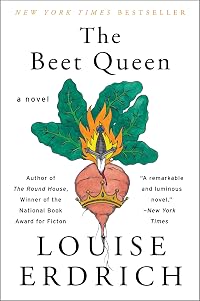
On a spring morning in 1932, young Karl and Mary Adare arrive by boxcar in Argus, North Dakota. After being orphaned in a most peculiar way, they seek refuge in the butcher shop of their aunt and her husband. So begins an exhilarating forty-year saga brimming with colorful, unforgettable characters: ordinary Mary, who will cause a miracle; seductive Karl, who lacks his sister's gift for survival; Sita, their lovely but disturbed cousin; and the half-Native American Celestine James, who will show more become Mary's best friend. Theirs is a story grounded in the tenacity of relationships, the extraordinary magic of natural events, and the unending mystery of the human condition. Bestselling, National Book Award-winning author Louise Erdrich dazzles in this vibrant and heartfelt tale of abandonment and sexual obsession, jealousy and unstinting love that explores with empathy, humor, and power the eternal mystery of the human condition. show lessTags
Recommendations

























Member Reviews
Mary and Karl Adare arrived in Argus, North Dakota in 1932, after an unusual and dramatic abandonment by their mother. Karl, 14, immediately struck out on his own, while Mary, 11, was taken in by her aunt and uncle who ran the local butcher. This sets the stage for a sprawling tale that follows both siblings into late adulthood. While Karl makes occasional appearances that give a sense of his life over the years, most of the story takes place in Argus, where Mary grows up alongside her cousin Sita and friend Celestine. Mary and Celestine eventually end up running the butcher shop, while Sita tries to distance herself from the family and move up in the world. The lives and relationships of these three women, as well as Celestine’s show more daughter Dot, are fuel for a number of comedic set pieces. There were poignant scenes as well, and these usually revolved around the male characters, which I thought was an interesting twist on the traditional “troubled woman” trope. Louise Erdrich also uses this novel to quietly point out the impact of the changing agricultural landscape, as small farms are taken over by large sugar beet operations.
The Beet Queen doesn’t have as much Native American spirituality and culture as some of her other books; I actually wish there had been more of that. However, the preposterous storylines and humor provide a different experience. If you can set aside any notions of practicality and go with the flow, you’ll enjoy the ride. show less
The Beet Queen doesn’t have as much Native American spirituality and culture as some of her other books; I actually wish there had been more of that. However, the preposterous storylines and humor provide a different experience. If you can set aside any notions of practicality and go with the flow, you’ll enjoy the ride. show less
The Beet Queen is a story about love. But not necessarily good love. It's about needing to be needed. It's about flawed characters loving each other in flawed ways.
The story begins with Mary and Karl Adare, whose mother quite literally got in a plane and flew away for good, reaching Argus, South Dakota by train during the Great Depression. Mary arrives with a fierce need for a survival and a willingness to make herself absolutely indispensible to her aunt and uncle to achieve that end. Within a few moments of their arriving in Argus, Karl is frightened by a barking dog and flees back to the train. From there, Mary and Karl's lives proceed in vastly different directions but ones that also bind them together for life. Mary inserts show more herself into life in Argus with an overbearing force that will define her entire life. Karl's life is marked by a rootlessness that sees him becoming a traveling salesman later in life.
Various characters play a significant part in the story including Mary's ambitious and eventually unhinged cousin Sita; Celestine, the best friend that Mary steals from Sita; and Wallace Pfef, a pillar of the Argus community who is unwittingly drawn into Mary, Celestine, and Karl's very unusual "family." What little that can be considered plot in this book revolves around Celestine and Karl's daughter, Wallacette nicknamed Dot, who was born on Wallace Pfef's couch during a fierce winter blizzard. Each of the characters tries misguidedly to give Dot the love that was missing from each of their lives - Mary by giving in to her every whim and being her confidant, Karl by sending oddball gifts from whereever he happens to be selling something at the time, and Wallace by attempting to win Dot's love through the staging of parties and events that should be the stuff of dreams but turn into the stuff of nightmares. Each character reveals his or her own selfishness through the love they shower on Dot eventually bequeathing her their own worst character traits and making Dot into a completely insufferable person. Erdrich reveals each one's desires, failings, and in essence, their humanity in their relations to Dot. While these characters aren't all that lovable, it's not difficult to see how grounded in reality they are.
For as I am standing there I look closer into the grandstand and see that there is someone waiting. It is my mother, and all at once I cannot stop seeing her. Her skin is rough. Her whole face seems magnetized, like ore. Her deep brown eyes are circled with dark skin, but full of eagerness. In her eyes I see the force of her love. It is bulky and hard to carry, like a package that keeps untying. It is like this dress that no excuse accounts for. It is embarrassing. I walk to her, drawn by her, unable to help myself.
This book is primarily about its characters. If you're looking for a quick moving plot or even a linear one, this book is not for you. The book is more of a "slice" of these characters lives, opening windows to the most vital parts. The bouncing between narrators and events gives the feeling of interconnected short stories instead of an entire cohesive novel. The individual stories are absorbing, but I couldn't help feeling that I was missing something. I kept waiting for everything to come together in the end, for some of the several narrative threads to resolve themselves but found myself dissatisfied. I enjoyed the writing but by the end had a feeling like that of going to the store, coming back with a lot of stuff, but not what I'd gone for in the first place. The writing is captivating. The characters come to life. The theme is valid. In the end, though, it still feels like there's something missing. show less
The story begins with Mary and Karl Adare, whose mother quite literally got in a plane and flew away for good, reaching Argus, South Dakota by train during the Great Depression. Mary arrives with a fierce need for a survival and a willingness to make herself absolutely indispensible to her aunt and uncle to achieve that end. Within a few moments of their arriving in Argus, Karl is frightened by a barking dog and flees back to the train. From there, Mary and Karl's lives proceed in vastly different directions but ones that also bind them together for life. Mary inserts show more herself into life in Argus with an overbearing force that will define her entire life. Karl's life is marked by a rootlessness that sees him becoming a traveling salesman later in life.
Various characters play a significant part in the story including Mary's ambitious and eventually unhinged cousin Sita; Celestine, the best friend that Mary steals from Sita; and Wallace Pfef, a pillar of the Argus community who is unwittingly drawn into Mary, Celestine, and Karl's very unusual "family." What little that can be considered plot in this book revolves around Celestine and Karl's daughter, Wallacette nicknamed Dot, who was born on Wallace Pfef's couch during a fierce winter blizzard. Each of the characters tries misguidedly to give Dot the love that was missing from each of their lives - Mary by giving in to her every whim and being her confidant, Karl by sending oddball gifts from whereever he happens to be selling something at the time, and Wallace by attempting to win Dot's love through the staging of parties and events that should be the stuff of dreams but turn into the stuff of nightmares. Each character reveals his or her own selfishness through the love they shower on Dot eventually bequeathing her their own worst character traits and making Dot into a completely insufferable person. Erdrich reveals each one's desires, failings, and in essence, their humanity in their relations to Dot. While these characters aren't all that lovable, it's not difficult to see how grounded in reality they are.
For as I am standing there I look closer into the grandstand and see that there is someone waiting. It is my mother, and all at once I cannot stop seeing her. Her skin is rough. Her whole face seems magnetized, like ore. Her deep brown eyes are circled with dark skin, but full of eagerness. In her eyes I see the force of her love. It is bulky and hard to carry, like a package that keeps untying. It is like this dress that no excuse accounts for. It is embarrassing. I walk to her, drawn by her, unable to help myself.
This book is primarily about its characters. If you're looking for a quick moving plot or even a linear one, this book is not for you. The book is more of a "slice" of these characters lives, opening windows to the most vital parts. The bouncing between narrators and events gives the feeling of interconnected short stories instead of an entire cohesive novel. The individual stories are absorbing, but I couldn't help feeling that I was missing something. I kept waiting for everything to come together in the end, for some of the several narrative threads to resolve themselves but found myself dissatisfied. I enjoyed the writing but by the end had a feeling like that of going to the store, coming back with a lot of stuff, but not what I'd gone for in the first place. The writing is captivating. The characters come to life. The theme is valid. In the end, though, it still feels like there's something missing. show less
Louise Erdrich is an excellent, compelling writer, with a fine sense of the quirks of human psychology, all of which is entirely evident in this early novel. And yet, it also feels a bit... off-kilter. I think it's that so many of the most pivotal events in it have this feeling of absurdity about them. Which I think is deliberate, but maybe it doesn't quite work for me? Most notably, there's the precipitating event of the whole story, in which a woman abandons her children in a strange, almost surreal sort of way: by buying a ticket for a ride in an airplane at a fair, and then just flying off with the pilot, forever. Which just kind of left me going, "huh?" for the rest of the novel. It's not that I have an issue with the absurd or the show more surreal, but there's something about it that just doesn't quite mesh with the more realistic aspects. And the characters have much the same kind of feel to them, really, that mix of the deeply believable and the weirdly over-the-top. And, while they and their inter-relationships are interesting, they're also often horrible and offputting, and there were times when I found myself getting tired of, or even disgusted with, their company.
And yet, even when she's doing things that don't 100% work... man, Erdrich can write.
Rating: It's impossible to know how to rate this, because it's either flawed but still really good or rather disappointing, depending on what standards I try to hold it to. I'm giving it a 3.5/5, but I don't know if I feel great about that. show less
And yet, even when she's doing things that don't 100% work... man, Erdrich can write.
Rating: It's impossible to know how to rate this, because it's either flawed but still really good or rather disappointing, depending on what standards I try to hold it to. I'm giving it a 3.5/5, but I don't know if I feel great about that. show less
In the second of the Love Medicine series, Erdrich brings her German ancestry into the mix, with the story of how the strangely orphaned Adare children arrived in Argus, North Dakota, looking for their Aunt Fritzie, who runs a butcher shop with her husband. Mary Adare clashes with her cousin Sita; inherits the meat business; develops a bit of a crush on Russell Kashpaw, a veteran of two wars and many wounds; and finds unsettling friendship with Russell's half sister, Celestine, the mother of a child Mary would wish to call her own. Again, complex relationships, a mixture of past and present, and hints of untold tales begging to be revealed. The title's relevance does not come clear until very near the end, which I found a bit show more unsatisfactory. In fact, this one didn't work especially well for me, possibly because it was all new---I hadn't read this one before. I think Erdrich is like Faulkner in this regard...she cannot simply be read, she must be re-read (with a nod to Jay Parini, who made the observation about Uncle Billy in the first place). show less
Louise Erdrich once said that her novels fell "together like a quilt, a crazy quilt,", and The Beet Queen is no exception. The story begins in 1932, with the orphaned young Mary and Karl Adare getting off a train in Argus, North Dakota . A threatening dog sends Karl running back to the train. Mary runs in the other direction, towards her aunt's house. Their lives literally take different paths at that point. Mary grows up as the despised cousin of lovely Sita and the foster daughter of Pete and Fritzie who own a butcher shop. Karl eventually ends up back in Minnesota, to grow up in a Catholic children's home. The people who know them, add their voices to weave a story that goes beyond Karl and Mary to include the entire town of Argus. show more Spanning forty years, the novel chronicles changes, not only within the characters, but in the town and the times in general. Erdrich has constructed a powerful novel out of many voices and individual stories. show less
I was looking forward to reading this novel for some time. I read LaRose, and thought it quite good, very realistic, and a story that left you thinking about some important human issues. But, for me, this story started off well and then deteriorated as it went along. I am all for quirky characters, but this novel is nothing but quirky characters. Not a single person here that I could truly connect with; not a moment in which I wanted to nod my head and say “yes, that is a situation or reaction I can relate to.” I neither liked nor disliked these people, and that leaves one dissatisfied.
Right to the end, I kept looking for something I could hold onto as a theme, a current that might run between these characters but speak to us all. show more They were all isolated for different, but largely self-imposed, reasons. They all seemed terribly self-centered, except for Celestine (but then open only in regard to her daughter, Dot). If there is anything that stuck out to me, it was that human contact for them seemed to be rooted only in sex. There is seldom a mention of any touching outside of that. Their relationships are as disingenuous as they can possibly be...about proximity and circumstance more than feeling or connection.
I can imagine that others might see something here that I do not. I understand the book contains characters brought over from Love Medicine. I wonder if it would have struck a different chord if I had read that book first. I still have The Round House on my shelf and will still plan to read it. It contains characters that were carried forward into LaRose, so I seem to be reading these books out of sequence. I have hopes to be brought back to Erdrich, but if this had been my first of her novels, I think I would have said she is not for me. show less
Right to the end, I kept looking for something I could hold onto as a theme, a current that might run between these characters but speak to us all. show more They were all isolated for different, but largely self-imposed, reasons. They all seemed terribly self-centered, except for Celestine (but then open only in regard to her daughter, Dot). If there is anything that stuck out to me, it was that human contact for them seemed to be rooted only in sex. There is seldom a mention of any touching outside of that. Their relationships are as disingenuous as they can possibly be...about proximity and circumstance more than feeling or connection.
I can imagine that others might see something here that I do not. I understand the book contains characters brought over from Love Medicine. I wonder if it would have struck a different chord if I had read that book first. I still have The Round House on my shelf and will still plan to read it. It contains characters that were carried forward into LaRose, so I seem to be reading these books out of sequence. I have hopes to be brought back to Erdrich, but if this had been my first of her novels, I think I would have said she is not for me. show less
It's hard to describe how I really feel about Louise Erdrich's The Beet Queen. I knew when Erdrich included a family tree in the beginning of the novel, that it was going to be intense. That's what The Beet Queen was: intense, unfortunate, and heartbreaking.
The Beet Queen tells different narratives from different point of views during 1932-1971 in North Dakota. Mary and Karl Adare are abandoned by their free spirited mother, Adelaide, and their baby brother is stolen during a fair.
They get on a boxcar on their way to their aunt and uncle's house. After arriving, they get split up: Karl winds up being a wandering salesman and Mary finds her aunt and uncle, carving out a life with them, her cousin Sita, and Sita's friend, Celestine.
Their show more stories and lives intersect. They meet new people. They start new businesses. They start new familes. Sometimes, they go crazy. They die.
The Beet Queen was an epic tale of melacholia. The characters weren't entirely likable. Their motives and actions were questionable. I felt bad for Mary because she ended up alone. I thought that Celestine, who was showed as smart enough, was stupid to sleep with Karl especially since he seemed unhinged from the get-go. Jude had no part in the narrative which was a shame because it could have been more intriguing.
Sita was a mega bitch. She was horrible to Mary and possessive to Celestine. But I felt bad on how she ended up. She went crazy and died and that was that. I hated Dot! She was absolutely atrocious! She was a spoiled unappreciative ingrate and I absolutely abhor reading her parts.
I couldn't help but feel since this is part of a series, and The Beet Queen is not first of it, I felt a bit of a disconnect. show less
The Beet Queen tells different narratives from different point of views during 1932-1971 in North Dakota. Mary and Karl Adare are abandoned by their free spirited mother, Adelaide, and their baby brother is stolen during a fair.
They get on a boxcar on their way to their aunt and uncle's house. After arriving, they get split up: Karl winds up being a wandering salesman and Mary finds her aunt and uncle, carving out a life with them, her cousin Sita, and Sita's friend, Celestine.
Their show more stories and lives intersect. They meet new people. They start new businesses. They start new familes. Sometimes, they go crazy. They die.
The Beet Queen was an epic tale of melacholia. The characters weren't entirely likable. Their motives and actions were questionable. I felt bad for Mary because she ended up alone. I thought that Celestine, who was showed as smart enough, was stupid to sleep with Karl especially since he seemed unhinged from the get-go. Jude had no part in the narrative which was a shame because it could have been more intriguing.
Sita was a mega bitch. She was horrible to Mary and possessive to Celestine. But I felt bad on how she ended up. She went crazy and died and that was that. I hated Dot! She was absolutely atrocious! She was a spoiled unappreciative ingrate and I absolutely abhor reading her parts.
I couldn't help but feel since this is part of a series, and The Beet Queen is not first of it, I felt a bit of a disconnect. show less
Members
- Recently Added By
Lists

Native American / Indigenous Literature
172 works; 100 members

A's favorite novels
100 works; 3 members

Llibres que he llegit el 2013
47 works; 1 member

Top 100 books by Indigenous Masters
134 works; 7 members

AP Lit
363 works; 6 members

TBR - Older Books
92 works; 1 member
Author Information

Karen Louise Erdrich was born on June 7, 1954 in Little Falls, Minnesota. Erdrich grew up in Wahpeton, North Dakota, where both of her parents were employed by the Bureau of Indian Affairs. She is a member of the Turtle Mountain Band of Chippewa. Erdrich graduated from Dartmouth College in 1976 with an AB degree, and she received a Master of Arts show more in creative writing from Johns Hopkins University in 1979. Erdrich published a number of poems and short stories from 1978 to 1982. In 1981 she married author and anthropologist Michael Dorris, and together they published The World's Greatest Fisherman, which won the Nelson Algren Award in 1982. In 1984 she won the National Book Critics Circle Award for Love Medicine, which is an expansion of a story that she had co-written with Dorris. Love Medicine was also awarded the Virginia McCormick Scully Prize (1984), the Sue Kaufman Prize (1985) and the Los Angeles Times Award for best novel (1985). In addition to her prose, Erdrich has written several volumes of poetry, a textbook, children's books, and short stories and essays for popular magazines. She has been the recipient of numerous awards for professional excellence, including the National Magazine Fiction Award in 1983 and a first-prize O. Henry Award in 1987. Erdrich has also received the Pushcart Prize in Poetry, the Western Literacy Association Award, the 1999 World Fantasy Award, and the Scott O'Dell Award for Historical Fiction in 2006. In 2007 she refused to accept an honorary doctorate from the University of North Dakota in protest of its use of the "Fighting Sioux" name and logo. Erdrich's novel The Round House made the New York Times bestseller list in 2013. Her other New York Times bestsellers include Future Home of the Living God (2017). (Bowker Author Biography) show less
Some Editions
Awards and Honors
Awards
Distinctions
Notable Lists
Series

Belongs to Publisher Series
Work Relationships
Is abridged in
Has as a student's study guide
Common Knowledge
- Canonical title
- The Beet Queen
- Original title
- The Beet Queen
- Alternate titles
- La Branche cassée (Traduction tronquée) (Traduction tronqué | e)
- Original publication date
- 1986-08-22 (1e édition originale américaine, Henrry Holt And Company, Inc) (1e é | dition originale amé | ricaine, Henrry Holt And Company, Inc); 1988-04-01 (1e traduction tronquée par Marianne Véron et édition française sous le titre La Branche cassée, Pavillons, Robert Laffont) (1e traduction tronqué | e par Marianne Vé | ron et é | dition franç | aise sous le titre La Branche cassé | e, Pavillons, Robert Laffont); 2016-01-04 (Nouvelle traduction française intégrale par Isabelle Reinharez et édition, Terres d'Amérique, Albin Michel) (Nouvelle traduction franç | aise inté | grale par Isabelle Reinharez et é | dition, Terres d'Amé | rique, Albin Michel)
- People/Characters
- Mary Adare; Karl Adare; Adelaide; Fritzie; Pete; Sister Leopolda (show all 14); Russell Kashpaw; Fleur Pillager; Jude Miller; Eli Kashpaw; Wallace Pfef; June Kashpaw; Dot Adare Nanapush; Clementine Kashpaw
- Important places
- Argus, North Dakota, USA; North Dakota, USA
- Dedication
- To Michael
Complice in every
word, essential
as air. - First words
- Long before they planted beets in Argus and built the highways, there was a railroad. Along the track, which crossed the Dakota-Minnesota border and stretched on the Minneapolis, everything that made the town arrived. All tha... (show all)t diminished the town departed by that route, too. On a cold spring morning in 1932, the train brought both an addition and a subtraction. They came by fright. By the time they reached Argus their lips were violet and their feet were so number that, when they jumped out of the boxcar, they stumbled and scraped their palms and knees through cinders. -The Branch
So that's how I came to Argus. I was the girl in the stiff coat.
After I ran blind and came to a halt, shocked not to find Karl behind me. I looked up to watch for him and heard the train whistle long and shrill. That ... (show all)was when I realized Karl had probably jumped back on the same boxcar and was now hunched in straw, watching out the opened door. -Chapter One, 1932, Mary Adare - Last words
- (Click to show. Warning: May contain spoilers.)I breathe it in, and I think of her lying in the next room, her covers thrown back too, eyes wide open, waiting.
- Blurbers
- Tyler, Anne; Bly, Robert; Kakutani, Michiko; Cryer, Dan
- Original language*
- Amerikanisch
- Canonical DDC/MDS
- 813.54
- Canonical LCC
- PS3555.R42 B4
*Some information comes from Common Knowledge in other languages. Click "Edit" for more information.
Classifications
Statistics
- Members
- 1,936
- Popularity
- 11,054
- Reviews
- 28
- Rating
- (3.71)
- Languages
- 10 — Catalan, Danish, Dutch, English, Finnish, French, German, Norwegian (Bokmål), Spanish, Swedish
- Media
- Paper, Audiobook, Ebook
- ISBNs
- 42
- ASINs
- 19